

Every mocktail brand hits the same packaging question at some point: glass or plastic? It sounds simple. It’s not. The sustainability gap between these two materials runs much deeper than what you see on a store shelf.
The Glass vs. Plastic Packaging debate covers a lot of ground — carbon emissions, recycling infrastructure, consumer perception, and long-term brand identity. The “obvious” choice and the data-backed choice don’t always match up.
Overview
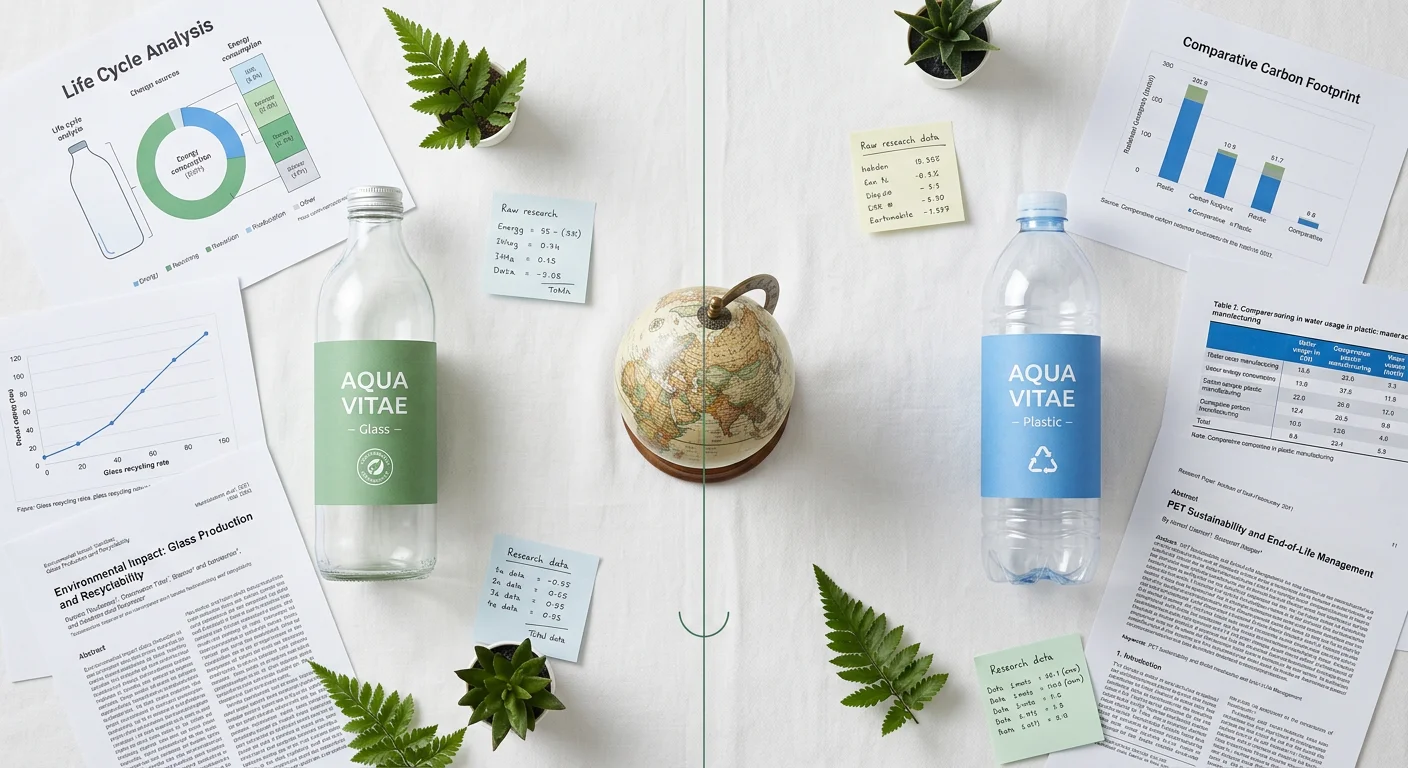
Packaging sustainability isn’t a branding exercise. It’s a supply chain decision with consequences that build up over decades.
For mocktail brands weighing the glass vs. plastic packaging debate, the framing matters — a lot. Most early-stage conversations fixate on weight, shipping costs, and shelf aesthetics. Those factors are real. But they sit on the surface of a much deeper problem.
Here’s what the full picture looks like:
-
Plastic carries a lower upfront energy cost to produce and a weight advantage in transport. On paper, that looks efficient.
-
Glass demands more energy at the production stage. But it runs on a completely different end-of-life logic — you can recycle it indefinitely with zero loss in quality.
That distinction is not minor. One material re-enters the supply chain clean. The other leaks out — into landfill, waterways, and the food system as microplastic contamination.
Plastic recycling rates stay low across most markets. There’s a wide gap between what gets collected and what actually gets recycled. That gap has real costs: environmental cleanup, public health burden, long-term ecological damage.
Glass avoids most of those downstream problems.
For mocktail brands serious about sustainability beyond the label, this section lays out the science-backed baseline — before the trade-offs get more complicated.
Environmental Impacts
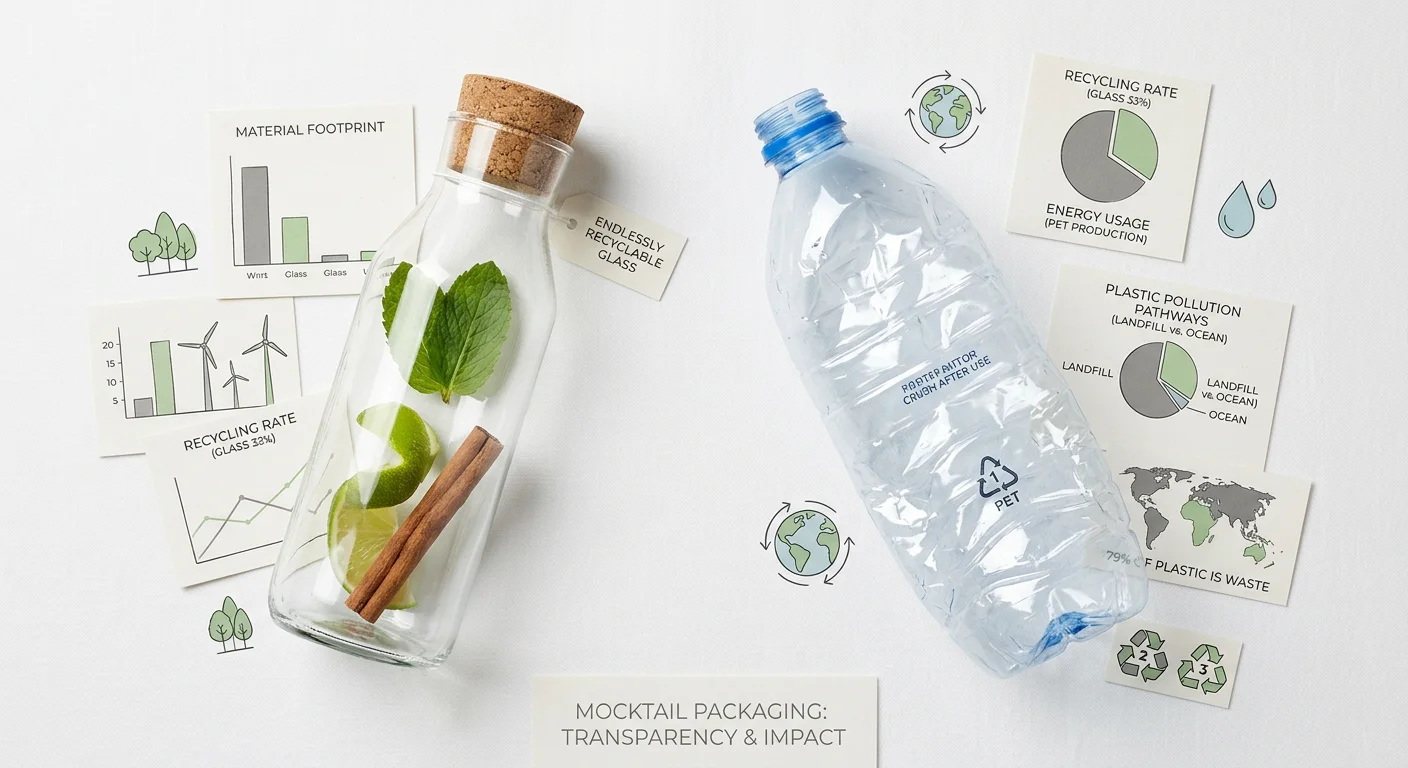
The numbers don’t lie. They just surprise people.
Run a full lifecycle analysis on glass versus plastic packaging, and the results cut against the intuitive narrative. Glass feels clean and premium. Plastic feels disposable and damaging. But feelings and emissions data are two separate conversations.
Here’s what the science shows — and why mocktail brands need to sit with this complexity before making a call.
Glass: The Recyclability Case Has a Hidden Cost
Glass comes from abundant, natural materials. Sand, limestone, soda ash. It recycles into new containers, into sand, into aggregates. Unlike plastic, it doesn’t degrade with each cycle. You can run glass through the recycling loop over and over with no loss in material quality. That’s a real advantage.
But the manufacturing side carries real weight — both in cost and in carbon.
Glass production is energy-heavy. The furnaces run hot. The process generates noise and water pollution. Quarrying zones show documented damage to local ecosystems. And once the glass is made, you still have to move it.
Weight is where the carbon story changes fast. Shipping one million glass jars generates 246.6 metric tons of CO2. That’s not a rounding error. For a brand scaling distribution across a region or the whole country, transport emissions build up quickly. Every pallet, every truck mile, every extra gram of packaging adds to the total.
In lifecycle assessments, the glass argument comes down to one word: reuse. Glass containers that get refilled — again and again — spread the upfront energy cost across many use cycles. The math works. But most single-use beverage packaging doesn’t run on a refill model. In markets without a strong deposit-return system, glass recycling rates are unreliable at best.
Plastic: Lower Emissions, Higher Consequences
Plastic’s carbon numbers look strong at the production stage. Compared to glass, plastic packaging carries 80% less carbon footprint before it ever ships. That’s not a small gap. It’s a structural one.
Lighter packaging also means lower shipping costs in carbon terms. Plastic generates 15% lower CO2 emissions in transport compared to glass. For brands moving high volumes, that difference adds up across a full year of operations.
Recycled materials push the numbers further. Recycled HDPE and PET both cut emissions compared to virgin plastic. Source post-consumer recycled content, and the carbon case for plastic gets even stronger.
But the downstream story is where plastic falls apart.
It starts at extraction. The raw material for most plastic packaging comes from fossil fuel infrastructure — including fracking. That’s the base of the supply chain, before a single bottle gets made.
Then there’s what happens at the end of a product’s life. Across the world, only 9% of plastic gets fully recycled. Total recycling rates, including partial recovery, reach about 21%. The rest — the vast majority — goes to landfill, gets incinerated, or ends up in the environment.
The ocean figure is hard to ignore: 5.25 trillion pieces of plastic circulate in the world’s oceans right now. That figure isn’t projected. Researchers have measured and documented it. Microplastics show up in drinking water, in soil, in human blood. The contamination isn’t a theory. It’s a systemic, ongoing problem.
What the Lifecycle Analyses Say
Independent lifecycle assessments on beverage packaging show PET plastic outperforming glass — and often aluminum — across key environmental metrics for single-use products. Carbon footprint, energy consumption, transport impact. In direct comparisons, PET comes out ahead on raw numbers.
That conclusion matters. It’s also incomplete.
LCAs measure what they measure. They model emissions and energy inputs well. What they miss is plastic’s long-term environmental leakage — the microplastic contamination, the ecological disruption, the public health costs that never show up on a product’s balance sheet.
Glass vs. plastic packaging has no clean winner once you factor in the full system. Glass carries higher production and transport emissions. Plastic carries a contamination legacy that recycling infrastructure has failed, again and again, to control.
For mocktail brands, the honest environmental picture looks like this:
-
Short-term carbon efficiency points toward plastic
-
Long-term material integrity and contamination risk points toward glass
-
Reuse infrastructure determines whether glass’s recyclability advantage ever shows up in practice
Neither material is neutral. The real question is which trade-offs your brand is willing to own — and what the data behind your sustainability claims can hold up to scrutiny.
Implications for Mocktail Brands
The science hands you a contradiction. Now you have to run a business with it.
For mocktail brands, the glass vs. plastic packaging decision doesn’t get resolved in a lifecycle assessment spreadsheet. It gets decided in distribution contracts, retailer conversations, margin calculations, and the story you’re willing to tell customers — and defend when someone digs into it.
Here’s how to think through this in practice.
Scaling Distribution? Plastic Has the Structural Advantage
Volume changes the equation fast. A brand moving product across multiple regions — through retail chains, food service accounts, e-commerce fulfillment — runs a very different operation than one selling at a local farmers’ market.
At that scale, PET and HDPE plastics are hard to argue against on emissions alone:
-
Lower transport weight
-
Lower per-unit carbon cost
-
Lower logistics overhead
The packaging moves with less friction across the chain. For a distribution-heavy beverage model, that gap matters. Glass can’t close it without serious cost offsets.
The move that narrows the gap: recycled content. Sourcing post-consumer recycled PET — rPET — keeps the weight and cost advantages while cutting the production carbon footprint further. It doesn’t erase plastic’s contamination problem. But it cuts the raw environmental cost and gives your sustainability messaging something solid to stand on.
Pair that with local or regional production wherever possible. Transport is where glass loses on emissions. It’s also where plastic’s carbon story can erode quietly. Cutting the distance between production and distribution reduces the transport footprint — no matter what material you use.
Building a Premium Brand? Glass Earns Its Place — With Conditions
Glass and premium positioning have a long, proven relationship. The weight in the hand. The sound of the lid. The visual clarity of the liquid inside. These aren’t small details — they’re the physical language of quality that moves consumers from curious to loyal.
For mocktail brands in the premium or craft segment, glass does more than contain the product. It communicates the product. That signal has real value on the shelf and at the price point you’re defending.
But the sustainability case for glass holds under one condition only: reuse, not single-use.
A Glass Bottle filled once, shipped once, and recycled once carries a heavy production and transport footprint. Single-use logic never recovers that cost. The math that makes glass defensible on environmental grounds is a refill model — a bottle that comes back, gets cleaned, and goes out again.
That takes real infrastructure:
-
Deposit-return systems
-
Regional collection networks
-
Partnerships with retailers or hospitality venues that participate in the loop
Where those systems exist, glass earns every sustainability claim you make for it. Where they don’t, those claims are thinner than they look.
The Hybrid Path Most Growing Brands Overlook
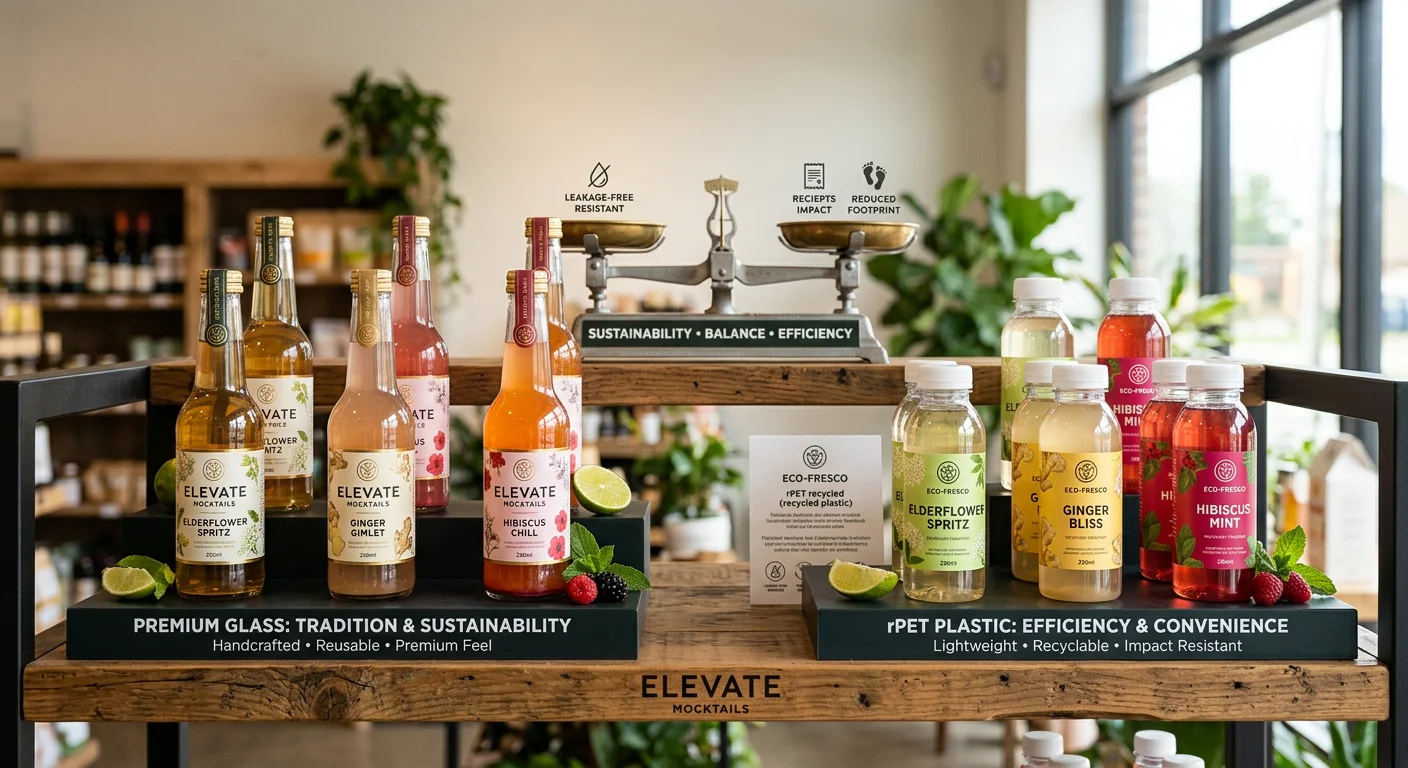
There’s a third option between “go all glass” and “go all plastic” that most brands ignore: a deliberate split strategy.
Use lightweight rPET for your core distribution SKUs — the formats that move in volume, travel long distances, and live in grocery or convenience channels. Keep the footprint low, source recycled content, and tighten your supply chain.
Reserve glass for formats where it earns its premium signal:
-
Gift packs
-
On-premise bottles
-
Direct-to-consumer flagship SKUs where the unboxing moment matters and the margin can absorb the cost
This isn’t a compromise. It’s a product architecture decision. Different formats serve different channels, different customers, and different moments. Matching packaging to context — rather than forcing one material to do everything — is how smart brands build a glass vs. plastic packaging strategy that holds up on both cost and environmental grounds.
The trade-off isn’t just carbon versus contamination. It’s scale versus story, efficiency versus identity. The brands that figure out where each one belongs — and stop treating this as a binary choice — are the ones that build packaging decisions they won’t need to reverse two years down the road.
Studies and Data
Three independent data points. Three different research contexts. The same conclusion.
Institutions with no stake in the packaging industry keep running the numbers on glass vs. plastic packaging. The results keep landing in the same uncomfortable place — bad news for brands that already committed to glass for sustainability reasons.
What the Research Found
The University of Southampton published its findings in 2020. The study ran a full comparison across packaging materials. The verdict was clear: glass performs worse than plastic overall. Weight and energy consumption both drag it down. Not slightly worse. Worse across the categories that lifecycle assessments treat as primary metrics.
That conclusion came from a research institution — not a plastics manufacturer. That distinction matters. Source credibility shapes how much weight you put on a finding.
Drug Plastics ran a more focused calculation. One million plastic jars against one million Glass Jars across the same distribution scope. The carbon gap came out to 197.2 metric tons of CO2 saved on the plastic side. For a brand growing into national retail, that number is not abstract. It ties to real emissions, real logistics costs, and real claims you can — or cannot — make to retailers who ask about your carbon footprint.
McKinsey’s analysis brought in the transport layer. Their data showed a 15% emissions advantage for plastic bottles over glass in shipping. That gap grows as distribution distances stretch. A brand shipping product from one production facility across multiple regions stacks that 15% across every pallet, every route, and every fulfillment cycle throughout the year.
What These Numbers Don’t Settle
The research consensus on carbon efficiency is real. It is also incomplete.
None of these studies track what happens after the bottle leaves the retailer’s shelf. The University of Southampton’s framework, Drug Plastics’ CO2 figures, McKinsey’s transport data — all three measure production and logistics performance. None of them cover end-of-life contamination, microplastic buildup, or the widespread failure of plastic recovery infrastructure that sits downstream of every unit sold.
For mocktail brands using this data to shape a glass vs. plastic packaging position, the research is useful. It also has a clear boundary. The carbon numbers hold up. The full environmental picture requires looking beyond what any single lifecycle metric can show.
Use the data. Know what it measures — and what it leaves out.
Conclusion
The glass vs. plastic packaging debate has no clean answer. Glass leads on recyclability and chemical purity. Plastic has the edge on carbon footprint during transport. The smartest mocktail brands aren’t picking sides without thinking — they’re picking with purpose.
For mocktail brands prioritizing sustainability, glass packaging stands out as the more eco-friendly, durable, and brand-aligned choice—far outperforming plastic in recyclability, carbon footprint, and long-term environmental impact. It not only supports your brand’s sustainability goals but also resonates with eco-conscious consumers. As a trusted TP Glass Bottle Manufacturer, we specialize in custom, high-quality glass packaging tailored for mocktail brands, helping you combine sustainability with brand personality. Let us partner with you to create sustainable glass packaging that elevates your mocktail line and reinforces your commitment to the planet.