

There’s something special about opening a jar of homemade jam in the middle of winter or pulling a jar of pickles from the pantry to accompany a meal. If you’ve started making your own preserves, you’ve likely discovered that the process is as much about the preparation as it is about the finished product. One of the most practical decisions you’ll face is choosing the right container. This post focuses on two straightforward factors to consider: the size of the jar and the type of seal, both of which play a role in how well your jam or pickles turn out.
Choosing the Right Glass Jar Capacity: From Sample-Size to Family-Batch
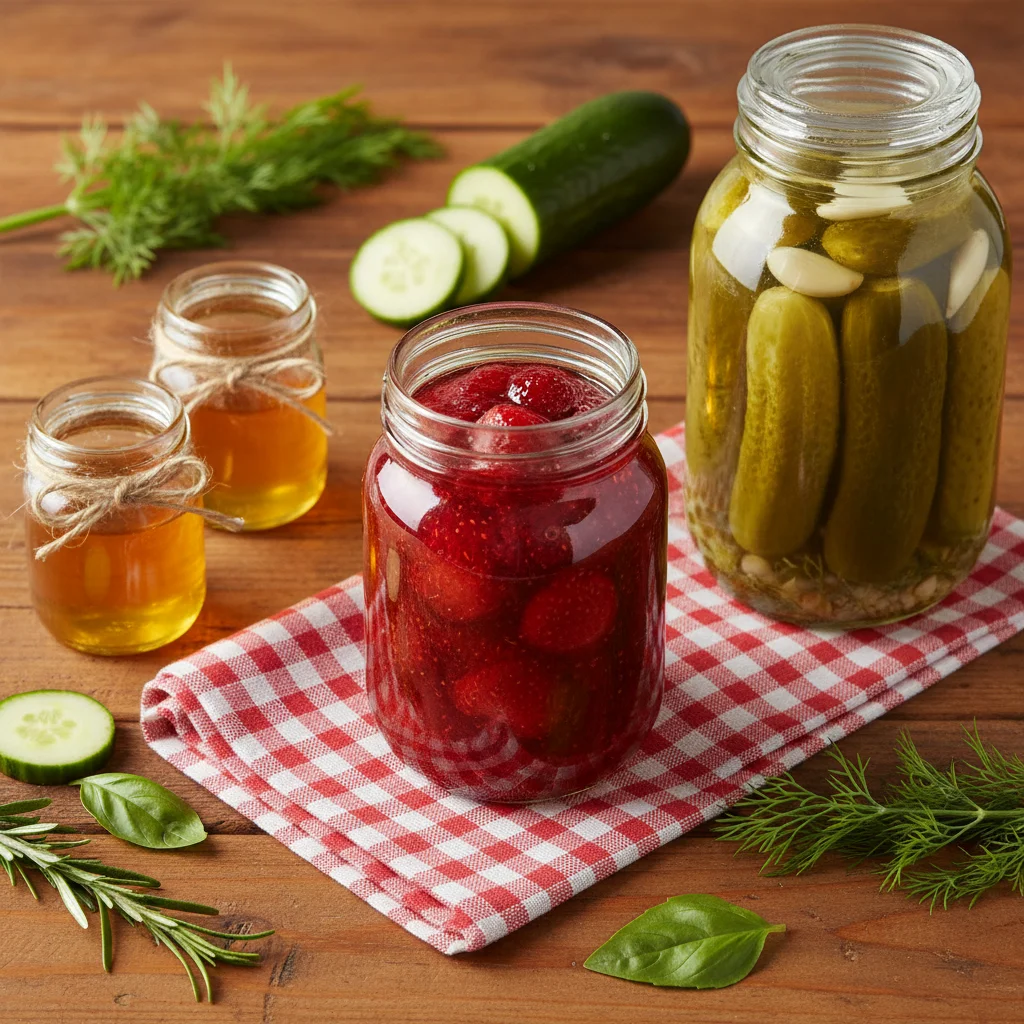
Capacity is where most people go wrong. Yet it’s the easiest thing to get right once you know the logic behind the numbers.
Glass jars come in a handful of standard sizes. Check any kitchen supply store or wholesale catalog, and you’ll find three workhorses: 4 oz (120ml), 8 oz (240ml), and 16 oz (480ml). Each size suits a different type of cook, household, and eating pace.
4 oz — The Charmer’s Jar
The little 4 oz jar has a personality all its own. Reach for it on a small-batch test run — a fig preserve with a pinch of cardamom, or a jalapeño jelly you’re still experimenting with. It’s also the top pick for gifting and sampling. Tuck four or five into a basket with a checkered cloth, and you’ve got a hostess gift that looks straight off a boutique farm stand.
The catch? A 4 oz jar goes fast. A single person spreading jam on toast each morning burns through one jar in about 5–7 days. That’s charming for a gift. For everyday pantry use, though, you’d be washing jars every single week. Not ideal.
8 oz — The Sensible Middle Ground
The 8 oz glass jar works well for most single-person households or couples eating at a normal pace — toast in the morning, a PB&J here and there. At that rate, a single person gets two to three weeks out of one jar. That’s a solid window. Long enough to feel like you’re making real progress. Short enough that the contents stay fresh before you hit the bottom.
For pickles, this size holds up well too — especially refrigerator pickles meant to be eaten within a few weeks, not stored long-term.
16 oz and the Case for the Family-Size Jar
Add kids to the equation? That 8 oz jar vanishes by Wednesday. For families of three or more, the 16 oz glass jar makes clear economic and practical sense. You run fewer batches, make fewer store trips, and — for water-bath canning — process fewer jars per session. That adds up fast during a big harvest.
Why 250ml Has Become the Sweet Spot
Among home preservers and small-batch producers, the 250ml glass jar has quietly become a gold standard. It sits right between the 8 oz and a full pint — generous, but not overwhelming.
For a single person or couple, 250ml of jam holds up for 10 to 14 days at normal use. That’s the sweet spot:
-
Not so small that you’re restocking every few days
-
Not so large that quality drops before you reach the bottom
It’s also a smart size for portion control with pickles. You open it, finish it within a week, and nothing sits in brine long enough to go soft.
The bottom line: match your jar size to your household’s actual eating pace. A jar that’s too big isn’t just wasteful — it’s a slow spoilage risk sitting right on your refrigerator shelf.
Choosing the Right Glass Jar Capacity for Pickles: Short-Term Snacking vs. Long-Term Storage
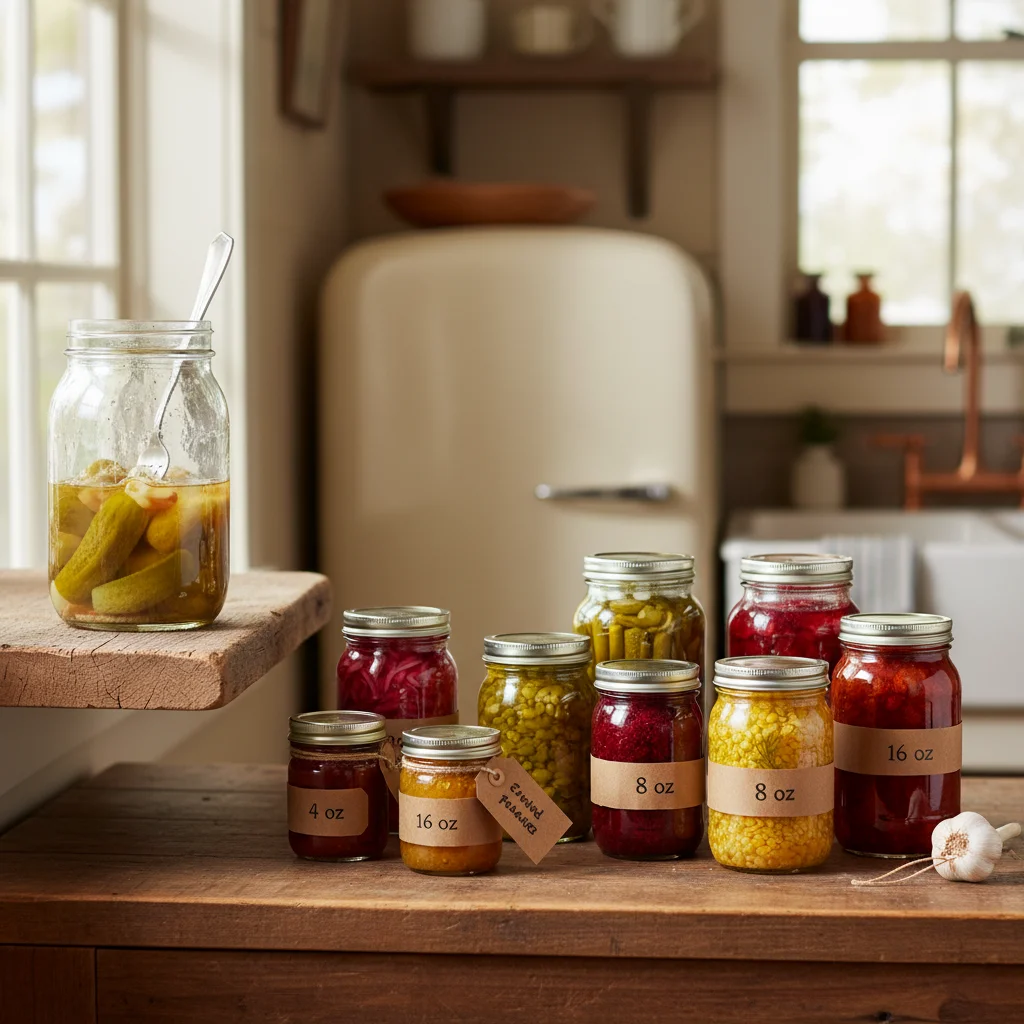
Here’s something I learned the hard way after a very ambitious cucumber harvest and about fourteen jars of bread-and-butter pickles: bigger isn’t always better. With pickles, the size of your glass jar changes everything about how long your batch stays crisp, bright, and worth eating.
The logic is different from jam. And once you get it, you’ll never grab the wrong jar again.
16–32 oz: The Workhorse Range for Everyday Pickle Jars
Most home kitchens fall into this range. Families who like pickles on burgers, sliced next to sandwiches, or eaten straight from the jar on a Tuesday afternoon — 16 oz to 32 oz Glass Jars are the practical sweet spot for short-term use.
Here’s why size matters so much with pickles: the moment you crack that lid, oxidation starts its quiet work. Brine that’s been sealed and stable for weeks meets air. The clock starts ticking. Each time you reach back into that jar, you bring in a little more oxygen. That means a little more softening.
A 16 oz jar opened in a busy household disappears in about one to two weeks. That’s fast enough that quality doesn’t have time to suffer. The pickles stay snappy. The brine stays bright.
Push it to 32 oz, and you get more breathing room. That’s the right fit for a family of four or five who eats pickles often. But there’s a catch nobody mentions on canning blogs: a 32 oz glass jar takes up a serious chunk of refrigerator shelf space. Tall, wide, and not shy about it. Line up three or four of those big boys and you’re doing a full fridge reorganization just to fit the leftover pot roast.
The rule of thumb: choose 16–32 oz only when you’re sure the jar will be finished within two to three weeks of opening.
32–64 oz and the 1-Gallon Jar: When Big Capacity Makes Real Sense
The half-gallon (64 oz) and full gallon glass jar sit in a different category. These aren’t everyday refrigerator jars. They serve a different purpose and suit a different kind of cook.
Three situations make going this big worth it:
-
Batch pickling for large families or gatherings. Putting up a full bushel of cucumbers at the end of summer? Planning to work through them over several months? A one-gallon jar keeps the whole process efficient. Fewer jars to fill. Fewer lids to track down.
-
Foodservice and small restaurant use. A café serving house-made pickles on every plate burns through volume fast. A 64 oz commercial-grade glass jar on the prep line beats restocking pint jars twice a day — no contest.
-
Deep-fermentation and traditional family recipes. Certain old-world recipes — kimchi, whole dill pickles in the Polish style, fermented garlic — are built for large-vessel aging. The volume is part of the process. A gallon jar isn’t oversized here. It’s exactly the right tool.
Outside those three situations? A gallon jar mostly eats up counter space and makes you feel more ambitious than you are on a Wednesday night.
The bottom line with pickle jars: short-term, frequent use calls for 16–32 oz. Batch production, commercial volume, or traditional long-ferment recipes are where the 32 oz and beyond glass jar earns its place. Match the jar to the pace of your kitchen — not just the size of your harvest.
Sealing Methods Compared: Vacuum Twist-Off Lids, Two-Piece Canning Lids, and Everything Else
The lid is doing more work than you realize. Pick the wrong one, and that jar of peach preserves you stored in June greets you with a soft, suspicious pop in October. Pick the right one, and it sits safely on your pantry shelf through January without a worry. Getting the sealing method right isn’t fussy perfectionism. It’s just good sense.
Two main options exist in the home preserving world. Each one has a clear logic behind it. Once you understand how they work, the choice gets much easier.
Vacuum Twist-Off Lids: Fast, Easy, and More Effective Than You’d Expect
Vacuum twist-off lids — the kind you see on commercial jam jars at every grocery store — create a vacuum seal as the hot contents cool inside the jar. The temperature drops. The air contracts. The lid dimples inward and locks flat against the rim. That little click you hear opening a fresh jar? That’s the seal breaking. That’s the sound of freshness.
For home bakers and small-batch jam makers, twist-off lids are a real draw. They’re easy to find, easy to use, and easy to open. Users rate twist-off lids higher than two-piece alternatives for convenience — especially older users or anyone with limited grip strength.
These lids also pair well with low-acid and high-sugar preserves: strawberry jam, blueberry preserves, apple butter, citrus marmalade. Think thick, sweet, shelf-stable products.
The key limitation? Twist-off lids are not built for repeat use in home water-bath canning. The sealing compound on the inner edge breaks down after the first heat cycle. Reuse a commercial twist-off lid for canning, and you’re gambling on that seal every time. Some people get away with it. Plenty don’t.
Shelf life with a proper vacuum seal: up to 12 months at room temperature for high-sugar, high-acid preserves. Once opened, refrigerate and finish within 3 to 4 weeks.
Two-Piece Canning Lids: The Trusted Choice for Serious Home Canners
Picture a row of gleaming Ball Mason Jars fresh from a water-bath canner — steam rising, lids pinging one by one as they cool on the counter. That’s the two-piece lid system in action. There’s something satisfying about it in an old-fashioned, no-nonsense way.
The two-piece system has two parts: a flat metal disc (the actual lid, with a rubber sealing compound on the underside) and a separate screw band that holds it in place during processing. The Ball Mason standard — now the benchmark most home canners follow — lays out a clear protocol:
-
Simmer the flat lids in hot (not boiling) water before use to soften the sealing compound
-
Set the band fingertip-tight only — don’t crank it down hard
-
Process according to your tested recipe’s time and pressure requirements
-
Remove the bands after the jars cool, confirm each lid has sealed flat, then store
That last step trips up a lot of beginners. The band is not the seal. The flat disc is. Bands left on during storage can trap moisture and cause rust. Worse, they can hide a failed seal from you entirely.
For pickles, fermented vegetables, low-sugar preserves, and anything going through pressure canning, two-piece lids are the go-to professional choice. They handle both water-bath and pressure canning. They form an airtight seal even with acidic, low-sugar contents that would challenge a twist-off lid.
Shelf life: properly sealed Ball-style jars hold 12 to 18 months at room temperature for high-acid foods. The flat lids are single-use — don’t reuse them for canning, even if they look fine. The bands are a different story. You can reuse them as long as they’re not bent or rusty.
How They Compare: A Practical Breakdown
|
Factor |
Vacuum Twist-Off |
Two-Piece Canning Lid |
|---|---|---|
|
Room-temperature shelf life |
Up to 12 months |
12–18 months |
|
Repeated opening ease |
★★★★★ |
★★★☆☆ |
|
Suited for water-bath canning |
✗ (not recommended) |
✓ |
|
Suited for pressure canning |
✗ |
✓ |
|
Refrigerator storage (opened) |
3–4 weeks |
3–4 weeks |
|
Re-sealable after opening |
Limited |
Limited |
|
Reusable lid component |
✗ (seal degrades) |
Band only |
|
Best for |
Jams, high-sugar preserves |
Pickles, all canned goods |
A Word on Other Options
Wax seals, ceramic bail-top closures, and reusable silicone lids all have fans — and they’re genuinely charming. A Weck jar with its glass lid and rubber gasket looks beautiful on a farmhouse table. For long-term shelf-stable storage of jams and pickles, though, wax and decorative closure systems don’t match the tested, reliable performance of the two main methods above.
Save the pretty bail-top glass jars for refrigerator pickles you’ll eat within two weeks, or for gifting something that’ll be opened right away. For anything sitting in the pantry for months? Stick with what’s been proven to work.
The bottom line: twist-off lids win on convenience. Two-piece lids win on reliability and range. Match the method to what you’re putting up — and how long you plan to keep it.
Conclusion
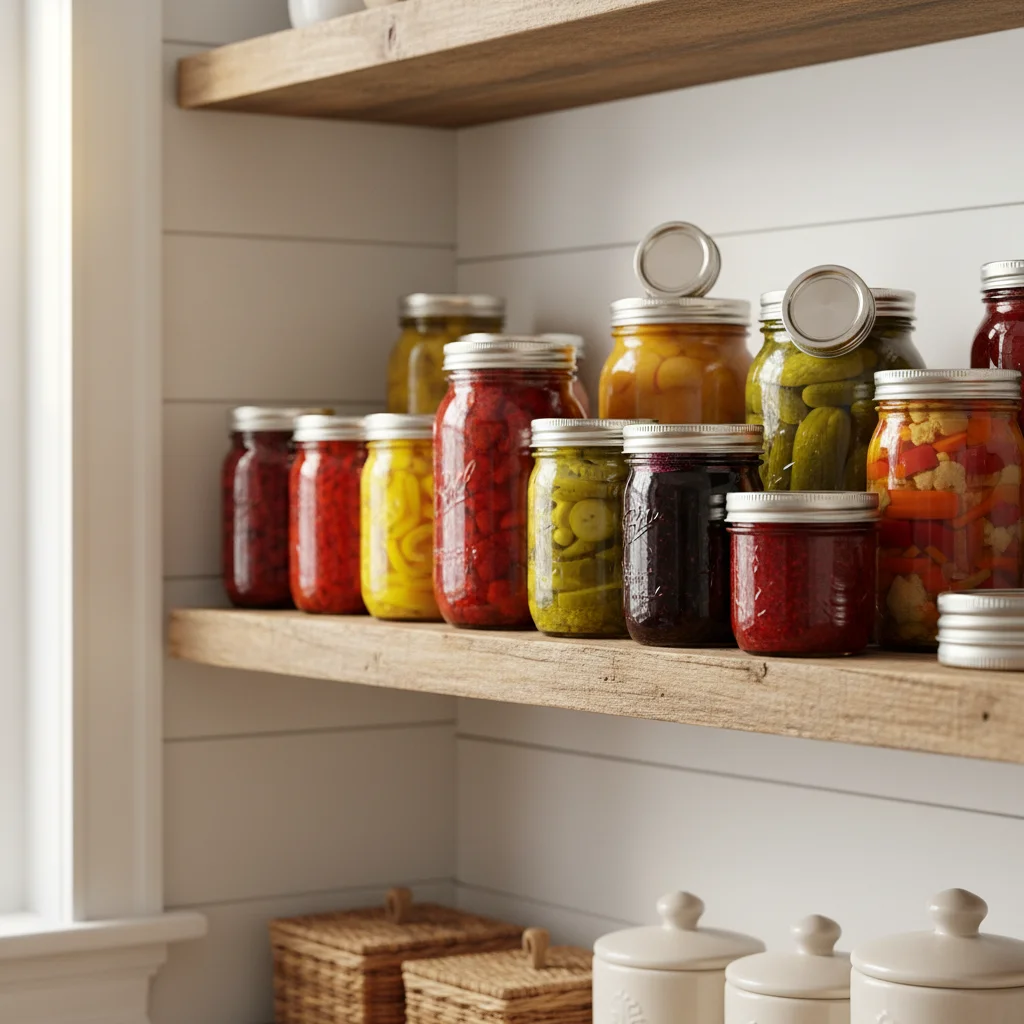
In conclusion, selecting the right glass jar capacity and sealing method is essential for preserving the freshness, flavor, and safety of your homemade jams and pickles. Whether you prefer smaller jars for personal use or larger ones for sharing, and whether you opt for vacuum lug caps or classic two-piece lids, understanding your specific needs ensures perfect results every time. At TP Glass Bottle Manufacturer, we specialize in producing high-quality, customizable glass jars designed to meet diverse preservation requirements. With decades of expertise, a wide range of sizes, and reliable sealing options, we are your trusted partner for premium packaging solutions. Explore our collection today and elevate your homemade creations with jars crafted for excellence and durability—because you deserve nothing less than the best. contact us to bring your vision to life