

The bottle sitting on your shelf isn’t just a container — it’s an active part of how your wine tastes. Packaging material affects oxygen exposure, temperature stability, and how the liquid reacts with what holds it. That quiet choice between plastic and Glass Wine Packaging shapes every sip, from first pour to last.
For decades, glass has been the traditional choice for wine bottles, valued for its ability to preserve the integrity of the wine inside. This article will explore the differences between plastic and glass wine packaging, focusing on their specific impacts and helping readers understand which option may be more suitable for different needs.
What Makes Wine Packaging Material Matter for Flavor and Quality
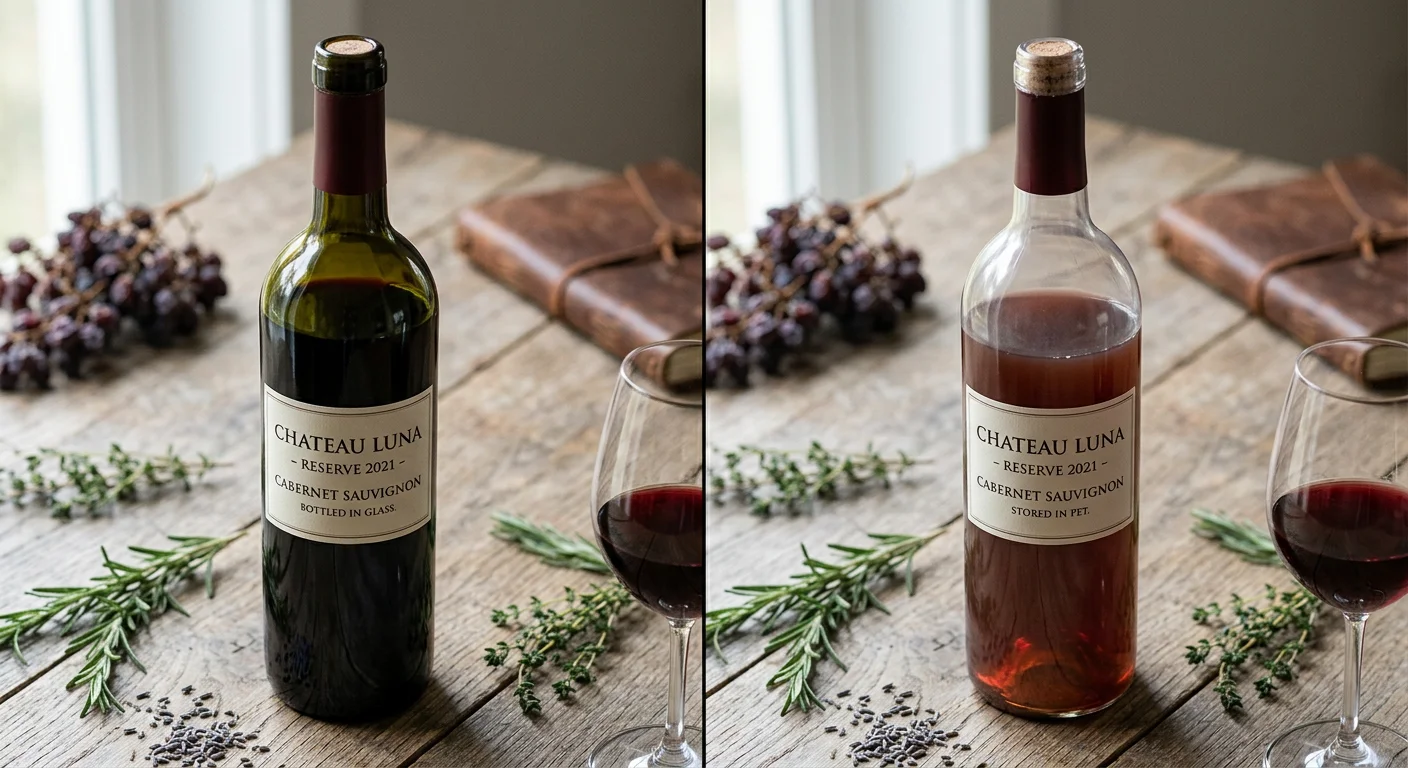
Wine is alive — in a chemical sense. Fermentation ends, but the liquid keeps reacting. It reacts with dissolved gases, with light, and with whatever material surrounds it. That last part is where packaging starts to matter.
Your choice of container isn’t passive. It’s an active factor in how wine turns out.
Inert vs. Reactive: The Core Chemical Distinction
Not all materials behave the same way in contact with wine. There’s a clear divide between inert materials and reactive ones.
-
Inert materials — like glass — don’t interact with the wine inside. Flavor compounds stay stable. The winemaker’s work stays intact.
-
Reactive or permeable materials — like PET plastic — can create small but real interactions. These include trace compounds migrating from the material itself, plus oxygen passing through the container walls at varying rates.
That gap matters more than most people expect. Wine flavor comes from hundreds of volatile aromatic compounds. Even small chemical interference can change how those compounds develop over time. A small rise in oxygen ingress can do the same.
Why Producers and Buyers Are Paying Closer Attention
The debate around glass wine packaging versus alternatives has grown stronger — and for good reason. Winemakers put serious effort into precise fermentation, oak management, and controlled bottling. They want a container that protects that work, not one that adds new variables.
Buyers face real stakes too. A wine bought for aging — or for a special occasion six months away — needs storage behavior you can predict and rely on.
The material question isn’t abstract. It’s measurable. Oxygen transmission rates, sorption behavior, and thermal stability all have documented effects on wine packaging quality. Knowing how these factors work is what separates a smart packaging decision from a guess.
Glass Wine Bottles: The Gold Standard for Flavor Preservation
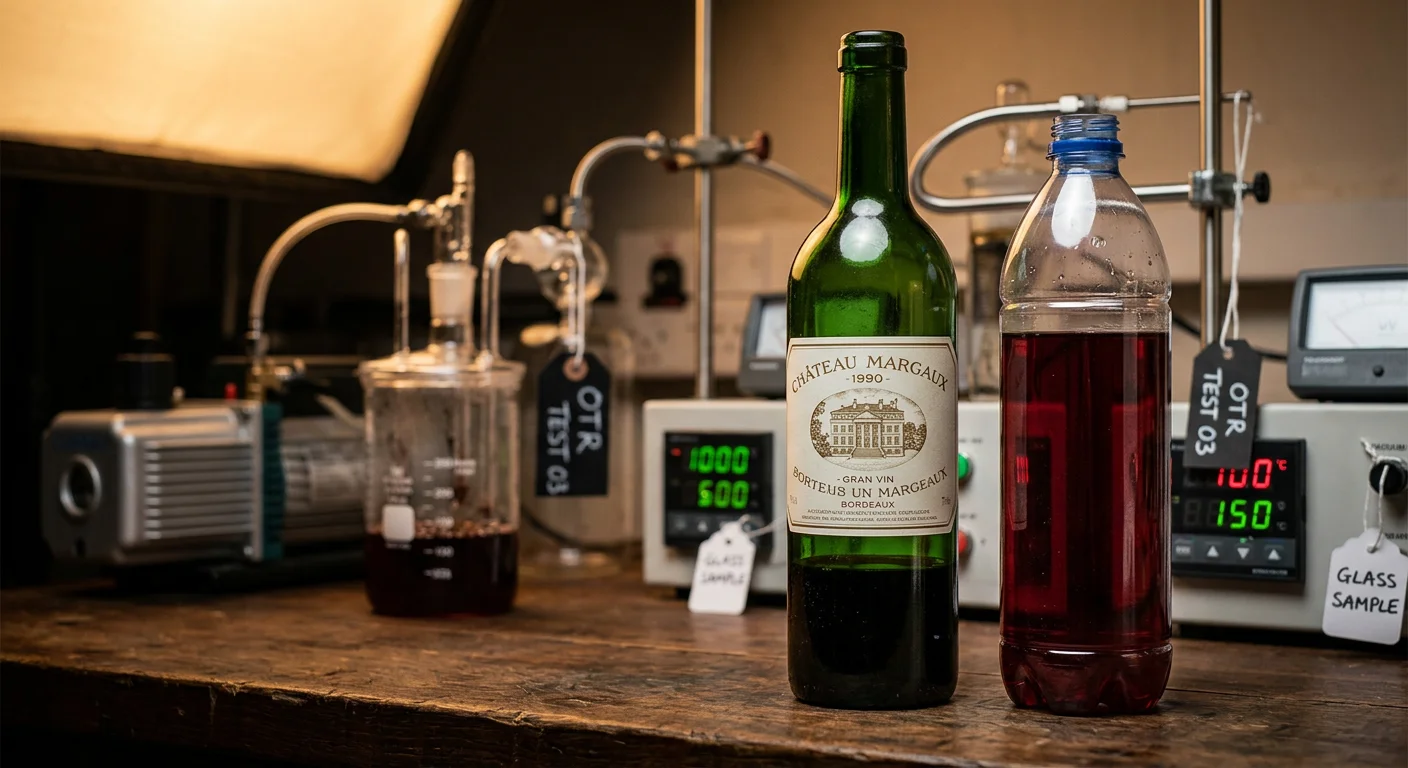
Glass has been holding wine for over 5,000 years. That’s not tradition for tradition’s sake — it’s one material that keeps outperforming everything else at a chemical level.
Why Glass Doesn’t Touch the Wine Inside
The defining property of glass is chemical inertness. It doesn’t react with acids, tannins, or aromatic compounds. It doesn’t release trace molecules into the liquid. What the winemaker puts in the bottle is what you get out — months or years later.
This matters more than it sounds. Wine contains hundreds of volatile aromatic compounds. Even minor contamination from packaging material can shift how those compounds behave. With glass, that variable doesn’t exist.
PET plastic can’t make the same claim. It’s permeable and reactive. Glass is neither.
Sealing Systems and Long-Term Flavor Evolution
Glass is one part of the equation. The seal determines how the wine ages.
-
Natural cork lets in micro-amounts of oxygen over time — by design. This controlled exposure drives slow oxidation, softening tannins and building depth. That’s why serious Bordeaux and Barolo still come under cork.
-
Screw caps on Glass bottles create a near-perfect seal with almost zero oxygen transmission. That works well for aromatic whites — Riesling, Sauvignon Blanc — where freshness is the goal, not evolution.
The Glass Bottle provides a neutral, stable environment. The closure manages the oxygen. Together, they give winemakers precise control over how a wine develops.
The Visual Signal No Plastic Replicates
Transparency has a practical side that often gets overlooked. Color is a diagnostic tool — for sommeliers, collectors, and careful buyers.
A wine’s hue tells you things. A browning rim on a red signals oxidative aging. A deep golden shift in white points to richness or age. You can read those signals through glass. Through most plastic, color comes across distorted or muted.
That visual clarity isn’t just aesthetic. It’s real information.
Where Glass Wine Packaging Has No Real Competition
Some wine categories require glass. No substitute holds up:
-
Age-worthy reds — Cabernet Sauvignon, Nebbiolo, Syrah — need decades of stable, controlled aging
-
Prestige whites — Grand Cru Burgundy, aged Chenin Blanc — where depth builds over years
-
Fine estate wines where the producer’s reputation depends on how the bottle performs
For these wines, glass wine packaging isn’t the premium choice — it’s the one defensible choice. The chemistry holds. The sealing options are flexible. The visual integrity stays intact. No other container has come close to replacing it.
Plastic (PET) Wine Bottles: Convenience at What Flavor Cost?
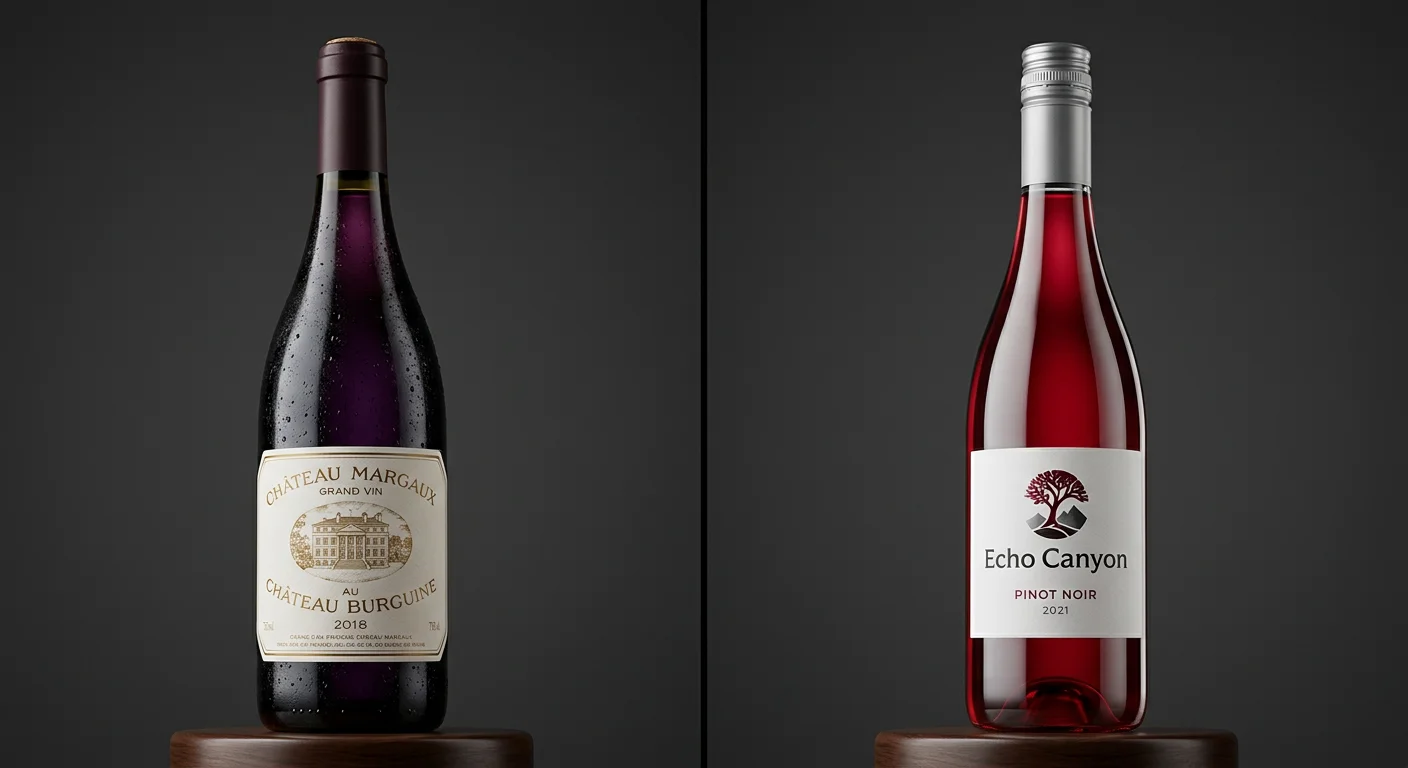
Lightweight, shatterproof, and cheap to ship — PET plastic solves real logistical problems for wine producers. But convenience has a chemistry cost. And that cost shows up in the glass.
Chemical Migration: What’s Leaching Into Your Wine
PET isn’t inert. Glass just sits around the liquid and does nothing to it. PET is different — it’s a permeable polymer that can release trace compounds into wine over time. The main concern is acetaldehyde migration. This is a byproduct of PET production. It transfers into the liquid at detectable levels, especially under heat or long storage periods.
There’s also oxygen transmission to think about. PET lets outside oxygen pass through the container wall at a measurable rate. For wine, that means slow, uncontrolled oxidation. This flattens aroma, dulls fruit character, and strips out the volatile compounds that make a wine interesting. It’s not dramatic. It’s gradual. But it adds up.
Temperature changes make the flavor damage worse. This happens during transport, warehouse storage, or time on a warm retail shelf. PET’s barrier performance drops as heat rises. That speeds up both migration and oxidation at the same time.
The 12–18 Month Shelf Life Problem
PET wine bottles carry a manufacturer shelf life of 12 to 18 months from bottling. That number assumes controlled conditions — stable temperature, no UV exposure, upright storage. Most real-world supply chains don’t deliver that.
In practice, most wine professionals and producers say you should drink PET-packaged wine within 6 months of purchase. That’s the window where flavor quality holds up. Push past it, and the oxidative drift and chemical interference become hard to ignore. This is a bigger problem in aromatic whites and light reds where freshness is the whole point.
This isn’t speculation. Sensory panel studies that compared wine from PET and glass containers show a clear pattern. Glass-preserved samples score higher on aroma intensity, freshness, and overall quality past the 6-month mark — every time.
Where PET Makes Sense
The flavor losses are real, but they don’t disqualify PET for every situation. PET wine packaging fits specific use cases where the trade-offs are acceptable:
-
Outdoor and event consumption — picnics, festivals, stadium pours — where glass is banned or impractical
-
Single-serve formats — 187ml and 250ml portions meant for immediate drinking
-
Budget-tier wines intended for immediate consumption, not the cellar
-
Airline and travel retail, where weight and breakage restrictions dominate
In these cases, convenience wins. Not because PET performs better, but because the wine won’t sit around long enough for the damage to matter. The problem starts when PET packaging gets treated as a long-term storage solution. It isn’t built for that. Glass is.
Oxygen Barrier Performance: How Each Material Impacts Freshness Over Time
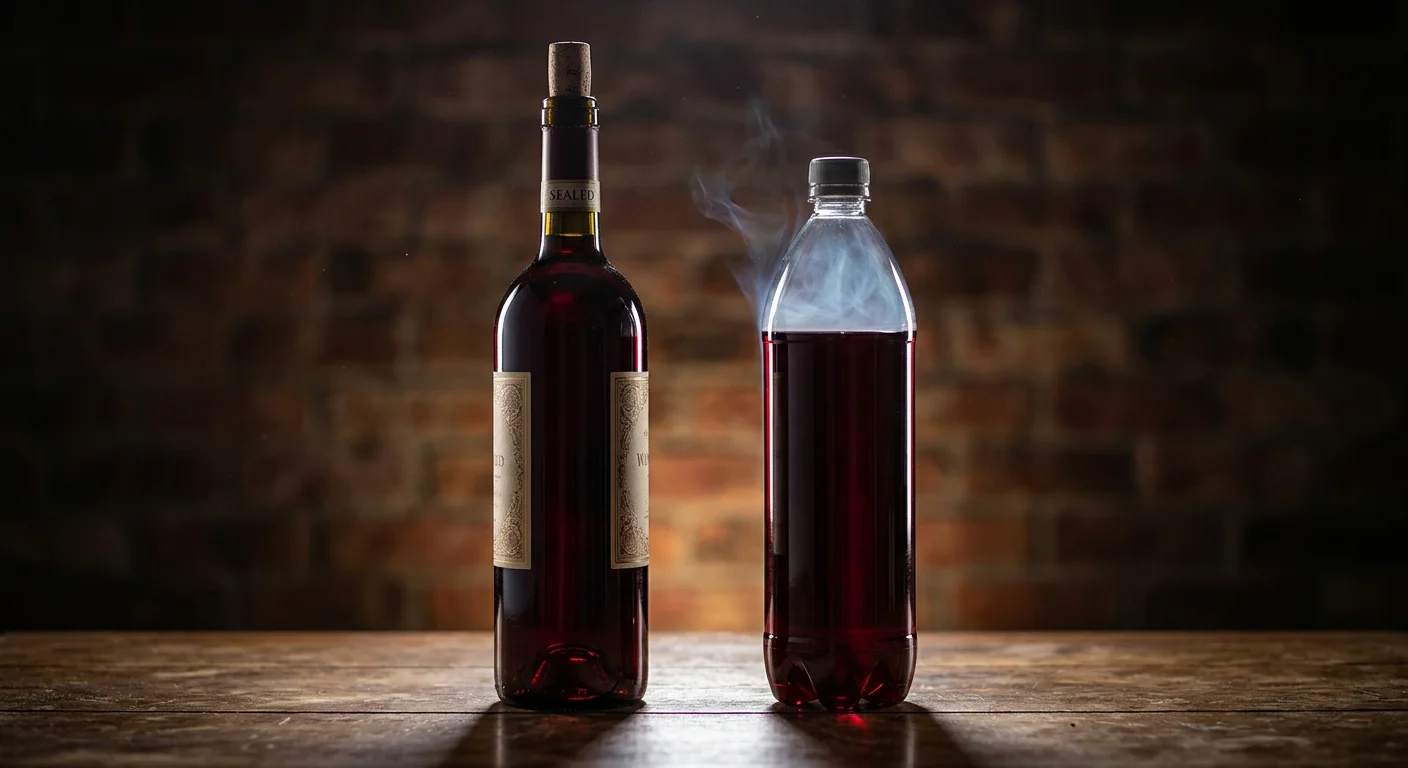
Oxygen is the enemy that doesn’t announce itself. It moves without warning, works without sound, and by the time you notice what it’s done to your wine, the damage is already permanent.
How packaging materials handle oxygen transmission isn’t a technical footnote. It’s the one variable that separates a wine that tastes like itself from one that doesn’t.
The Three Stages of Oxidative Damage
Oxygen doesn’t destroy wine all at once. It works in phases. Each phase has a distinct signature.
Stage 1 — Fruit loss (weeks to months). Fresh aromatic compounds go first. The bright cherry in a young Pinot Noir. The citrus edge in a Sauvignon Blanc. These volatiles oxidize fast. You notice their absence before you can name what changed.
Stage 2 — Acetic drift (months). Oxidation keeps building, and acetic acid accumulates. The wine picks up a faint vinegar smell — not enough to reject, but enough to flatten the experience. This is the stage most wines hit when stored in permeable containers past their window.
Stage 3 — Color browning (months to years). Phenolic compounds oxidize and bond together. Reds shift from ruby to brick. Whites move from straw to deep amber. You’re seeing the visible result of structural damage that started long before the color changed.
The timeline compresses or extends depending on one thing: how much oxygen is getting in.
Transmission Rates: Glass vs. PET
This is where the material difference becomes measurable.
Glass wine packaging transmits zero oxygen through the container wall. The bottle itself is not the variable. Any oxygen exchange in a glass-bottled wine comes from the closure — and that’s a factor you can control. Cork, screw cap, and synthetic options each carry a known, documented transmission rate. Winemakers can choose the right one with full intention.
PET offers no such precision. Oxygen passes through the polymer structure at a constant rate. Research puts PET’s oxygen transmission rate at 10 to 20 times higher than glass under comparable conditions. That rate climbs with temperature fluctuation — which is the exact condition most real-world supply chains create.
The result: a PET-packaged wine isn’t aging. It’s oxidizing without direction.
What Long-Term Glass Storage Shows
Side-by-side tasting comparisons between glass and PET containers tell a clear, consistent story.
At the 3-month mark, differences are subtle. Most casual tasters won’t catch them. At 6 months, aroma intensity in glass-stored samples is noticeably higher — fruit character stays lifted and defined. At 12 months, the gap is significant:
-
Glass samples hold their structure — tannin balance, acid brightness, aromatic complexity all stay intact
-
PET samples show visible acetic drift, a muted mid-palate, and color shift
Collectors working with cellar-aged Bordeaux or white Burgundy report the same pattern — bottles stored for 10 to 20 years in glass under proper conditions outperform shorter-aged wines stored in less stable containers.
The conclusion is clear: glass doesn’t just slow oxidation. It removes the packaging material as an oxygen variable. What’s left is closure chemistry and cellar conditions — both of which you can control.
Side-by-Side Comparison: Flavor, Freshness, and Quality Across Key Scenarios
The right packaging decision isn’t universal. It depends on what’s in the bottle and what you’re paying for it.
Different wine styles have different weak points. Different price points carry different risks. The practical decision comes down to matching the material to those realities.
By Wine Type: Where Each Material Wins or Loses
Sparkling wines are the most demanding category. Carbonation builds internal pressure. CO₂ escapes through PET walls at a measurable rate — faster than through glass. A sparkling wine in PET loses its bubbles much quicker. For Champagne, Cava, or any bottle where the bubbles are the whole point, glass wine packaging is non-negotiable. There’s no trade-off worth making.
Aromatic whites — Riesling, Sauvignon Blanc, Pinot Grigio — are built around delicate top notes. These compounds are fragile. Oxygen strips them away first. PET’s higher transmission rate flattens these wines faster than almost any other category. Freshness is the whole point of these wines. PET shrinks the window in which they deliver it.
Light reds like Pinot Noir and Gamay carry the same high risk in PET. Their fruit expression is delicate. Acetic drift shows up fast. These wines lack the tannin structure or concentration to handle oxidative stress. Glass keeps them in shape. PET speeds up their decline.
Full-bodied reds — Cabernet Sauvignon, Syrah, Malbec — have more built-in buffer. Tannins and concentration offer some protection against early oxidative damage. For same-day or next-day drinking, the flavor hit from PET is less dramatic here than in lighter styles. That doesn’t make PET a long-term solution. It just means the margin for error is a bit wider in the short run.
Sweet and fortified wines sit in an interesting middle ground. High residual sugar and elevated alcohol protect against microbial spoilage. But oxygen still degrades the flavor over time. For everyday dessert wines you plan to drink fast, PET can work. For premium late-harvest or fortified styles with real aging potential, glass holds the clear advantage.
Conclusion
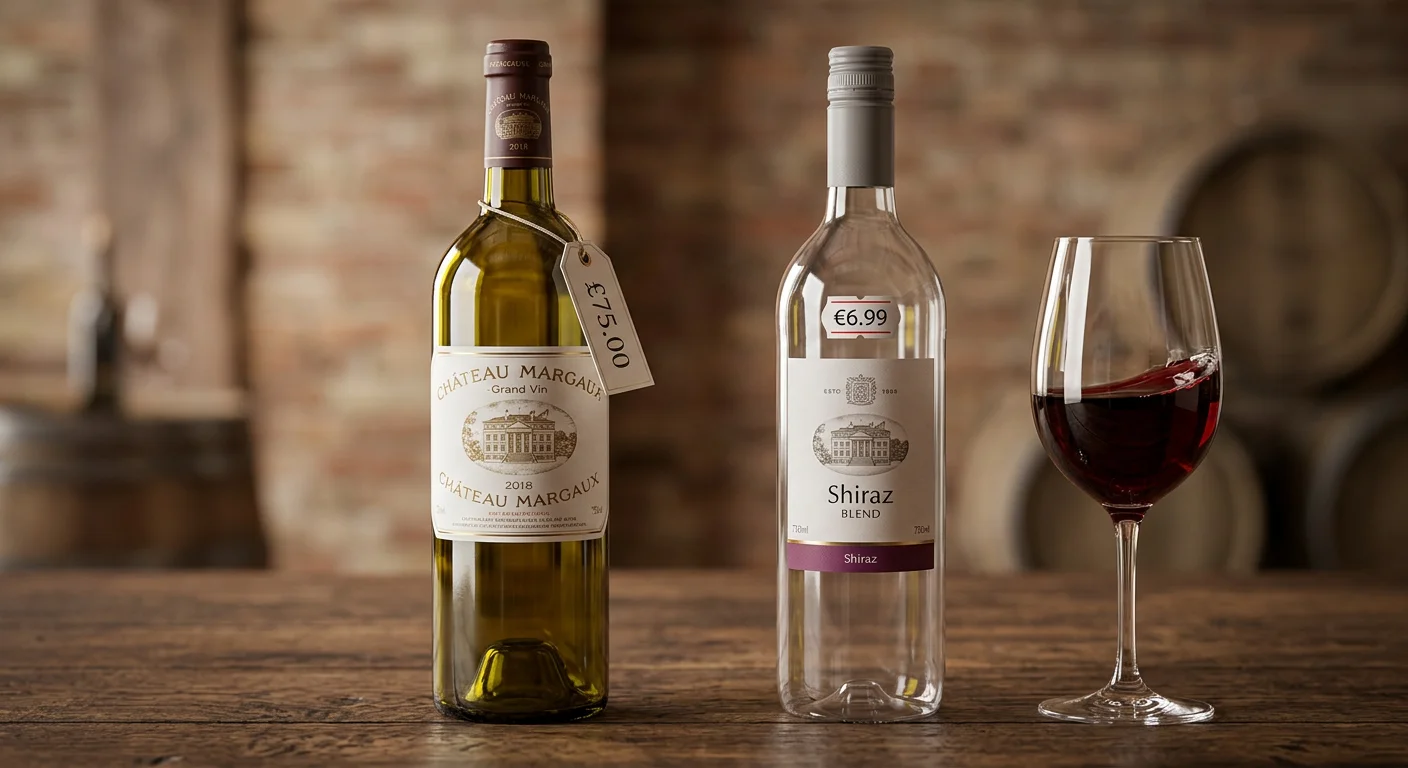
The choice between plastic and glass wine packaging ultimately hinges on prioritizing what matters most for your wine: flavor preservation, long-term freshness, or short-term convenience and cost savings. As this article has explored, plastic packaging offers practical advantages such as lower cost and easier transport, but it falls short when it comes to maintaining wine’s original flavor profile and extending its freshness—key factors that define wine quality.
At TP Glass Bottle Manufacturer, we understand the critical role that packaging plays in elevating wine quality. We specialize in producing high-quality glass wine bottles that are designed to lock in freshness, preserve authentic flavors, and showcase your wine in the best possible light. Whether you are a small boutique winery or a large-scale producer, our customizable glass bottle solutions are tailored to meet your unique needs, ensuring that your wine reaches consumers exactly as you intended—with all its quality and character intact. Choose TP Glass Bottle Manufacturer, and let our expertise in glass packaging help your wine stand out in a competitive market.