

Soft drinks are a staple in many people’s daily lives, enjoyed for their refreshing taste and convenience. There’s something almost ritualistic about cracking open a soft drink glass bottle. When it comes to choosing how to enjoy them, one common observation often arises: a soft drink tastes better when served in a glass bottle compared to a plastic one. Many consumers have noticed subtle differences in flavor, fizz, or even overall enjoyment depending on the container. Does the type of bottle really affect how a soft drink tastes, or is it just a matter of personal bias?
Table of Contents
Why People Swear Glass Bottles Taste Different
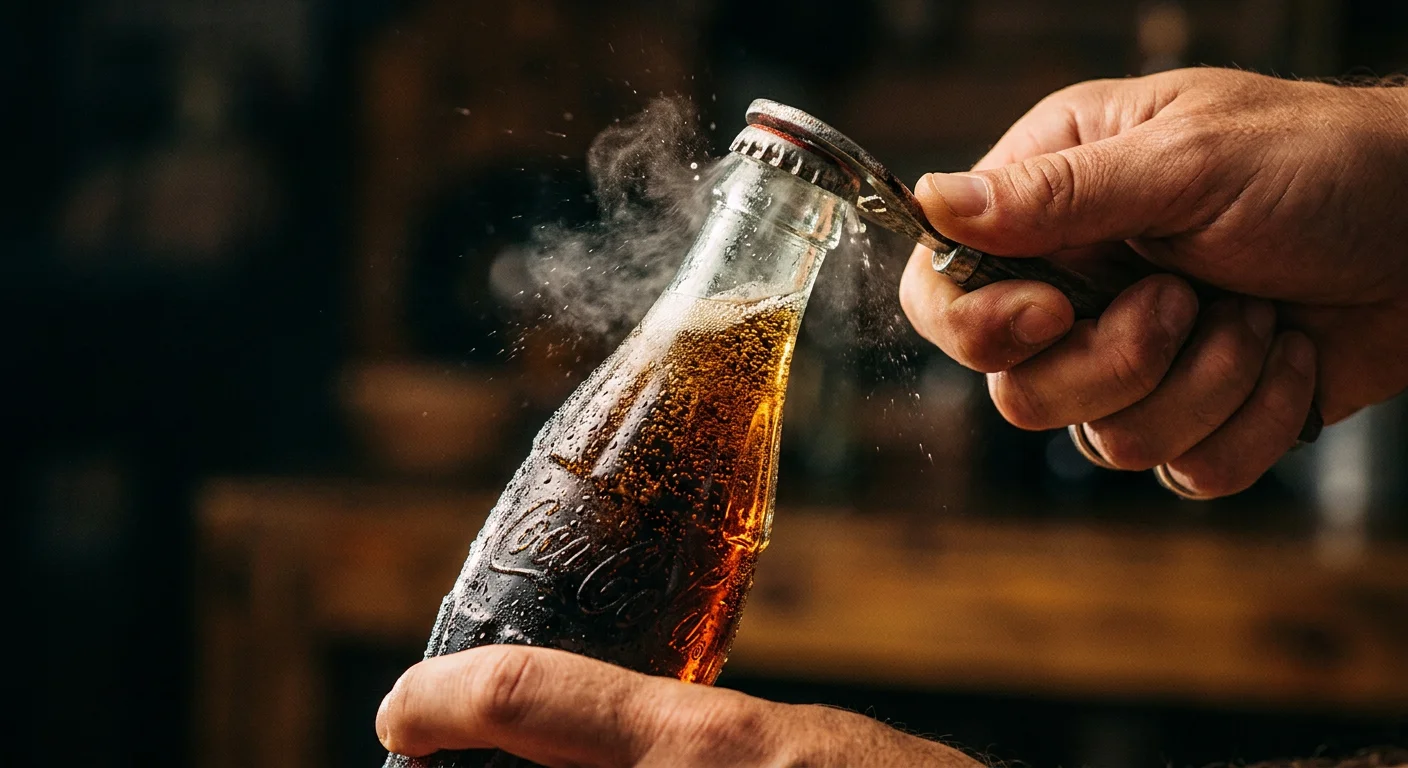
Here’s the thing — nobody told you it would taste better. You just knew.
Maybe it was a summer afternoon, a corner store, a glass bottle pulled from an ice-filled cooler. That first sip hit different. Colder. Sharper. More alive. You didn’t analyze it. You just remembered it.
That memory is doing a lot of work. It’s worth being honest about that.
The Nostalgic Layer
A big part of what people call “better taste” is emotional. The weight of glass in your hand. The sound it makes. The way it looks sitting on a table. These aren’t small things — they’re active ingredients in how your brain builds flavor.
Researchers call this expectation-driven perception. Your senses cast their vote before the drink even touches your tongue. Glass wins that vote almost every time.
But It’s Not Only Psychology
Here’s where it gets more interesting — and more honest.
Glass is non-porous and inert. It doesn’t react with the liquid inside. Plastic is different. It’s a polymer. Food-grade plastics can still release trace compounds that shift what you’re tasting. Acetaldehyde is one of them. It’s not dramatic. It’s not dangerous. But it’s there.
Carbonation matters too. Glass holds pressure better than plastic. So the fizz in a soft drink glass bottle isn’t just in your head — the bubbles may genuinely be sharper and more stable.
Coca-Cola Says the Recipe Is Identical
The formula doesn’t change. That part is true. But the container affects flavor compounds. It affects carbonation stability. It affects the whole feel of the experience. That’s what changes.
Same ingredients. Different delivery. That gap is exactly where this debate lives.
Glass vs. Plastic vs. Can: Head-to-Head Taste & Performance Breakdown
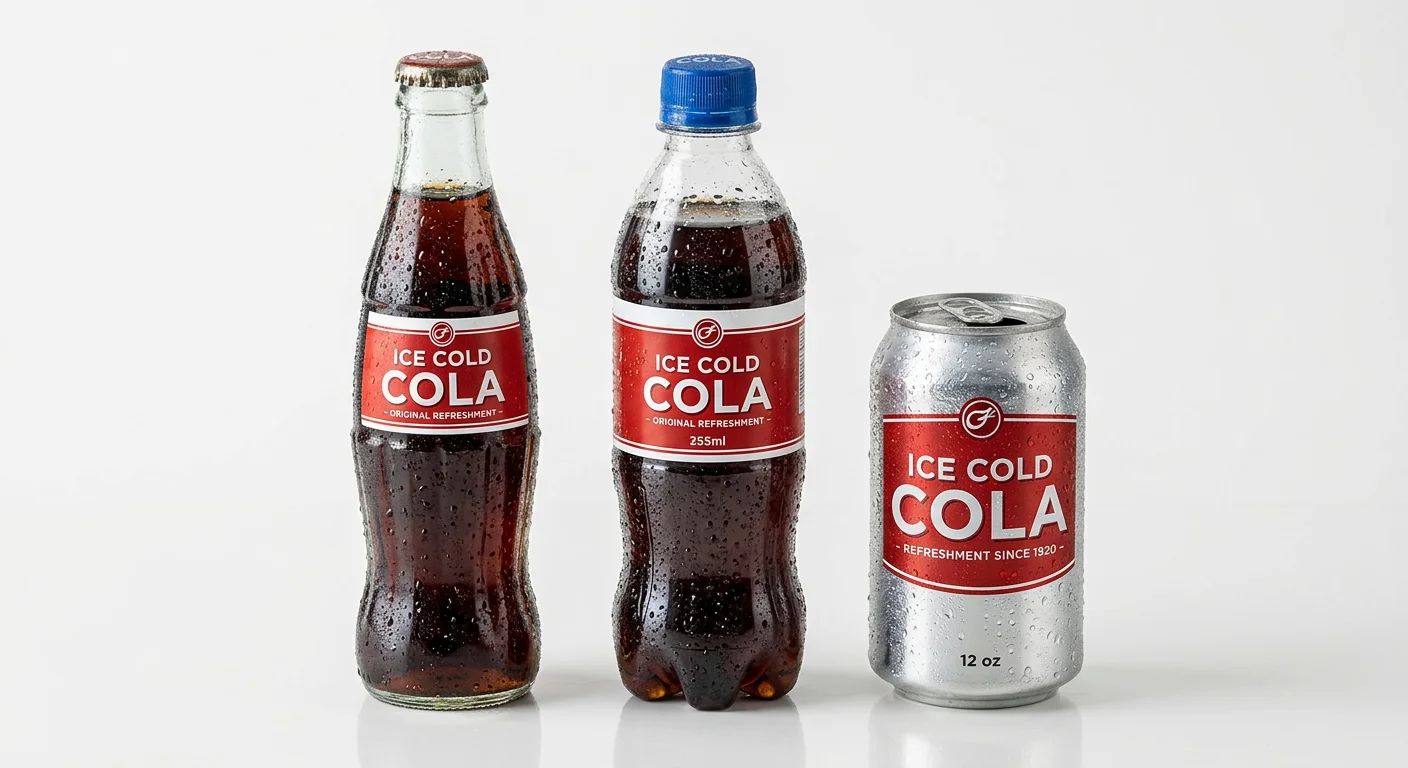
Put three identical soft drinks in front of a room full of people — one in a soft drink glass bottle, one in plastic, one in a can — and you won’t get three identical answers about which tastes best. That’s not confusion. That’s data.
Each container does something different to your drink, long before it reaches your lips. Here’s what’s happening across the five dimensions that matter most.
Flavor Purity
Glass wins this category without much argument.
It’s chemically inert. Nothing migrates from the glass into the liquid. Nothing leaches. The drink inside a glass bottle stays exactly as it was made — no foreign compounds, no interference of any kind.
Plastic is more complicated. Food-grade PET plastic can release trace amounts of acetaldehyde over time, especially under heat or long storage. The shift is small. It’s not a health concern. But flavor is a precise thing, and that precision matters.
Aluminum cans bring a different variable — the epoxy lining on the inside wall. Without it, the metal would react with acidic soft drinks. With it, you get a sealed, non-reactive surface. Most people can’t detect the lining at all. Some can. It’s worth knowing it’s there.
Ranking: Glass → Can → Plastic
Fizz Retention
Carbonation is pressure. Glass holds pressure well — better than any other container here. The walls don’t flex, don’t breathe, don’t give. A sealed glass bottle keeps its internal environment stable in a way plastic just can’t match.
Plastic expands a little. That expansion lets CO₂ spread out and escape faster over time. The drink still fizzes, but the sharpness fades. Leave a half-drunk plastic bottle for an hour. That tells you everything.
The aluminum can performs well here too. The seal is airtight. The walls are rigid. Before opening, carbonation stays as well-preserved as in glass. After opening, there’s no cap — so that advantage disappears fast.
Ranking: Glass / Can (sealed) → Glass (opened, with cap) → Plastic
Temperature Maintenance
Cold glass stays cold. The density and thickness of glass absorb and hold temperature in a way thin plastic walls can’t. That first sip from an ice-cold soft drink glass bottle feels different from its plastic equivalent. Sharper. Colder. More satisfying.
Aluminum moves temperature fast — it chills quickly, but warms just as fast. A can in a warm hand loses its cold in minutes. Glass is slower in both directions. More stable. More forgiving.
Plastic sits in the middle, with poor insulation on both ends.
Ranking: Glass → Plastic → Can
Light Exposure Risk
This is where the can makes its strongest case.
UV light breaks down flavor compounds. It speeds up oxidation. It destroys the subtle aromatic elements that make a soft drink taste like itself. Glass — unless it’s dark or tinted — offers almost no protection from this.
Aluminum is fully opaque. Total light block. Zero UV gets through. For soft drinks sitting on shelves under fluorescent lights or near windows, this is a real advantage that glass can’t match.
Plastic varies. Colored plastic gives partial protection. Clear plastic gives none.
Ranking: Can → Tinted Glass → Plastic → Clear Glass
Tactile and Sensory Experience
The weight. The chill against your palm. The sound when you set it down.
Glass owns this category — and that matters for taste in a real, measurable way. Drinking from a glass bottle signals quality before you taste a single thing. That signal shapes your perception. That perception shapes what you actually taste.
The can has its own appeal — that sharp metallic click on opening, the thin rim against your lip. It has loyal fans for a reason.
Plastic brings almost nothing to this dimension. It works. It gets the job done. But it leaves no impression.
Ranking: Glass → Can → Plastic
The Psychology Factor: How Your Brain Changes the Taste
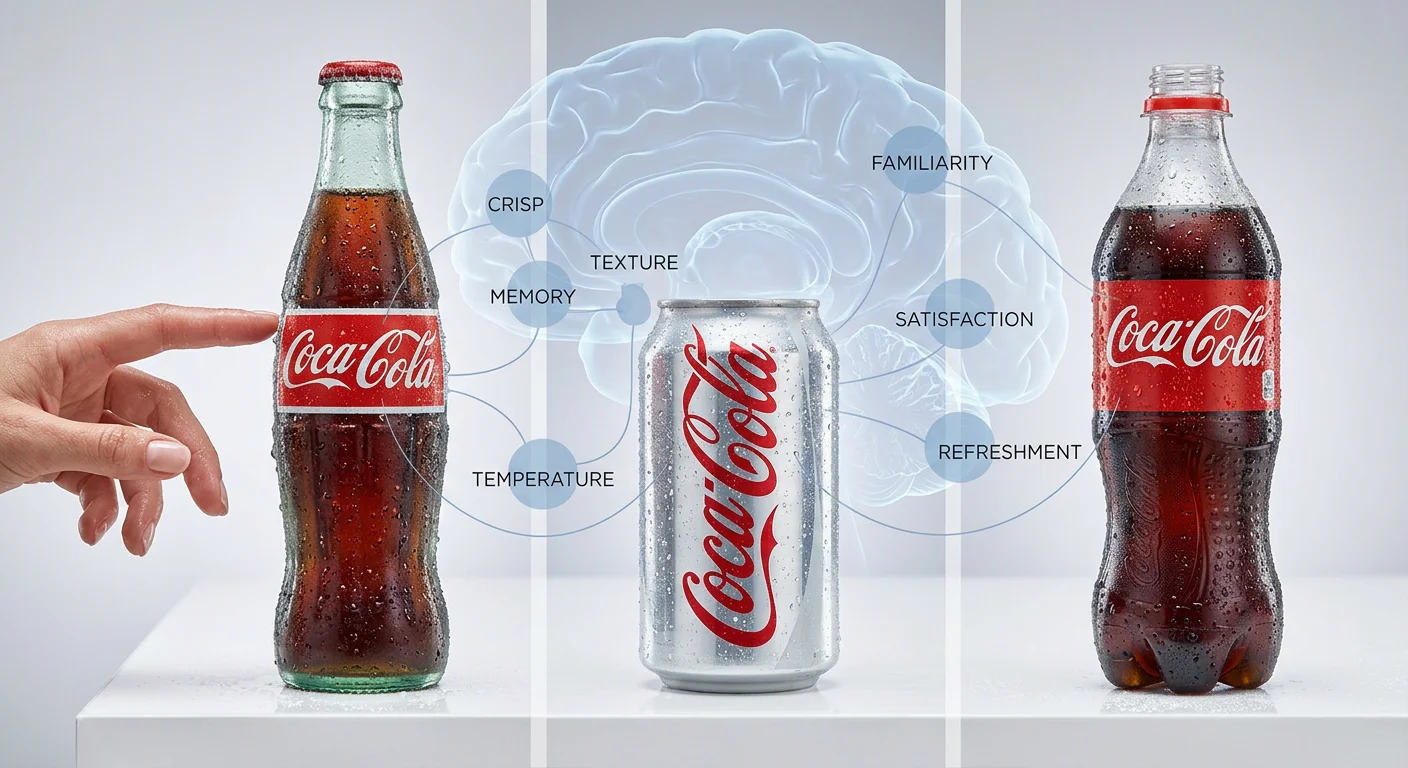
Your brain makes up its mind before your tongue gets a vote.
This isn’t a metaphor. It’s neuroscience. And it explains more about why a soft drink glass bottle tastes better than any chemistry paper ever could.
You reach for a glass bottle. The cool weight settles into your palm. The cap pushes back just slightly before it gives. At that point, your brain has already started building a flavor profile. Not guessing — building. No permission needed.
Psychologists call this sensory priming. Your nervous system picks up early sensory signals. Those signals set expectations. Those expectations reshape everything that follows. Touch informs taste. Sound sharpens perception. Sight adjusts sweetness. By the time the drink reaches your lips, the verdict is already half-written.
The Weight Tells You Something
A heavier object feels more valuable. That’s not an accident. Study after study shows people rate products as higher quality when they weigh more in the hand. A glass bottle of soda sits in your hand with a different kind of presence than a plastic one. It has density. A quiet authority.
That weight sends a signal. Your brain reads it as this is worth something. Right then, your sensory system raises its expectations. You’re not just holding a drink. You’re holding something that already has a good review — before a single sip.
Plastic doesn’t do that. It’s light. It gives under pressure. The message it sends — before a single drop touches your tongue — is easy to forget. Your brain treats it the same way.
The Pop of the Cap Is Part of the Recipe
Sound is an ingredient. A real one.
Research from the Crossmodal Research Laboratory at Oxford University — led by Professor Charles Spence — shows that what you hear while eating or drinking changes what you taste. Louder carbonation sounds make drinks taste fizzier. Higher-pitched sounds boost sweetness. The sharp metallic pop of a glass bottle cap sets you up for something crisper, more focused, more worth paying attention to.
That sound is a small ritual. It marks a beginning. Your brain notices, and it gets ready.
A plastic screw-top has none of that. It opens without any signal. There’s no moment. No lead-in. So your brain doesn’t prepare, either.
What You See, You Taste
Visual clarity plays a real role. A soft drink in glass lets you see the color catch the light. You can spot the fine carbonation bubbles moving against the curve of the bottle. That visual triggers what researchers call expectation bias. You see something beautiful. Your brain decides it will taste beautiful. And then it does.
This isn’t self-deception. It’s a feature of human perception — not a flaw. Your senses evolved to work together. Each one reinforces the others to build the clearest picture of what’s in front of you.
The psychology isn’t tricking you. It’s finishing the experience.
A glass bottle carries more than the drink. It carries every signal your brain needs — weight, sound, sight, ceremony. Take those signals away and something real disappears. You might not be able to name it. But you’ll taste the absence.
What Coca-Cola and Other Brands Say
Coca-Cola’s official position is clean and consistent: the formula doesn’t change. Glass, plastic, can — same ingredients, same ratios, same Coke. End of statement.
What they don’t say is almost more interesting than what they do.
The Official Line
Ask Coca-Cola about taste differences between containers, and the company points to three things: temperature, ritual, and individual perception. They’re not wrong. They’re just not telling the whole story.
Coca-Cola has acknowledged — in consumer FAQs and occasional interviews — that serving temperature plays a big role in how flavor lands. A glass bottle pulled from an ice cooler tastes different from a warm plastic bottle off a shelf. That part is real, and they’ll say so.
What they won’t touch is what the container itself does between the bottling line and your lips.
What “Same Formula” Really Means
Same formula is a precise claim. It means the concentrate, the sweetener ratio, the carbonation level — all identical at the point of production.
It does not mean the drink reaches your senses in identical condition.
Glass is inert. Nothing passes between the container and the liquid. What goes in is what comes out.
PET plastic is a polymer. Trace compounds — acetaldehyde being the most studied — can migrate into the drink over time. The amounts fall within safety limits. But flavor doesn’t care about safety limits. It cares about precision
The epoxy lining inside aluminum cans creates a sealed surface. Most people can’t detect it. Some people reliably can.
Same formula. Different delivery conditions. The company knows this. They just don’t lead with it.
What Other Brands Have Started to Admit
A handful of smaller craft soda brands have been more open about it. Some market their soft drink glass bottle format as a flavor choice — not just a branding one. They cite the non-reactive surface. They talk about carbonation stability. They make the container part of the product story.
That’s not by accident. It’s an admission — wrapped in marketing language — that the package shapes what you taste.
Coca-Cola built a global empire on consistency. That reputation rests on the message that every Coke tastes like every other Coke. Admitting the container changes the experience would break that story apart.
So they don’t. The gap between what the company says and what chemistry shows — that gap is where the real answer lives.
So Does Glass Taste Better?
The short answer is yes. The longer answer is that “yes” has two separate engines driving it — and both are real.
The chemistry side is measurable. Glass doesn’t interact with your drink. Not at all. No trace compounds, no polymer migration, no epoxy surface between you and the liquid. What the bottler sealed inside is what reaches your tongue — unchanged. Plastic can’t make that claim. Neither can a can. That difference is small under most conditions — but flavor is a precise thing. Small gaps matter.
Carbonation adds to it. Glass holds pressure without flex, without give. The fizz in a soft drink glass bottle stays more stable than in plastic. That sharpness you notice? It has a physical explanation.
The psychology side is just as legitimate. This is the part people want to dismiss — as if “it’s in your head” means it isn’t real. But your brain is part of the tasting process. The bottle’s weight, the sound of the cap, the clarity of the liquid — these signals shape your perception before the drink even touches your lips. That mental setup changes what you experience. Not what you imagine. What you taste.
Both explanations hold up on their own. The glass bottle gives you a cleaner-tasting soft drink and a richer sensory experience. Those two things push in the same direction.
That’s not nostalgia talking. That’s the full picture — and it lands clearly on one side.
Conclusion
The debate over whether soft drinks taste better in glass or plastic bottles has a clear winner: glass. Glass bottles keep soft drinks fresher, preserve their original flavor and carbonation better, and avoid any unwanted odors or chemical leaching that can affect taste. Beyond better taste, glass is also safer, more sustainable, and gives consumers a premium drinking experience.
As a trusted TP Glass Bottle Manufacturer, we specialize in producing high-quality, food-safe, and customizable glass bottles that help beverage brands highlight product freshness and elevate their brand image. If you’re looking for reliable glass packaging that truly enhances the taste and appeal of soft drinks, we have the professional solutions and consistent quality to support your business success.