

Liquor Bottle design has come a long way from being a simple container for storing spirits. For decades, it has evolved alongside consumer preferences, cultural trends, and advancements in manufacturing technology. What was once a functional necessity has gradually become a key element of a liquor brand’s identity—one that communicates its values, heritage, and uniqueness to consumers.
Historical Evolution of Liquor Bottle Design
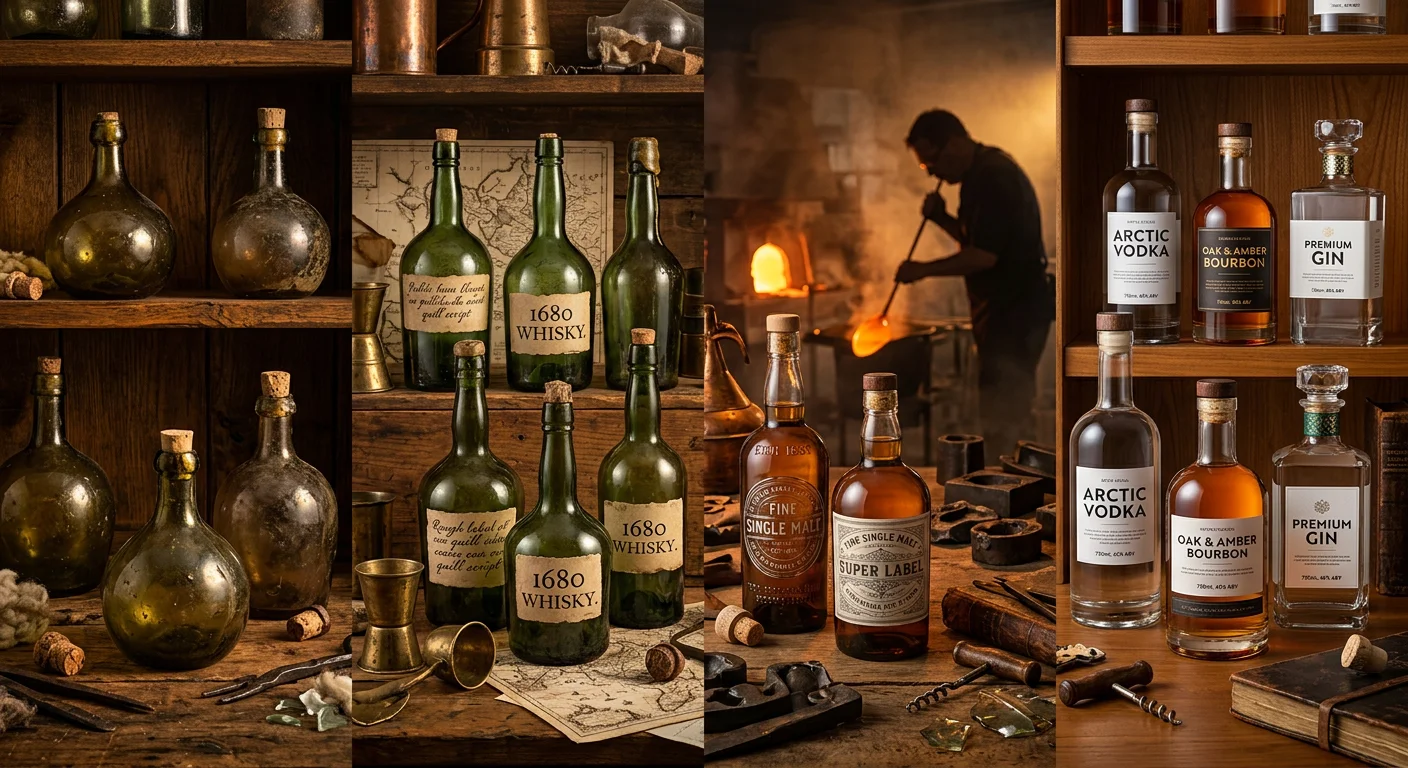
Glass changed everything. Glassblowing emerged around the 1st century BCE. It gave craftsmen something they’d never had before — the ability to shape a container around an idea. bottles could be tall, curved, narrow, or ornate. They could hold personality.
But for centuries, that personality was accidental.
The first glass whiskey bottles appeared in the 17th century. They were hand-blown and bulbous, with long tapering necks. No two looked the same. Britain standardized bottle sizes in the early 1900s — settling on 26⅔ fluid ounces. That number came from the average output of those old glassblowers. It wasn’t a design decision. It was arithmetic. A measurement born from human inconsistency, locked into law.
That standard held until 1980.
The Machine Enters the Room
The 1820s brought the glass press. Bottles could now be made faster, more consistent, and at lower cost. Then in 1903, the Owens Bottle Machine took over the process, producing uniform shapes at industrial scale. The liquor bottle was no longer a handmade object — it was a manufactured one.
This shift had an unexpected consequence. Once every bottle could look the same, the ones that didn’t started to mean something.
Jack Daniel’s caught on to this early. In 1895, the brand introduced its now-iconic square bottle. The angular shape wasn’t just aesthetic — it reduced breakage during shipping. Paired with embossed lettering and a stark black label, it built a visual language that still reads as strong and authoritative more than a century later. Shape became signature.
The cylinder bottle developed alongside these bolder moves. Through the 19th and into the 20th century, the standard cylindrical liquor bottle grew narrower and taller. Clear glass became more common. That let the whiskey’s amber color speak for itself. The bottle wasn’t just a vessel — it was becoming a frame.
Elegance, Prohibition, and the Art of Concealment
Design doesn’t follow a straight line. It zigzags through culture.
The 1920s brought the Dimple Pinch bottle. Its hourglass silhouette drew from the female form — a clear push for elegance in whiskey packaging. At the same time, Prohibition (1920–1933) in the United States pushed a different design logic. Medicinal whiskey had to move without drawing attention. Small, flat, flask-shaped bottles fit pockets and stayed hidden. Function came from necessity, not aesthetics.
Prohibition ended in 1933. The floodgates opened. Brands rushed to stand out through shape. Cylindrical bottles became the baseline. Everything else became an opportunity.
Hennessy X.O launched its cognac decanter in 1947 — a curved form built to echo grape bunches and vine leaves. Absolut Vodka arrived in 1979, drawing from an 18th-century Swedish medicine bottle: clear glass, silver lettering, impossible to miss.
On January 1, 1980, the global standard shifted to 750ml. The numbers changed. The design race, by then, was already well underway.
Key Design Changes
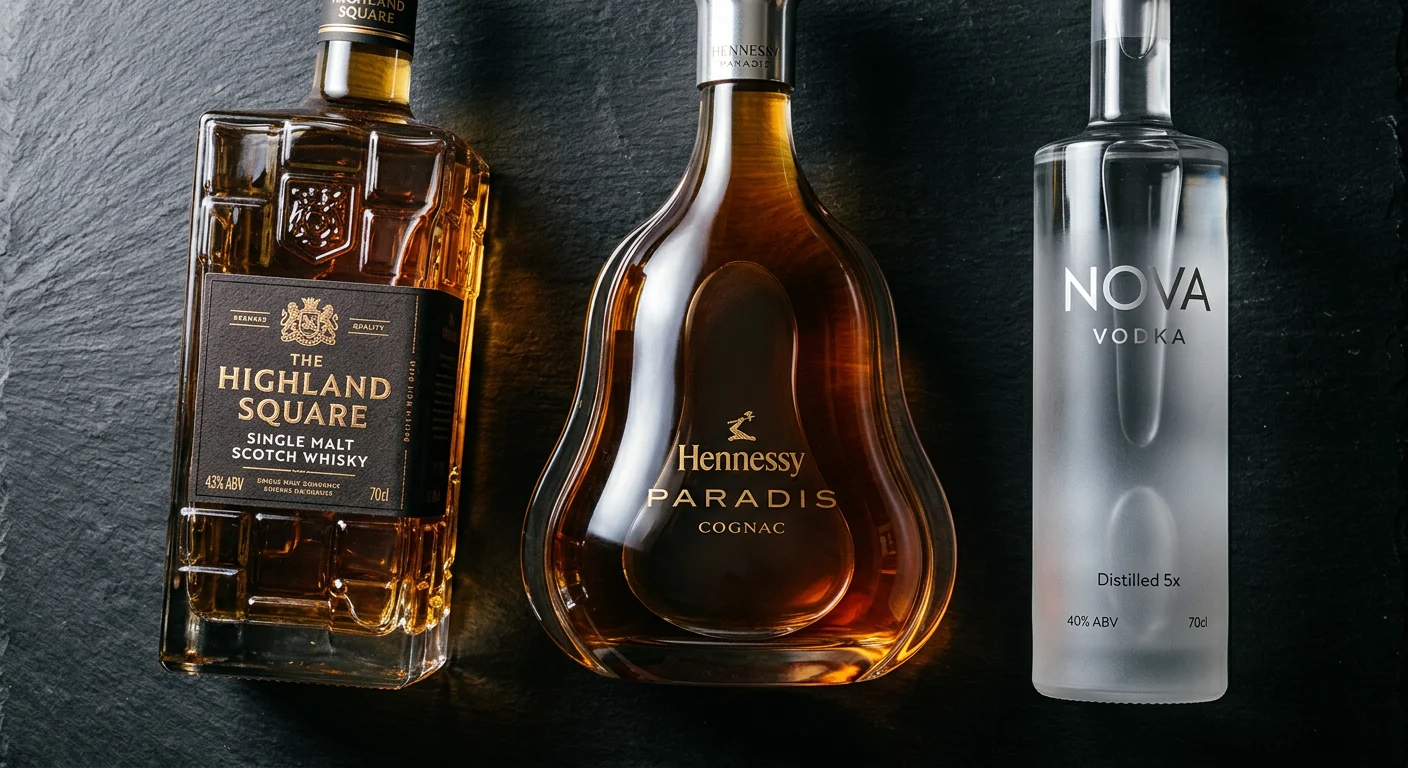
Three elements drive every meaningful shift in liquor bottle design: shape, surface, and signal. Change any one of them and you change what the bottle says before a single word is read.
These aren’t cosmetic decisions. They’re structural ones — choices built into the manufacturing process, the retail environment, and the mind of the person standing in the aisle trying to decide which bottle to bring home.
Shape as a Competitive Weapon
The cylinder is neutral. It takes up predictable space, ships well, and offends no one. That’s exactly why ambitious brands abandoned it.
Committing to an unconventional silhouette is a calculated bet: the cost of being different is lower than the cost of being invisible. The angular profile of a square-sided bottle reads as bold and blunt on a crowded shelf. A decanter-style curve reads as ceremony, as occasion. A squat, wide-bodied flask whispers rare and considered.
Shape is the first thing peripheral vision catches. A shopper’s eye reads the silhouette before the brain registers what it’s looking at. By that point, the shape has already done half the persuasion.
Surface: Where Identity Gets Detailed
Shape establishes presence. Surface locks in personality.
This is where the real arms race lives. Embossing, etching, foil stamping, wax seals, textured labels — each one adds tactile and visual layers that photography can’t fully capture. That gap between the screen and the hand is intentional. It creates a discovery moment at the point of purchase that no digital ad can replicate.
Color contrast plays a big role here. A clear Glass Bottle against a pitch-black label creates a sharp visual hierarchy — the spirit’s color becomes the hero, and the label frames it like a gallery card. Brands that modernized their packaging by improving color contrast saw real behavioral shifts. In documented redesign cases, tightening the relationship between background, label color, and typography produced triple-digit gains in conversion-related actions. That’s not theory — it’s proof that surface design connects to commercial outcomes.
Callout elements deserve specific attention. Strategic badges, benefit statements, and quality markers on the packaging surface shape purchase decisions in ways buyers don’t notice. In consumer product testing, a simple ingredient badge drove 80% purchase preference. A single callout phrase shifted 77% of buyers toward a product over its competitors. The same logic applies to premium spirits — a hand-numbered batch statement, a distillery heritage badge, or a master distiller’s signature works the same way. It answers the unspoken question: why this one?
The Label as UX Layer
Modern bottle design pulls from user experience thinking. The label is no longer just decoration — it’s an information layout problem.
Cluttered labels perform worse. Simplified messaging converts better. Digital design research shows the same pattern: remove visual noise, clarify the main message, and engagement goes up. Brands that stripped their labels down to essential elements — leading with one clear value proposition, placed where the eye lands first — report stronger shelf performance and higher consumer recall.
Hierarchy matters here the same way it matters on a landing page. What does the consumer see first? What does the label confirm second? What does it reward on closer inspection? A well-designed liquor bottle label moves the viewer through a clear sequence: category recognition → brand identity → differentiating detail.
Signal: The Cumulative Message
Shape and surface combine into something larger — a signal about who the bottle is for.
This is where design stops being decoration and becomes positioning. A bottle dressed in raw, industrial materials signals craft and authenticity. A bottle with hand-applied wax and irregular label edges signals artisanal process. A sleek, minimal form with debossed lettering and no excess ornamentation signals modern restraint.
Every design decision is a claim. Brands need to ask honestly: does the claim the bottle makes match the liquid inside — and the person they’re trying to reach?
Get those three things right — shape, surface, and signal — and the liquor bottle stops being a container. It becomes a conversation.
Impact on Brand Identity
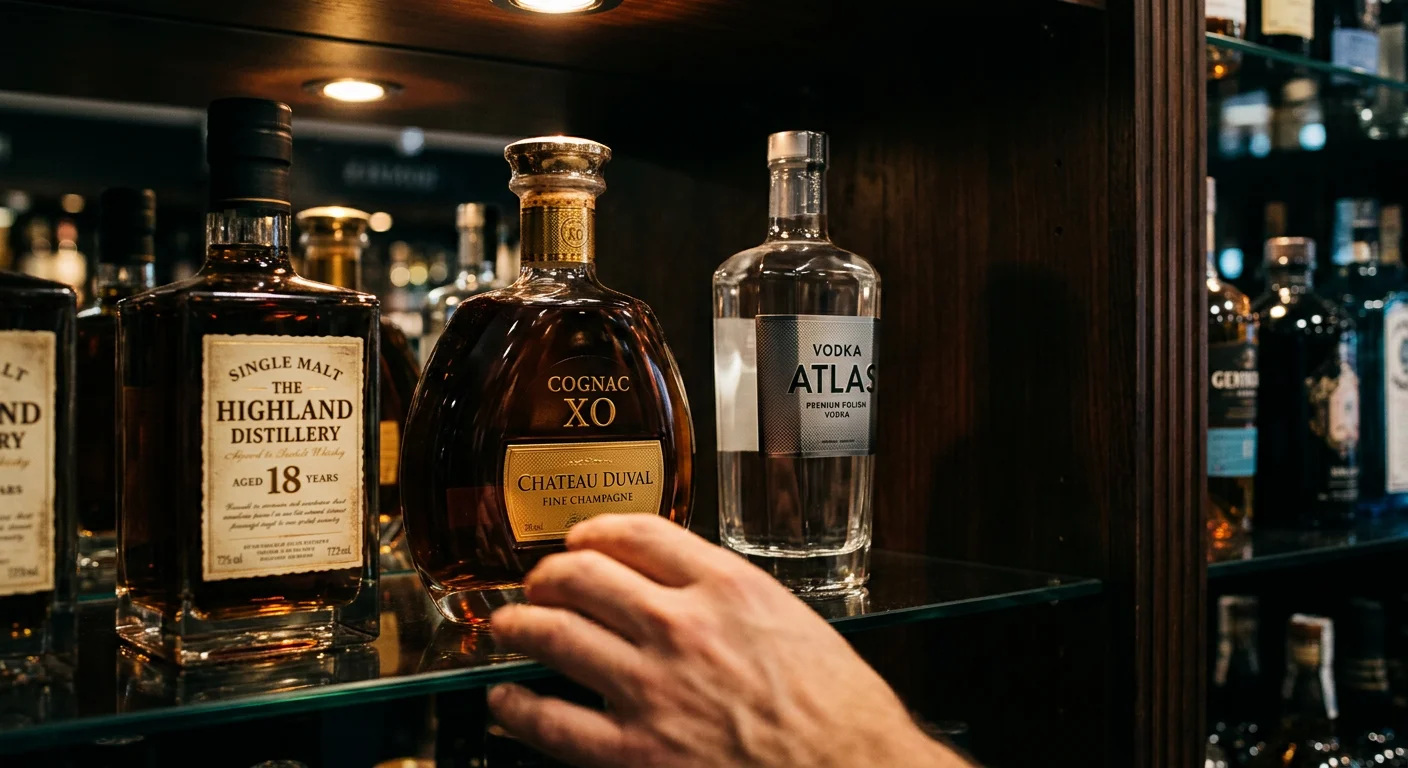
Brand identity isn’t built in a boardroom. It’s built in the three seconds a person stands in front of a shelf, eyes moving, brain deciding.
The liquor bottle is where that decision gets made. And the numbers behind it are hard to ignore.
The Recognition Problem
Here’s a number worth sitting with: 81% of consumers remember a brand’s color before its name. Seventy-five percent recognize a brand by its logo first. Not the story. Not the founder’s biography on the back label. The color. The mark.
For a liquor bottle, that’s both a challenge and a clear signal of what to do.
A bottle with a strong visual language — a set color palette, a distinct shape, a consistent label structure — builds something advertising can’t just buy: instant recognition. A consistent color palette alone boosts brand recognition by 80%. That’s not a small win. That’s the difference between being seen and being passed over.
Recognition doesn’t happen on the first encounter, though. Research puts the threshold at six to seven impressions before a brand sticks in memory. After that point, consumers are 50% more apt to buy — and 63% prefer brands they already know. Every time a liquor bottle shows up on a shelf, in a bar, or in a photo, it either adds to that count or wastes the moment.
Consistency as Commercial Infrastructure
Some brands treat visual consistency as infrastructure, not just aesthetics. The results back that up.
Consistent brand presentation makes companies 3.5 times more visible in their markets. Revenue grows by up to 23% when that consistency holds across touchpoints. Among organizations that stayed disciplined with branding, 35% reported 10–20% revenue growth tied to consistent visuals. Another 32% credited the same growth to consistent messaging. These aren’t soft outcomes. They show up on the balance sheet.
68% of companies say brand consistency contributed 10–20% to revenue growth. That’s a majority. The liquor category has dense shelf competition and buyers who are sensitive to price. That’s the kind of market where those percentage points add up fast.
Inconsistency costs more than most brands expect. 71% of businesses say visual inconsistency caused real, measurable customer confusion. A bottle that looks different across market editions — or a label redesign that drops an established palette for no clear reason — doesn’t just confuse buyers. It wipes out the impression capital you’ve built. The counter resets.
Values on the Shelf
Design doesn’t just signal quality. It signals belonging.
68% of US adults choose brands that reflect their personal values. That stat changes how you think about a liquor bottle’s job. The bottle isn’t just competing on taste or price. It’s competing on fit — on whether the person holding it thinks this brand is for someone like me.
A bottle made with reclaimed materials and hand-applied wax draws buyers who care about craft and process. A clean, minimal form with no extra decoration speaks to a different self-image. Neither is the right answer for everyone. Both make a clear, intentional claim.
That’s why 73% of companies now use design as a key competitive differentiator. And why 77% of marketing executives consider branding essential for growth. The liquor bottle isn’t a packaging problem. It’s a positioning problem — one expressed in glass, color, and shape.
The Compounding Effect
Identity builds on itself. Brand search demand grows 5–20% faster for recognized brands than for those without strong visual equity. The bottle you notice tonight becomes the name you search for tomorrow.
There’s a reason 13% of consumers will pay up to 50% more for brands they believe make a positive impact — and why 37% of consumers become loyal after just five purchases. The liquor bottle earns those purchases one impression at a time.
Shape gets noticed. Surface creates texture. Signal builds meaning. But identity? Identity is what stays after the bottle is empty.
Conclusion
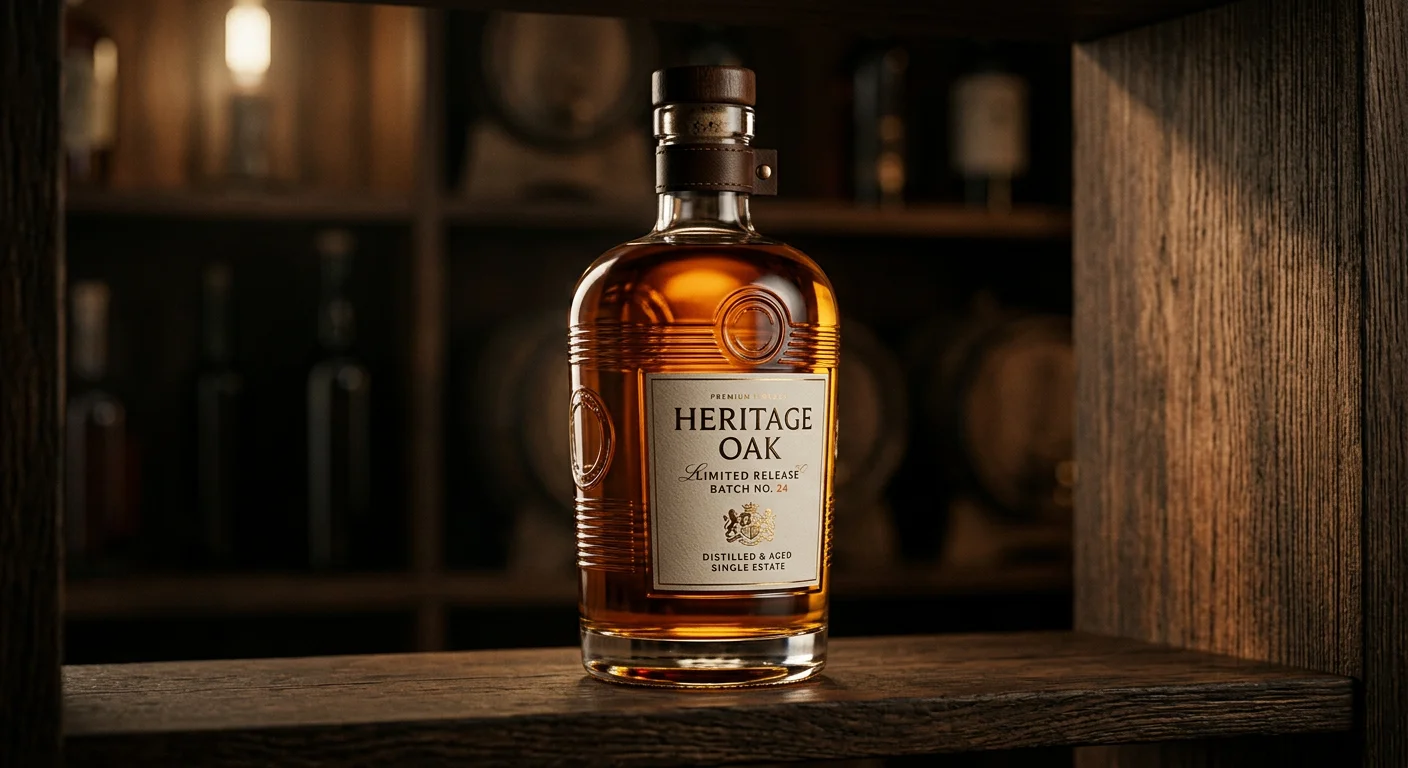
The evolution of liquor bottle design reflects shifts in consumer tastes, technology, and brand strategy—from basic functional containers to iconic symbols that define a brand’s identity. A well-designed liquor bottle does more than hold spirits; it tells a brand’s story, builds recognition, and sets it apart in a crowded market.
As a professional TP Glass Bottle Manufacturer, we specialize in creating custom, high-quality liquor bottles that align with your brand’s heritage and vision. Whether you’re honoring traditional design or embracing modern trends, we’re here to help you turn your brand identity into a tangible, eye-catching bottle that resonates with consumers and stands the test of time.