

Whether in pharmaceutical research, biotechnology, or high-end cosmetics, the quality and precision of glass vials can be critical to a product’s integrity and success. While often overlooked as simple containers, custom-designed vials play a fundamental role in storage, stability, and safe delivery across numerous scientific and industrial fields. This article provides a practical, updated overview of seven leading manufacturers specializing in custom glass vials, focusing on their capabilities, specialties, and what makes them stand out in the 2026 landscape.
Pacific Vial Manufacturing (USA)
Pacific Vial is one of America’s oldest glass vial specialists. They’ve been running since 1947 from their Southern California facility. The company produces over 50 million units each year across three production lines. This makes them a major player in domestic Glass packaging.
Their customization runs deep. Size options range from tiny 1ml sample vials to large 100ml containers. Need glass tips heat-sealed onto your vials? They have the equipment. Want tamper-evident closures that show any tampering? Their engineering team handles this as standard work. Their real advantage? They match exact specs without forcing you into pre-set mold options.
Industry Versatility That Matters
Pacific Vial serves four distinct sectors. Each has tough quality standards:
-
Pharmaceutical companies need USP Type I and Type III borosilicate glass for injectable medications
-
Research labs need precise dimensions for automated sampling equipment
-
perfume brands want crystal-clear glass that shows off fragrance color
-
Essential oil producers need chemical-resistant containers that preserve volatile compounds
The pharmaceutical work stands out. They maintain clean room production areas. Plus, they provide certificate of analysis documentation for every batch. Labs value their dimensional consistency. This matters because vials must fit robotic handling systems within 0.1mm tolerances.
For candle jar projects, Pacific Vial offers unexpected advantages. Their borosilicate glass handles extreme temperature shifts without cracking. The material stays neutral. So it won’t react with fragrance oils or dyes. They’re not a main candle jar supplier. But their technical glass expertise works well for premium candle lines wanting lab-grade quality.
Minimum orders start at 10,000 units. This positions them for established brands rather than startups.
Acme Vial & Glass Company (USA)
Acme Vial has outlasted most competitors by eight decades. We started in 1942 from our Chicago base. The glass packaging industry shifted from wartime production to modern pharma standards. We watched it all happen. Still family-owned. Still making glass in the same industrial district. That longevity shows our business model works.
The Low-Volume Advantage
Most glass makers push you toward huge orders. We break that pattern. Our minimum order sits at just 1,440 units—one gross. Small candle makers can test new scent lines. Boutique perfume brands can launch limited runs. You’re not risking $50,000 on an untested product idea.
Our factory-direct model cuts costs by 25-40% versus distributors. No middleman markup. No sales rep commissions on your invoice. You talk straight to our production managers. They know the shop floor. They understand what’s possible and how long it takes.
Our catalog covers standard sizes from 5ml to 120ml. Wall thickness matters here. Thicker glass handles thermal shock better for Candle Jars. Thinner walls work for cosmetic bottles where shipping weight adds up. We stock both types.
Market Position Reality
We don’t chase pharma contracts that need FDA-validated clean rooms. Commercial packaging is our focus. Candle jars for craft producers. Glass vials for artisan skincare brands. Essential oil bottles for aromatherapy shops. This focus keeps our pricing sharp. Quality stays high.
Our customers are mostly regional brands. Companies pulling $500K to $5M per year. These shops need steady glass supply. They don’t want corporate red tape slowing things down.
Stock items ship in 4-6 weeks. Custom tooling adds time—figure 12 weeks total.
Daxin Glass Vial Solutions
Daxin operates three production lines in their Guangdong factory. They focus on complex custom mold work that other factories turn down. Their engineers handle shape changes most competitors refuse. They say it’s “too hard” or “costs too much.”
Custom Mold Development That Works
Send your 3D file or physical sample to start. Their CAD team creates technical drawings in 48 hours. You check the specs and approve them. Tooling starts next. Standard custom molds need 25-35 days from deposit to first samples. Rush service? You get it done in 18 days. That costs 30% more.
Minimum orders start at 5,000 units for custom shapes. Stock mold changes need just 3,000 pieces. That’s competitive pricing for custom glass. Mold fees start at $800 for simple size changes. Complex multi-cavity designs cost up to $3,500. You own the mold once paid. Reorders have no extra tooling fees.
Here’s what makes Daxin different: they’ll modify molds during production. See samples and need the neck diameter changed by 2mm? Most factories make you start over with new tooling. Daxin’s team can rework the mold for $200-400. This saves you weeks and thousands of dollars during development.
Surface Treatment Options
Their finishing team handles six treatments:
-
Frosted glass coating gives premium candle jars that soft-touch feel
-
Color spraying matches any Pantone color, plus adds scratch-resistant topcoat
-
Electroplating creates metallic finishes (gold, silver, rose gold) for luxury packaging
-
Screen printing puts logos and patterns right on the glass
-
Hot stamping applies metallic foil designs that stay bright
-
UV coating protects printed graphics from handling wear
The frosted treatment works great for candle jars. It spreads candlelight smoothly. The textured surface hides fingerprints. Budget glass looks expensive. Customers notice the difference.
Quality Numbers That Matter
Daxin keeps a 98.7% yield rate across all production runs. That means defects per thousand units. Their QC system uses ISO 9001:2015 standards. Each batch gets tested three times: after molding, after treatment, and before packaging.
Each shipment comes with inspection reports. You get size measurements. Wall thickness data. Treatment adhesion test results. Brands that need full traceability rely on this paperwork.
Stock items with standard finishes ship in 15-20 days. Custom work takes 35-40 days with tooling included.
Stoelzle Glass Group (Europe)
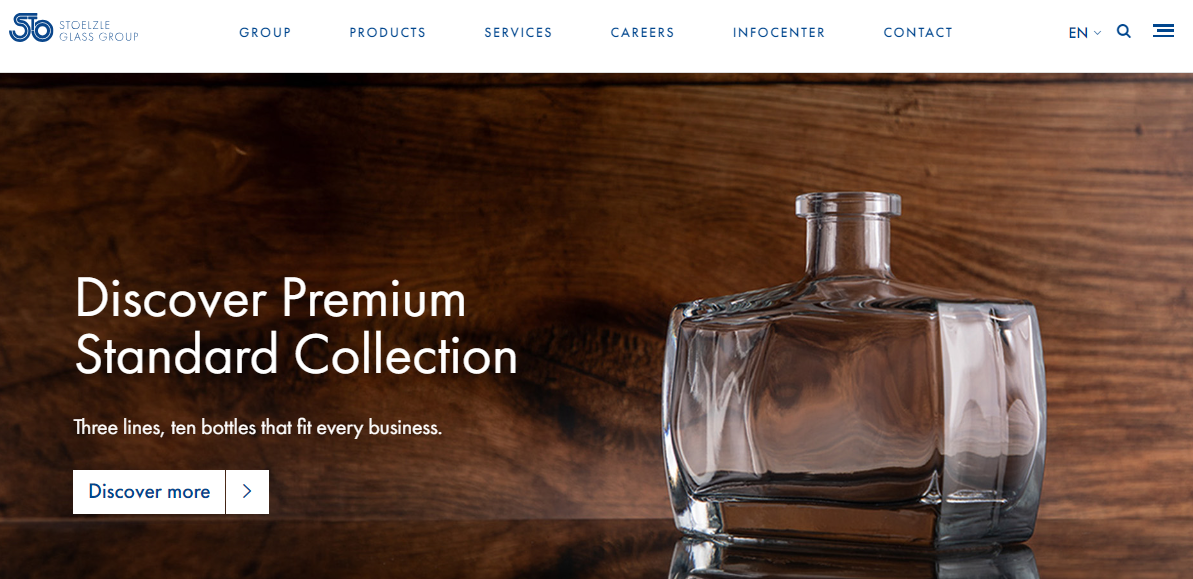
Stoelzle built its name on precise pharmaceutical glass. They run five factories across Europe. The Austrian company operates sites in Austria, Germany, Poland, Czech Republic, and Hungary. Production sits within 500km of major European pharma centers. Close location means faster shipping and lower freight costs for repeat orders.
Pharmaceutical Certification Depth
Certifications set Stoelzle apart from standard glass suppliers. Each factory holds USP Type I, Type II, and Type III approvals. These aren’t just documents on file. Labs test every glass batch. They check against strict limits set by US Pharmacopeia and European Pharmacopoeia standards.
Type I borosilicate vials work with harsh drugs. Injectable antibiotics. Chemo compounds. The glass keeps alkali particles out of delicate formulas. Type II and Type III containers handle milder medications. Buffer solutions. Oral suspensions. Vitamin supplements.
Pharma clients need detailed records. Stoelzle gives batch-specific certificates. You get alkali release rates, resistance class data, and thermal shock results. Auditors ask for this proof. Quality managers keep it ready for FDA checks.
Production Technology Setup
Their newest plants run on automation. Robotic arms move hot glass from furnaces to forming machines. No human hands touch it. This cuts contamination risk. ISO Class 7 cleanrooms wrap the filling lines where vials get sealed. Particle counts stay below 352,000 per cubic meter. This meets the rules for injectable drug packaging.
Quality control uses automated optical systems. They scan every vial at 400 units per minute. Cameras spot wall thickness changes. Laser sensors check neck sizes. Bad units get tossed before they reach shipping boxes.
Candle jar makers get surprising value from Stoelzle’s glass know-how. Their borosilicate blends handle heat stress from burning wicks. The glass stays stable around fragrance oils and dyes. Premium candle brands looking for pharma-grade quality find it here.
Minimum orders begin at 50,000 units. This volume fits established brands selling across multiple markets.
Gerresheimer Pharmaceutical Packaging
Gerresheimer operates 35 plants across three continents. Europe, North America, and Asia each host production facilities. This setup creates strong logistics advantages. German and Czech plants serve European clients. North Carolina and New Jersey facilities handle American pharma companies. The China hub covers Asian customers.
Cleanroom Standards That Define Quality
Their sterile packaging runs in ISO Class 5 cleanrooms. That’s ten times cleaner than Stoelzle’s ISO Class 7 setup. Air holds fewer than 3,520 particles per cubic meter. Regular factory air? Millions of particles float around. Injectable drugs need this level of purity. Small bits of contamination trigger patient reactions.
The cleanroom setup proves their commitment. Ready-to-fill vial lines came next. Glass shows up already sterilized and sealed. Drug makers skip washing and sterilization. Production time drops by 40%. Less handling cuts contamination risks.
Glass Forming Precision
Gerresheimer picks from three glass forming methods:
-
Tubular vials – Cut and shaped from glass tubes. Wall thickness varies only 0.05mm. Works best for volumes under 10ml.
-
Molded vials – Fits larger containers from 10ml to 500ml. Hot glass blows into precision molds. Great for irregular shapes.
-
Injection molding – Makes complex neck finishes. Child-resistant closures and dropper tops need this method.
The newest German plant checks every 50th vial. Machines measure neck diameter, height, and wall consistency. Reject rates stay below 0.8% across all lines.
Candle jar makers get consistent wall thickness from their molded glass tech. Weak spots won’t form. Heat stress can’t crack these jars. Premium candle brands trust this repeatability. Each jar performs the same way.
Production starts at 100,000 units minimum. Standard pharma vials take 8-10 weeks lead time.
Baralan International (Italy)
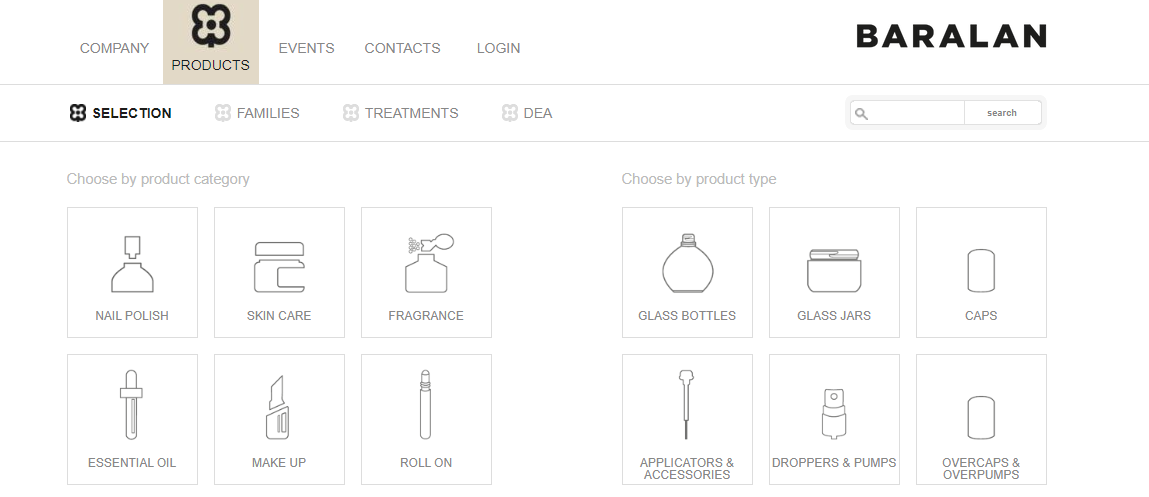
Baralan’s Bergamo facility blends Italian design with factory precision. They’ve made perfume packaging an art form since 1932. The company owns 127 registered design patents for Glass Bottle Shapes. That’s more design IP than most European glassmakers have together. Their specialty? Roll-on perfume bottles with shapes luxury brands can’t copy.
Design Innovation Backed By Patents
Baralan’s patents protect unique bottle shapes. Teardrop-shaped rollers. Uneven neck designs. Bottles that fit together like puzzle pieces for store displays. Each patent blocks competitors for 20 years. Perfume makers pay top dollar for these exclusive designs.
Their design team works 18 months ahead of trends. They study Milan Fashion Week. Track new cosmetic ingredients. Then they create bottle shapes that match coming fragrance styles. Citrus scents get angular bottles with sharp edges. Oriental fragrances pair with curved, smooth forms.
Automated Flexibility That’s Rare
Six production lines run 24/7 in their main plant. Machines handle 85% of the work. Yet they switch molds in under 90 minutes. Most automated factories need 4-6 hours for this. Fast changes mean small custom runs make money.
Their system handles 500-unit batches at good cost. That’s rare for automated glass making. Niche perfume brands test new scents without big stock risks. Production hits 45 million units per year across all lines.
Baralan brings real value for candle jar projects that want Italian style. Their finishes—metallic coatings, color fades, raised glass patterns—turn basic containers into high-end pieces. The same craft standards used for luxury perfume bottles lift candle jars into gift-quality packaging.
Minimum orders start at 5,000 units for catalog designs. Custom tooling begins at 10,000 pieces with 14-week lead times.
MIRON Violetglass Technology
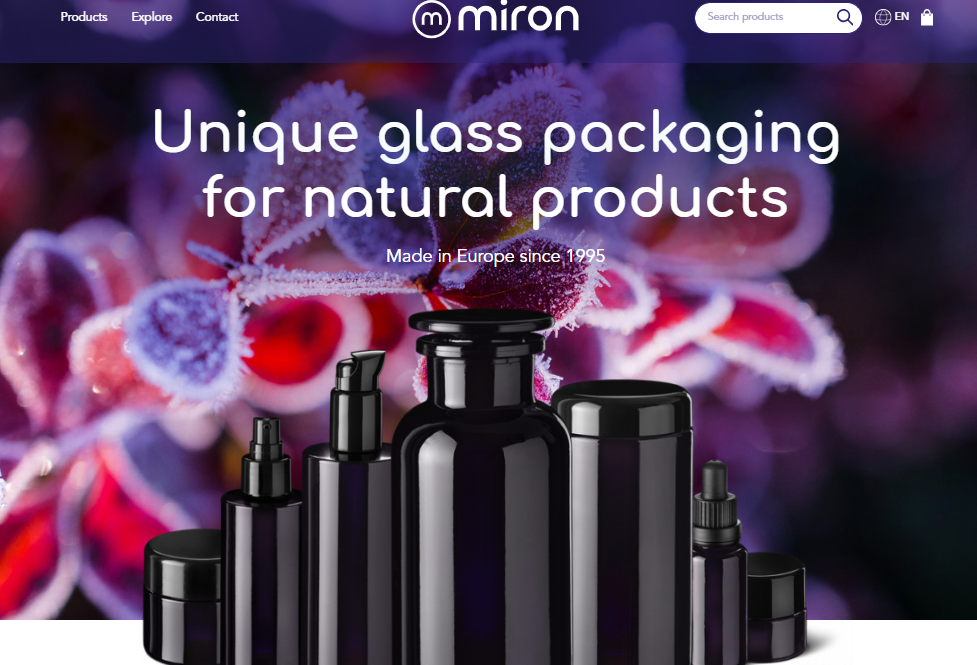
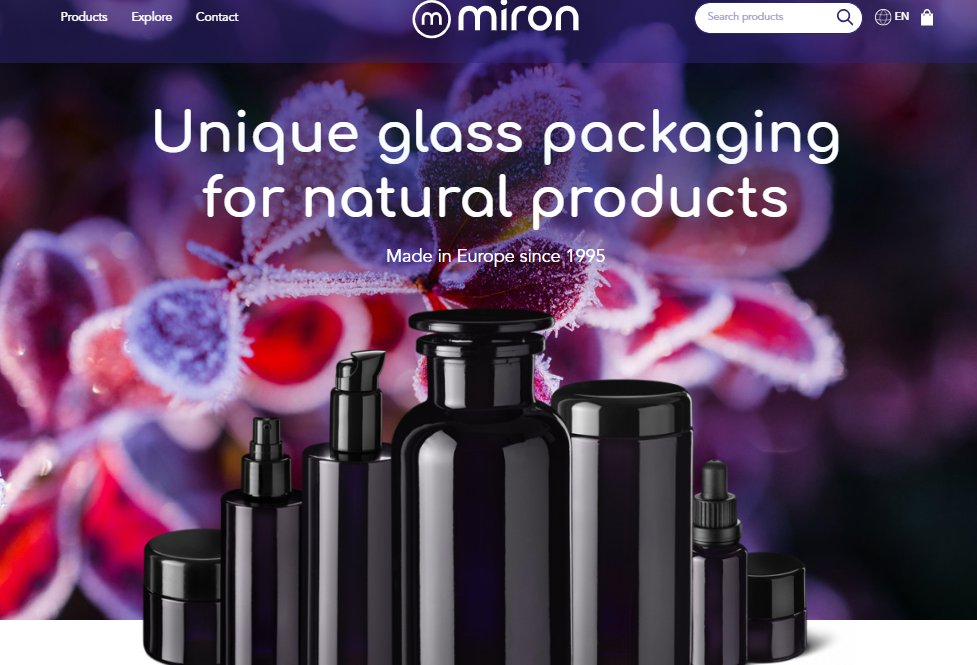
MIRON’s violet glass blocks visible light. UV-A and infrared wavelengths pass through. This patented protection keeps organic materials fresh longer than clear or amber glass. Swiss scientists developed the technology in 1995. Now over 8,000 brands worldwide use these dark violet containers for premium natural products.
Shelf Life Extension Data
Lab tests show clear preservation results. Essential oils in MIRON glass kept 91% of their original structure after 12 months. The same oils in amber glass? Just 63% preservation. Clear glass performed worst at 47%.
The technology works well for:
-
Essential oils and aromatherapy products – Volatile compounds stay stable. Therapeutic properties last 3-4x longer.
-
Natural medicines and herbal tinctures – Active ingredients resist oxidation. Potency stays consistent through shelf life.
-
Organic cosmetics with botanical extracts – No synthetic preservatives needed. The glass itself protects formulas.
Cherry juice stored 3 months in violet glass tested identical to fresh-pressed juice. Same antioxidant levels. Same flavor compounds. Regular glass containers showed 40% nutrient loss in the same timeframe.
Wholesale Access and Pricing Reality
MIRON sells through authorized distributors. Direct factory minimums start at 10,000 units. Regional distributors accept smaller orders—1,000 pieces for stock sizes. Expect to pay 2.8-3.5x more than standard clear glass. A 30ml clear vial costs $0.45. The same size in violet glass runs $1.30-$1.60.
Premium pricing positions violet glass for high-end product lines. Artisan essential oil brands. Luxury skincare formulas. Natural pharmacy products. The cost makes sense once you skip synthetic preservatives and extend shelf life claims.
Sustainability Credentials
MIRON glass carries EU organic packaging approval. The material contains 40% recycled glass content. You can recycle it endlessly without quality loss. Each remelting cycle saves 30% energy versus making new glass from raw materials.
Their closed-loop recycling program accepts used MIRON containers. Brands ship back empty jars. The factory processes them into new production batches. This circular system reduces waste streams for eco-conscious brands. Documentation tracks recycled content percentages for sustainability reports.
For candle jars, violet glass creates striking visual impact. The deep purple color spreads candlelight into warm ambient glow. Natural wax candles with botanical scents gain authentic premium positioning. The preservation benefits matter less here. But the look and sustainability story resonates with conscious consumers.
Stock items ship in 4-6 weeks from European distribution centers. Custom molding requires 16-20 week lead times.
Conclusion
Finding the right custom glass vial manufacturer means more than just picking a supplier. You need a partner who gets your brand’s vision and delivers quality every time. Whether you need elegant candle jars for a premium home fragrance line or pharmaceutical-grade vials for sensitive formulas, these seven manufacturers set the standard in 2026.
While these manufacturers set high industry standards, the journey to find the perfect vial partner should always align with your specific needs for quality, customization, and value. For a seamless blend of all these essentials, look no further than TP Glass Bottle Manufacturer. We are not just suppliers; we are your dedicated partners in glass. With state-of-the-art facilities, rigorous quality control, and a client-centric approach, we specialize in bringing your custom vial and bottle concepts to life with exceptional clarity, durability, and precision. Let’s transform your vision into iconic packaging. Contact TP Glass Bottle Manufacturer today for a quote and experience the difference true expertise makes.