


Ever grabbed a Glass Bottle and wondered what each part is called? You might work in packaging design or manufacturing. Or maybe you’re just curious about that wine bottle on your shelf. Either way, knowing Glass Bottle Parts helps you make better choices about packaging, quality control, and product design. From the finish where your cap screws on to the punt at the bottom, every part has a name and purpose. Some parts affect how the bottle works. This guide breaks down each section of a glass bottle—top to bottom. You’ll learn the terms that professionals use every day. Plus, you’ll see why these details matter. That simple container? It’s an engineered piece with diverse anatomy across different industries.
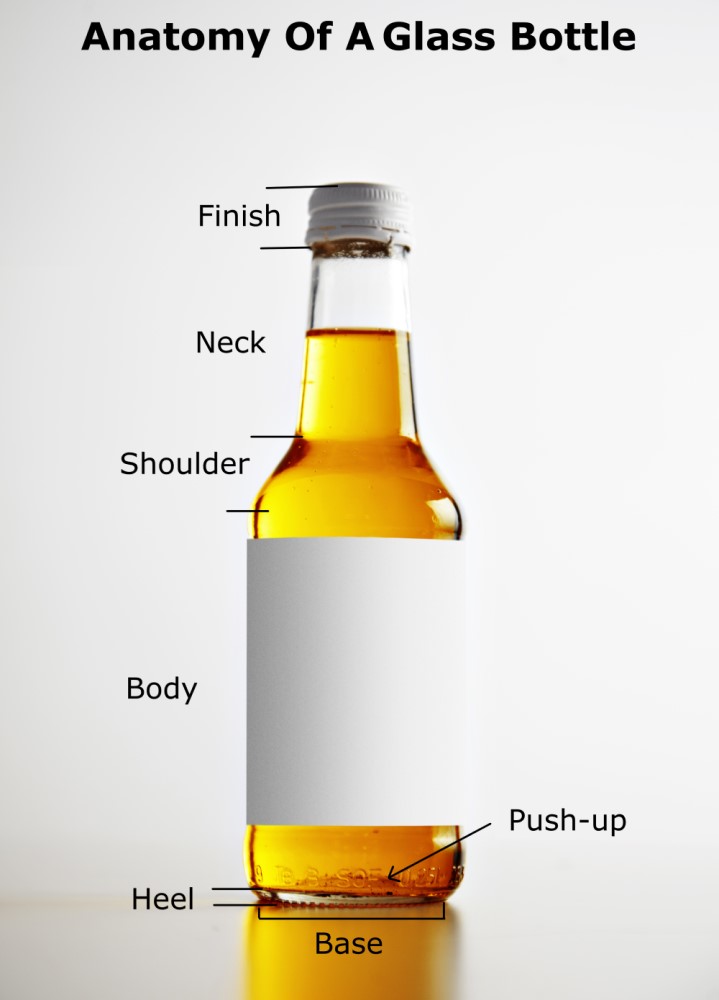
Table of Contents
Finish: The Top Opening and Closure Interface
The finish is where your bottle meets its closure. This top part decides which cap, cork, or lid will seal your product. Glass bottle parts like the finish might seem small, but they control closure compatibility. They also affect how easy it is for customers to open your container.
Different industries use specific finish types. Each design serves different functional needs.
Continuous Thread Finish
The most common finish features spiral threads molded into the glass neck. Continuous thread finishes work with screw caps. You see these twist-off closures on beverage bottles, condiment jars, and pharmaceutical containers.
This finish type offers reliable resealing. Users can open and close the glass bottle multiple times. Product freshness stays intact. Manufacturers like continuous threads because automated filling lines can cap thousands of bottles per hour. The torque specs stay consistent.
Standard thread profiles include 28-400, 38-400, and 43-400. The first number shows neck diameter in millimeters. These standard dimensions ensure caps from different suppliers fit correctly.
Crown Finish
Beer and soda bottles use crown finishes. The glass neck flares outward at the top. This creates a ridge that grips metal crown caps—those crimped bottle caps you need an opener to remove.
Crown finishes create hermetic seals. These seals preserve carbonation. The metal cap bends a bit during application. It conforms to the glass surface for an airtight closure. This finish dominated the beverage industry for over a century. It’s reliable and cost-effective.
Cork Finish
wine, champagne, and spirits bottles feature cork finishes with smooth, tapered openings. The glass neck has minimal threading or none at all. Natural or synthetic corks compress as they slide into the bottle opening. Then they expand to form a tight seal.
Premium products often choose cork finishes. They signal traditional craftsmanship. The finish diameter and depth vary based on cork size. Standard wine bottles range from 18mm to 24mm.
Snap-On Finish
Cosmetic and pharmaceutical bottles sometimes use snap-on finishes. These have raised beads or undercuts. Plastic closures click into place without threading. This provides tamper-evident sealing for creams, lotions, and medical products.
Neck: The Transition Zone
The neck connects the finish to the glass bottle’s main body. This section of glass bottle parts bridges two key zones. It creates a smooth transition. Plus, it serves many practical functions.
Neck length and diameter control how products pour. Long-neck bottles give you precise pouring control. They slow liquid flow for measured dispensing. You see this in olive oil bottles, craft beer containers, and spirits packaging. Short-neck designs work better for quick emptying. Think condiment bottles or juice containers.
Design Variations and Production Impact
Manufacturing costs change based on neck specs. Wider necks need more glass material. They also need larger closures. Narrow necks cut material costs. But they can slow filling line speeds. Automated filling machines adjust nozzle positions for different neck sizes.
Standard neck sizes include 18mm, 24mm, and 28mm openings. Each size fits specific industry needs. Wine bottles use 18-19mm necks. Beverage bottles feature 28mm or larger openings. This speeds up filling rates.
The neck angle matters too. Straight vertical necks make production simpler. Bottles move through lines faster. Angled or curved necks look better. But they make production harder. They need special molds. They also need careful handling during heating and cooling.
Neck thickness affects bottle strength. Thicker necks resist breakage during capping. They handle more force when screw caps tighten. This matters for products with high internal pressure.
Shoulder: The Curved Connector
The shoulder curves inward between the neck and body. This curved part of glass bottle parts controls how liquid moves inside. It also affects how the bottle looks in your packaging.
Shoulder Profile Types
High shoulders create sharp angles. Spirits and some wine bottles use this style. The steep slope gives a premium look. Bordeaux wine bottles have high shoulders that catch sediment as wine ages. Pour slow, and the sediment stays below the curve.
Sloped shoulders move smoothly from neck to body. Burgundy wine bottles show this gentle curve. The smooth angle looks softer and friendlier. Craft beverage brands often pick sloped shoulders for a modern style.
Rounded shoulders form smooth curves with no sharp angles. beer bottles and many drink containers use this shape. The rounded design spreads stress across the glass. This cuts down breakage during making and shipping.
Functional Impact
Shoulder angles control how fast liquid pours out. Steep shoulders slow the flow. You get better control pouring wine or spirits. Gentle slopes empty faster for daily drinks.
The shoulder in wine bottles catches sediment bits. High shoulders trap deposits well. Your final glass stays cleaner. Sloped shoulders catch less sediment but work fine for young wines.
Body and Label Panel: The Main Storage Area
Most of the liquid sits in the body. This largest section of glass bottle parts holds your product. It also gives you prime space for branding. The body’s shape, size, and surface area determine capacity. These factors also control how your label appears on the shelf.
Shape Variations and Branding Impact
Cylindrical bodies rule the bottle industry. Round shapes spread pressure across the glass. This makes them stronger and cheaper to produce. Beverage bottles, cooking oils, and drugs use cylindrical designs. Labels wrap around them with no issues. Automated labeling machines work faster with round bottles.
Square and rectangular bodies grab attention on crowded shelves. Spirits brands pick angular shapes to show premium quality. Square bottles pack tighter on shelves and in shipping boxes. You fit more units per pallet. This cuts shipping costs. But angular corners need thicker glass. They cost more to mold than round shapes.
Custom molded bodies create unique brand marks. perfume bottles, premium spirits, and specialty products use distinct shapes. Coca-Cola’s contour bottle got registered as a trademark. These custom designs need expensive molds. You’ll face higher minimum order quantities. But the brand recognition rewards established products.
The label panel is the flat or curved surface where labels stick. It needs careful planning. Wider bodies give you more label space. Your brand message shows clearer. Product details fit better. Narrow bodies limit what you can print. Design teams pick which details matter most.
Body Thickness and Performance
Glass thickness in the body affects three key factors. Strength grows with thicker walls. Carbonated drink bottles need 3-4mm thickness. They resist internal pressure without breaking. Standard wine bottles use 2-3mm walls.
Weight goes up with body thickness. Thicker glass means heavier bottles. This raises shipping costs. A 750ml wine bottle with 2.5mm walls weighs about 400-500 grams. Bump that to 3.5mm, and weight jumps to 600-700 grams. Extra weight adds up across thousands of units.
Material costs climb with thickness too. More glass per bottle means higher raw material costs. Makers must balance strength needs against cost pressure. Light-weighting programs try to cut thickness. But they can’t sacrifice strength.
Heel: The Bottom Transition
The heel forms the curved transition where the bottle body meets the base. This small radius in glass bottle parts stops a major weakness. Sharp 90-degree angles create stress points. Glass cracks at these spots during temperature changes or impact. The heel’s gentle curve spreads mechanical stress across the bottom section.
Radius Standards for Structural Integrity
Industry standards set minimum heel radius measurements. Most beverage bottles require 3-5mm radius curves. Wine bottles often feature 4-6mm heels. These measurements come from testing. Engineers found that radius below 3mm increases fracture risk by 40% during thermal shock. The curved transition absorbs expansion and contraction forces. Hot liquids meet cold glass. The heel handles the stress.
Thicker products like beer bottles need larger heel radii. The extra curve compensates for higher internal pressure. Standard beer bottles use 5-7mm heels. This stops bottom blowouts. Carbonation builds up. The heel keeps the bottle intact.
Stacking Performance During Transport
Heel design affects how bottles stack on pallets. The curved transition creates a stable contact ring. This ring spreads weight from upper layers. Bottles with proper heel geometry stack 8-10 layers high. The base stays in good shape. Poor heel design causes wobbling. Pallets become unstable during shipping. Breakage rates jump 25-30%. This happens outside optimal heel radius ranges.
Base and Bearing Surface: The Foundation
The bottom of every glass bottle acts as its physical anchor. Two key zones make up this section of glass bottle parts: the base surface and the bearing surface. These zones control stability, scratch resistance, and how well the structure holds up under weight.
Surface Treatments and Scratch Protection
Base surfaces come in two main finishes. Smooth finishes create glass-to-glass contact. Bottles touch surfaces and get scratched during conveyor transport and shelf placement. Scratches weaken the glass. They turn into fracture points under stress.
Stippled or textured bases fix this issue. Makers mold tiny raised patterns into the glass bottom. These patterns cut down contact area between glass and hard surfaces. Stippling reduces scratch formation by 60-70% during production line movement. The texture also stops bottles from sticking together when wet. This speeds up filling line work.
Premium wine and spirits bottles often use smooth bases. The clean finish shows quality. But these bottles need careful handling. Protective dividers separate units during shipping. Mass-market beverage bottles choose stippled bases. Durability beats appearance for high-volume production.
Bearing Surface Width Standards
The bearing surface is the outer ring that touches flat surfaces. This narrow band carries the glass bottle’s full weight—glass plus what’s inside. Width needs change based on total load.
Bottles under 300 grams need 3-5mm bearing surface width. Standard wine bottles (750ml, 500g total weight) require 5-7mm width. Heavy champagne bottles demand 8-10mm bearing surfaces. This wider contact spreads out pressure. It stops rim chipping as cases stack six layers high.
Too-narrow bearing width causes edge failures. The glass chips or cracks at contact points. Tests show bearing surfaces below minimum specs boost breakage rates by 35% during warehouse storage. Each bottle type needs the right width to match its weight and handling needs.
Pushup (Punt): The Interior Dome
See that indentation molded into the bottom? It changes how glass bottles handle pressure and stress. The pushup—also called a punt—is a concave dome that engineers design with specific depth measurements. This isn’t leftover from old glassblowing methods. Modern bottles use punts for real structural benefits.
Depth Variations Across Bottle Types
Wine bottles feature the deepest punts. Standard still wine containers have 15-25mm indentations. Champagne and sparkling wine bottles go deeper. These 25-35mm pushups handle 5-6 atmospheres of internal pressure. The dome shape redirects force outward across the base. This stops bottom blowouts as carbonation builds up.
Beer bottles use moderate punts of 8-15mm depth. The indentation adds strength without extra weight. Standard beverage containers often feature shallow 5-10mm punts. Some modern lightweight bottles skip the punt. Flat bases work fine when internal pressure stays low.
Engineering Functions
Punts strengthen the base through shape geometry. The curved dome spreads weight and pressure across the glass. Bottles stand more stable on uneven surfaces. The raised center point creates a smaller contact area. This reduces stress at the bottom.
Volume capacity drops with deeper punts. A 750ml wine bottle with a 20mm punt holds the same liquid as a flat-based bottle with less total height. Makers adjust body height to keep the target capacity. The punt takes up 30-50ml of space inside champagne bottles. But this trade-off pays off. The pressure resistance stops costly breakage during production and storage.
Bottle Part Terminology by Industry
Different industries use different names for the same glass bottle parts. This confuses buyers who order custom packaging or switch suppliers. A wine producer’s “bague” means nothing to a pharmaceutical buyer. They call it a “transfer bead.” Know these terminology gaps. You’ll save time and avoid expensive ordering mistakes.
Wine Industry Nomenclature
Wine professionals use French-influenced terms. Other sectors don’t recognize these words. The bague is the ring below the finish. Foil capsules grip this area. Pharmaceutical specs don’t include this term. Wine buyers specify punt depth in millimeters. The punt is the bottom dome. Sediment collects there. Beverage producers skip punts in their technical drawings.
The collerette is the decorative ring around the neck. Premium wineries need specific collerette dimensions. This matches their brand look. Food and beverage engineers ignore this detail. They focus on functional parts. Thread pitch and cap torque specs matter more to them.
Pharmaceutical Packaging Standards
Pharma buyers need precise measurements. Wine and beverage sectors don’t work at this level. They specify finish configurations using GPI numbers. These are Glass packaging Institute codes. Examples include “400 finish” or “415 finish.” These codes define exact thread dimensions. They cover neck diameter and sealing surface angles. Tolerances go down to 0.1mm.
Pharmaceutical specs list parting line measurements. This horizontal line shows where mold halves joined. Drug packaging needs smooth parting lines. Rough edges cause seal failures. Wine bottles can have visible parting lines. No one cares.
Food and Beverage Technical Requirements
Food packaging engineers discuss fill height and headspace volume. They measure air between liquid and closure. This impacts product shelf life. Wine producers focus on glass bottle diameter and label panel width. Marketing impact drives their choices.
The term transfer bead shows up in beverage specs. Wine buyers get confused by it. This raised ring on the neck marks where glass blob transferred during forming. Beverage quality teams check transfer beads for defects. Wine specifications skip this feature.
Common Supplier Miscommunications
Buyers ask for “crown caps.” Manufacturers need crown finish dimensions. That’s the glass part, not the metal closure. This mix-up delays quotes by days. Say “28mm crown finish with 6mm sealing radius.” Don’t just say “crown cap compatible.”
Bore diameter and finish diameter create another common problem. Bore measures the inside opening. Finish diameter includes the glass thickness. A 20mm bore might have a 24mm finish diameter. Miss this detail? Caps won’t fit your production run.
Conclusion
As we’ve seen, every part of a glass bottle—from the finish and neck to the shoulder, body, and base—plays a role in both function and design. Understanding these terms not only helps in identifying bottle styles but also ensures clearer communication when customizing or sourcing packaging.
At TP Glass Bottle Manufacturer, we combine precise craftsmanship with deep industry knowledge to produce glass bottles that excel in quality, aesthetics, and usability. Whether you’re looking for standard designs or fully custom-made glass packaging, our team is here to help bring your vision to life—one perfectly formed glass bottle at a time.