

If you’ve ever bought essential oils, you’ve probably noticed that they almost always come in Amber Glass Bottles. It’s one of those things that’s easy to overlook, or maybe you figured it’s just the “classic look” brands use. But that deep, honey-brown color isn’t random, and it’s definitely not just for aesthetics — it’s actually doing a pretty important job. The reason those bottles are amber has everything to do with keeping your oils fresh, potent, and safe from the very thing.
Table of Contents
Why Essential Oils Are Vulnerable to Light Damage
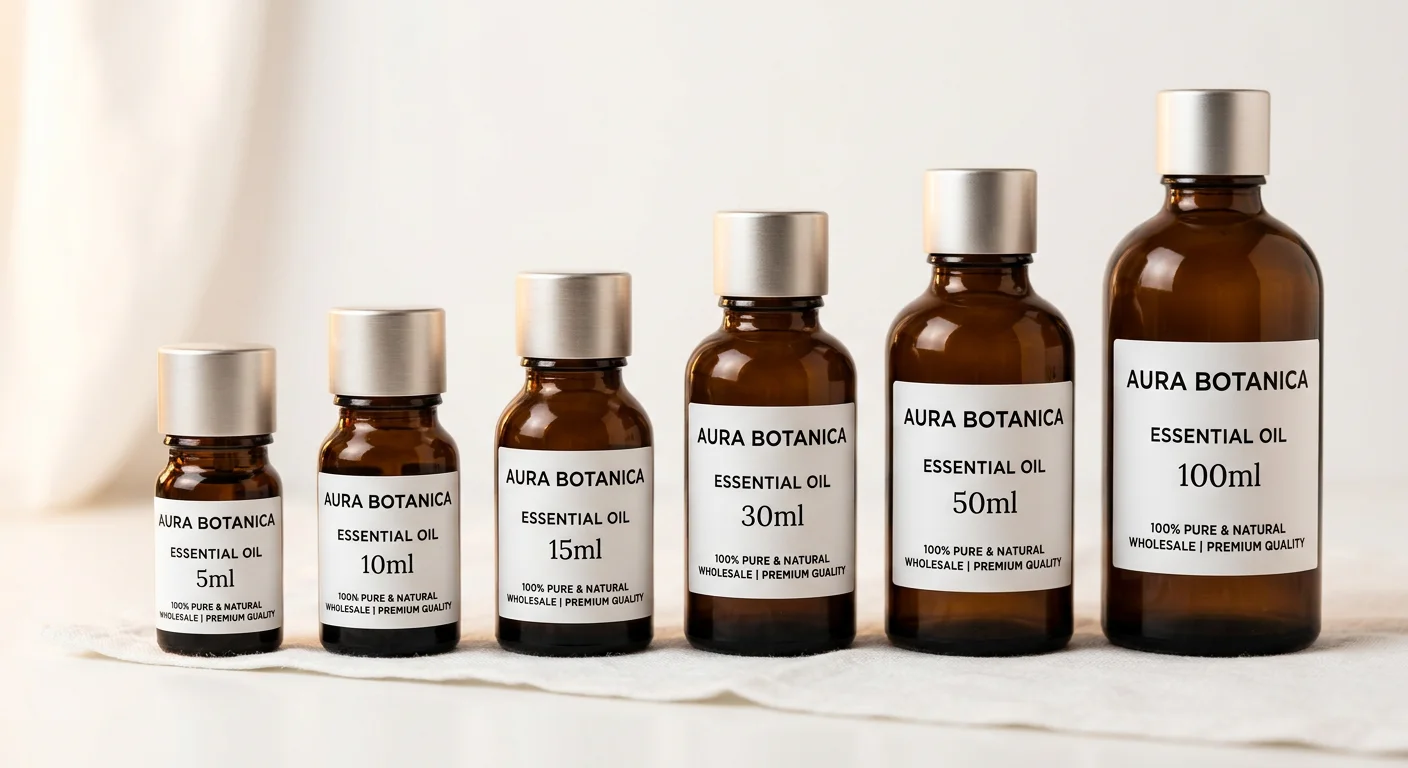
Light is not passive. It’s reactive — and inside a clear glass bottle, it works against your essential oil from the moment you set it on a shelf near a window.
Here’s what’s happening at the molecular level.
Essential oils contain highly active compounds: limonene (dominant in citrus oils), linalool (the signature molecule in lavender and rosewood), terpineol, and dozens of volatile aromatic esters. These molecules are unstable under UV and visible light wavelengths between 300–500 nm. That instability is exactly what makes them potent — and exactly what makes them fragile.
Light hits those compounds and triggers photooxidation. That’s a chain reaction where oxygen molecules bond to the oil’s active ingredients. The result is not subtle:
- Aroma degrades — bright top notes flatten, and medicinal or rancid undertones emerge
- Color shifts — oils may darken, cloud, or lose their natural clarity
- Therapeutic efficacy drops — oxidized linalool, for instance, is not just less effective; it can become a skin sensitizer
The timeline matters. Studies on citrus essential oils stored in clear glass show measurable oxidation starting within 30 days of light exposure. The same oils stored in amber glass bottles held their composition for 12 months or longer under identical conditions.
That is not a marginal difference. That is the difference between a product worth selling and one that lets down the customer who trusted you.
How Amber Glass Blocks UV: The Science Behind the Color
Amber glass is not dark glass. It is engineered glass — and that distinction explains everything.
The brown-amber color comes from iron, sulfur, and carbon compounds fused into the glass matrix during manufacturing. These elements are not coatings that wear off or treatments that fade. They are structural. Together, they create a light-filtering barrier that blocks 98% of UV radiation — the wavelengths between 300–400 nm that cause the most photochemical damage to volatile organic compounds.
But UV is only part of the story. Amber glass also filters a large portion of visible light in the 400–500 nm range — the blue-violet spectrum that keeps driving oxidation even after UV has been blocked. That dual-spectrum filtering sets amber glass apart from alternatives like green or cobalt blue glass. Those options intercept UV, but they still let more visible light pass through.
Why the Pharmaceutical Industry Settled This Question Long Ago
Here is a useful frame: this is not new science being applied to essential oils. It is established science borrowed from a more demanding field.
The United States Pharmacopeia (USP) and the European Pharmacopoeia (EP) are the regulatory bodies that set packaging standards for pharmaceutical products. Both designate amber glass as the required container for light-sensitive medications — including certain antibiotics, vitamins, and hormone compounds. That standard exists because the chemistry demanded it.
Essential oils face the same risk. The photochemical degradation that destroys pharmaceutical compounds also breaks down linalool, limonene, and terpene esters in your essential oils. The process is the same. Only the product differs.
A packaging material that meets pharmaceutical-grade light protection standards is more than adequate for aromatherapy and botanical products. UV protection glass bottles built to those benchmarks are not a premium upgrade — they are the baseline your product deserves.
Color-by-Color Comparison: Amber vs. Cobalt Blue vs. Green vs. Clear Glass
Four colors. Very different levels of protection. One right answer for most essential oils.
The table below goes straight to the numbers. Light protection is not a matter of opinion. It is measurable.
| Glass Color | UV Blockage (300–400nm) | Visible Light Filtration | Best For | Key Limitation |
|---|---|---|---|---|
| Amber | ~98% | High (blocks 400–500nm blue-violet spectrum) | All essential oils, citrus, floral, and therapeutic blends | Less eye-catching on retail shelves |
| Cobalt Blue | ~75–80% | Moderate | Mid-sensitivity oils: eucalyptus, peppermint, tea tree | Lets significant visible light through; not enough for volatile compounds |
| Green | ~50–60% | Low-Moderate | Short-term storage; decorative or gift packaging | Weakest functional protection among colored options |
| Clear | ~10–15% | Minimal | Display purposes only; oils used within days | Gives almost no UV or light protection |
What the Numbers Mean for Your Oil
Amber does not win this comparison by a small margin. It wins by a wide one.
Cobalt blue has a strong reputation in the essential oil world. But that reputation runs ahead of its real performance. Yes, it blocks UV better than clear glass. Yes, it looks striking — that deep, jewel-toned blue photographs well and stands out on a shelf. But 75–80% UV blockage still leaves a real gap. For volatile oils like bergamot, lemon, or frankincense, that gap turns into a problem over a 12-month shelf life.
Green glass tells a similar story. It photographs well in natural light. It signals “botanical” and “natural” in a way that appeals to certain customers. But about 40–50% of incoming UV radiation still passes through. That is before you even count visible light in the damaging blue-violet range.
Clear glass is not a storage solution. It is a display option. Fill clear bottles and you are making a style choice at the cost of everything else.
The One Scenario Where Cobalt Blue Makes Sense
Cobalt blue works well for decorative product lines where visual identity carries real commercial weight. Think gift sets, spa collections, or retail displays where the bottle itself tells the brand story. In those cases, pair blue glass with secondary UV-protective packaging — an outer box, a kraft paper wrap, or opaque labeling that covers most of the bottle surface.
It is not the best option. But it works — with the right precautions.
For everything else — your core essential oils, your therapeutic blends, your products that need to hold up for a customer a year from now — amber glass bottles are the one container that does the full job without cutting corners.
Which Essential Oils Need Amber Glass Most?
Not all essential oils are fragile in the same way — but most are more fragile than people think.
Light sensitivity follows a predictable pattern. It comes down to the oil’s chemistry: how volatile its compounds are, how reactive its molecules get under UV exposure, and how long you need it to stay potent and safe.
Here is a simple breakdown by sensitivity level.
High Sensitivity — Amber Glass Is Non-Negotiable
These oils oxidize fastest. They lose therapeutic value first with light exposure. Storing or selling any of these? Amber glass is the only rational choice:
- Citrus oils — lemon, bergamot, sweet orange, grapefruit, lime. These are limonene-dominant. You’ll see measurable degradation within 30 days in clear glass.
- Floral oils — lavender, rose, ylang-ylang, geranium. High linalool content makes these oils very reactive to light.
- Frankincense and myrrh — resinous compounds break down fast. Therapeutic-grade frankincense is expensive. Losing it to poor packaging stings twice.
- Carrier-blended therapeutic oils — diluted blends have more surface area exposed to oxidation. Treat them like full concentrates. Protect them the same way.
Moderate Sensitivity — Amber Still Wins, But Blue Glass Can Work Short-Term
These oils are more stable. They still benefit from colored glass protection:
- Eucalyptus, peppermint, tea tree — popular oils with moderate volatility. Cobalt blue glass works fine here, as long as turnover is high and storage stays cool and dark.
- Rosemary, clary sage, cedarwood — these handle medium-term storage well in blue or green glass. Just don’t stretch it past six months.
Quick Decision Guide
Ask yourself two questions before picking a bottle:
1. How long will this oil sit before use?
Longer than three months — go with amber. No further questions needed.
2. Do you have a dark, cool storage space?
Yes? Moderate-sensitivity oils get a bit more flexibility. No? Your storage space is adding light exposure on top of whatever the bottle already lets through. Amber glass becomes the safer call. You can’t always control ambient light, so let the bottle do the work.
| Oil Sensitivity | Storage Conditions | Recommended Bottle Color |
|---|---|---|
| High (citrus, floral, frankincense) | Any | Amber |
| Moderate (eucalyptus, peppermint) | Dark + cool | Cobalt blue acceptable |
| Moderate (eucalyptus, peppermint) | Variable or bright | Amber |
| Low / short-term use | Display only | Clear (use quickly) |
The decision is simple. Not sure? Amber glass protects everything — and costs you nothing in efficacy.
Amber Glass Bottle Types for Essential Oils: Matching Bottle to Use Case
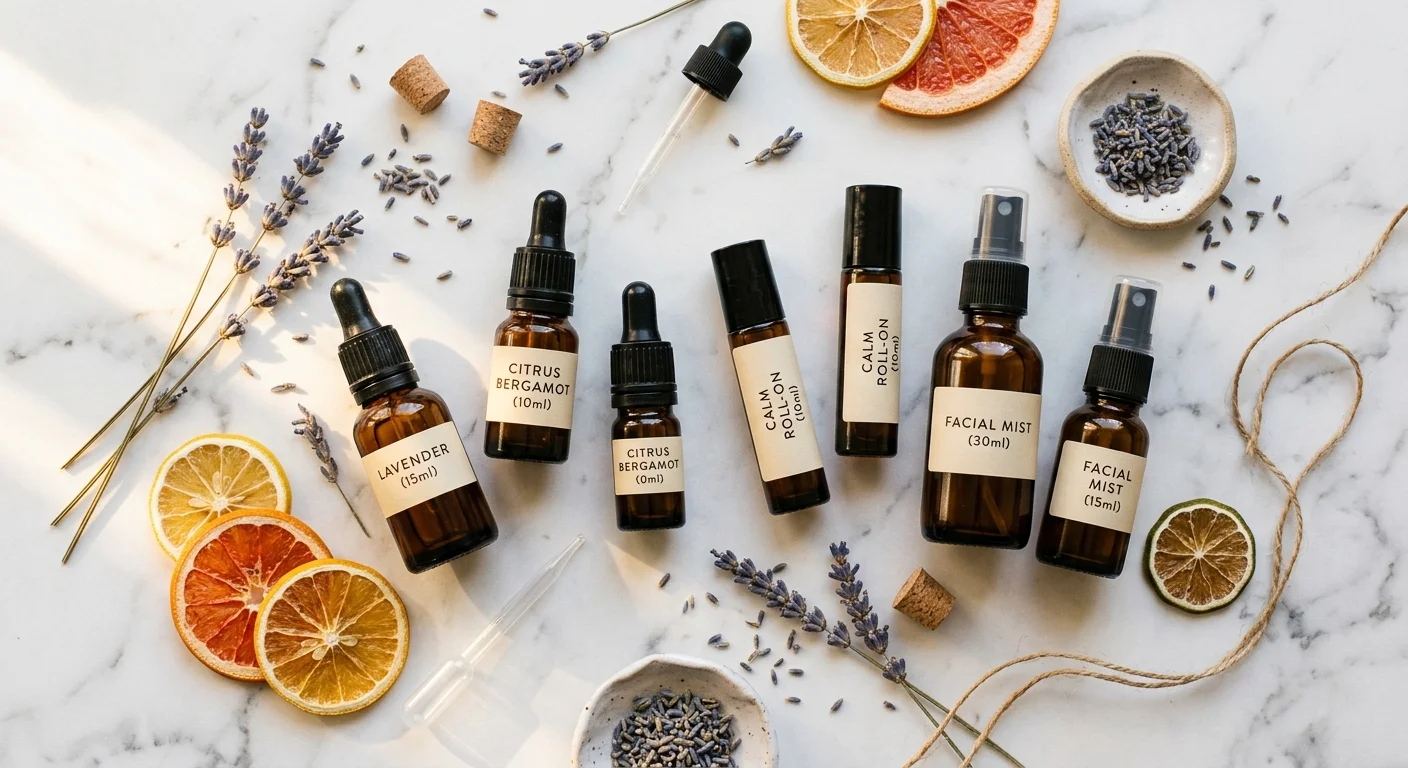
The right amber glass bottle isn’t just about color — it’s about how the oil gets used.
A dropper bottle and a roller bottle both protect against UV. Use the wrong one, though, and you’ve created friction for your customer at the exact moment they want to enjoy what they bought. Here’s how to match bottle type to purpose.
Dropper Bottles — For Precision and Potency
Brown glass dropper bottles are the workhorse of the essential oil world. The built-in dropper insert controls flow. That matters a great deal with high-concentration single-note oils — frankincense, rose absolute, helichrysum. One drop too many changes a blend. One drop too few wastes an expensive material.
Dropper bottles also keep air out between uses. Less headspace. Less oxidation. That’s not a side benefit — it’s a core reason dropper bottles are the default for therapeutic-grade product lines.
Roller Bottles — For Skin-Ready Blends
Pre-diluted blends belong in roller bottles. The stainless steel or glass roller ball gives smooth, even application on skin — pulse points, temples, the back of the neck. No measuring, no spilling, no hesitation.
Got a ready-to-use blend? A roller bottle removes every barrier between the customer and a good experience.
Spray Bottles — For Hydrosols, Tinctures, and Room Mists
Amber glass spray bottles cover a different category: hydrosols, alcohol-based tinctures, linen sprays, and room diffuser mists. The fine-mist mechanism spreads product across a surface in a consistent layer. Your customer doesn’t need to touch or tilt the bottle at all.
Cap Type: The Detail That Can Undermine Everything Else
The bottle can be perfect. The cap can still ruin the product.
| Cap Type | Best For | Key Advantage |
|---|---|---|
| Aluminum cap | Wholesale and retail lines | Superior seal; won’t react with volatile compounds |
| Phenolic (Bakelite) cap | Therapeutic and professional lines | Chemical-resistant; long-term storage |
| Plastic cap | Short-term or budget packaging | Low cost; lighter for shipping |
For most essential oil storage containers in a professional or wholesale setting, pair aluminum or phenolic caps with amber glass. You get solid protection from light, air, and the oil itself — all three of the main threats to product quality.
How to Choose Amber Glass Bottles for Your Brand or Business (Wholesale Buying Guide)
Buying amber glass bottles at scale comes down to two decisions: the right size for how your customers use the product, and the right volume to make the numbers work.
Match the Size to the Use Case
Bottle sizes serve different purposes — not just different price points.
- 5ml and 10ml — sample kits, travel sets, single-note offerings. Low commitment for first-time buyers. Package them well and the perceived value goes up fast.
- 15ml and 30ml — the retail sweet spot. Most essential oil brands build their core product line around these sizes. Customers know them. They trust them.
- 50ml and 100ml — bulk blends, carrier-diluted formulas, professional or spa settings. Larger bottles expose more product to air over time. That makes UV protection glass bottles more important at this size, not less.
The ROI Case for Buying in Volume
Wholesale pricing on amber glass bottles ranges from $0.30 to $1.20 per unit — size and order volume move that number. Order more, pay less per unit.
The math is simple. Proper light protection cuts spoilage. Shelf life gets longer. Fewer customers complain about degraded product quality. That’s a real return, not a marketing assumption.
For steady supply and competitive wholesale pricing, tpglassbottle.com carries a full range of amber colored glass containers across all standard sizes — built to the protection standards your product needs.
Conclusion
So, next time you reach for that familiar amber bottle, you’ll know it’s not just a design choice — it’s a small but powerful protective shield. The deep brown glass filters out the harmful UV and blue light that can quietly degrade your oils, helping them hold onto their therapeutic properties, scent, and freshness much longer. If you’re looking for a glass bottle partner that understands why color matters, we’d love to hear from you. Feel free to reach out for samples, custom sizes, or just a friendly chat about your packaging needs.