

Making candles at home is a rewarding hobby that lets you create custom scents and designs for your space or to give as gifts. One of the most important decisions you’ll make when starting out is choosing the right glass jars. The perfect jar affects everything from how your candle burns to how it looks on a shelf. With so many different sizes, shapes, and styles available, it can be hard to know which ones will work best for your needs. In this complete guide, we’ll break down everything you need to know about selecting glass jars for candle making.
Table of Contents
What Makes a Glass Jar Safe for Candle Making? (Core Selection Criteria)
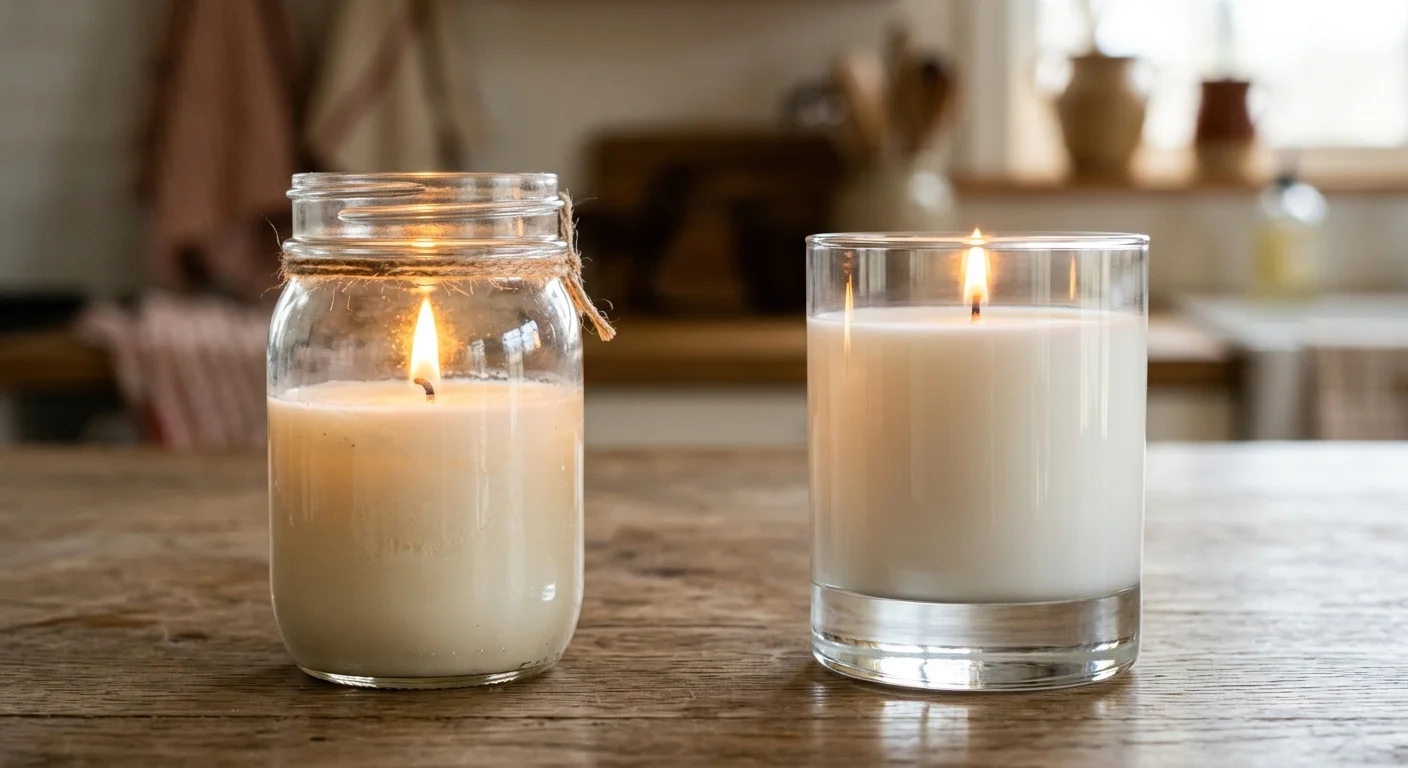
Safety starts with two numbers: heat resistance and wall thickness. Get these wrong, and no amount of beautiful branding will save you from a cracked jar mid-burn.
Heat Resistance: Match Your Glass to Your Wax
Different waxes burn at different temperatures — and your glass needs to keep up.
- Soy wax burns between 160–180°F
- Paraffin wax runs hotter at 180–200°F
A jar built for mild temperature swings will fail during a four-hour paraffin burn. Check that your heat resistant glass Jars are rated above your wax’s peak burning temperature. You want a clear safety buffer above that number, not right at the limit.
Look for jars that state borosilicate or thick-walled soda-lime glass construction. Vague terms like “heat-tolerant” without a stated temperature range are a red flag. This matters more when you’re sourcing bulk Candle Jars at scale — one bad batch puts your whole production at risk.
Wall Thickness: The Detail Most People Overlook
The standard safety threshold for glass candle vessels is a minimum wall thickness of 3mm.
Thinner glass — the kind often found in cheap decorative jars — can develop micro-fractures during long burns. Those fractures rarely give a warning. A jar can split on a shelf without any obvious sign, leaking hot wax or, worse, starting a fire.
A 3mm+ wall spreads heat across the glass surface more evenly. It holds up through repeated use. Your scented candle containers also feel more solid and premium in hand — customers notice that difference.
The practical rule: a jar that feels lightweight and fragile before the pour will feel risky after it.
Mason Jars for Candle Making: The Beginner’s Reliable Choice
Mason jars built their reputation through real work — pressure canning, boiling water baths, years of heavy kitchen use. That durability is why they work so well for candle making too.
Brands like Ball and Kerr build their mason jars to a 250°F pressure canning standard. Soy wax peaks around 180°F. Paraffin tops out near 200°F. That gap gives you a real safety buffer — built into the jar before you ever light a wick.
The wide mouth design is a practical win. Centering a wick inside a narrow jar is tricky, frustrating work. This is true on your first few pours. A wide mouth opening cuts out that problem completely.
The Cost Case Is Straightforward
Mason jars are affordable across every size:
- 4 oz — ideal for samples and gift sets
- 8 oz — the most popular everyday candle size
- 16 oz — strong value for large pillar-style pours
Retail pricing runs well below purpose-made soy Candle Jars. Bulk orders push that gap even wider. You’re testing recipes or watching margins on small batches — that price difference adds up fast.
They’re not the most polished option on the shelf. But as a starting point — safe, proven, and easy to find — mason jar candles are hard to beat.
Tempered Glass Candle Jars: Best for High-Heat Waxes
Paraffin and palm wax don’t forgive weak containers. These waxes burn hotter and longer than soy. That sustained heat is where standard glass starts to fail.
Tempered glass goes through a controlled heating process that makes it stronger and more heat-resistant than regular soda-lime glass. For high-heat wax types, that difference matters a lot.
Why Paraffin and Palm Wax Demand More
Across repeated burn cycles, tempered glass candle vessels hold their shape where ordinary jars develop stress fractures. Those cracks are often invisible — until a jar gives way without warning. Paraffin burns at 180–200°F, and palm wax hits similar temperatures. The margin for error is tight. Tempered construction keeps that margin safe, pour after pour.
Sizes, Shapes, and Brand Value
The most useful sizes for retail are 8 oz, 10 oz, and 12 oz. These volumes work well for mid-range candles and gift collections. Shape plays a role too:
- Straight-sided cylindrical jars photograph well and stack neatly for shipping
- Waisted silhouettes add a boutique look that supports premium pricing on shelves
You’ll find both styles available in tempered scented candle containers. So whatever your brand direction, there’s a format that fits.
Is the Price Premium Worth It?
Tempered jars cost 20–40% more per unit than comparable mason jar candles. For commercial production, the math is simple: fewer breakage losses, stronger brand perception, and a container that actually matches a higher price point. The premium pays for itself faster than most expect.
Apothecary & Amber Glass Jars: Aesthetic Appeal for Premium Candle Brands
There’s a reason certain candles stop you mid-scroll. The jar does half the work before the scent ever reaches you.
Apothecary and amber glass jars speak a visual language that clear containers can’t match. Think somewhere between an old pharmacy shelf and a botanical garden greenhouse. That look translates into real pricing power. On Etsy and Amazon, candles in amber glass jars command 15–30% higher price points than the same products in clear vessels. The jar signals quality before a customer reads a single word of copy.
The Brand Story These Jars Tell
Amber glass isn’t just pretty — it’s purposeful. The tinted glass filters UV light. That matters for candles made with essential oils and natural fragrance compounds. Those ingredients break down with too much light exposure. So the UV protection isn’t just a feature — it becomes part of your brand story.
This is why apothecary-style jars are the natural fit for:
- Essential oil and botanical candle lines
- Organic or clean-ingredient positioning
- Spa, wellness, and aromatherapy collections
Your brand story centers on natural ingredients and intentional living. Your packaging should say that at a glance. An Amber Glass Jar with lid for candles does that job on its own — no extra copy needed.
Wide Mouth vs. Straight-Sided Glass Jars: Which Shape Works Better?
Jar shape feels like a small decision — until you’re three hours into a pour session with wax on your sleeve and a wick that refuses to stay put.
Two things separate these jar styles: how easy they are to work with, and how well they burn.
Wide Mouth Jars: Built for the Person Doing the Pouring
A wide mouth opening — 70mm or wider — makes centering a wick simple. You can see what you’re doing. Your wick holder sits flat across the rim, no balancing required. Hot wax goes in clean, with far less splashing on the inner walls or air pockets forming along the sides.
For beginners, that extra opening changes everything. It’s the difference between a clean pour and a frustrating one.
Wide mouth candle jars are the practical choice for anyone working with:
– Thick, high-viscosity waxes like soy or coconut blends
– Double-wick configurations
– Larger volume containers (8 oz and above)
Straight-Sided Jars: Where Even Burns Win
Straight-sided glass candle vessels earn their advantage once the candle is lit. The uniform wall shape keeps airflow consistent around the flame. Heat moves out from the center at a steady rate — this cuts down tunneling and pushes scent throw further.
Want a retail candle that holds up from first burn to last? Straight-sided clear glass candle holders are hard to beat. The clean lines also look sharp on a shelf, which matters for presentation.
The short version: Grab wide mouth jars when production ease is the top priority. Go straight-sided when burn performance and shelf appeal come first.
Best Glass Jars by Wax Type: Matching Container to Your Formula
Wax type is the variable most candle makers underestimate. Get the pairing right, and everything else — burn quality, scent throw, safety — falls into place.
Soy Wax: Keep It Simple, Keep It Wide
Soy wax burns between 160–180°F. That’s a forgiving range for glass. Standard thick-walled soda-lime jars handle it without any issue. But what really matters with soy is the opening: wide mouth candle jars (70mm+) are the practical standard.
Soy wax is thick and slow-moving. A wide mouth gives you cleaner pours. It also makes wick placement easier and helps build a more even melt pool from the very first burn. Mason jars and straight-sided soy candle jars are both solid choices. They’re affordable, easy to find, and reliable.
Paraffin Wax: Don’t Compromise on Glass Quality
Paraffin pushes temperatures up to 180–200°F. At that range, thin decorative glass becomes a real liability. Micro-fractures build up silently during long burns. The jar can fail without any warning at all.
The non-negotiable rule here: use tempered or thick-walled glass candle vessels with a minimum 3mm wall. Skip any jar sold for decor purposes with no stated heat rating. For paraffin, that missing information is a genuine safety risk.
Coconut Wax and Blends: Prioritize the Seal
Coconut wax has a low shrinkage rate as it cools. It stays close to the container walls. That’s exactly why glass jars with lids are so valuable here. A snug lid locks in the scent profile and slows oxidation. Wide mouth containers also give coconut blends the space to develop an even melt pool every time.
Quick-Reference: Wax-to-Container Match
| Wax Type | Recommended Jar | Safety | Aesthetic | Cost |
|---|---|---|---|---|
| Soy | Wide mouth / Mason jar | ✅✅✅ | ✅✅ | ✅✅✅ |
| Paraffin | Tempered straight-sided | ✅✅✅ | ✅✅✅ | ✅✅ |
| Coconut / Blends | Wide mouth with lid | ✅✅✅ | ✅✅✅ | ✅✅ |
Match your wax to its container before you pick a label. Your formula sets the direction — everything else follows from there.
Glass Jars vs. Metal Tins vs. Ceramic: Which Container Wins for Your Business?
Three materials. One decision that shapes your margins, your burn quality, and your brand shelf life.
Most sourcing guides skip this part: container choice isn’t just about looks — it’s about heat. Each material handles heat in its own way. That difference shows up in how your candle burns, how long it lasts, and whether it stays safe on a customer’s nightstand.
How Each Material Behaves Under Heat
Glass has low thermal conductivity (~1 W/m·K). Heat stays inside the wax pool longer. This supports a deeper, more even melt. Heat resistant glass jars outperform other materials on scent throw — and they do it burn after burn.
Metal tins conduct heat 40–200× faster than glass. The sidewalls heat up fast. Burn time shortens as a result. For high-fragrance or high-wax-volume candles, that’s a real performance tradeoff you need to plan for.
Ceramic falls in between. It insulates better than metal. It’s heavier than glass. Quality-checking ceramic pieces at scale is also much harder than most buyers expect.
The Cost Reality at MOQ
For the same 8 oz capacity:
| Container | MOQ 5,000 | MOQ 10,000 | MOQ 50,000 |
|---|---|---|---|
| Glass jar | $0.55–0.85/unit | $0.40–0.65/unit | $0.28–0.45/unit |
| Metal tin | $0.45–0.70/unit | $0.35–0.55/unit | $0.22–0.38/unit |
| Ceramic | $1.20–2.00/unit | $0.95–1.60/unit | $0.75–1.20/unit |
Metal tins come in cheaper per unit. But bulk candle jars in glass close that gap fast. Glass carries higher perceived value and supports better retail pricing. Ceramic is a premium-tier commitment, full stop.
For most small-to-mid-size candle brands, clear glass candle holders hit the best balance. You get competitive cost at volume. You get proven heat performance. Plus, the visual clarity turns your wax color and texture into part of the product story itself — and that’s something metal and ceramic simply can’t offer.
Wholesale Buying Guide: How to Source Candle Jars in Bulk
Bulk buying reshapes your candle-making costs from the ground up. The supplier you pick drives everything else — pricing, lead times, and how fast you can scale.
MOQ and Tiered Pricing
Domestic suppliers like CandleScience and SKS Bottle start at 12–24 units per SKU. Low risk, fast shipping — but you pay more per unit for that convenience.
Go straight to Chinese manufacturers and the numbers look different. MOQs start at 500–1,000 units, and the price per unit drops hard:
| Order Volume | Avg. Price (8 oz jar) |
|---|---|
| 500–1,000 units | $0.65–0.85/unit |
| 5,000 units | $0.40–0.55/unit |
| 10,000+ units | $0.28–0.42/unit |
For a growing candle brand, the 5,000-unit mark is where your margins start to work. Below that, the savings are real but modest. At 5,000+, the cost structure changes in a way that actually moves your bottom line.
Customization Options Worth Knowing
Factory-direct suppliers offer solid customization choices. Each one comes with its own MOQ and lead time, so plan ahead:
- Screen-printed or foil-stamped logos: MOQ 2,000–3,000 units; adds 15–25% to base price; lead time 25–35 days
- Frosted glass finish: MOQ 1,000–2,000 units; adds 10–20% to base price
- Custom lid colors or materials: MOQ 1,000 units minimum; adds $0.08–0.15 per unit
My honest advice? Don’t rush customization. Nail down your jar shape and wax pairing first. Lock in your formula. Then put money into branded packaging — in that exact order. Skipping steps here leads to expensive reprints and wasted MOQ minimums.
FAQ: Glass Jars for Candle Making (Answering Real Buyer Questions)
Some questions come up again and again — in Reddit threads, in DMs, in Google searches at midnight. Here are the honest answers.
Can I reuse glass candle jars? Yes, and it’s easier than you think. Three methods work well:
– Freeze method: Pop the jar in the freezer for two hours. The wax contracts and lifts right out.
– Hot water bath: Pour boiling water into the jar. The wax melts, floats, and peels away once cooled.
– Oven method: Place upside-down on a lined baking sheet at 150°F. Residual wax drips out with no mess.
Should I choose a jar with a lid? Yes — especially if scent longevity matters to you. A lid keeps the fragrance stronger during storage. It slows down how fast the scent fades. Just note: never burn a candle with the lid on. Metal and wood lids work fine for storage. None are heat-safe during burning.
Are food-grade glass jars safe for candles? Yes, but with some caveats. FDA food-grade certification means the glass is non-toxic. That does not mean it’s heat-rated for candle use. Check wall thickness yourself — 3mm is the minimum. Also check the temperature tolerance before use. Do not assume food-grade equals candle-safe.
Can glass candle jars go in the microwave? No.
Conclusion
To wrap up, choosing the right glass jars for candle making comes down to balancing safety, burn performance, aesthetics, and your specific business needs. We’ve covered everything from the best jar sizes and shapes to critical safety considerations and how to avoid common issues like cracking and tunneling.
At TP Glass Bottle Manufacturer, we specialize in producing high-quality, heat-resistant glass jars specifically designed for candle making. We offer a wide range of standard sizes and styles, plus full custom options to help you create unique candles that stand out in the market. Contact our team today to discuss your requirements and get a free quote.