

If you’re a beer enthusiast, you’ve probably heard of Growler Bottles. These reusable glass containers have revolutionized the way people enjoy craft beer, allowing you to bring home fresh draft beer from your favorite breweries. But there’s more to growlers than just being a big bottle for beer. They come in various sizes, styles, and materials, and knowing how to use them correctly can make a huge difference in the quality of your beer. This guide will walk you through all the essentials of glass beer growler bottles, helping you make the most of your craft beer experience.
Table of Contents
What Is a Growler Bottle?
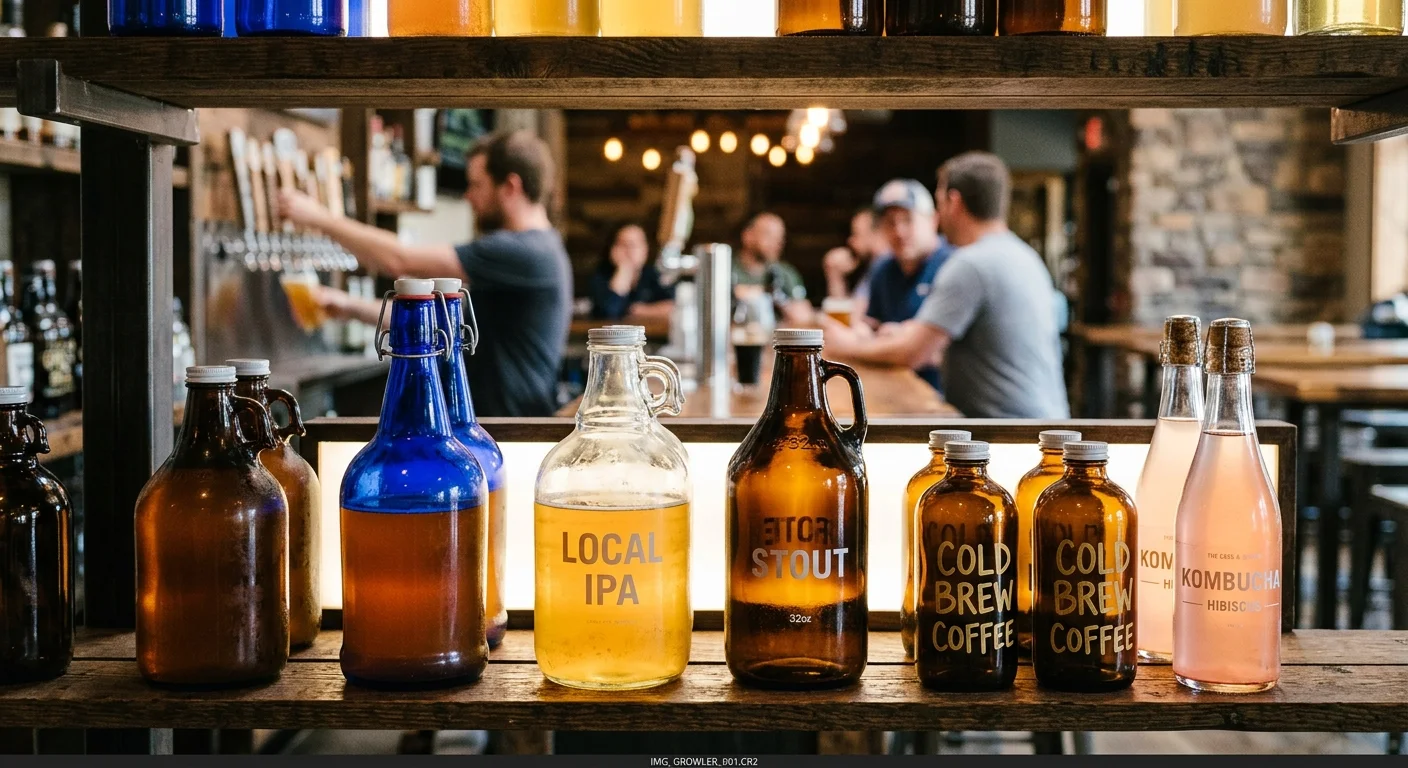
A growler bottle is the container draft beer has always needed — an airtight, refillable jug built to carry fresh beer from the tap to your table, your backyard, or wherever you choose to drink it.
Unlike a standard bottle sealed at the brewery, a craft beer growler travels with you. Fill it at a taproom, a brewery, or straight from your homebrew setup. The seal locks in carbonation and keeps oxygen out. That’s the whole job. Simple, effective, hard to replace.
A History Worth Knowing
The story goes back to late 19th-century America. Workers carried fresh beer home from the local pub in galvanized iron pails. The sloshing liquid released CO₂ as it moved. That escaping gas made a low rumbling growl. The name stuck.
Over the following century, the refillable beer bottle changed a great deal. Metal gave way to glass. Glass gave way to stainless steel. Ceramic and plastic versions came next. Each material brought trade-offs in taste preservation, durability, and cost.
Today’s market breaks down into four main materials: glass, stainless steel, ceramic, and plastic. Each has its advocates. The rest of this guide will show you why glass keeps pulling ahead.
Growler Bottle Sizes: 32 oz、64 oz、128 oz — Which Size Do You Need?
Size matters more than most people admit. Pick the wrong growler and you’re lugging around more beer than you’ll drink. Or you’re rationing your last half-pint like supplies are running out.
Three sizes dominate the market. Here’s what each one gives you.
The Numbers, Side by Side
| Size | Pints | 12 oz Bottles | Best For |
|---|---|---|---|
| 32 oz growler | 2 pints | ~2.7 bottles | Solo use, sampling |
| 64 oz growler | 4 pints | ~5.3 bottles | Small group, everyday use |
| 128 oz growler | 8 pints | ~10.7 bottles | Parties, events, group gatherings |
Breaking Down Each Size
The 32 oz growler is the portable one. Light enough to fit in a bag, practical for a single sitting, and low-stakes if something breaks. The downside is clear — it empties fast. Share it with even one other person and you’ll wish you’d grabbed the bigger jug.
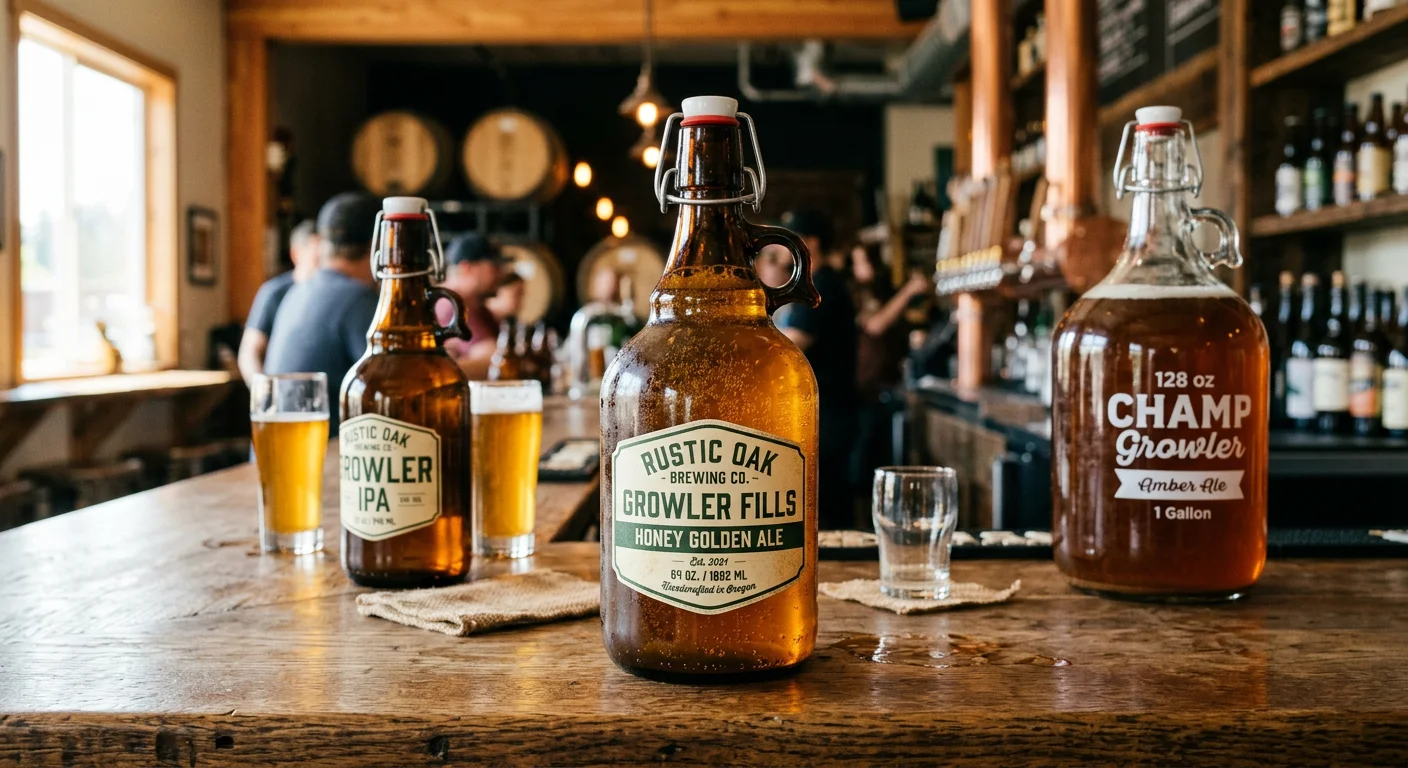
The 64 oz growler is the standard. Walk into almost any brewery or taproom, and this is the size they fill without asking. Most growler bottle programs are built around it. Four pints hits the sweet spot. That’s enough for two people to drink well, and small enough that the beer stays fresh before the last glass is poured. Most homebrew growler setups are also built around this size.
The 128 oz growler — sometimes called a growler jug or beer jug bottle — sits in a different category. This is a party vessel. Eight pints in a single container. It looks great at a backyard gathering. Anywhere else, it feels out of place. Glass at this volume runs heavier and more fragile, so handle with care.
Why 64 oz Became the Default
The 64 oz growler didn’t win by accident. Breweries standardized around it because four pints matches how most people drink draft beer. Enough for a relaxed evening. Not so much that freshness becomes a problem. Consumers followed, and the format stuck.
Buying your first growler? Start at 64 oz. Already know your habits lean smaller or larger? The choice makes itself.
Why Choose Glass Beer Growler Bottles? Material Advantages
Glass doesn’t lie. Pour the same beer into plastic, stainless steel, and glass. Let it sit for 24 hours, then taste each one. The glass version wins. Not because of sentiment or tradition — because of chemistry.
What Glass Does for Beer
Glass is chemically inert. It doesn’t leach anything into your beer. It doesn’t absorb odors from previous fills. It doesn’t react with carbonation. That’s called taste neutrality — and it’s the single most important property a craft beer growler can have.
The other materials fall short here. Plastic absorbs flavors over time. It also lets oxygen seep in through tiny pores. Stainless steel is tough and popular, but it can leave a faint metallic edge under certain conditions. You also can’t see what’s inside. Ceramic looks great but costs more and weighs more. Glass hits the sweet spot between performance and practicality.
The food-safe case is just as clear. Glass passes the strictest FDA and EU food-contact standards — no coatings, no liners, no chemical treatments needed. What you fill is what you taste.
The Four-Way Comparison
| Material | Taste Neutrality | UV Protection | Durability | Cost |
|---|---|---|---|---|
| Glass | ★★★★★ | ★★★★☆ (amber) | ★★★☆☆ | Low |
| Stainless Steel | ★★★★☆ | ★★★★★ | ★★★★★ | High |
| Ceramic | ★★★★☆ | ★★★★★ | ★★★☆☆ | High |
| Plastic | ★★☆☆☆ | ★★☆☆☆ | ★★★★☆ | Very Low |
Amber glass growler bottles add UV blocking to the mix — the same reason most quality beer ships in dark bottles. Light breaks down hop compounds fast. Brown glass cuts that damage down by a wide margin.
The Business Case for Glass
Breweries and craft taprooms come back to refillable glass growler bottles for two reasons: cost and presentation. Glass costs far less to buy in bulk than stainless steel. So your per-unit spend stays low even at scale. It’s also clear — customers can see the beer color, the clarity, the carbonation bubbles rising to the top. That visual sells the product before a single sip.
A swing top growler or screw cap growler in branded amber glass turns into a marketing tool the moment it leaves your taproom. Your customer carries your logo home. That kind of exposure doesn’t add to your costs.
Swing Top vs Screw Cap: Choosing the Right Growler Closure
The closure on your growler bottle does one job: keep oxygen out. How it does that job determines which one belongs in your hands.
Swing Top Growlers
A swing top growler uses a ceramic disc pressed against a rubber gasket. A wire bail and spring mechanism holds it all down. Lock the bail, and the gasket compresses into an airtight seal. No threading. No torque judgment. Just flip it shut.
That simplicity is the whole point. You open a refillable beer bottle at home, pour a glass, seal the rest for later, then do it again tomorrow. You need a closure that works the same way every time. The swing top does exactly that — no guesswork, no adjustment.
It also holds up over time. Replace the rubber gasket every year or two. The rest of the hardware keeps going.
Screw Cap Growlers
A screw cap growler seals through threaded contact between the cap and the bottle neck. Twist it tight. Done.
Breweries and taprooms filling dozens of growler bottles per shift will appreciate that. Screw caps move faster at the counter. They clean up easy. Replacement caps cost almost nothing. High-volume operations benefit from that kind of low-friction workflow — less fuss, faster fills, fewer bottlenecks.
The trade-off is seal consistency. You need steady hand-tightening every time to keep the seal solid. Under-tighten it and carbonation escapes. The swing top cuts out that variable completely — the mechanism does the work for you.
Which One to Choose
| Swing Top | Screw Cap | |
|---|---|---|
| Seal mechanism | Gasket compression | Threaded contact |
| Best for | Home use, repeated opening | Taproom filling, bulk ops |
| Replacement parts | Rubber gasket | Full cap |
| Ease of use | One-handed flip | Requires tightening judgment |
Home use points to the swing top. Brewery operations point to the screw cap. Both seal well with proper use — the difference is where each one fits into your routine.
Glass Color Guide: Amber, Clear, and Blue Growler Bottles
Color isn’t decoration. In glass growler bottles, it’s function — and the wrong choice costs you flavor.
Amber: The Workhorse
Amber glass blocks 99% of UV light. That matters. UV radiation triggers a chemical reaction in hops. It converts hop compounds into 3-methylbut-2-ene-1-thiol — the same sulfur molecule found in skunk spray. Brewers call it “skunking.” It ruins beer fast. It happens even through indirect sunlight.
An amber growler stops that process before it starts. Your beer is traveling to outdoor events, farmers markets, or on long drives? Amber is the clear choice. There’s a reason serious craft beer growler programs default to brown glass — the science is settled.
Clear: Honest and Immediate
Clear glass filters zero UV. That’s just the truth. For beer, it’s a poor fit for anything beyond immediate consumption. Fill it, drink it within the hour, and keep it out of direct light.
Where clear wins is visibility. Kombucha brewers love it. Cold brew coffee producers love it. The deep amber tone of a cold brew — or the cloudy, living culture of a refillable beer bottle filled with kombucha — looks striking through clear glass. Your product is your presentation, and clear glass lets it speak for itself.
Blue and Specialty Colors: Brand First
Blue growler bottles offer moderate UV protection. Better than clear, yes — but well behind amber. They don’t serve a technical brewing purpose so much as a branding one. A cobalt blue swing top growler on a retail shelf stops eyes cold. Craft producers and gift-market brands use colored glass to stand out.
The trade-off is straightforward: you gain shelf presence, you give up maximum light protection.
| Color | UV Protection | Best Use |
|---|---|---|
| Amber | High (~99%) | Beer, outdoor transport, storage |
| Clear | None | Kombucha, cold brew, immediate use |
| Blue | Moderate | Branding, gift market, retail display |
Beyond Beer: Using Glass Growler Bottles for Kombucha, Cold Brew & Wine
Beer made the growler famous. Everything else followed.
Glass growler bottles have become the go-to container for a much wider range of beverages. The reason is always the same. Airtight seal. Inert walls. Zero flavor interference. Whatever you fill it with, the glass stays out of the way.
Kombucha and Cold Brew
Kombucha is a live product. Active cultures produce CO₂ non-stop. That means pressure builds inside the container over time. A swing top growler handles this well. The gasket compresses under pressure instead of cracking or warping. Glass also doesn’t react with the acidity of fermented kombucha the way plastic does. No off-flavors. No seal material breaking down.
Cold brew coffee is a simpler case. The main issue is oxygen exposure. Oxygen speeds up oxidation and kills the flavor. A sealed refillable beer bottle filled with cold brew and kept refrigerated holds its depth for days longer than a container with a loose cap.
Clear glass works well for both. The look alone — dark coffee, cloudy kombucha — sells the product before anyone opens the lid.
Wine and Light-Sensitive Liquids
Wine reacts to UV light much like beer does. Light degrades it. For short trips or outdoor events, an amber growler jug gives the same protection it offers for hops. It blocks the wavelengths that trigger oxidation.
This isn’t a replacement for a wine bottle. It’s a practical fix for specific situations — picnics, events, or anywhere a standard bottle gets in the way.
The Homebrewer’s Angle
Homebrew growler use goes far beyond moving finished beer around. Many homebrewers use 64 oz and 128 oz growler jugs for short-term batch storage between fermentation stages. Not as primary fermenters — but as flexible overflow vessels when space runs short. The wide range of sizes makes glass growlers useful across the whole homebrew workflow.
Glass Beer Growler Bottles Wholesale & Custom Options (B2B Buying Guide)
Sourcing glass growler bottles in bulk is a different game than buying one for your kitchen shelf. The decisions add up fast — MOQ, customization, certifications, lead times. Get them right the first time and you save money. Get them wrong and you lose a supplier relationship plus face a production delay.
Here’s what matters most when buying beer growler bulk.
Key Decisions Before You Place an Order
Minimum Order Quantities (MOQ) vary by manufacturer. Most factories producing brewery growler bottles start at 500–1,000 units per SKU. Start with a sample order. Any solid supplier will work with you on that.
Customization options worth asking about:
– Size: 32 oz, 64 oz, and 128 oz are standard. Custom volumes are available with tooling fees.
– Color: Amber, clear, blue, or specialty finishes
– Closure type: Swing top or screw cap, factory-fitted or separate
– Logo & labeling: Screen printing, embossing, or custom sleeve labels
Quality certifications are required for food-contact glass — no exceptions. Look for FDA compliance (US market) or LFGB certification (EU market). Both confirm the glass is safe for direct beverage contact. A manufacturer that can’t produce these documents? Skip them.
What Custom Growler Bottles Cost
Wholesale pricing for glass growler wholesale orders runs $1.50–$4.00 per unit. The final price depends on size, color, and customization level. Branded amber 64 oz units with swing tops land in the mid-range. Clear screw-cap bottles at high volume push toward the lower end.
How to Evaluate a Supplier
Three things separate a reliable glass growler manufacturer from a risky one:
- Documented OEM/ODM capability
- A clear sample policy
- Verifiable factory certifications
Ask for all three before you commit to anything.
tpglassbottle.com supplies custom and wholesale glass growler bottles with full FDA/LFGB documentation, flexible MOQs, and OEM support. Reach out to the team for pricing and samples.
Conclusion
We hope this comprehensive guide has given you all the information you need about glass beer growler bottles. From their benefits for both breweries and consumers to tips for proper care and maintenance, we’ve covered it all. TP Glass Bottle Manufacturer is your trusted partner for high-quality glass growler bottles in every size and style. We combine expert craftsmanship with competitive pricing and reliable global delivery to serve breweries, pubs, and beverage companies worldwide. Visit our website to browse our full product catalog or contact our sales team today to start your growler bottle order.