

Let’s be real—most of us grab a bottle of olive oil from the store, bring it home, and set it on the counter without a second thought. Today, we’re taking a simple look at three common options—dark glass bottles, metal containers, and plastic ones—to help you decide which is best for keeping your olive oil in great shape.
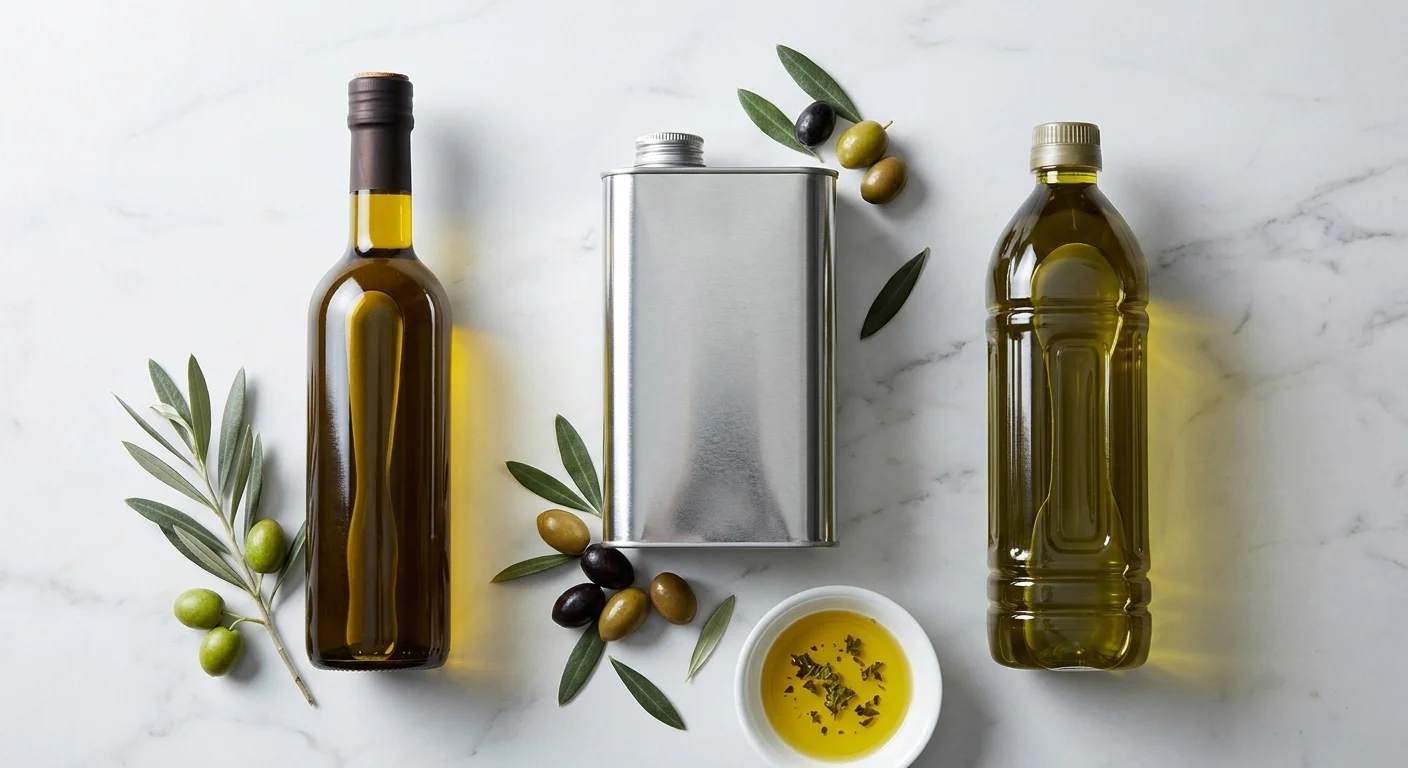
Table of Contents
Why Your Olive Oil Storage Container Matters More Than You Think
Olive oil doesn’t spoil because it’s low quality. It spoils because most containers work against it.
Four forces break down your oil from the moment it’s bottled: UV light, oxygen, heat, and chemical contamination from reactive packaging. Each one causes a different type of damage. Together, they strip your extra virgin olive oil of its flavor, aroma, and nutritional value — long before the best-by date on the label.
Here’s what that looks like in real numbers:
- Light damage: Clear glass stored under standard fluorescent lighting can cause olive oil to lose up to 40% of its polyphenols within just two months. Polyphenols give the oil that peppery, grassy bite. They’re also the main health driver behind extra virgin olive oil’s reputation.
- Oxygen exposure: Even small amounts of air trigger oxidation. Fresh oil turns rancid and flat fast.
- Heat: Repeated temperature swings — like sitting near a stove — speed up chemical breakdown. It happens faster than most people expect.
- Reactive packaging: Certain plastics leach compounds into the oil over time. This affects both the taste and the safety profile.
The container doesn’t just hold your olive oil. It either protects it or destroys it.
Dark Glass Bottles for Olive Oil: The Gold Standard Explained
There’s a reason every serious olive oil producer — from small Sicilian family estates to award-winning Greek producers — reaches for dark glass at bottling time.
Dark glass isn’t just a pretty package. It’s a proven defense system.
How Dark Glass Blocks Light Damage
Amber and dark green glass contain iron oxide and other metal compounds built into the glass itself. These compounds work as a physical UV filter. They absorb and scatter the light wavelengths that trigger oxidation in olive oil.
The numbers back this up:
- Amber glass blocks 99% of UV radiation below 450nm
- Dark green glass blocks around 85–90% of harmful UV wavelengths
- Clear glass? It blocks almost nothing — which is why clear-bottled oil degrades so much faster on retail shelves
That UV protection keeps polyphenols intact, preserves flavor compounds, and gives your oil a longer shelf life than clear or light-colored containers can offer.
Non-Reactive Glass — and That Matters More Than You’d Think
Glass doesn’t react with anything inside it. That’s what “chemically inert” means in plain terms. For olive oil storage, it’s a big deal.
Unlike certain plastics, glass contains no BPA, no phthalates, no plasticizers of any kind. Nothing migrates into your oil — not after one week, not after two years. The FDA recognizes glass as food-safe because it holds a permanent barrier between the packaging and the contents.
This matters most with extra virgin olive oil. Its fats pick up chemical compounds fast from reactive containers. Dark glass keeps that from happening. What goes in stays pure.
Why Premium Brands Choose Dark Glass
Walk down the specialty food aisle and look at which oils carry the highest prices. Almost all of them come in dark glass bottles — and that’s no accident.
Dark glass signals quality before anyone opens the cap. It tells buyers the producer took care to protect the product. For B2B buyers — olive oil brands, bottlers, private-label producers — dark glass is both a product quality choice and a brand-positioning move. You’re not just protecting the oil. You’re shaping how customers see your brand from the shelf.
The bottle tells the story. Make sure yours tells the right one.
Metal Containers (Tin & Stainless Steel): A Smart Alternative
Metal earns its place in olive oil storage — and for good reason.
Tin cans and stainless steel containers block 100% of incoming light. No UV filtering needed. No amber pigments required. The metal wall itself is a solid, total barrier. Oxygen resistance is strong too, especially with a well-sealed tin. On pure protective performance, metal sits right alongside dark glass at the top of the class.
But here’s where it gets interesting.
The Food-Grade Lining Question
Not all metal containers are equal. This detail separates a smart purchase from a regrettable one.
Bare, unlined metal reacts with olive oil’s natural fatty acids. That reaction causes metallic off-flavors. It also triggers oxidative catalysis — metal ions speed up the breakdown of your oil instead of protecting it.
The fix is a food-grade lacquer lining on the interior surface. Quality tin containers use it. It puts a neutral barrier between the metal and the oil, cutting out any migration risk. Sourcing metal containers at bulk B2B volumes? Always check that the interior lining is there. This is non-negotiable.
Where Metal Shines: Bulk & Commercial Use
For olive oil producers, distributors, and bottlers moving large quantities, metal containers offer real practical advantages that glass can’t match:
- Lighter weight means lower freight costs at scale
- Shatterproof construction cuts breakage losses during transport and warehousing
- Traditional 3L and 5L tin formats are a well-established, trusted trade format
These advantages make metal a solid choice for B2B supply chains.
The Real Limitations to Know
Metal has a few honest drawbacks worth knowing:
- No visibility — you can’t check oil level or color without opening the container
- Hard to clean thoroughly for reuse
- Once opened, keeping a reliable airtight seal becomes inconsistent
For everyday home storage and retail shelf display, those limitations matter. Dark glass handles both better. But in the right commercial setting, metal holds its own.
Plastic Bottles for Olive Oil: The Hidden Risks You Should Know
Let me be straight with you: plastic is the worst container choice for olive oil, full stop.
It’s cheap, it’s lightweight, and it’s everywhere — but those conveniences come at a real cost to your oil’s quality, safety, and flavor.
Plastic Leaches Into Your Oil
Here’s the part that should give you pause. Plastics contain chemical additives — BPA, phthalates, plasticizers. These compounds don’t stay locked inside the container wall. They migrate. Over time, they move into the fatty acids of your olive oil.
Heat and light make that process worse. Store a plastic bottle near a warm stove or on a sunny countertop, and migration rates spike fast. That peppery, grassy extra virgin olive oil you paid good money for? It starts picking up off-flavors you can’t taste — but they’re there.
Oxygen Sneaks Through
Unlike glass or metal, plastic breathes. PET and HDPE bottles have measurable oxygen transmission rates. Air passes through the container wall itself, not just through the cap. For olive oil, that’s a slow, invisible problem. Oxidation creeps in and turns fresh oil flat and rancid before you notice.
The Two Cases Where Plastic Might Work
Two scenarios make plastic acceptable — short-term use under 30 days, or a very tight budget with no other options. Even then, choose food-grade PET. Keep it away from light and heat. Use the oil fast. That’s the minimum standard. It’s not a real solution — it’s damage control.
The Brand Image Problem
For olive oil producers and bottlers, plastic carries one more penalty: perception. Premium olive oil and plastic packaging don’t belong together. Customers link plastic with low-end, commodity products. A brand built on quality takes a hit from plastic packaging. It works against everything your label promises.
Dark glass doesn’t just protect the oil. It protects the brand.
Head-to-Head Comparison: Dark Glass vs Metal vs Plastic (Full Analysis Table)
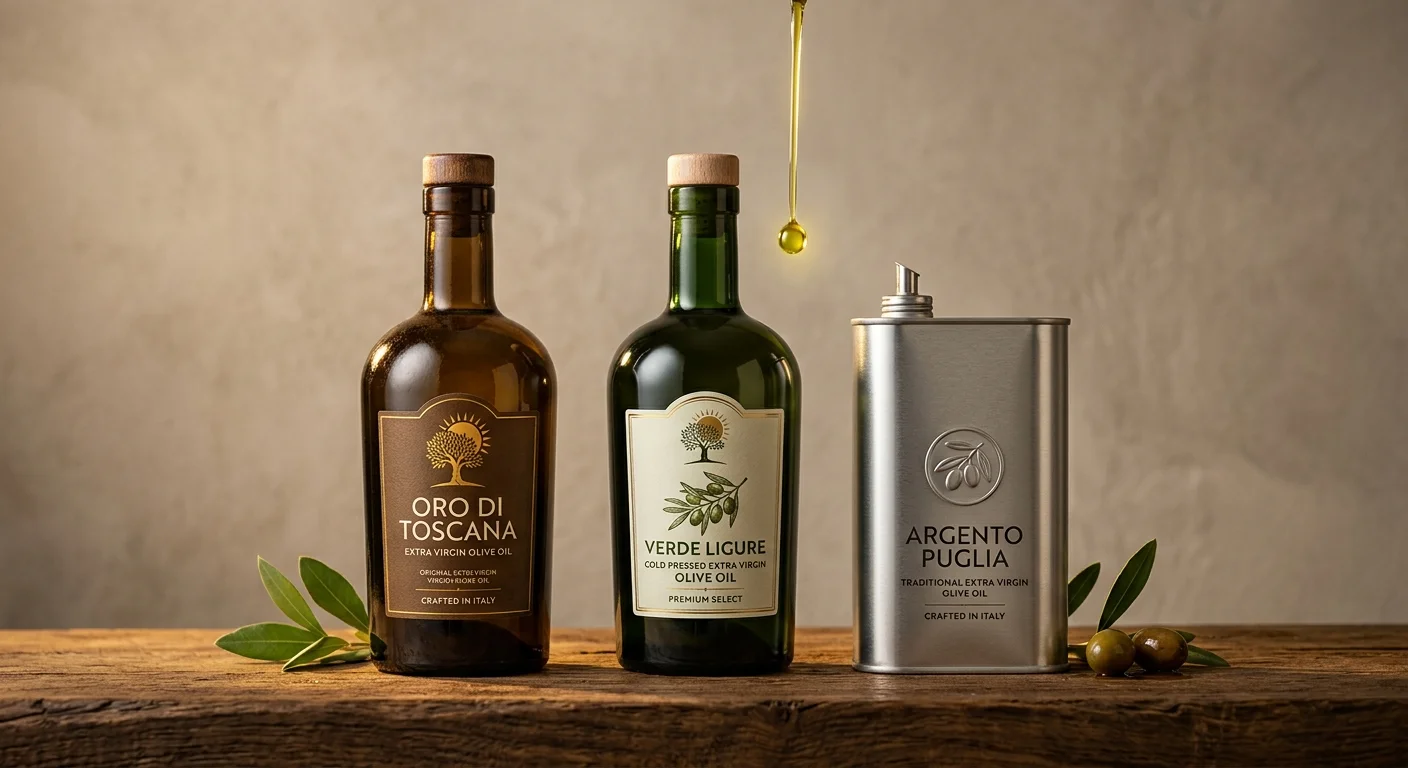
Numbers don’t lie. The data on olive oil containers tells a clear story.
The table below compares all three materials across eight dimensions that matter for olive oil quality and safety. No fluff, no filler — just a straight comparison.
| Dimension | Dark Glass (Amber/Green) | Metal (Tin/Stainless) | Plastic (PET/HDPE) |
|---|---|---|---|
| UV / Light Protection | ★★★★★ Blocks 85–99% UV | ★★★★★ 100% opaque | ★☆☆☆☆ Near zero |
| Oxygen Barrier | ★★★★☆ Excellent with airtight seal | ★★★★☆ Strong when sealed | ★★☆☆☆ Permeable walls |
| Chemical Safety | ★★★★★ Inert, zero migration | ★★★★☆ Safe with food-grade lining | ★★☆☆☆ BPA/phthalate migration risk |
| Seal Integrity | ★★★★★ Consistent, reliable | ★★★☆☆ Degrades after opening | ★★★☆☆ Adequate short-term |
| Polyphenol Retention | ★★★★★ Highest | ★★★★☆ High | ★★☆☆☆ Significant loss over time |
| Weight & Shipping Cost | ★★★☆☆ Heavier | ★★★★☆ Lightweight at bulk | ★★★★★ Lightest |
| Recyclability | ★★★★★ Recyclable without limit | ★★★★☆ Strong recyclability | ★★☆☆☆ Downcycled, often landfilled |
| Cost | ★★★☆☆ Mid-range | ★★★☆☆ Mid-range at volume | ★★★★★ Cheapest |
Which Container Fits Your Situation
The right choice depends on who’s buying and why.
Home cooks and everyday consumers: Dark glass wins, no contest. It protects flavor, keeps the oil safe, and looks great on a kitchen shelf — and that last part is not a small thing.
Restaurants and food service buyers: Dark glass or lined tin both work well. Volume and logistics play a big role here. Metal’s lighter weight makes it worth considering for bulk orders.
Olive oil brands and private-label bottlers: Dark glass is the professional standard. It protects polyphenol content. It signals quality on the shelf. Metal and plastic simply can’t meet those brand expectations at the same level.
One container leads across just about every dimension. The table makes that clear.
Buying Guide: How to Choose the Right Olive Oil Storage Container
The right container comes down to three questions: Who’s using it, how much do you need, and what does your oil deserve?
For home cooks, the answer is simple. Grab a dark amber or dark green glass bottle — 500ml to 750ml is the sweet spot for most kitchens. Make sure it has an airtight pour spout. Store it away from the stove and windowsill. That’s all it takes to keep your extra virgin olive oil tasting the way it should, from first pour to last.
For olive oil brands and private-label bottlers, the decision runs a little deeper. A few things worth locking down before you place an order:
- MOQ and unit cost — quality glass suppliers work with minimum order quantities. Higher volume means lower per-unit cost. Know your numbers before you compare quotes.
- Customization options — bottle color (amber vs. dark green), shape, embossed logo, and label surface all affect shelf presence. These details aren’t cosmetic. They’re brand identity made physical.
- Lead time and consistency — a reliable supplier delivers the same bottle dimensions and glass weight across every production run. Inconsistency creates bottling-line headaches. Nobody has time for that.
That’s where a manufacturer like TPGlassBottle.com fits in. They focus on food-grade dark glass bottles for olive oil. You get custom sizing, UV-protective glass options, and B2B order support — all built into the process. Sourcing at scale? It’s worth a conversation.
The short version: dark glass protects the oil, custom glass protects the brand. Neither one should be an afterthought.
FAQ: Your Top Questions About Olive Oil Storage Containers Answered
Good olive oil deserves straight answers — not a rabbit hole of conflicting advice. Here are the most common questions, answered directly.
How long does olive oil last in a dark glass bottle?
Keep extra virgin olive oil in an amber or dark green glass bottle, away from heat and light. It stays fresh for 18–24 months unopened. After opening, use it within 6–8 weeks for the best flavor.
Is a UV protection glass bottle necessary?
Yes. Amber glass blocks up to 99% of UV radiation. That protection keeps polyphenols intact. It also stops oxidation — the process that turns fresh, peppery oil dull and flat.
Is olive oil in plastic bottles safe?
Short-term, it’s tolerable. Long-term, no. Plastics can push BPA and phthalates into the oil. Heat and light make this worse. A BPA-free olive oil bottle made from food-grade glass is the safer choice.
Which is better for olive oil — tin cans or glass bottles?
Both provide strong UV and oxygen protection. Tin is lighter, so it works better for bulk shipping. Glass holds up better for shelf life consistency, reusability, and chemical stability. For retail and home use, dark glass is the stronger olive oil shelf life container.
What makes a good airtight olive oil dispenser?
Look for dark glass construction. You want a pour spout with a secure stopper. The bottle should seal tight between uses. These three features cut oxygen exposure each time you cook.
Does bottle color matter that much?
It does. Amber edges out dark green on UV blocking. But both are far ahead of clear glass. Clear glass offers close to zero protection — so it’s not a real option for long-term storage.
Conclusion
For most people, a dark glass bottle—especially a quality one—ends up being the smart, no-compromise home for your oil. It’s non-reactive, it blocks the UV rays that speed up oxidation, and it just keeps your olive oil tasting the way the producer intended, longer. That’s exactly the kind of bottle we focus on at TP Glass Bottle Manufacturer. If you’re looking for bottles that protect what’s inside as well as you do, drop us a line anytime.
👉 Ready to find the perfect olive oil glass bottle? Explore TP Glass’s full range of food-grade amber and dark glass bottles — built for quality, designed for freshness, and ready to protect every bottle you fill.