

When choosing pill bottles for medication storage and dispensing, two common options are plastic and glass bottles. Each material has its own advantages and drawbacks in terms of protection, safety, cost, and environmental impact. Understanding how plastic and Glass Pill Bottles compare can help you make an informed decision for your pharmaceutical or supplement packaging needs.
Table of Contents
What Makes a Pill Bottle “Safe” for Medication Storage
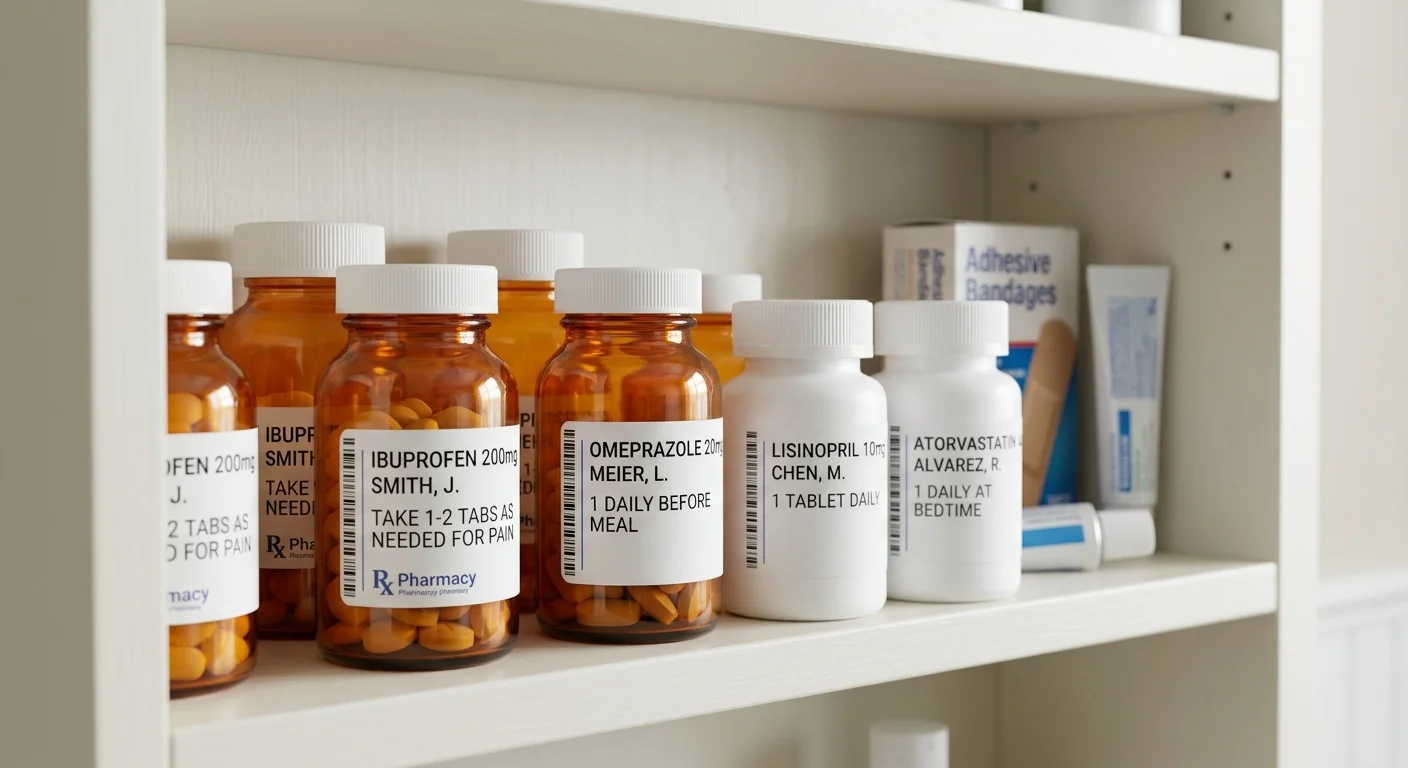
Safety in medication storage isn’t a feeling — it’s a measurable standard.
The FDA and United States Pharmacopeia (USP) have set clear requirements for what counts as a suitable pharmaceutical container. These aren’t suggestions. They’re the baseline every pill bottle must meet before it holds a single tablet.
Here’s what the standards require:
- Chemical inertness: The container must not react with, absorb, or leach substances into the medication it holds
- Light protection: Some drugs break down fast under UV and visible light exposure — compliant containers must block or cut transmission by a defined amount
- Moisture barrier: Humidity speeds up drug breakdown. Packaging must limit moisture permeation to defined thresholds
- Physical integrity: The container must protect contents from contamination and physical damage across its full shelf life
USP places containers into categories — including tight, well-closed, and hermetic. Each category has specific performance criteria based on the drug type stored inside.
The material you choose determines which of these standards your container can meet.
Plastic checks some boxes. Glass — especially pharmaceutical grade glass bottles — checks all of them. That’s why glass stays the go-to material in clinical settings and for high-sensitivity medications.
Glass Pill Bottles: Chemical Inertness and Long-Term Stability Advantages
Glass doesn’t negotiate with chemistry. That’s the point.
Plastic is porous and can break down over time. Glass won’t. It holds its structure at the molecular level — no compounds leach into your medication, no active ingredients get absorbed by the container, no reactions triggered by temperature swings over months or years. For long-term medication storage safety, that kind of steady, silent reliability matters more than most people think.
Borosilicate vs. Soda-Lime: Not All Glass Is Equal
Two main types of glass go into pharmaceutical packaging. The difference between them is real and worth knowing.
Borosilicate glass contains boron trioxide. That ingredient tightens the internal structure of the glass and gives it strong chemical resistance. It handles extreme pH levels. It resists breakdown from water-based solutions. It stays stable even with reactive drug compounds. That’s why injectable medications and high-sensitivity formulations almost always use it as the default material.
Soda-lime glass is easier to produce and costs less. It works fine for many solid-dose medications. But it’s a weaker choice for liquid drugs or chemically aggressive compounds — the resistance just isn’t there.
For pharmaceutical grade glass bottles, borosilicate sets the standard. It meets USP Type I classification — the most rigorous category in pharmaceutical container testing.
How Amber Glass Blocks Light Damage
Light breaks down medication faster than most people expect. UV exposure attacks molecular bonds in vitamins, antibiotics, and many other compounds. Sometimes the damage starts within days.
Amber glass pill bottles block light across wavelengths from 290nm to 450nm. That cuts UV exposure by up to 99%. This isn’t a marketing claim — it’s a built-in optical property of the glass itself. Clear glass gives you almost none of that protection.
So for photosensitive medications, the container color isn’t about looks. It’s doing real work.
Where Glass Has Always Been Trusted
Vaccines, injectable drugs, volatile compounds — pharmaceutical teams have stored these in glass medicine storage containers for decades. Not by chance. Regulatory agencies and manufacturers choose glass because it adds no variables to the equation. What goes in stays intact.
- Glass doesn’t off-gas
- Glass doesn’t absorb
- Glass doesn’t react
That stability is the core advantage. Everything else follows from it.
Plastic Pill Bottles: Durability and Cost-Effectiveness in Daily Use
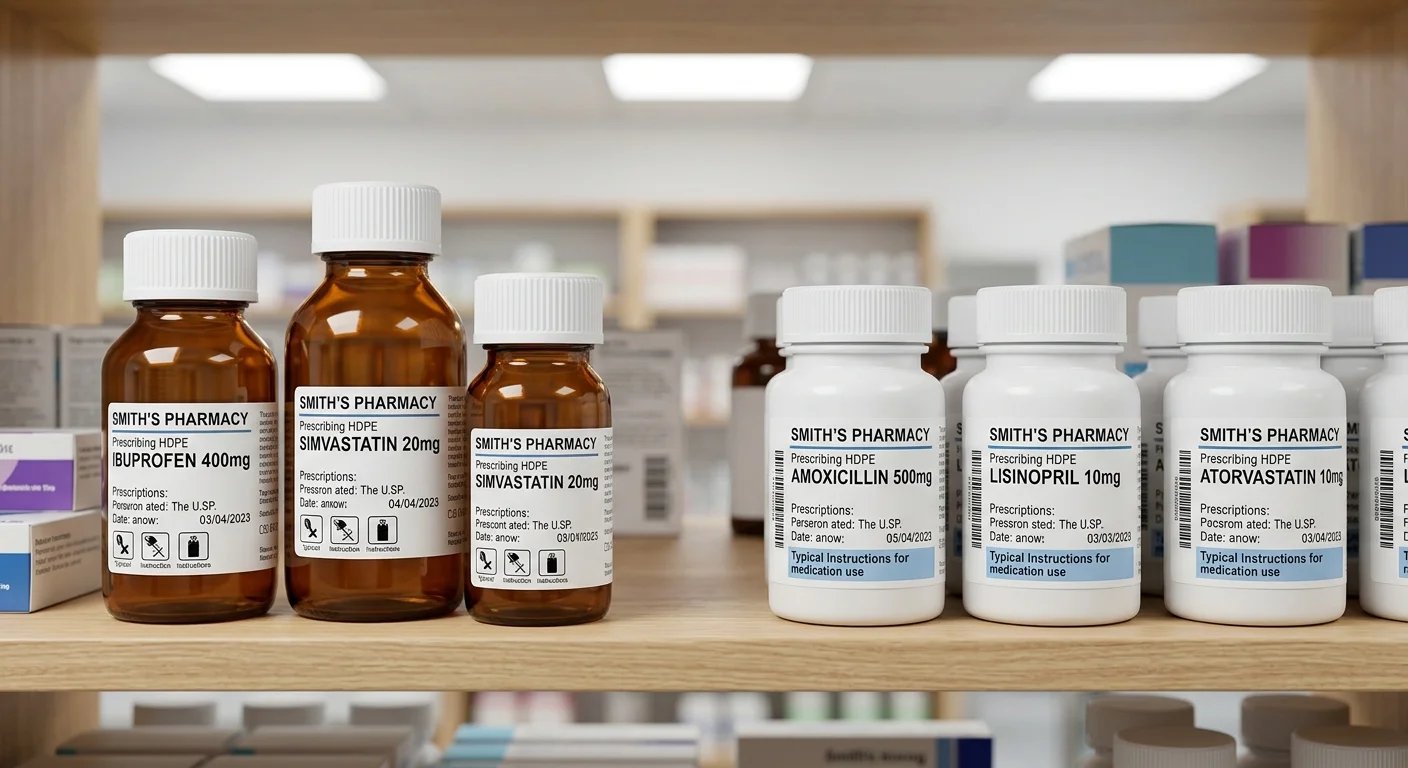
Plastic earned its place in pharmacy for good reasons — more than one.
Walk into any retail pharmacy. You’ll find that most prescription bottles are made from HDPE (high-density polyethylene) or PP (polypropylene). These aren’t random choices. Both materials carry USP and FDA approval for pharmaceutical use. They’ve passed baseline safety evaluations for solid-dose medications like tablets and capsules. Pharmaceutical-grade HDPE and PP belong to a different category than the plastic in a grocery bag or a cheap storage bin. The certification process is real.
For the everyday prescription — a 30-day supply of blood pressure medication, a course of antibiotics — plastic gets the job done.
The Cost Advantage Is Significant
Plastic bottles cost a fraction of glass in high-volume pharmacy settings. Retail pharmacies fill hundreds of prescriptions each day. That cost difference adds up fast. Plastic is lightweight, shatter-resistant, and easy to produce at scale. It survives a tumble off the bathroom counter. It slips into a bag or pocket without trouble.
For short-term, high-turnover use cases, the economics make sense.
Where the Limitations Appear
The complications start as conditions change. Leachables and extractables — the chemical compounds that can move from plastic into the medication — aren’t a fixed number. They shift based on several variables.
Temperature is the biggest factor. Studies show chemical migration from plastic speeds up above 40°C (104°F). Longer storage time raises exposure. Oil-based or solvent-type ingredients in a medication also push that interaction further.
BPA-free labeling is meaningful, but it only tells part of the story. Many manufacturers swapped BPA for BPS (bisphenol S) or other alternative plasticizers. Emerging research suggests these substitutes may carry similar hormonal disruption risks. So “BPA-free” on a label isn’t a full safety guarantee.
For short-term storage of stable, solid medications in controlled conditions, pharmaceutical-grade plastic is a reasonable choice. For long-term storage, temperature-sensitive compounds, or liquid and reactive formulations — the math changes.
That’s the honest picture.
Head-to-Head Comparison: Glass vs Plastic Across 6 Critical Dimensions
Six dimensions. Two materials. One clear pattern.
Here’s what the data shows — not in theory, but across real storage conditions where medication either stays stable or slowly breaks down.
1. Chemical Stability by Formulation Type
The drug type matters just as much as the container material.
- Water-based medications: Glass doesn’t react with water-based solutions at all. Plastic HDPE works for short-term use, but hydrolysis risk grows the longer you store it.
- Oil-based formulations: This is where the gap gets wide. Fat-soluble compounds pull chemicals out of plastic polymers over time. Glass transfers zero extractables — none, full stop.
- Powder medications: Both materials do well here. That said, glass seals out moisture more reliably and carries no static charge risk that can clump fine powders together.
2. Light Protection: Amber Glass vs. Opaque HDPE
Amber glass pill bottles block 290–450nm wavelengths — cutting UV transmission by up to 99%. Opaque white HDPE blocks visible light well, but UV filtering varies based on wall thickness and pigment concentration. For light-sensitive drugs like doxycycline or certain vitamins, amber glass gives you consistent, measurable protection every time.
3. Moisture Resistance
Glass forms a true seal by nature. A well-sealed airtight glass pill container holds steady internal humidity no matter what’s happening outside. Pharmaceutical HDPE has set moisture vapor transmission rates — fine for most solid tablets, but the moisture transfer is higher than glass across multi-month storage periods.
4. Heat Sterilization Tolerance
This one isn’t close. Pharmaceutical grade glass bottles handle autoclave sterilization (121°C, 15–20 minutes) with zero structural change or chemical release. Plastic warps, releases accelerated extractables, and loses container integrity under the same heat. Any medication needing terminal sterilization must use glass — it’s not a preference, it’s a requirement.
5. Environmental Lifecycle Cost
The full picture goes beyond “glass is heavier.”
- Glass production puts out more upfront carbon emissions than plastic
- Glass is 100% recyclable — again and again, with no material loss
- Plastic recycling rates sit around 9% across the world
- Add up production + transport + end-of-life across multiple use cycles, and glass reaches carbon parity. It often comes out ahead.
BPA-free pill bottles made from plastic still feed microplastic pollution. Glass doesn’t add a single particle.
6. Practical Handling and Economics
Plastic wins on weight, drop resistance, and unit cost. For high-volume retail pharmacy dispensing of short-term prescriptions, that cost math is real. Glass costs more per unit and needs more care in handling.
For long-term storage, specialty formulations, and brands where packaging signals quality — glass medicine storage containers deliver value plastic can’t touch.
Across all six dimensions, the pattern holds: glass leads where precision matters most.
Which Medications Benefit Most from Glass Bottles
Some medications are too reactive, too volatile, or too light-sensitive for plastic. For these, glass isn’t a premium upgrade — it’s the only responsible choice.
Medications That Require Glass by Nature
Photosensitive drugs top the list. Nifedipine (a common calcium channel blocker), certain nitroglycerin formulations, and doxycycline start breaking down within days of light exposure. Amber glass pill bottles aren’t optional for these compounds — they’re doing real protective work.
Volatile and liquid formulations come next. Essential oil-based preparations, alcohol-based tinctures, and solvent-heavy compounds react with plastic polymers over time. This pulls plasticizers directly into the solution. Glass transfers nothing. That clean barrier is what these drugs need.
Strongly acidic or alkaline liquid medications round out the category. Hydrolysis — the breakdown reaction triggered by water and pH — speeds up fast in plastic containers. Glass medicine storage containers stay chemically inert at any pH level. The formulation stays intact, just as it was compounded.
USP <661> makes this clear. It mandates glass packaging for injectable preparations, volatile compounds, and medications where chemical migration from the container would compromise safety or potency.
Vitamins and Supplements: A Strong Case for Glass
The evidence here is solid and worth knowing. Fish oil stored in glass holds oxidative stability longer than in plastic. Fat-soluble compounds pull polymer additives out of plastic walls over months — glass stops that entirely. Vitamin C also degrades faster as moisture gets in. Pharmaceutical grade glass bottles control moisture more consistently than HDPE across long storage periods.
For supplement brands that lead with quality, this isn’t just a packaging choice. It’s shelf-life performance you can point to with data.
How to Choose the Right Pill Bottle for Your Specific Use Case
Three variables decide the right container: what you’re storing, how long, and where.
Use this as your decision framework:
By medication type
– Liquid, oil-based, or reactive formulations → glass. Full stop.
– Photosensitive drugs or volatile compounds → amber glass pill bottles are the right call here
– Solid tablets or capsules, short-term use → pharmaceutical-grade plastic works fine
By storage duration
– Under 90 days, stable conditions → plastic is a reasonable choice
– 3 months or longer → glass medicine storage containers hold chemical integrity. Plastic starts to break down over time.
By setting
– Daily carry or travel → plastic wins on weight and drop resistance
– Home medicine cabinet or long-term storage → glass
– Clinical or compounding pharmacy → pharmaceutical-grade glass bottles are the standard. Not the exception.
Pharmacies and supplement brands buying in volume have one more layer to think through. Find suppliers who provide USP compliance documentation, offer custom sizing, and match minimum order quantities to your dispensing volume. Airtight glass pill containers with tamper-evident closures matter here — for regulatory reasons, and for the customers reading your label.
A practical shortcut: not sure about a medication’s sensitivity? Choose glass. The cost difference is real but small. The stability difference can be significant.
Frequently Asked Questions
Does glass affect how medication tastes or smells?
No. Glass is chemically inert — it doesn’t interact with what’s inside it. No compounds transfer. No odors absorb into the walls and linger. What you put in is what you get out. Plastic, by contrast, can hold trace smells over time. This is especially true with oil-based or liquid formulations.
Is it safe to leave plastic pill bottles in a hot car?
This one matters more than most people realize. A parked car can hit 40°C (104°F) on a warm day — fast. At that point, chemical migration from plastic speeds up at a measurable rate. Plasticizers and polymer additives move into your medication faster under heat. Short exposure won’t ruin everything, but repeated exposure is a real risk. Glass doesn’t have this problem.
Amber glass or clear glass — which is better?
It depends on what you’re storing. Photosensitive medications need amber glass. That includes certain antibiotics, vitamins, and nitroglycerin formulations. Amber glass blocks 290–450nm wavelengths and cuts UV transmission by up to 99%. For drugs that aren’t light-sensitive, clear glass works fine. Not sure which you need? Go with amber — it’s the safer choice.
How do you clean glass pill bottles for reuse?
Use warm water and mild soap. Rinse well. For sterilization, glass holds up to autoclave heat at 121°C — no warping, no chemical release into the container. Dry it out before refilling. Moisture is the one variable you want to keep out.
Conclusion
The bottle holding your medication isn’t just packaging. It’s the last line of defense between a well-formulated drug and the environment trying to break it down.
Glass wins on chemistry. It won’t leach, won’t react, and won’t compromise what’s inside. Amber glass pill bottles offer UV protection and chemical inertness that plastic cannot match. For long-term storage, sensitive compounds, or anyone who’d rather not think about what’s seeping into their supplements — that difference is real.
Plastic has its place: lighter, cheaper, fine for short-term use. But “good enough” becomes a problem when medication safety is what’s at stake.
At TP Glass Bottle Manufacturer, we produce high-quality glass pill bottles in various sizes with precise neck finishes for secure sealing. Contact us today to source reliable glass packaging for your medication or supplement line.