

There’s a reason the 750ml wine bottle sits on almost every shelf, in every restaurant, across every corner of the globe. Wine is a widely enjoyed beverage, present in gatherings, casual evenings at home, and even formal events around the world. Among the various bottle sizes available—from small 187ml splits to large magnums—one size stands out as the most common: the 750ml wine bottle. It’s the standard choice for winemakers, retailers, and consumers alike, but have you ever stopped to wonder why this specific size has become so dominant in the market?
Table of Contents
Why 750ml Fits Human Drinking Behavior So Well

Five glasses. That’s what lives inside every standard 750ml wine bottle — and that number is not a coincidence.
Pour a proper 150ml serving and you get five glasses from one bottle. Clean. Simple. Almost mathematical. What makes this formula stand out is how well it maps to the way real people drink wine.
Think about the most common wine-drinking scenarios:
Dinner for two: Two people, a relaxed weeknight meal, no particular occasion. Each person has two glasses with dinner and maybe one more while the dishes are cleared. That’s five glasses. Bottle finished. Nothing wasted, nothing left sitting on the counter.
Date night: Pacing matters here. One glass to settle in, conversation opens up, a second glass follows. By the end of the evening, two people have moved through a bottle together. Nobody feels like they overdid it.
Casual Friday with friends: Three people, a low-key evening, nobody counting. One and a half glasses each lands right at 750ml. The bottle empties just as the conversation hits its stride.
This is the quiet genius of the 750ml format. It isn’t just a measurement. It’s a social script.
The Biology Behind the Math
Human drinking behavior follows a rhythm. Most people hit a natural stopping point after two to three glasses. That’s where the conversation gets good, the mood lifts, and the body says “this is enough.” A 750ml wine bottle covers that window for one to two people.
Research on consumption patterns shows that most casual wine occasions involve either one person drinking over two evenings or two people sharing in a single sitting. Both scenarios fall right within the 750ml sweet spot. You’re not forcing moderation. You’re not tempted by excess. The bottle runs out at the right moment.
This self-regulating quality matters more than people give it credit for. A larger format pushes you to pour more. A smaller format leaves you with that nagging feeling of not quite enough. 750ml sits in the behavioral middle ground — generous without being excessive, satisfying without being indulgent.
That’s a difficult balance to hit. And yet, this bottle size landed there without anyone designing it that way on purpose.
The math worked out. The behavior followed. The standard stuck.
How Global Standardization Turned 750ml Into an Industry Law

In 1973, a quiet bureaucratic decision changed the wine industry forever.
The European Economic Community — the precursor to today’s European Union — made the 750ml wine bottle the official standard unit for wine trade across member states. It wasn’t glamorous. No fanfare. Just a regulatory document, packed with compliance language, buried deep in the machinery of international commerce.
But its consequences were enormous.
The United States followed soon after. The Bureau of Alcohol, Tobacco and Firearms set its own standardized wine bottle sizes for import and domestic sale, with 750ml sitting at the center of the approved list. Two of the world’s largest wine markets — Europe and North America — now spoke in the same measurement. The rest of the global supply chain took note.
How Regulators and Trade Bodies Agreed on One Number
The 1970s saw intense international trade harmonization. Regulatory bodies across multiple continents worked to cut friction at borders, simplify customs declarations, and build consistent product categories. Importers, distributors, and retailers all needed to work from the same playbook.
Wine was a natural fit for this kind of standardization. It crossed more borders than almost any other agricultural product. It also had a long history of inconsistent sizing — bottles ranged from 700ml to 800ml and beyond, depending on the region and producer. Each variation created paperwork. Each non-standard bottle created a labeling problem.
The 750ml wine bottle solved all of that at once.
Under the EEC framework, wine producers exporting to European markets had to bottle in approved sizes. Customs authorities processed shipments faster. Labeling rules — alcohol content, origin declarations, vintage disclosures — got standardized across bottle formats. Inspectors knew what they were looking at. The paperwork shrank. The shipping volume grew.
That’s how a measurement becomes a law. Not through force, but through convenience so total that breaking from it stops making sense.
The Supply Chain That Built Itself Around One Bottle
After regulators locked the standard wine bottle size at 750ml, every layer of the supply chain built itself around that number. That shift made the standard almost impossible to undo.
Look at what happens at the palletization stage. A standard wooden pallet holds a set configuration of 750ml wine bottles — twelve bottles per case, with cases stacked for maximum load stability and space efficiency during ocean freight. Shipping containers are sized with this layout in mind. Freight costs get calculated against it. Logistics software defaults to it.
Change the bottle size, and the entire calculation breaks.
The same logic holds at the retail level. Store planograms — visual diagrams that map where every product sits on every shelf — are built around 750ml bottle dimensions. Shelf depth, facing width, row height: all set for this format. A bottle with different dimensions doesn’t just look out of place. It breaks the shelf plan, cuts display efficiency, and creates stocking headaches that retailers don’t want to deal with.
Then there’s labeling. Global wine labeling rules — from the TTB in the United States to the EU’s food information regulations — treat the 750ml format as the reference point. Alcohol content percentages, serving size declarations, health advisory language: all of it assumes a 750ml container. Any other size needs extra documentation, separate label approvals, and in some markets, a full new set of regulatory submissions.
Every link in the chain points to the same conclusion: 750ml is easiest.
Market Dominance by the Numbers: What Sales Data Reveals
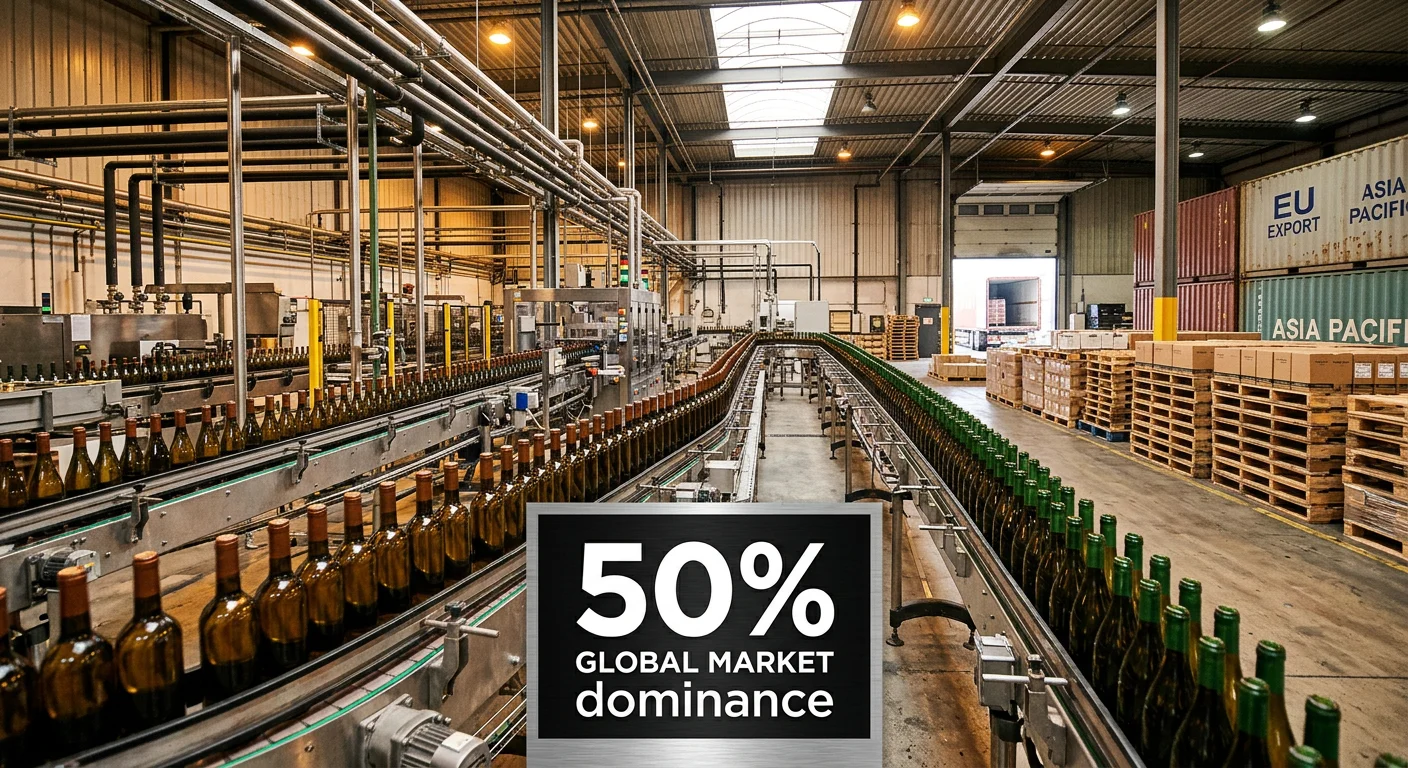
Half of every wine bottle sold on the planet right now is a 750ml wine bottle. Not a rough half. Not an approximate half. A consistent, stubborn, decade-after-decade half — sitting at 50% of global wine sales by volume. That figure comes from IWSR data tracking consumption across more than 160 markets worldwide.
That number deserves a moment of genuine attention.
Wine is an enormous, fragmented, deeply opinionated industry. It spans thousands of producers, hundreds of grape varieties, and dozens of packaging formats. Consumers disagree on almost everything — region, vintage, price point, closure type. But on bottle size, half the world keeps reaching for the same thing.
That’s not a trend. That’s a verdict.
What 50% Looks Like at Scale
Consider what 50% of global wine volume means in practice. IWSR estimated total global wine consumption at 25 billion liters in recent years. Half of that volume moves through a single bottle format. That adds up to tens of billions of individual 750ml bottles produced, filled, shipped, shelved, purchased, and opened — every single year.
No other wine format comes close. Here’s how the alternatives stack up:
1.5L magnum — popular for celebrations and long-aging reds, but holds a modest share of premium wine sales
187ml single-serve — the kind you see on airline carts and at stadium concessions, with loyal but limited demand
Bag-in-box — growing in markets like Australia, Scandinavia, and France, mainly among everyday drinkers who want convenience
None of these formats challenges the standard 750ml wine bottle at the overall volume level. They find their lanes. The 750ml owns the highway.
The Premium Segment Makes It Even Clearer
Here’s where the data gets more telling. As wine prices climb — moving from everyday table wine into the $20, $50, $100+ price tiers — the dominance of the 750ml bottle grows stronger, not weaker.
Wine Intelligence research tracked consumer purchasing behavior across key markets. It found that the 750ml format holds an even higher share of premium and super-premium wine purchases than it does for value wine. Buyers spending more money are more likely to grab the standard bottle — not less.
Why? The 750ml wine bottle carries a kind of silent credibility in the premium space. Serious wine. Proper bottle. Correct size. Stepping outside that format — upsizing or downsizing — sends a signal. In the premium tier, that signal carries real risk. Producers who spend years building a quality reputation protect it by staying inside the format their buyers already trust.
This is a powerful market dynamic. The 750ml bottle doesn’t just win on volume. It wins on value. It wins where the margins are.
Why 750ml Will Remain Dominant (Even as Alternatives Grow)
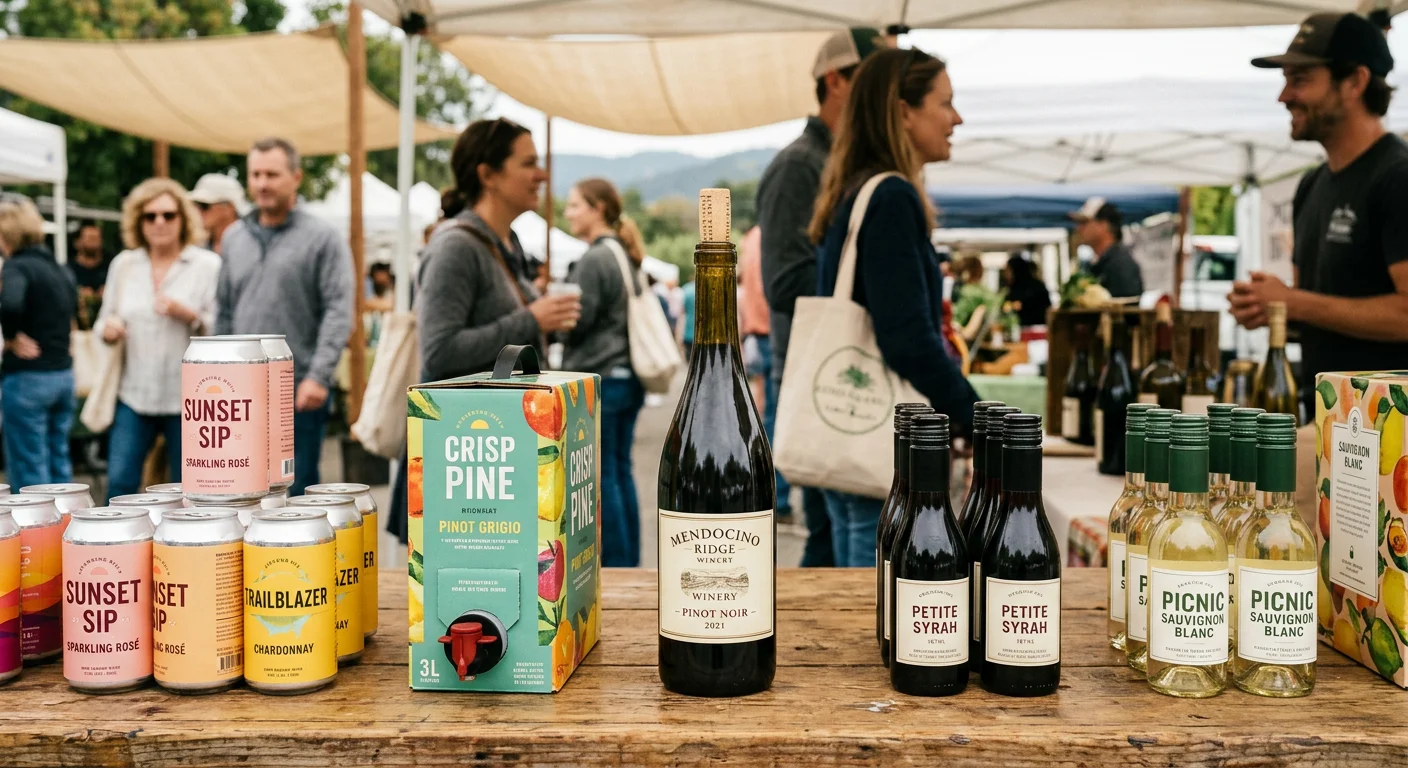
The challengers are real. Smaller households. Mindful drinking. Canned wine at the farmer’s market. Bag-in-box at the Scandinavian supermarket. These aren’t fringe experiments anymore — they’re real market shifts, driven by real consumer demand.
And yet. The 750ml wine bottle isn’t losing ground. It’s holding it.
Look at the structural forces underneath the trend. The picture becomes clear fast.
Smaller Households Are Changing Habits — But Not the Standard
Household sizes across North America, Western Europe, and urban Asia have been shrinking for decades. More single-person households. More couples without children. More people who want a glass on a Tuesday without opening a full bottle.
That shift has pushed real demand toward 187ml and 375ml formats — what analysts now call the “less but better” drinking movement. People drink less wine overall, but spend more per bottle. They want quality. They want choice. They want to finish what they open.
That behavior creates a real niche for smaller formats. But here’s what it doesn’t do:
It doesn’t knock the 750ml bottle off its spot as the standard
It adds options around the edges
The center holds
Smaller formats grow alongside the 750ml. They don’t replace it.
Glass Recyclability Is Winning the Sustainability Argument
Sustainability pressure is real in the wine industry. Producers face it. Retailers push it. Consumers ask about it more and more.
Glass — the material the standard 750ml wine bottle is made from — has a recyclability advantage that rivals haven’t beaten. Consider what the competition offers:
Aluminum cans need more energy to produce from raw materials
Carton packaging mixes materials, which makes recycling harder in many markets
Plastic-based formats carry a reputation risk that no wine brand wants attached to its label
Glass can be recycled over and over without losing quality. That’s not a marketing claim. That’s materials science. As sustainability rules tighten in the EU and other regions, glass’s clean recyclability record becomes a long-term strength — not a liability.
Other formats are still working through those trade-offs. Glass has already solved them.
Premium Brands Will Protect the Format Because Their Brand Equity Depends On It
The biggest force keeping the 750ml wine bottle dominant isn’t regulation or logistics. It’s the brand mindset of premium wine producers — and they resist non-glass formats at a fundamental level.
A winery selling bottles at $80 or $120 isn’t just selling liquid. It’s selling a story about craft, place, and time. That story lives inside a specific vessel. Put the wine in an aluminum can or a carton, and the story breaks. Perceived value collapses before the buyer even picks up the package.
Wine Intelligence research backs this up: premium and super-premium buyers connect the glass 750ml format with quality itself. Producers at that tier guard that connection hard — their margins depend on it.
So the math is simple:
Move to a non-glass format → the story breaks
The story breaks → perceived value drops
Perceived value drops → the premium price becomes hard to justify
No serious premium producer takes that risk.
Alternative formats will grow. But the 750ml wine bottle — backed by sustainability credentials, brand equity, and consumer psychology — stays the format everything else gets measured against.
Conclusion
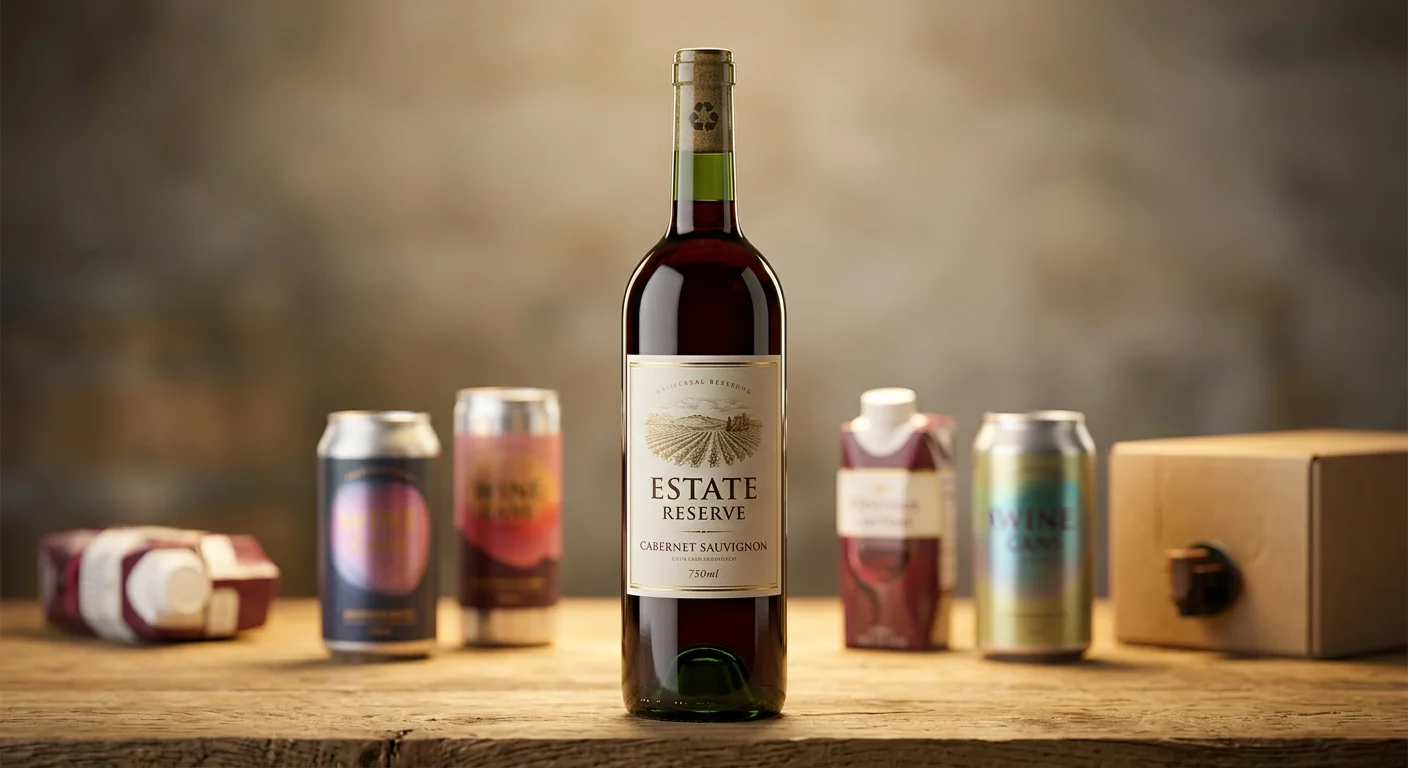
The 750ml wine bottle’s popularity stems from its perfect balance of tradition, functionality, industry standards, and consumer convenience—making it the market’s standard choice. For winemakers looking to leverage this standard, partnering with a trusted Glass Bottle Manufacturer is key. At TP Glass Bottle Manufacturer, we produce high-quality 750ml wine bottles that meet global standards, with durable, clear designs and customizable options to fit your brand. Our strict quality control preserves wine aroma and flavor, while our cost-effective solutions support both small craft wineries and large brands. Choose us to enhance your product’s shelf appeal and protect your brand reputation.