

When it comes to enjoying a beer, most people focus on the type of beer itself—whether it’s a crisp lager, a hoppy IPA, or a rich stout. Choosing the right beer bottle isn’t just a trivial matter; it can affect how you store your beer, how it preserves its flavor, and even how it presents itself when you serve it. If you’re wondering what type of beer bottle you can choose, this article will break down the options and help you make the right decision.
Longneck Beer Bottle – The Industry Standard Worth Knowing First
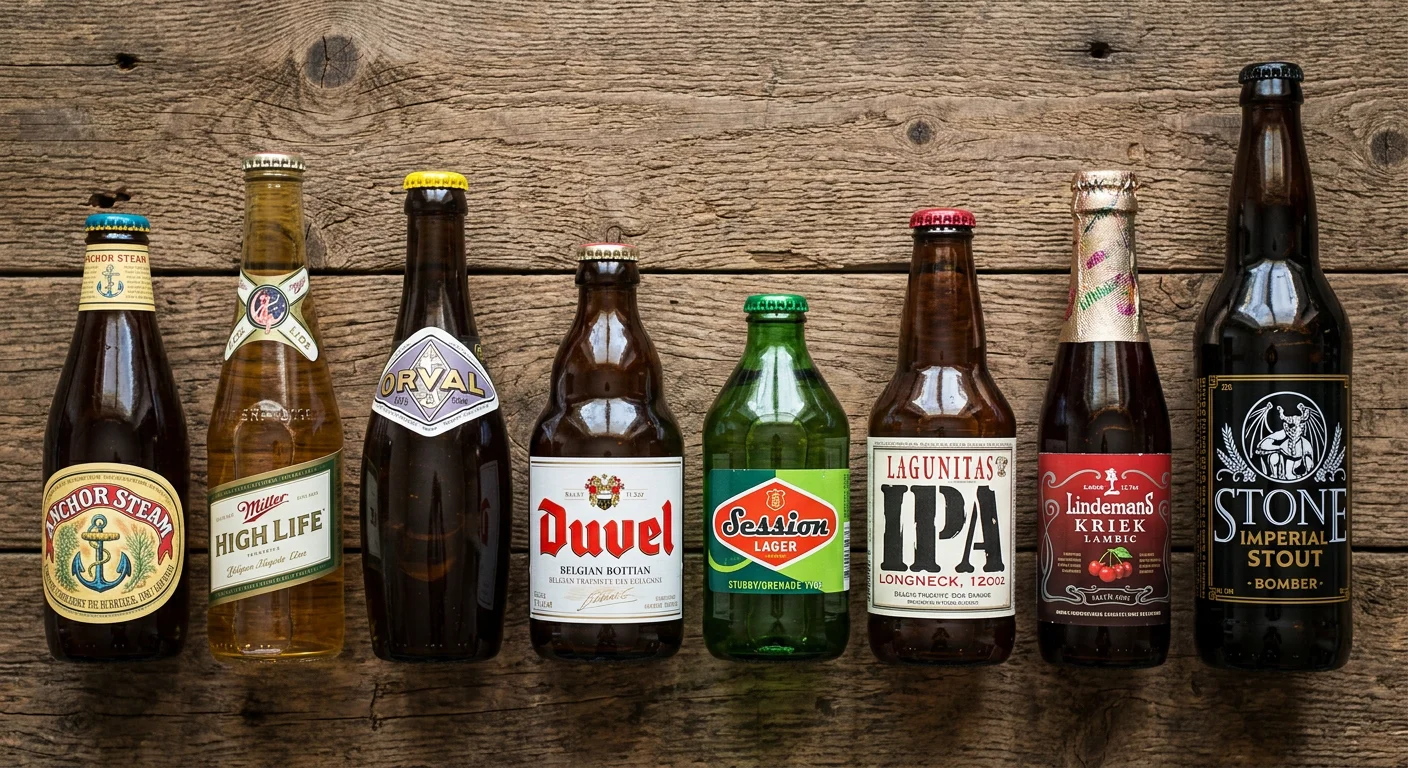
Walk into any bar across North America, and the bottle in most people’s hands looks almost identical. That silhouette — slim neck, cylindrical body, crown cap — is the longneck. To be exact, it’s the Industry Standard Bottle (ISB) . It has become the backbone of commercial beer packaging, and most people never even think about it.
Start here. Once you understand the longneck, every other bottle format becomes easier to evaluate.
What the Numbers Look Like
The North American ISB longneck holds 355 ml (12 oz) — the volume that dominates mass-market retail. The proportions are precise and deliberate:
- Height : 23.1 cm (9.09 inches)
- Body diameter : 2.4 inches (6.1 cm)
- Neck length : 2–3 inches, slender enough for a standard 26 mm crown cap
- Weight : 193 g to 380 g, depending on whether the bottle is single-use or refillable
That refillable spec matters more than most buyers expect. A well-made longneck beer bottle handles up to 16 reuse cycles . Over a full production run, that changes your unit economics in a real way — fewer bottles purchased, lower material cost per fill.
Why Breweries Default to It
The longneck’s real advantage isn’t how it looks. It’s how it fits into existing infrastructure.
The uniform ISB dimensions drop straight into automated filling lines. No custom adjustments needed. At the pallet level, you get 2,250 bottles per pallet across 5 layers , with gross weights from 430 to 773 kg. For operations running 6-pack distribution or high-volume retail, that stacking efficiency cuts per-unit shipping costs in a meaningful way.
The cylindrical body also works well with wrap-around labeling . That’s a practical win — run thousands of units through a labeling machine at speed, and a consistent surface makes the whole process smoother and faster.
Where It Falls Short
The longneck isn’t the right fit for every product. A few real limitations worth knowing:
- Generic visual presence on shelf — it blends in rather than stands out
- Lower pressure tolerance compared to thicker bombers or champagne-style bottles — a poor match for high-carbonation Belgian styles
- Limited closure options — standard crown pry-off only. That can feel out of place on barrel-aged or high-ABV releases where a premium opening experience adds to the product’s appeal
- Fixed at 355 ml — your product needs a different volume, you need a different bottle. Full stop.
For mass distribution with tight cost control, the longneck is hard to beat. For everything else, it’s the baseline you measure other formats against.
Belgian Beer Bottle – The Right Choice for Wheat Beers and Yeast-Heavy Styles
Yeast-heavy beers have a real problem. Standard longnecks can’t fix it. That’s why Belgian-style bottles exist.
Pour a bottle-conditioned witbier through a regular longneck, and a thick cloud of yeast sediment rushes right into the glass. The pour looks murky. All that clarity you worked for — gone. The Belgian beer bottle solves this through one structural detail. It changes everything.
The Double-Bumped Shoulder — One Design, One Purpose
The key feature is the double-bumped shoulder . Two raised rings sit just below the neck. They form a physical barrier that holds yeast sediment at the base of the bottle during the pour. Narrow neck, dual shoulder bumps, precise geometry — together, they keep 90–95% of yeast in the bottle . None of it reaches your glass.
A standard longneck only holds back 40–60% of yeast sediment. For high-flocculation strains like Safale BE-256 — which settles fast after fermentation — the Belgian bottle cuts yeast-in-pour to under 5% . That’s a real packaging advantage, not just a visual one.
Capacity and CO₂ Tolerance
The standard size is 375 ml . That makes it a premium single-serve format. It fits well with the higher ABV and rich flavor profiles of yeast-driven Belgian styles. The heavy glass handles up to 5 volumes of CO₂ , compared to just 2.5 for a typical longneck. That extra pressure capacity matters a lot for bottle-conditioned refermentation. Priming with 1–2g of dry yeast per 5 gallons keeps carbonation building inside the sealed bottle — and the glass holds it without issue.
Which Beer Styles Belong Here
| Style | Attenuation | CO₂ Vols | Key Yeast Character |
|---|---|---|---|
| Witbier / Hefeweizen | 82–86% | 3–5 | High esters, low flocculation |
| Abbey / Trappist Ale | 82–86% | 3–5 | Fruity, high alcohol tolerance |
| Saison | >90% | 3–4 | Phenolic, diastaticus strains |
| Strong Belgian Ale | 82–86% | 4–5 | High isoamyl-acetate esters |
Real brands back this up. Blue Moon uses 355–375 ml Belgian-style bottles to manage yeast suspension across its witbier range. Allagash White counts on 375 ml bottles to hold its signature yeast haze at 5.2% ABV. Paulaner Hefe-Weizen switched to 375 ml Belgian variants in EU craft markets — the double shoulder blocks more than 85% of sediment in its 5.5% ABV wheat.
Your lineup includes any of these styles? The Belgian bottle isn’t a premium upgrade. It’s the right tool for the job.
Stubby Beer Bottle – Storage Efficiency and Durability First
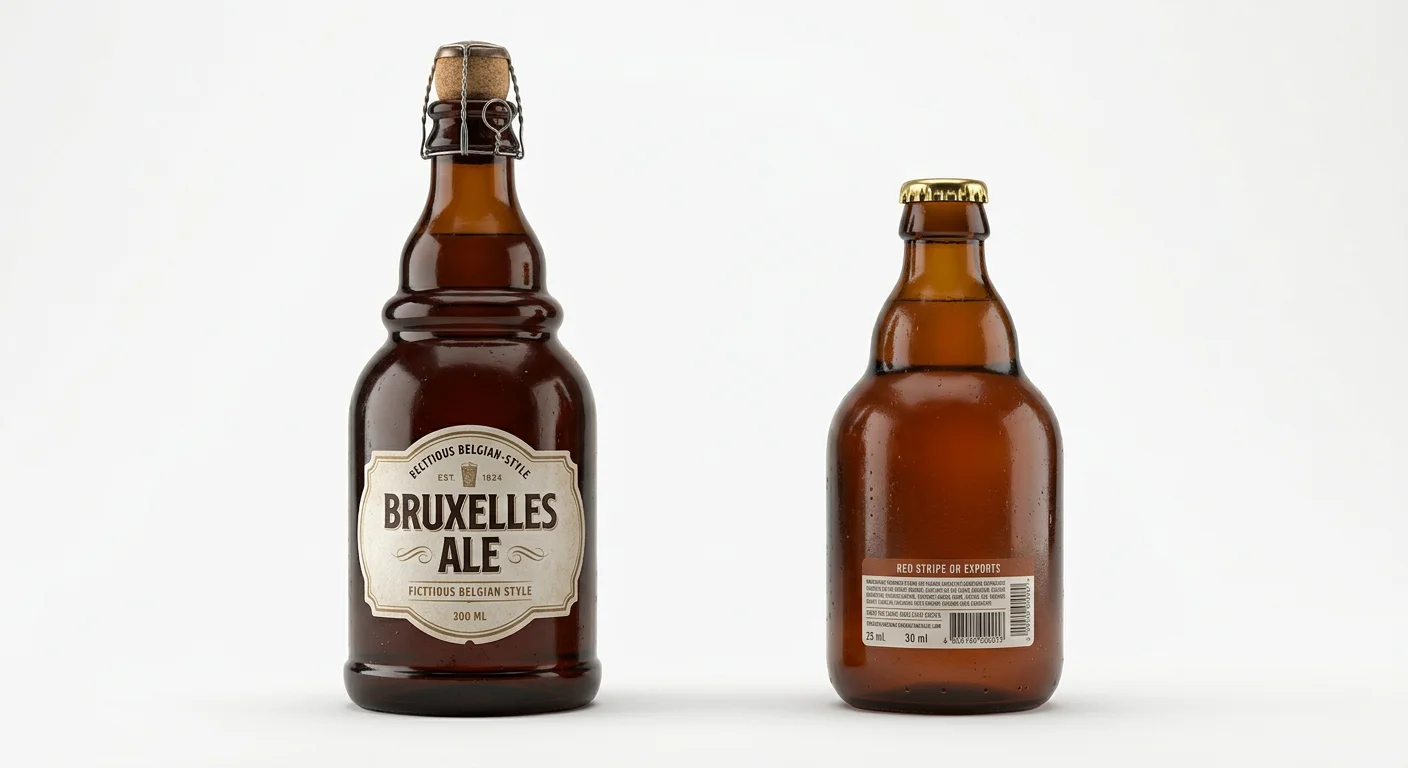
The numbers make the case. A stubby stands just 6.2 to 6.46 inches tall — about 30% shorter than a standard longneck. That one size difference creates real operational advantages across your logistics chain.
The Physics of Short and Wide
The stubby’s squat shape is not a style choice. It’s an engineering decision. A lower center of gravity means less tipping in transit. A wider diameter — 2.57 to 2.65 inches versus the longneck’s 2.25 inches — gives more contact surface against neighboring bottles. Put those two things together, and you get a format that breaks far less in bulk shipping. No changes to your handling process needed.
At the pallet level, the gap is easy to measure:
- Stubby cases pack at 2,496 to 2,640 bottles per pallet across 5 stacked layers
- Longnecks are taller and more top-heavy, so they don’t hit those densities
- More units per truckload means fewer trips, lower freight costs, and fewer breakage claims to deal with
Capacity Options and Market Fit
The stubby covers a solid capacity range: 330 ml, 341 ml (the Canadian standard), 355 ml, and select 16 oz variants . That 341 ml size is the go-to format for traditional Canadian lagers. All models use a 26mm crown pry-off finish — fast on a production line, simple, no extra steps.
Brands like Coors Banquet and Miller Lite brought the stubby back on purpose. They leaned into its 1930s look to stand out on the shelf. Longnecks tend to blend into each other. The stubby doesn’t — it’s shorter, stockier, and easy to spot at a glance.
For traditional lagers, heritage brands, or any operation where logistics efficiency shapes packaging decisions, the stubby delivers solid value at every stage — from pallet loading to point-of-sale display.
Euro and Vichy Bottles – High Carbonation Capacity for Craft Imports
Four volumes of CO₂. That single number sets the Vichy bottle apart from almost every standard format on this list. It’s also why European craft importers keep coming back to it.
Put a high-carbonation Euro-style lager or sparkling craft beer into the wrong bottle, and pressure becomes more than a problem. It becomes a liability. The Vichy bottle was built for this pressure range. The specs back that up with precision.
What the Vichy Bottle Delivers
The USA-made 500ml amber Vichy bottle holds up to 4 volumes of CO₂ — no tunnel pasteurization required. That’s the ceiling most brewers working with high-carbonation lagers need to reach. The glass weighs 380g , stands 260mm tall , and measures 67.8mm wide at the body. The neck finish is a standard 26mm pry-off crown . It keeps the seal tight and doesn’t complicate your production line.
There’s a second Vichy variant worth knowing. It’s a lighter 500ml build at 340g, 229mm tall , rated to 3 volumes CO₂ . Solid performance for most Euro-style imports. The structural difference between the two is real. Heavier USA-made glass handles higher internal pressure and hot-fill conditions. Thinner imported glass suits lower-carbonation applications where cutting weight matters.
The shoulder geometry on the Vichy is distinct too. It slopes gradually — a clear contrast to the sharp neck-to-body transition on standard longnecks. That shape does more than look different. It spreads internal pressure across the bottle wall more evenly. That’s a big part of how the heavier Vichy variant holds 4 volumes without failure.
Label Area and Brand Impact
Here’s something most buyers miss at the spec stage: the Vichy 500ml carries a full-wrap label panel measuring 212.8mm wide by 102mm tall . You get 30–40% more display surface than a standard longneck gives you. For imported brands fighting for shelf visibility, that extra panel space is a real commercial advantage. More room for design, storytelling, and the kind of brand presence that actually moves product at retail.
Both amber and green glass options offer UV protection . They block the wavelengths that cause lightstruck flavors in hop-forward and delicate lager styles.
Logistics at Scale
Pallet economics are clean and easy to work with. The Vichy 500ml ships in 12-count cases at 11 lbs per case . A full pallet holds 960 bottles across 80 cases , with a total weight of 933 lbs at dimensions of 48″ × 43″ × 48″ . For EU export routes, the maximum ship pallet is 108 cases . Lock that number in early so your container planning doesn’t get complicated later.
Choosing the Right Vichy Format
- Carbonation above 3 volumes : Go with the USA-made 500ml amber Vichy. The 380g glass wall is built to handle that pressure.
- Sparkling craft or Euro-style lagers : Vichy is the right structural fit. The crown seal holds fizz without extra torque hardware.
- Shelf presence matters : The full-wrap label panel gives imported brands visual real estate that narrower bottles can’t match.
- EU export distribution : Plan cases at 12ct, pallets at 108 cases max. Run those numbers against your freight costs before you finalize container quantities.
Euro and Vichy bottles don’t get as much attention as longnecks or flip-tops in most buying conversations. That’s the point. The brewers who understand this format are the ones shipping high-carbonation craft product across markets — no pressure failures, no lightstrike complaints, and no wasted label space.
Bomber and Large Format Beer Bottles – Positioning Premium and Limited Releases
Size signals intent. A 22 oz bomber or 750ml large format beer bottle on a retail shelf doesn’t just hold more liquid — it tells a story before anyone reads the label. That story is about exclusivity, craft, and value worth paying for.
These two formats serve different commercial purposes. Mix them up, and you lose margin.
22 oz Bomber — Single-Serve Premium for Off-Trade
The 22 oz bomber (about 650ml) is the standard U.S. craft format for standing out on premium shelves. Get the positioning right, and it commands 15–30% above standard 12 oz pricing . It fits well into specialty off-trade retail and online alcohol channels. E-commerce penetration for premium beer has already crossed 25% in those spaces.
This format works best for bold single-serve releases — IPAs, imperial porters, high-ABV seasonals. The bottle itself justifies the price before the first sip. That’s the job it does.
750ml Large Format — Limited Releases and On-Trade Sharing
The 750ml bottle takes its cues from wine. That association alone supports 20–50% price premiums on barrel-aged and limited-edition releases like imperial stouts. Add corked-and-caged closures with a wax seal, and the effect gets stronger. The unboxing ritual becomes part of the product itself. This matters especially in restaurants and bars, where the experience around the drink drives the purchase decision.
For on-trade channels, the 750ml pours 4–6 portions . That makes it a clean fit for tableside sharing — no keg commitment, no waste.
| Format | Sweet Spot | Price Lift |
|---|---|---|
| 22 oz Bomber | Premium single-serve, specialty retail | +15–30% vs 12 oz |
| 750ml Large | Barrel-aged, limited, on-trade sharing | +20–50% via cork/wax |
The broader market backs this up. U.S. beer packaging is projected to grow from $6.3B in 2025 to $9.06B by 2035 . Glass holds the lead in premium and craft segments. Yes, overall craft volumes dipped 4.3% in 2025 — but dollar sales held at $28.8B through premiumization. Large format glass is how brands protect margin when volume softens.
Conclusion
Scaling a craft brewery, launching a premium label, or sourcing packaging for a seasonal release — the right bottle is never just a container. It’s a silent salesperson sitting on the shelf. A longneck signals familiarity and mass-market trust. A Belgian bottle speaks to tradition and depth. The decision comes down to three things: what’s inside , who’s buying it , and where it’s going . Get those three aligned, and the right bottle becomes clear.
So take the next step. Browse our amber glass beer bottles, green glass beer bottles, and specialty formats at TP Glass Bottle Manufacturer . Or reach out for custom sizing, MOQ details, and samples — we’re happy to help you find the right fit.
Contact us today to learn more about our beer bottle products and how we can support your business needs.