
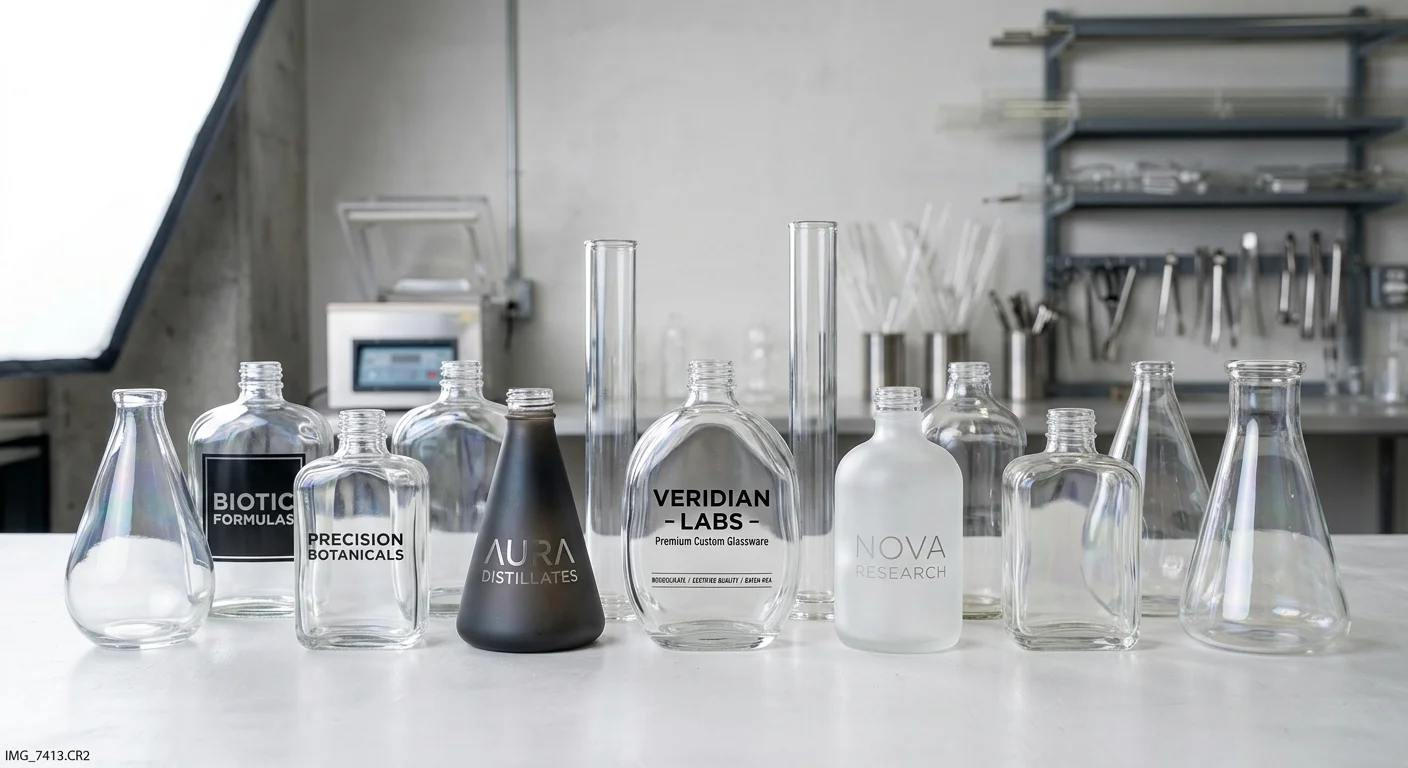
Glass bottles have long been a popular choice for storing, packaging, and displaying a wide range of products, from beverages and food items to cosmetics, pharmaceuticals, and laboratory supplies. Among the various glass materials available, Borosilicate Glass Bottle has emerged as a preferred choice for many individuals and industries alike. This article will explore the key reasons why borosilicate glass bottles stand out from other alternatives, as well as their diverse applications across different sectors.
Table of Contents
What Is a Borosilicate Glass Bottle? (Material Composition & Properties)
Borosilicate glass has a specific chemical identity — and that identity is what sets it apart from every other glass on a shelf.
Standard soda-lime glass is 70% silica, with sodium and calcium making up the rest. Borosilicate glass swaps a large portion of those elements for boron trioxide (B₂O₃) — between 12–15%. That one change completely shifts how the material handles heat, chemicals, and physical stress.
There are two main grades to know:
- Standard borosilicate glass — contains 12–13% boron trioxide. You’ll find it in laboratory and food-grade products.
- High borosilicate glass — boron content reaches 15% or higher. This gives you a lower thermal expansion rate and stronger resistance to sudden temperature changes.
SCHOTT AG is one of the top specialty glass makers in the world. They define borosilicate glass under the name DURAN® — a material used in pharmaceutical, laboratory, and industrial packaging globally. Corning’s original Pyrex® carried the same borosilicate formula. It set the industry standard for over a century.
So what does this mean for you? A borosilicate glass bottle is more than just a container. It’s an engineered material built on a specific chemical structure. That structure makes thermal shock resistance and chemical stability predictable, measurable, and consistent every time.
Superior Heat & Thermal Shock Resistance: The Core Advantage
Here’s a number worth remembering: -40°C to 500°F (260°C). That’s the full temperature range a quality borosilicate glass bottle can handle — freezer storage to oven use, all in the same container.
Most glass can’t do that. Standard soda-lime glass expands and contracts at a rate three times higher than borosilicate glass as temperatures change. That difference is the whole reason thermal shock resistance matters as a category.
What “Thermal Shock Resistance” Means
Thermal shock happens when one part of a glass container heats or cools faster than another. The uneven expansion builds internal stress. That stress grows until the glass cracks.
Borosilicate glass has a low coefficient of thermal expansion (CTE) — around 3.3 × 10⁻⁶/°C. Soda-lime glass sits at 9 × 10⁻⁶/°C. Less expansion means less internal stress. Less stress means the glass handles temperature shifts that would break ordinary bottles.
In practical terms:
- Pull a borosilicate glass bottle from the refrigerator and pour in boiling liquid — it holds
- Move it from a freezer at -40°C into a warm room — no cracking
- Use it for hot-fill beverage production — no thermal fracture risk
Why This Matters Beyond the Kitchen
This isn’t just a kitchen convenience feature. Pharmaceutical manufacturers count on this stability for sterilization cycles. Labs need it for autoclave processes. Beverage brands choose heat resistant glass bottles because they cut cold-chain breakage losses.
The thermal performance of borosilicate glass is not a marketing claim. It’s a measurable, testable material property. You’ll see the same results across every application where temperature control matters.
Chemical Inertness & Safety: BPA-Free, Non-Leaching, Food-Grade Certified
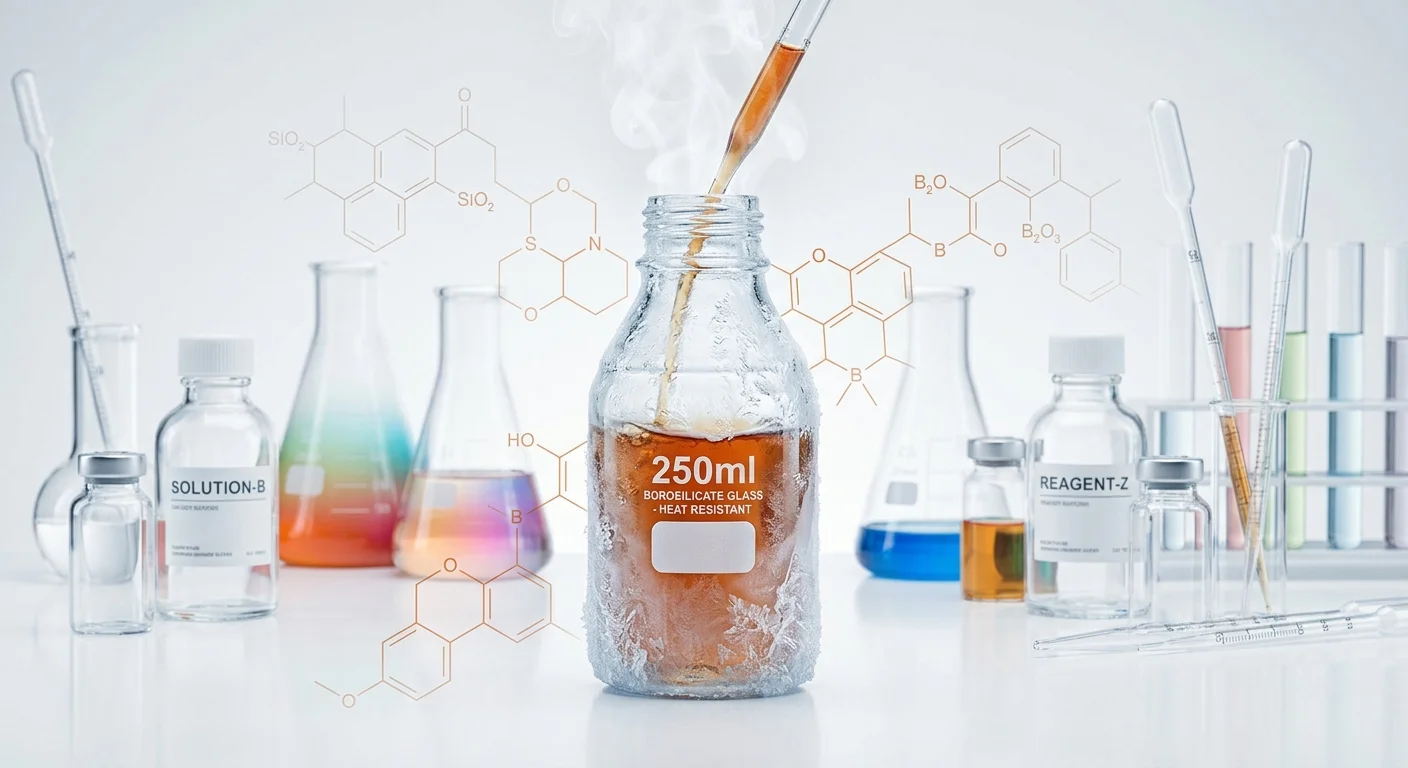
Glass that doesn’t react is glass you can trust. That’s the chemical reality behind borosilicate’s strong reputation in food, pharmaceutical, and laboratory use across the globe.
The boron trioxide network in borosilicate glass builds a stable molecular structure. It won’t release ions into whatever you store inside. No leaching. No off-flavors. No hidden chemical transfer. What goes in stays pure — and what stays in the glass stays in the glass.
That’s what chemical inertness means in practice. For procurement managers and brand owners, it translates straight into compliance.
The Certifications That Procurement Teams Care About
Several global standards decide whether a glass bottle is safe for food, beverage, pharmaceutical, or laboratory use. Borosilicate glass meets all of them:
- FDA 21 CFR — the U.S. standard for food-contact materials. Borosilicate glass qualifies as a safe food-contact substance. No leaching risk under normal use conditions.
- EU Regulation No 10/2011 — the European framework for plastic and glass materials in contact with food. Borosilicate glass clears migration limits with room to spare.
- ISO 4829 / ISO 719 — international standards that measure hydrolytic resistance. High borosilicate glass reaches Class HGB 1 — the highest resistance rating available.
- RoHS Compliant — free from restricted hazardous substances. This matters for brands selling into European markets.
These aren’t optional certifications. For any serious B2B buyer, they’re the starting point — not a bonus.
Why USP Type I Glass Is the Pharmaceutical Gold Standard
The U.S. Pharmacopeia sorts glass packaging into four types. USP Type I — borosilicate glass — ranks at the top. It carries the highest hydrolytic resistance of any glass category. That means very little chemical interaction with stored contents. This holds true even under heat sterilization and long-term storage.
USP Type II covers treated soda-lime glass. It works for some applications, but it sits one step below in both performance and reliability.
Pharmaceutical manufacturers choose USP Type I borosilicate glass for injectable drugs, infusion solutions, and sensitive biologics. The reason is simple: contamination risk is not acceptable in these applications. You use the material with the lowest reactivity. A BPA-free glass bottle built to USP Type I standards removes that risk from the equation.
For food-grade and beverage use, the same logic holds — just with different regulatory labels attached.
Long-Term Durability & Scratch Resistance: A Cost-Per-Use Analysis
The cheapest bottle isn’t the one with the lowest unit price. It’s the one you replace least often.
Borosilicate glass has a dense, hard molecular structure. That structure resists surface scratches better than standard soda-lime glass — and far better than plastic. Scratches matter more than they look. On plastic bottles, surface abrasions create micro-grooves. Bacteria build up there, and chemicals seep through. On borosilicate glass, the surface stays smooth, non-porous, and stable through thousands of use cycles.
That difference shows up in lifespan. A quality borosilicate glass bottle holds up for 3 to 5 years under regular commercial use. A standard plastic bottle degrades in months — heat, UV light, and repeated washing all speed up that breakdown. The material fails on the surface. It also fails in ways you can’t see. You replace it. Then you replace it again.
The Real Cost Comparison
Run the numbers over a 5-year period:
- Borosilicate glass bottle: Higher upfront cost, single purchase, minimal replacement rate
- Plastic bottle: Lower unit price, but frequent replacement cycles stack up fast — plus disposal costs, compliance risks, and brand reputation damage from material breakdown
For B2B procurement managers buying at volume, this cost-per-use gap adds up fast. A high borosilicate glass bottle that holds its performance for five years beats a cheaper option that needs two or three replacement rounds in the same period. The math is straightforward once you look past the unit price.
Laboratory grade glass bottles used in pharmaceutical and research settings follow the same logic. Durability isn’t a premium feature. It’s a procurement efficiency argument — one that holds across industries, order sizes, and budget cycles.
Key Applications: Industries & Use Cases Across Markets
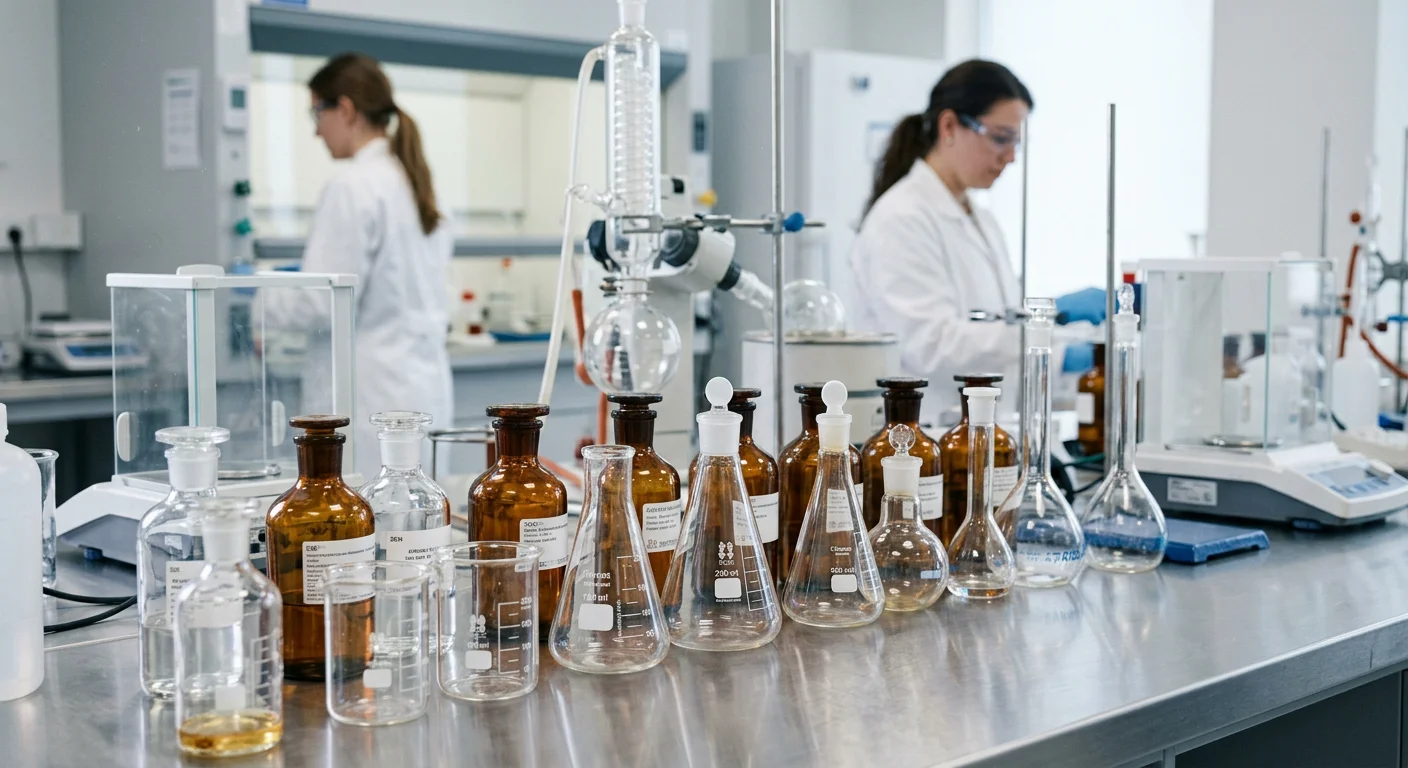
Borosilicate glass shows up everywhere once you start looking — and for good reason.
The same material properties that make it reliable in a pharmaceutical clean room also make it the right choice for a cold brew coffee brand trying to justify a premium price point. That’s rare. Most materials have one job. Borosilicate glass handles several.
Consumer Products: Everyday Bottles That Last
Most people encounter borosilicate glass in the consumer market first — even if they don’t know that’s what they’re holding.
Water bottles, travel tumblers, kitchen storage jars, and infant feeding bottles now specify borosilicate glass as the material of choice. The reasons are straightforward:
- No plastic taste
- No chemical migration
- No surface wear after repeated dishwasher cycles
Infant feeding bottles are worth a closer look. Parents hold products to high standards — and they’re right to. BPA-free glass bottles made from borosilicate glass remove leaching concerns, hold up through sterilization without any structural change, and don’t trap bacteria in surface scratches the way plastic does after months of heavy use.
For kitchen storage, thermal range matters. A heat resistant glass bottle goes straight from freezer to microwave without cracking. That kind of performance sells itself.
B2B Industrial Applications: Where Specifications Get Serious
Industrial buyers don’t purchase on feel. They purchase on specs.
Pharmaceutical packaging sits at the top of the requirement list. Injectable vials, infusion bottles, and ampoules for sensitive biologics require USP Type I borosilicate glass — the highest hydrolytic resistance classification available. The material must survive autoclave sterilization at 121°C with no dimensional change and no chemical interaction with the stored compound. No substitute meets this specification.
Cosmetics follow a similar logic. Serum bottles and essential oil containers made from high borosilicate glass protect active ingredients from UV damage and chemical reaction. Premium skincare brands call out this material by name — it signals product integrity before the customer even opens the cap.
Laboratory grade glass bottles used for reagents and sample storage demand the same chemical inertness. Contamination in a lab doesn’t just ruin a batch. It invalidates the entire experiment.
Emerging Markets: Where Growth Is Happening Now
Cold brew coffee, functional beverages, and premium spirits are three of the fastest-growing segments in glass bottle demand. All three are moving toward borosilicate glass food grade specifications.
Cold brew producers need bottles that handle cold storage and hot-fill processes without switching materials. Craft spirits brands choose borosilicate packaging for small-batch redistribution — the clarity and chemical neutrality preserve flavor profiles that standard glass can compromise.
Each of these segments carries a different bottle requirement:
- Neck diameter
- Wall thickness
- Coating finish
- Closure compatibility
That’s the real shape of any serious procurement conversation. It’s also where customization becomes the deciding factor.
How to Choose the Right Borosilicate Glass Bottle for Your Needs
The material is settled. Now the real decisions start.
Pick the wrong borosilicate glass bottle spec and you lose time, money, or worse — a product launch falls apart. Four variables drive this choice. Get them right from the start.
Key Specs to Lock Down First
Capacity and bottle shape define your use case first. A 250ml round bottle suits a serum or cold brew single-serve. A 1L square format works for kitchen storage or bulk beverage distribution. Irregular shapes signal premium positioning. They cost more to produce, but they grab shelf attention and hold it.
Wall thickness is next. Thicker walls add weight and durability. They also affect how the bottle handles sudden temperature changes in production. Thin-walled bottles are lighter and cheaper per unit. But they won’t hold up on hot-fill lines or through autoclave sterilization.
Neck diameter and closure compatibility trip up more buyers than you’d expect. Most don’t catch the issue until it’s already too late. Your closure vendor and your glass supplier must agree on this spec from day one. A mismatch here throws off your entire packaging timeline.
OEM Customization: What to Clarify Before You Commit
Sourcing at volume? Custom borosilicate glass food grade bottles become a real business decision — not just a product pick.
Three things to nail down upfront:
- MOQ (minimum order quantity) — solid manufacturers set MOQs between 5,000 and 10,000 units, based on bottle complexity
- Printing and surface finish options — silk-screen printing, spray coating, and hot stamping each deliver different visual results and come at different price points
- Lead time — custom molds add 4–6 weeks on top of standard production schedules
Know exactly what you need before that conversation starts. It saves time on both sides.
Frequently Asked Questions
Is borosilicate glass safe for daily use?
Yes — without a doubt. Borosilicate glass is chemically neutral. It won’t leach toxins or change the taste of your drink. It’s FDA-compliant, BPA-free, and meets EU food-contact standards. Scientists use it in labs. Pharmaceutical companies use it for injectable drugs. Your water bottle is in good company.
What temperature can borosilicate glass withstand?
A quality borosilicate glass bottle handles temperatures from -40°C to 260°C. That covers deep-freeze storage all the way to hot-fill production lines. Standard soda-lime glass expands at about three times the rate. That’s why it cracks under the same conditions.
Can borosilicate glass bottles go in the dishwasher?
Yes. The surface holds up through repeated high-heat wash cycles. No clouding, no scratching, no breakdown over time. Plastic bottles can’t say the same.
Is borosilicate glass better than tempered glass?
For thermal shock resistance, yes. Borosilicate glass has a lower thermal expansion rate (3.3 × 10⁻⁶/°C) than tempered glass. It handles sharp temperature shifts that would crack tempered options. For pure impact resistance, tempered glass has an edge — but it shatters into small pieces when it breaks. Borosilicate tends to crack into larger, easier-to-spot pieces instead.
Can I customize borosilicate glass bottles for my brand?
Yes. Most manufacturers offer OEM services that cover shape, capacity, surface finish, and printing. Plan for MOQs between 1,000 and 5,000 units based on complexity. Custom molds also add a 4–6 week lead time.
Conclusion
Picking the right bottle material is more than a packaging choice — it says something about what your brand stands for.
Borosilicate glass bottles hold up where it matters most. They resist thermal shock that would crack ordinary glass. They stay chemically inert for decades. And they meet the BPA-free safety standards that both consumers and regulators expect today. These aren’t small upgrades over conventional materials — they’re a completely different level of performance.
Let us be your trusted partner to elevate your brand’s packaging with durable, high-performance borosilicate glass bottles that align with your business objectives and resonate with your target market. Ready to spec your next product line? Explore custom borosilicate glass bottle