

Glass bottles are one of the most versatile and widely used packaging options across industries, from food and beverages to cosmetics, pharmaceuticals, and household products. Their durability, recyclability, and ability to preserve product quality make them a preferred choice for brands and consumers alike. However, not all glass bottles are the same—they come in a variety of shapes, styles, and sizes, each designed to serve specific purposes. This guide breaks down all Types of Glass Bottles, explaining their key shapes, distinct styles, and practical uses, to help you understand which option best fits your needs.
Table of Contents
What Are the Main Types of Glass Bottles? (Overview by Classification System)
Glass bottles don’t fit into one single category. They span a wide range of types — defined by function, material, and color. Getting clear on these types is the first step to picking the right bottle without second-guessing yourself later.
There are three core dimensions that define any glass bottle:
- Shape & Style — the physical form: round, square, oval, flat, cylindrical, or specialty profiles built for specific uses
- Glass Material — mostly soda lime glass (the standard workhorse of the industry) or borosilicate glass (built for heat and chemical resistance)
- Color & Finish — clear, amber, frosted, green, or cobalt blue, each with its own functional and visual purpose
Every glass bottle maps to all three dimensions at once. A Boston Round amber borosilicate bottle isn’t a loose idea — it’s an exact specification.
How Different Industries Prioritize These Dimensions
Your position in the supply chain shapes which dimension you care about first.
Food & beverage buyers start with shape. Wide-mouth jars work for preserves. Narrow-neck bottles suit sauces and juices. Volume and sealing compatibility come next.
Spirits and wine producers lead with looks. The bottle silhouette is part of the brand. Color — deep antique green or crystal-clear flint — signals premium quality before anyone reads the label.
Cosmetic and personal care brands balance form with finish. Frosted glass reads as luxury. A distinct shoulder shape helps a product stand out on a packed retail shelf.
Pharmaceutical and nutraceutical companies put material and color first. Amber glass blocks UV light. Borosilicate glass holds up through sterilization. Compliance rules drive every single choice.
Industrial and chemical applications need chemical inertness and heat resistance. Borosilicate glass bottles are the go-to answer here, almost without exception.
Knowing your industry’s starting point keeps you from drowning in options that never applied to you. The sections below are built around that same logic.
Glass Bottle Shapes & Styles: A Complete Visual Guide
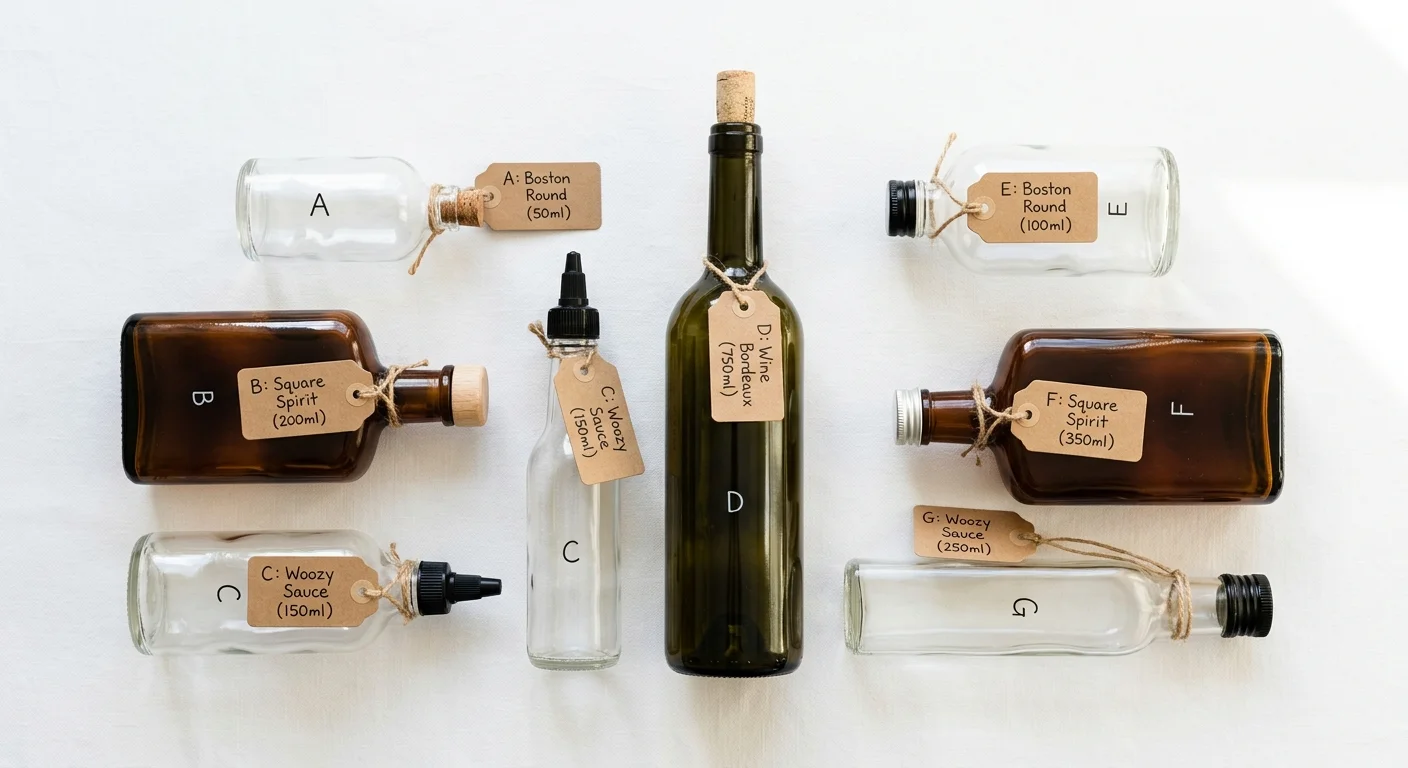
Shape is the first thing a customer sees — and the last thing any supplier wants to argue about over email. Know the correct name for each bottle form and what it’s built to do. That alone cuts out a lot of back-and-forth.
Here’s every major glass bottle shape, grouped by use.
Food & Beverage Bottles
Boston Round
The Boston Round has curved shoulders and a cylindrical body. That combination makes it one of the most versatile shapes out there. Cold brew coffee, fresh-pressed juice, kombucha, syrups, and hot sauces all ship in this form. The rounded profile spreads internal pressure across the glass. Most buyers don’t notice this until something breaks — but it’s a real engineering advantage.
Woozy Bottle
The narrow neck is the whole point here. It’s not a style choice — it controls how fast thick, concentrated liquids pour out. Hot sauce producers and specialty condiment brands choose the Woozy because the tight opening slows the flow. You won’t over-dispense. The shape is now so linked to hot sauce that it works as a category signal on retail shelves.
Ring Neck (RN) Bottle
The raised ring around the neck has a clear job: it gives handlers a better grip during filling and transport. High-volume sauce and condiment production lines get real benefit from this detail. It’s a small feature, but it makes a measurable difference in operations.
Marasca (Oil) Bottle
The Marasca has a square cross-section, and it does two things well. First, it stacks tight — you save storage space and cut shipping waste. Second, the angular shape looks deliberate. In the premium olive oil and artisan cooking oil market, that heritage-driven look carries real weight. You’re competing on perceived quality, not price. The silhouette does a lot of that work for you.
French Square Bottle
The French Square shares the Marasca’s square geometry but sits shorter and more practical. It’s a go-to for sauces, extracts, and specialty condiment brands. The flat sides hold labels straight and sit flush against shelf edges. In a crowded grocery aisle, face-out visibility drives purchase decisions — and this bottle delivers that.
Maple Syrup Bottle
This one solves a specific problem: pouring thick, slow-moving liquids without making a mess. Honey, maple syrup, molasses — all of these need a controlled tip and a comfortable grip. The rounded body and built-in handle give you both. The handle isn’t decorative. It’s functional design built right into the glass.
Spirits & Wine Bottles
Nordic Spirit Bottle
Tall. Narrow. Elegant by design. The Nordic Spirit silhouette signals premium positioning before anyone reads the label. Craft vodka, small-batch gin, whiskey, and bitters all use this form to project refinement. The long neck creates visual restraint — this bottle doesn’t shout. It lets the product speak.
Long-Neck Beer Bottle
The narrow neck isn’t just tradition. It limits the surface area exposed to air after opening, which keeps carbonation longer. Amber glass adds to that: the brown tint blocks the UV wavelengths that trigger the chemical reactions making beer go skunky. Neck shape plus glass color — that’s a preservation system. Not a style decision.
Wine & Champagne Bottles
Three classic forms cover most of the market:
- Bordeaux — straight sides, high shoulders, built for structured reds and dry whites. The sharp shoulder traps sediment during decanting.
- Burgundy — sloping shoulders, softer curves, long tied to Pinot Noir and Chardonnay. The shape sets a different sensory expectation before the cork even comes out.
- Champagne — thicker walls, deeper punt, built to hold the internal pressure from secondary fermentation. This bottle handles around 6 atmospheres of pressure. That structure is a safety specification, not a design flourish.
Specialty & Custom Shapes
Square, oval, flask-style, and fully custom forms sit at the top end of the market. Premium spirits brands and artisan food producers use non-standard shapes to support higher price points and stand apart on shelves. Standard forms can’t do that. A strong, original silhouette becomes a brand asset — protected, recognizable, and hard to copy without it being obvious.
Custom mold tooling costs money upfront. For brands focused on long-term market position, though, the shape itself builds equity. It’s not just packaging — it becomes part of what the brand owns.
Glass Bottle Colors & Their Functional Roles
Color isn’t decoration. Every shade of glass exists for a reason — and knowing those reasons changes how you specify your next order.
Amber Glass Bottles
Amber glass blocks UV light in the 280–450nm wavelength range. That range is where photodegradation starts. It’s a chain reaction that breaks down active compounds in essential oils, pharmaceuticals, and fermented beverages.
For light-sensitive products, amber isn’t a preference. It’s a protection mechanism built into the material itself. Craft beer brewers use it to prevent the skunky off-flavors triggered by UV exposure. Nutraceutical brands use it because their certifications often require it. Essential oil producers use it for good reason too — a clear bottle will degrade the product on a sunlit shelf within weeks.
Industries that default to amber:
– Pharmaceuticals
– Craft beer
– Herbal tinctures
– Essential oils
– Kombucha
– Chemical reagents
Clear (Flint) Glass Bottles
Clarity is a selling tool. A consumer picks up a cold-pressed juice, a sparkling water, or a serum — they want to see what they’re buying. The liquid color signals freshness. No sediment builds trust. Transparency removes doubt at the point of purchase.
Clear glass delivers that. It offers no UV protection. So it works best for products with stable formulas, short shelf cycles, or controlled retail environments. For brands where visual appeal drives sales, flint glass earns its place.
Green Glass Bottles
Green glass offers moderate UV filtration — stronger than clear, but less than amber. Wine producers have used it for centuries for that reason. Olive oil brands rely on it for the same protection logic. Plus, green carries a natural, earthy visual cue that works across almost any category.
In craft beer and organic food packaging, green glass does something else: it signals craft. It carries an emotional connection to sustainability and artisan production that clear glass doesn’t deliver.
Frosted Glass Bottles
Frosted glass is a finishing treatment, not a base material. Two methods exist — acid etching and sandblasting. Acid etching produces a finer, more uniform matte texture and costs more. Sandblasting is faster and more affordable, but the surface comes out a bit coarser.
Both finishes serve the same purpose: they signal luxury without saying a word. Perfume brands and high-end skincare lines choose frosted glass because the soft, opaque surface feels premium — you sense it before you even open it. On a crowded retail shelf, that contrast stops hands.
Glass Bottle Materials: Which Type Is Right for Your Product?
Most glass looks the same from the outside. It doesn’t behave the same way.
The material your bottle is made from decides three things: does it survive sterilization, does it react with your formula, and does it pass regulatory inspection. Pick the wrong one and you’re not just dealing with a quality problem — you could shut down an entire product line.
Three material categories are worth knowing. Each sits at a different level of performance, cost, and use case.
Soda Lime Glass: The Industry Default
Soda lime glass makes up over 90% of all glass bottles produced. That number tells you a lot. It’s the standard option — affordable to produce, easy to source, and suitable for the vast majority of packaging needs.
Food and beverage, household personal care, and general-purpose pharmaceuticals all rely on soda lime. Bottling juice, olive oil, body lotion, or vitamins? This is the material already in your supply chain — even if you never specified it.
Cost and scalability are its real strengths. Performance demands are moderate for most products. Soda lime glass covers everything you need without the added cost.
Borosilicate Glass: Built for Extremes
Borosilicate glass has a low thermal expansion rate. In plain terms, it doesn’t crack under sharp temperature changes — it handles temperature swings above 200°C. Regular glass fails well before that point.
This makes it the go-to for specific, high-stakes uses: laboratory glassware, hot-fill beverage production, and chemical storage where contents could react with standard glass. Pharmaceutical manufacturers use it too, especially for products that go through sterilization cycles.
The tradeoff is cost. Borosilicate costs more to produce. For most food and beverage buyers, that extra cost isn’t justified. For chemical and industrial applications, there’s no substitute.
Pharmaceutical Glass: Type I, II, and III
Pharmaceutical packaging adds a classification layer built around chemical inertness. Three types cover the full range:
- Type I (Borosilicate) — the strongest resistance to chemical interaction. Used for injectable drugs, blood products, and highly reactive active ingredients.
- Type II (Treated Soda Lime) — surface-treated to cut down leaching. Works for most liquid oral medications and low-aggression injectables.
- Type III (Standard Soda Lime) — solid for dry powders, tablets, and non-aqueous preparations where chemical contact is minimal.
Regulations decide which type your product needs. This isn’t a preference call — it’s a compliance requirement.
The simple rule: start with your product’s conditions. Heat, chemical exposure, or pharmaceutical regulation? Material selection drives every other decision. None of those factors apply? Soda lime glass is the right answer almost every time.
Key Factors for B2B Procurement: MOQ, Lead Time & Customization
Three numbers shape every B2B glass bottle order: minimum order quantity, lead time, and tooling cost. Get clear on all three before you start negotiating.
Standard Stock vs. Custom Mold: What Changes
Standard stock bottles are the faster, lower-risk path. MOQs start around 1,000–5,000 units per SKU. No tooling fees. Lead times run 2–4 weeks for most orders. Your product fits a standard Boston Round, Woozy, or French Square profile? Most do. Start here.
Custom mold bottles are a different conversation. You’re commissioning a proprietary shape. That means extra costs, longer timelines, and more moving parts:
- Mold tooling fees: $2,000–$8,000+ depending on shape complexity
- MOQ: 5,000–10,000 units minimum to spread the tooling cost
- Lead time: add 45–90 days for mold fabrication before production starts
- Sampling: plan for a sample stage with approval cycles — budget 2–3 weeks for this alone
The economics make sense only if the custom shape becomes a long-term brand asset. For brands still testing market fit, standard stock is the smarter entry point.
What to Confirm Before Placing Any Order
Ask your supplier these four questions before you commit:
- What is the MOQ for this specific bottle and color combination?
- Is this shape a stock item or does it require dedicated tooling?
- What is the realistic production lead time — not the optimistic one?
- Are pre-production samples available, and what do they cost?
These questions sort responsive, experienced suppliers from ones who will catch you off guard later.
TP Glass (tpglassbottle.com) handles both stock and custom mold orders across beverage, spirits, cosmetic, and pharmaceutical packaging. Their team manages the full specification process — from bottle selection to closure compatibility — so buyers have a clear path forward from day one. At the early stages of selection, their product catalog is a solid place to start.
Conclusion
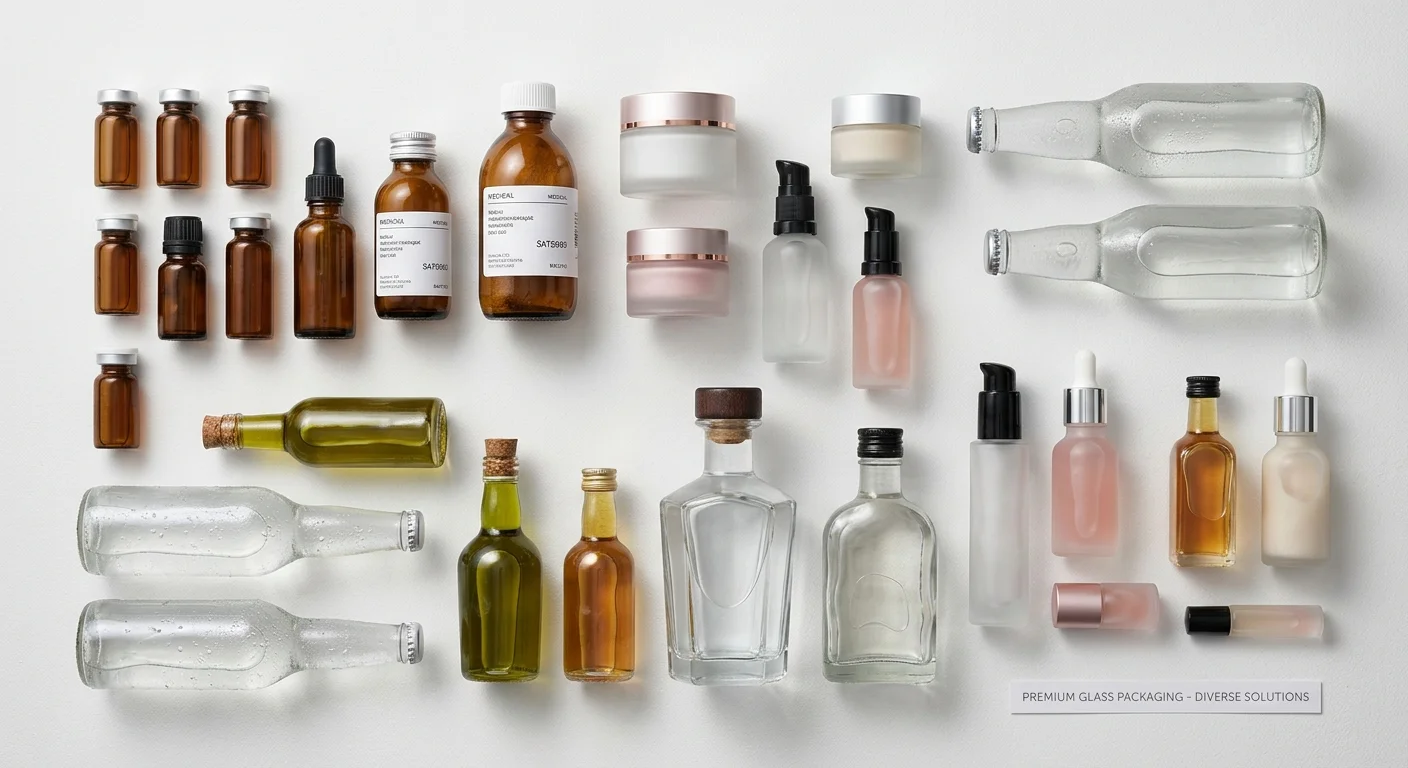
This guide has broken down the key types, their distinct features, and practical uses, helping you identify which glass bottle best suits your requirements, whether you’re a brand selecting packaging or simply seeking to understand the bottles around you. With their inherent durability, recyclability, and ability to preserve product integrity, glass bottles remain a timeless and reliable packaging choice.
At TP Glass Bottle, we work with brands across industries to turn these decisions into finished products. We offer flexible MOQs, custom shapes, and factory-direct pricing — so you get exactly what your product needs.