

Glass bottles have long been a popular choice for packaging a wide range of products, from beverages and cosmetics to pharmaceuticals and food items. Among the various colored glass options available, amber glass stands out as a preferred choice for many manufacturers and consumers alike. While clear and green glass bottles are common in everyday use, amber glass offers unique properties that address key concerns related to product protection, preservation, and quality.
What Makes Amber Glass Bottles Different from Clear Glass?
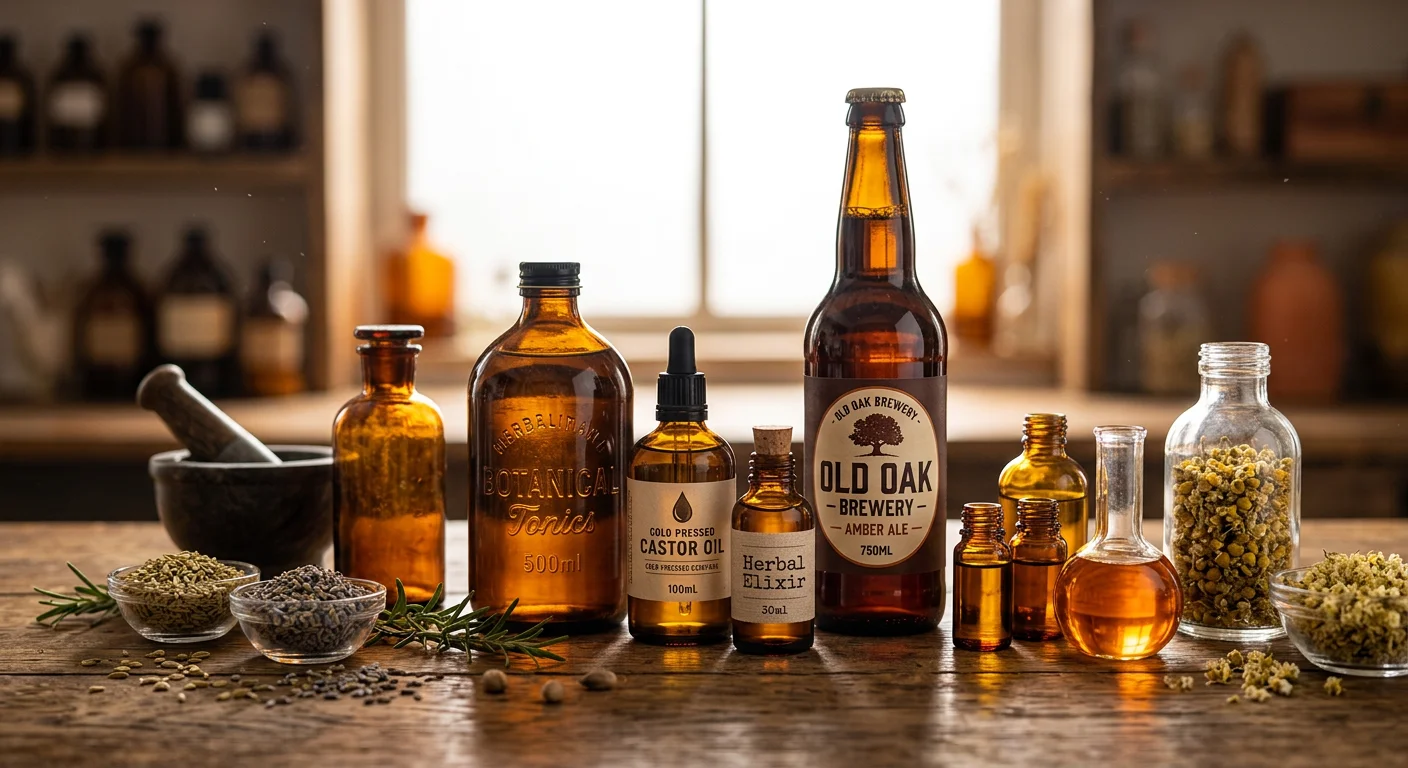
The difference isn’t just cosmetic. That rich brown tint in amber glass comes from a deliberate chemical process. Manufacturers introduce iron, manganese, and sulfur compounds during production. These get fused into the glass matrix itself — not applied to the surface.
Those metal oxides change how the glass handles light at the molecular level. It’s a structural difference, not a coating.
Clear glass has none of that. Light cuts straight through it, wavelength by wavelength. Over time, that exposure quietly damages whatever’s stored inside.
The UV Filtering Gap Is Bigger Than You Think
This is where the science gets interesting — and where amber glass takes a clear lead.
Amber glass blocks almost all light below 450 nanometers on the UV spectrum. That range covers ultraviolet and violet light — the wavelengths that trigger oxidation and photodegradation in sensitive compounds. Lab data shows amber glass filters out UV radiation at rates above 99% across that range.
Compare that to the alternatives:
-
Clear glass: Filters out almost nothing below 450nm. It’s transparent to the exact wavelengths that damage your product
-
Green glass: Gives moderate UV protection, blocking around 30–50% of harmful wavelengths
-
Blue glass: Performs close to green — selective filtering, but still leaves noticeable UV transmission gaps
-
Amber glass: The top standard for UV protection among common glass colors
Why Industries Treat Amber as the Default for Sensitive Products
Pharmaceutical companies and essential oil producers choose amber glass for a concrete reason — not habit. Regulatory frameworks and industry standards in both sectors designate amber as the reference packaging color for photosensitive contents. No other standard glass color covers the same protective range.
A product’s effectiveness depends on molecular stability. For those products, amber isn’t a preference. It’s the required specification.
The Science of UV Protection: How Amber Glass Shields Your Products
Light is relentless. It doesn’t knock before entering — it passes straight through clear packaging and gets to work fast, breaking molecular bonds and degrading the very compounds that make your product valuable.
This is photodegradation. And it’s happening faster than most people realize.
What the Lab Data Shows
Researchers measure UV transmission through different glass types. The numbers for amber glass are striking.
Amber glass blocks over 99% of UV radiation below 450 nanometers — the exact wavelength range that triggers oxidation in oils, active pharmaceutical ingredients, and volatile aromatic compounds. That’s not a marketing approximation. That’s a measurable, repeatable result from spectrophotometric testing used across pharmaceutical quality control labs worldwide.
The mechanism is straightforward. During manufacturing, iron, sulfur, and manganese compounds fuse into the glass matrix. UV photons hit the bottle. Those metal oxides absorb the energy before it can get through. It never reaches your product.
Clear glass offers no such defense. Neither does green. Neither does blue.
What Happens to Products Without That Protection
The shelf life research makes a strong case.
Studies on essential oils stored in amber versus clear glass show clear differences in oxidation rates within weeks of light exposure. Monoterpene compounds — the fragile aromatic molecules that give lavender, frankincense, and citrus oils their therapeutic properties — break down much faster in clear glass under standard lighting conditions. Some studies document a shelf life reduction of 30–50% for unprotected botanical oils exposed to indirect fluorescent light over a 90-day period.
Pharmaceutical research backs this up. Light-sensitive active ingredients — including certain vitamins, antibiotics, and hormone compounds — can lose measurable potency within days in clear glass under ambient retail lighting. Pharmacopoeia standards across multiple countries designate amber Glass packaging by name. The protection it provides isn’t marginal. It’s the difference between a product that performs and one that only looks like it does.
Extended Shelf Life: Which Products Benefit Most?
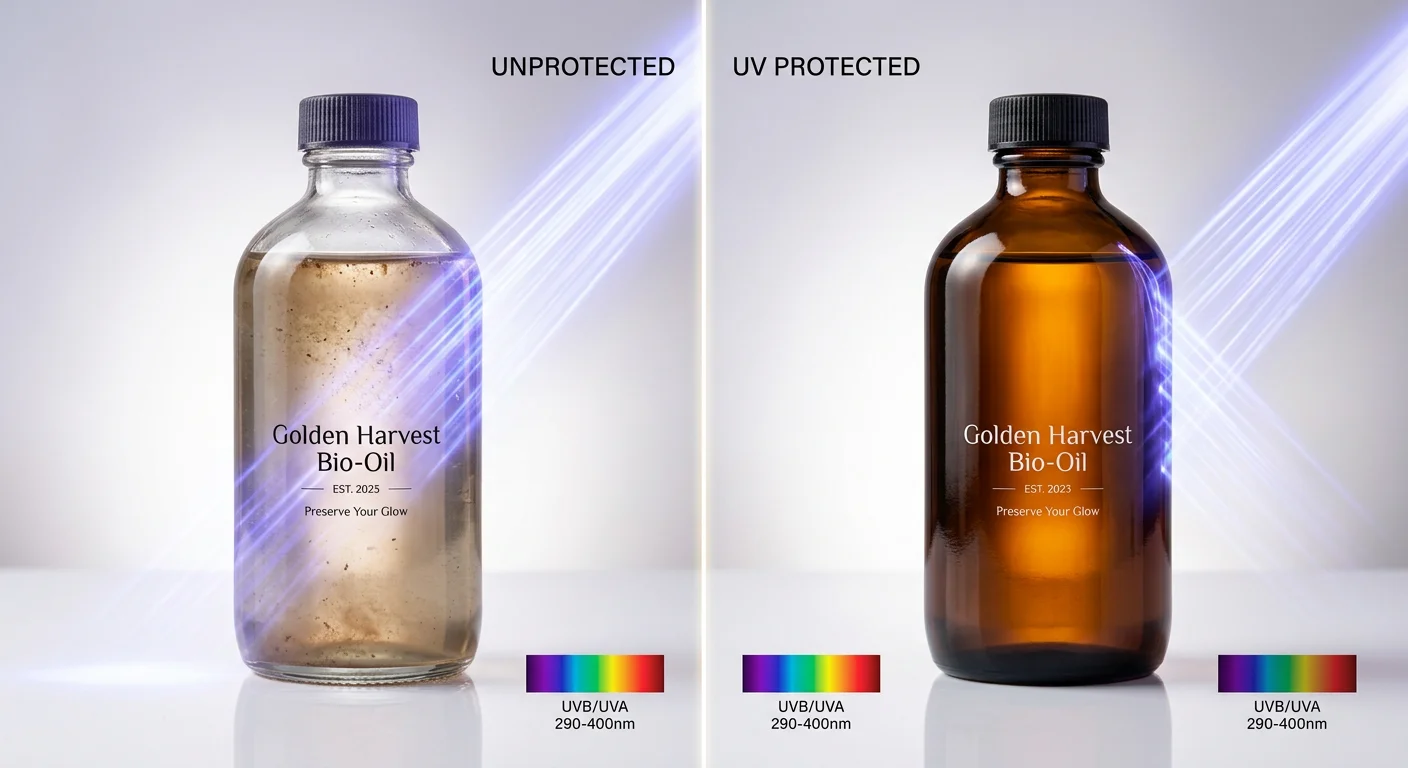
Not every product suffers the same in clear glass. Some degrade so slowly you’d never notice — until a customer complains. It’s the difference between a six-month shelf life and one that never makes it to the retailer’s shelf. Amber Glass Bottles do their best work with four product categories.
High-Sensitivity Products: The Chemistry of Rapid Degradation
Essential oils rank among the most UV-vulnerable substances you can bottle. The culprit is terpene content. Monoterpenes — the aromatic compounds in lavender, frankincense, and citrus oils — oxidize fast under light exposure. Heat speeds it up. UV light kicks it off. Once oxidation starts, therapeutic value doesn’t fade slowly. It collapses. Rancidity, off-notes, and reduced effectiveness follow one after another.
Herbal tinctures face a different but just as serious problem. Active alkaloids and polyphenols — the compounds that do the real work in valerian, echinacea, and elderberry preparations — break down through a process called photooxidation. UV energy doesn’t just discolor the liquid. It cuts the molecular bonds that give those compounds their biological activity. A tincture that looks perfectly fine may have already lost 40% of its potency before anyone opens it.
Probiotic supplements in liquid form are highly sensitive to both light and temperature changes. Live cultures don’t just die off in one go — they lose viability in measurable percentages per hour under standard fluorescent retail lighting. The viable count printed on the label turns into fiction before the product reaches a single consumer.
Vitamin C serums and ascorbic acid-based skincare oxidize fast — faster than most people expect. Under UV exposure, ascorbic acid converts to dehydroascorbic acid. That compound offers zero benefit and can irritate skin directly. Professional formulators won’t ship vitamin C products in anything other than amber glass or fully opaque packaging.
Food and Beverage
Craft beer producers have a name for what UV light does to their product: light strike. It’s not a figure of speech. UV and visible light above 350nm react with hop-derived compounds — isohumulones, to be exact — to produce 3-methyl-2-butene-1-thiol. That’s a sulfur compound nearly identical to skunk spray. The reaction takes minutes in direct sunlight. Hours under fluorescent light. Amber glass blocks the wavelengths that trigger this reaction almost completely.
Kombucha, cold-pressed juices, and matcha beverages face oxidative color and flavor loss that’s measurable and financially significant. Cold-pressed green juices stored in clear glass lose both their vibrant color and chlorophyll content fast. Studies document visible color degradation within 48–72 hours of light exposure at standard retail conditions.
Pharmaceutical Applications: Regulatory Requirements
This is where amber glass moves from best practice to legal requirement.
The FDA and European Pharmacopoeia (Ph. Eur.) both set out clear packaging rules for light-sensitive pharmaceutical compounds. These are hard rules, not suggestions. Nitroglycerin tablets and solutions — used in cardiac emergencies — break down fast under light exposure. They lose effectiveness at the exact moment a patient needs them most. Vitamin B12 injections (cyanocobalamin) carry the same light-sensitive designation. Amber glass is named directly in their product monographs.
The logic here is straightforward. For these drugs, a packaging failure is a treatment failure. Amber glass isn’t a premium choice pharmaceutical manufacturers make. It’s the container those formulations are required by law to use.
Across every category above, the pattern stays the same: a product’s value lives in its molecular integrity, and UV light attacks that integrity without stopping. Amber glass bottles cut off that process before it ever begins.
Industry-Specific Applications: Matching the Right Amber Bottle to Your Needs
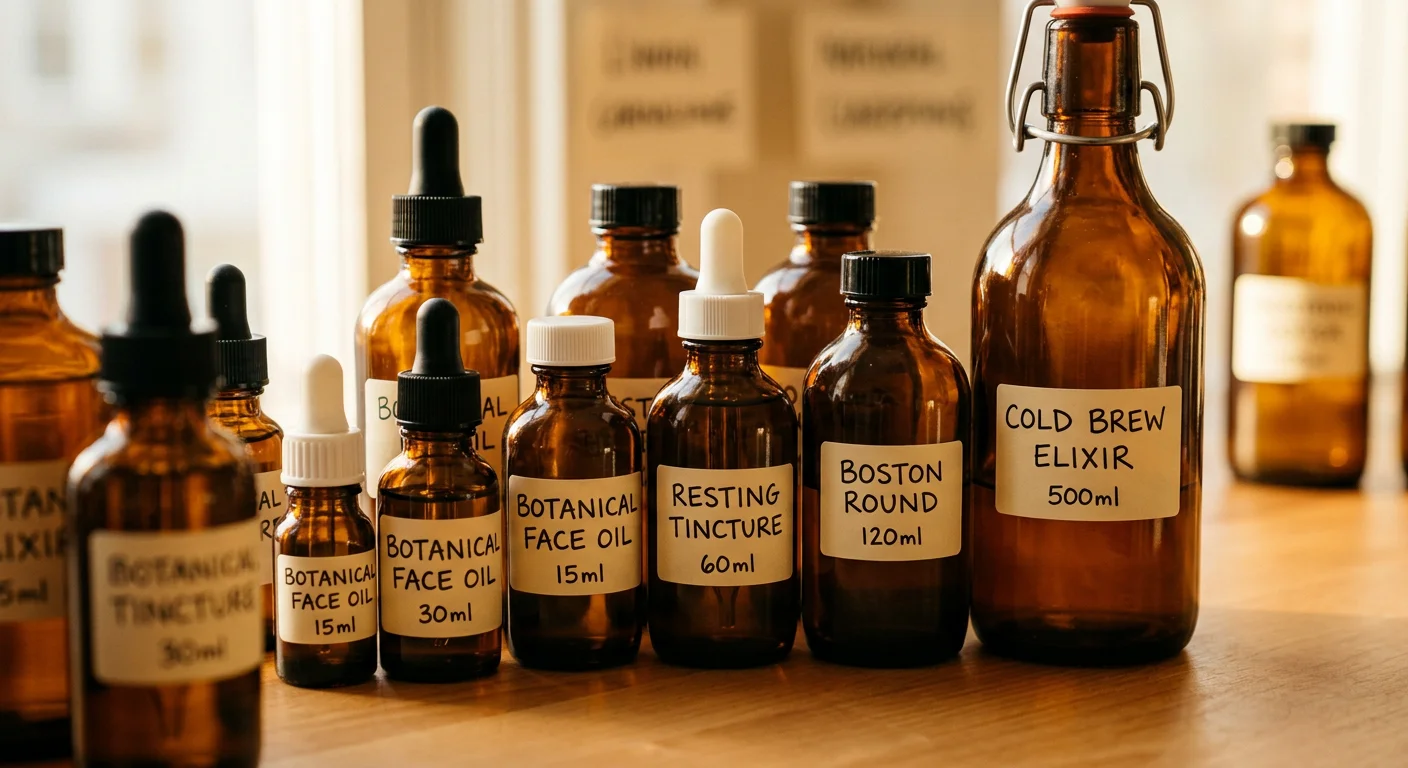
Amber glass isn’t a single product. It’s a category — and picking the wrong bottle format is its own packaging failure, even with perfect UV protection.
Bottle shape, size, neck width, and closure type all affect how well the container serves the product inside. Here’s how the right amber bottle looks across four major industries.
Pharmaceuticals and Laboratories: Boston Round vs. Blake Bottles
Step into any compounding pharmacy or analytical lab and you’ll spot two amber bottle shapes on the shelves: the Boston Round and the Blake bottle.
They look similar. They are not interchangeable.
Boston Round bottles have a rounded shoulder and narrow neck. That design is no accident — the narrow opening cuts air exposure during dispensing. This matters for oxidation-sensitive compounds. They’re the go-to choice for liquid formulations, tinctures, and chemical reagents where controlled pouring and minimal headspace are top priorities.
Blake bottles have a flatter, wider profile. Labs prefer them for bulk storage and sample collection. Stability during stacking and easy labeling matter more here than precise pouring. The wider body also gives more surface area for regulatory labels — something pharmaceutical compliance teams care about.
Same amber glass. Different jobs. Knowing which one you need before ordering saves time, money, and a lot of frustration.
Essential Oils and Aromatherapy: The Euro Dropper Bottle Gets Specific
Essential oil packaging has one challenge clear glass never solved well: dispensing fractions of a milliliter without waste or mess.
The Euro Dropper amber bottle was built for exactly this. It has a built-in orifice reducer — a small insert that controls flow by inverting the bottle, releasing one measured drop at a time. That sounds minor until you’re handling oils priced at $80 per 15ml.
Matching bottle size to oil viscosity is where most buyers slip up:
-
1ml and 5ml Euro Droppers work best for high-value, low-viscosity oils like frankincense CO₂ and steam-distilled rose — every drop is expensive, so precision counts
-
10ml bottles hit the sweet spot for most single-note essential oils: lavender, peppermint, eucalyptus
-
30ml bottles suit carrier oil blends and synergy formulas with lower viscosity, where flow through the orifice reducer stays steady
Thick, resinous oils — vetiver, sandalwood, myrrh — often need a wider orifice reducer or a separate dropper pipette. The standard Euro Dropper insert can clog under high viscosity. That clog tends to happen mid-pour, which is the worst time for it.
Skincare and Cosmetics: Not All Light-Sensitive Ingredients Are Equal
Cosmetic formulation has a clear pecking order for photosensitivity. It goes well beyond “store in a cool, dark place.”
Vitamin C (ascorbic acid) sits at the most vulnerable end. It breaks down fast. The breakdown product — dehydroascorbic acid — irritates skin. Amber glass is the practical requirement for any serum with a real ascorbic acid concentration.
Retinol and vitamin A derivatives sit in the next tier. Retinol doesn’t break down as fast as ascorbic acid, but UV exposure converts it to inactive compounds over time. The process is slow and hard to detect. By the time a user notices weaker results, weeks of degradation have already happened. Amber glass — paired with an opaque outer carton — is the professional standard for retinol concentrations above 0.3%.
Niacinamide (vitamin B3) is more stable by comparison, but still benefits from amber packaging alongside other actives. Combination serums pairing niacinamide with zinc or peptides are a growing product category. Here, amber glass acts more as a precaution than a strict requirement.
Craft Beverages: Standard Specs Matter More Than You’d Think
The craft beer industry runs on two amber bottle formats brewers treat as non-negotiable: 330ml and 500ml.
Those sizes aren’t random. They match standard carbonation volumes, fill line tolerances for bottling equipment, and retailer shelf expectations across global markets. A craft brewer using an off-spec bottle size runs into real distribution problems — not just aesthetic ones.
The closure choice matters just as much. Crown caps — the traditional crimped metal seal — create a near-airtight barrier that beats most alternatives for carbonated beverages. They cut oxygen entry after filling, which is the second biggest threat to beer quality after light exposure. Screw caps trade some of that seal strength for convenience and re-sealability. That makes them a solid choice for kombucha and low-carbonation fermented drinks, but a weaker option for high-carbonation craft styles where holding CO₂ is critical.
The amber glass handles UV. The closure handles oxygen. Get both right, and the beer your customer opens tastes like the beer you brewed.
Amber Glass vs Alternative Packaging: Honest Comparison
Amber glass wins on UV protection. That part isn’t contested. The real question is whether it wins enough to justify the tradeoffs. Every alternative packaging material has at least one legitimate argument in its favor.
Here’s where each one stands.
Amber Glass vs. Dark PET Plastic
Dark PET plastic is lighter, cheaper per unit, and survives a drop that would shatter glass. Those are real advantages — not marketing spin.
Look past cost-per-unit, though. The comparison falls apart fast:
|
Factor |
Amber Glass |
Dark PET Plastic |
|---|---|---|
|
Weight |
Heavier |
85–90% lighter |
|
Unit cost |
Higher |
Lower |
|
Chemical safety |
Inert — zero leaching |
Risk of plasticizer migration, heat or oils make it worse |
|
Recyclability |
Recyclable without quality loss, cycle after cycle |
Degrades with each recycling cycle |
|
UV protection |
Blocks 99%+ below 450nm |
Variable — depends on pigment and wall thickness |
The chemical safety gap is what matters most for what goes inside. Essential oils, tinctures, and pharmaceutical liquids react with plastic at the molecular level. Some terpenes push plasticizer migration along even faster. A cost saving at purchase can turn into a contamination problem on the shelf.
Where dark PET still makes sense: dry supplement capsules, short shelf-life products, and situations where breakage risk is high and chemical migration isn’t a concern.
Amber Glass vs. Stainless Steel
Stainless steel and amber glass are close on light blocking. Both shut out UV well. The real difference shows up elsewhere.
Glass has one structural advantage stainless steel can’t match: chemical inertness. Glass won’t react with acidic formulations, alcohol-based tinctures, or aromatic compounds. Stainless steel — lower grades in particular — can push metallic off-notes into acidic liquids over time.
Stainless steel fights back on durability. It won’t shatter. For field use, outdoor storage, or industrial lab settings where breakage creates real hazards, that edge matters more than flavor purity.
The choice comes down to your use case:
-
Pick amber glass — chemical neutrality, product visibility, or regulatory compliance drives your decision
-
Pick stainless steel — durability and portability matter more than purity
No single material wins across the board. The product itself — and where it gets stored — makes the call.
Conclusion
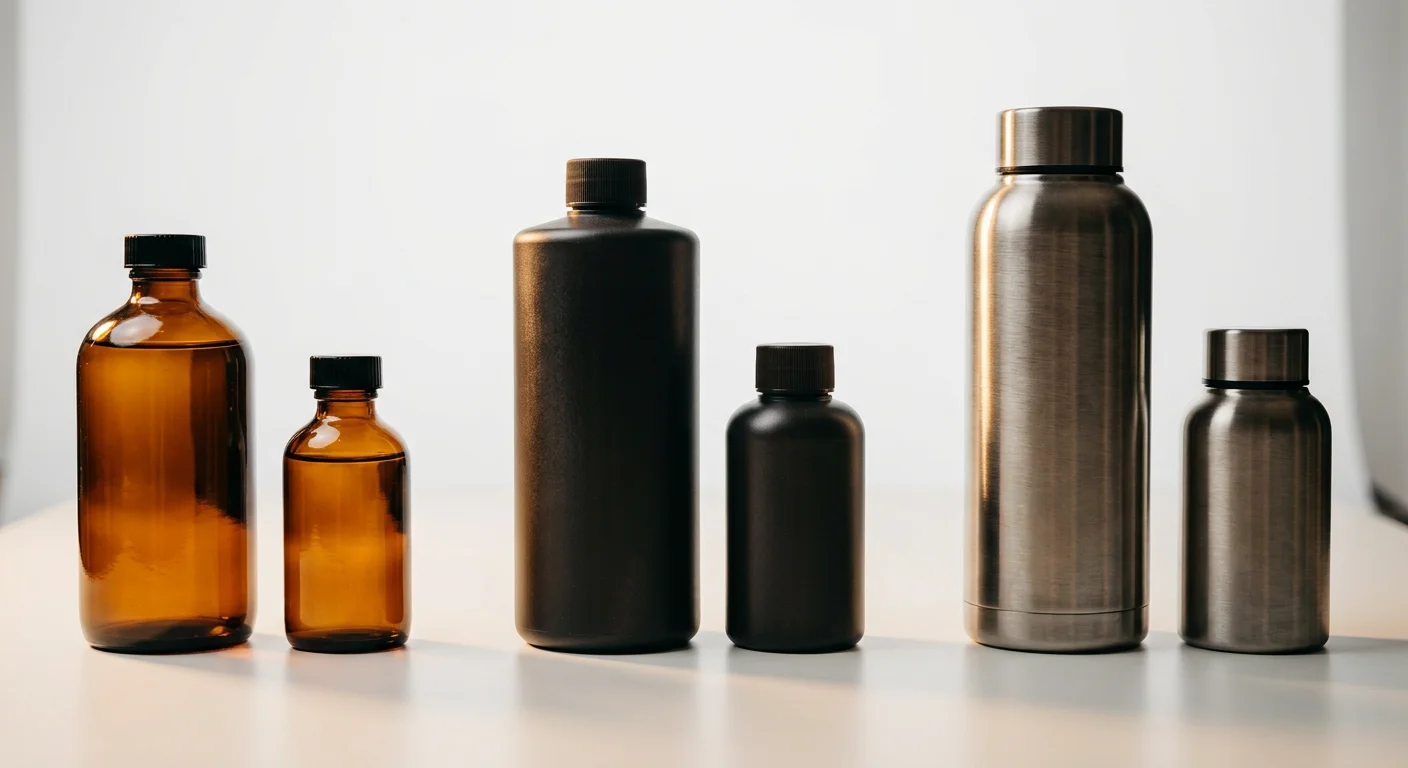
Amber glass bottles are a superior packaging choice for various products, offering unmatched UV protection, product integrity preservation, and extended shelf life. Their ability to safeguard light-sensitive ingredients makes them essential across food and beverage, pharmaceuticals, and cosmetics.
At TP Glass Bottle Manufacturer, we specialize in high-quality amber glass bottles that leverage these advantages, with flexible customization options to meet your brand and product needs. Choose us as your trusted partner to protect your products and elevate your brand.