

When it comes to storing and using essential oils, choosing the right container is key to preserving their potency and ensuring a convenient user experience. Essential oils are delicate substances—they can degrade when exposed to certain materials, light, or air, which can reduce their effectiveness over time. For many users and brands alike, roll-on bottles have become a popular choice for dispensing essential oils, thanks to their ease of use and precise application. Among the various materials used for roll-on bottles, glass stands out as the superior option, offering unique benefits that align perfectly with the needs of essential oils. This article explores why Glass Roll-On Bottles are the best choice for storing, dispensing, and showcasing essential oils.
What Makes Glass Roll-On Bottles Chemically Safe for Essential Oils
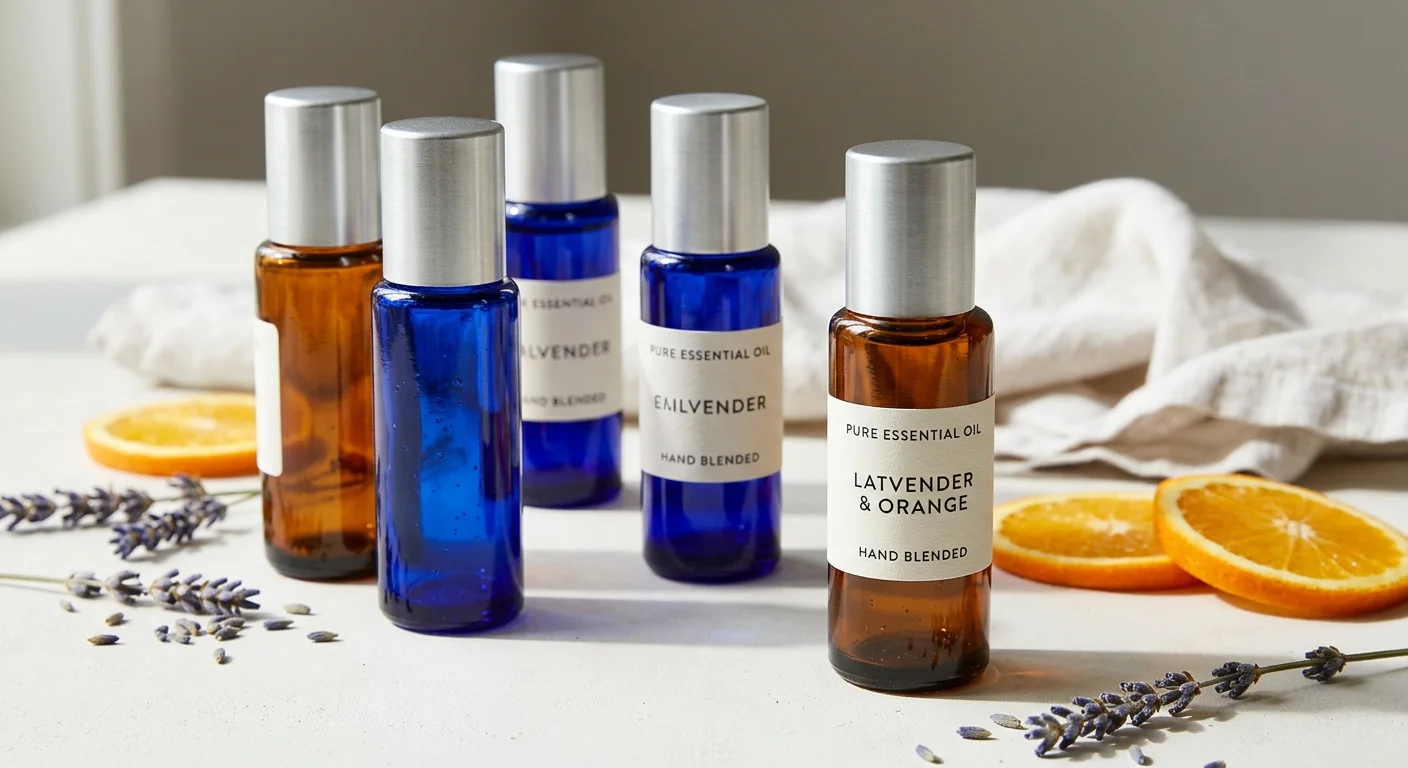
Here’s something the packaging industry rarely admits: not all glass is the same. That difference matters a lot when you’re storing something as complex as an essential oil.
Most glass roll-on bottles used in essential oil packaging are made from Type III soda-lime glass — the industry standard. It meets USP and ISO standards for chemical resistance. That makes it more than good enough for most oil-based formulas. For higher-stakes applications — pharmaceutical-grade blends or highly acidic botanical extracts — borosilicate glass is the better choice. It has a stronger inertness rating. So it pushes back harder against chemical interaction. Both glass types share one core trait: they don’t interfere with your formula.
That’s the core promise of glass. It’s chemically inert.
Glass Doesn’t Negotiate With Your Formula
Essential oils are not simple liquids. They’re packed with reactive compounds — terpenes, esters, phenols, aldehydes — each behaving differently at the molecular level. Terpenes oxidize. Phenols can corrode. Esters react to heat and contamination. Put any of these in a plastic container, and a slow, invisible reaction starts between your oil and the container walls.
Glass doesn’t play that game.
Plastic contains plasticizers, BPA, and petrochemical residues. These can move into your formula over time. Glass contains none of that. There is no leaching. No off-gassing. No slow contamination that breaks down the therapeutic quality of what you’ve blended.
What “Stability” Really Means Over Time
The real test of chemical safety isn’t what happens on day one — it’s what happens on month six. Or month eighteen.
Studies on aromatic compound stability show that terpene-rich oils stored in glass hold much higher potency at the 12 and 24-month marks compared to those stored in standard plastic. Linalool, limonene, eucalyptol — these key compounds break down faster in plastic packaging. The reason is simple: plastic is porous at the molecular level. Glass is not.
For a small-batch aromatherapy brand selling a $45 roller blend, that stability gap is very real. It separates a product that performs as promised on month one and month twenty-four from one that slowly loses its edge.
Glass roll-on bottles aren’t just containers. They’re preservation vessels. For essential oils, where therapeutic potency is the product, that distinction is everything.
How Colored Glass Protects Essential Oil Potency from UV Degradation
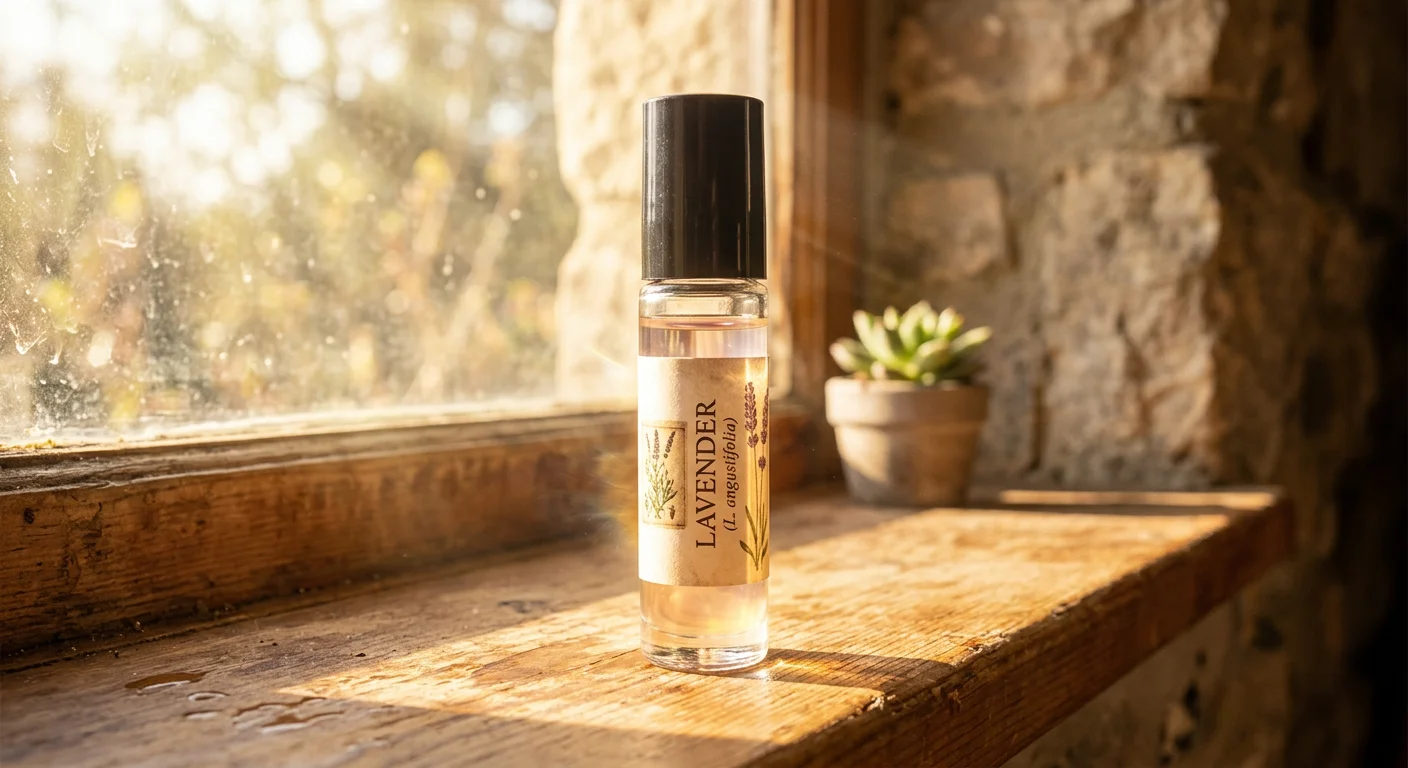
Light is silent. It doesn’t announce itself as a threat. Leave a clear glass roller bottle of lavender oil on a sunny windowsill for a few weeks. Something invisible starts happening — a slow breakdown of the very compounds that make that oil worth buying.
This is why color matters in glass roll-on bottles. Not as a branding choice. As a shield.
The UV Wavelengths That Damage Essential Oils
Not all light hits the same. The wavelengths that cause the most harm to essential oils fall in the ultraviolet range — 200 to 400 nm. This is where photodegradation begins. Terpene bonds weaken. Aromatic compounds — the ones responsible for both scent and therapeutic function — start breaking down at the molecular level.
Here’s how the three main glass colors compare:
-
Clear glass blocks almost no UV light. It lets through the wavelengths that damage oils most. Fine for display. Bad for preservation.
-
Amber glass is the industry standard for a reason. It blocks UV transmission across the full 200–400 nm spectrum — absorbing up to 99% of harmful UV rays. It’s the go-to choice for most essential oil roller blends, particularly those rich in terpenes like linalool, limonene, and citral.
-
Cobalt blue glass offers moderate UV protection — stronger than clear, but not as complete as amber. It filters well in the 280–350 nm range. It works better for oils that are less UV-sensitive, or for blends where shelf display matters to the brand.
Why Amber Wins for Serious Formulations
Your roller blend contains citrus-based oils, floral extracts, or high-terpene compounds? Amber glass roll-on bottles aren’t optional — they’re the responsible choice. Citrus oils are highly photosensitive. Bergamot, lemon, and sweet orange can degrade within weeks under UV exposure. You’ll see and smell the difference.
The bottom line: the color of your bottle isn’t decorative. It’s functional chemistry. Pick it with purpose.
The Precision Application Advantage: Why Roller Ball Design Reduces Waste and Improves Experience
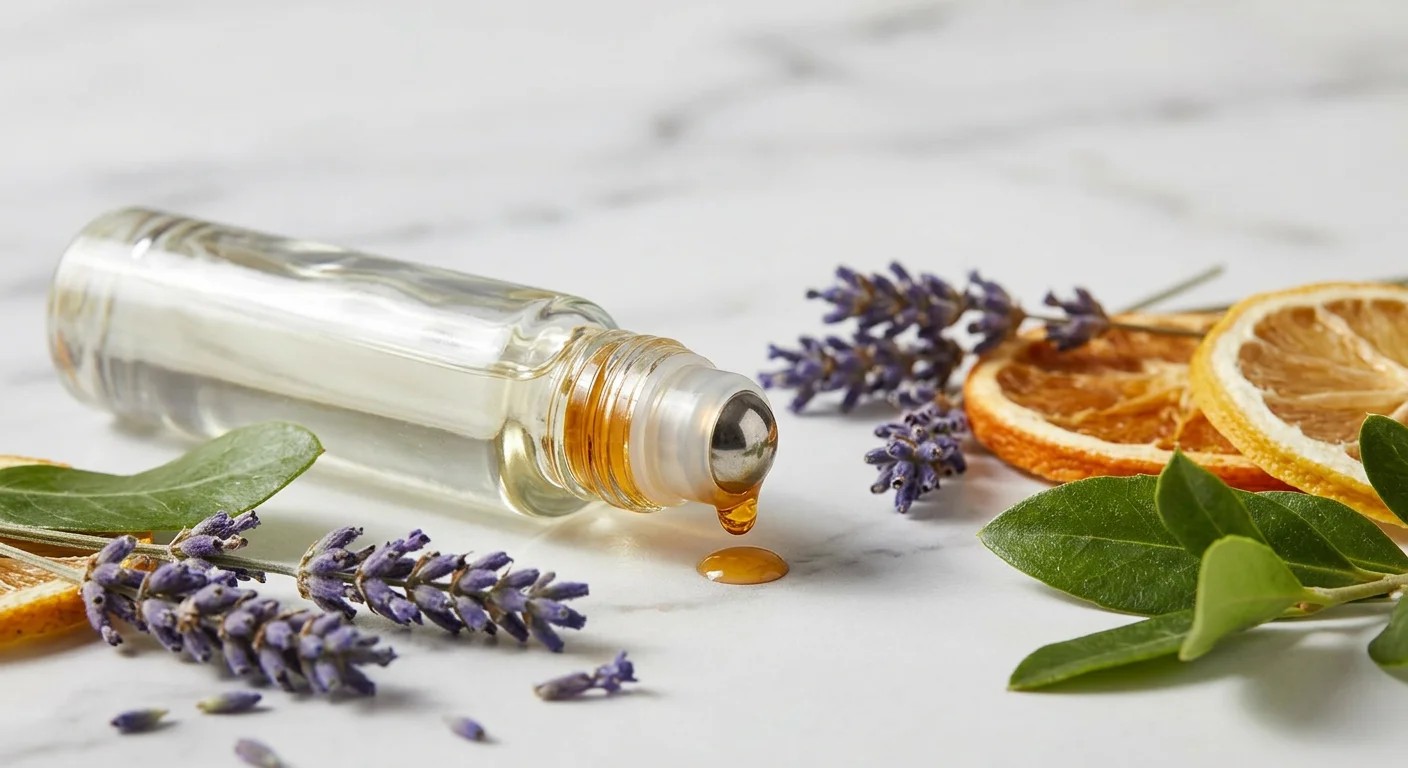
Every drop of a well-formulated essential oil blend costs something — in time, in raw materials, in the expertise that went into building it. A dropper cap that releases too much at once doesn’t just waste product. It wastes all of that.
The roller ball design on glass roll-on bottles exists to solve this problem. And it solves it better than most people give it credit for.
The Physics of a Better Application
A roller ball dispenses oil in one simple way: controlled contact. You press the ball against skin, it rotates, and a measured film of oil transfers from reservoir to surface. That’s it. No guessing. No “maybe three drops, maybe five.”
The difference between a glass ball and a stainless steel ball is worth knowing.
-
Glass balls create a smoother roll with lower surface friction. They dispense thinner, more consistent films — ideal for light facial blends or delicate serums where precision counts.
-
Stainless steel balls offer more durability and a cooler, firmer feel on skin. They tend to release a bit more volume per roll, which works well for body blends or thicker carrier oil formulas.
Neither is the clear winner for every use case. But both deliver something a dropper cap cannot: dosage consistency. Across a standard roll-on application to the wrist or neck, a well-fitted roller ball releases 0.03 to 0.06 mL of product per pass. That’s a predictable, repeatable amount — session after session, bottle after bottle.
For a brand selling a $48 roller blend with a 10mL bottle, that consistency matters. It means customers experience the same product every time. That’s not just good formulation. That’s good brand trust.
Hygiene Is Not a Side Benefit — It’s a Core One
Open-mouth bottles and dropper caps share one problem: they both expose your formula to the outside environment at the point of application. Fingers hover. Air enters. Contamination builds up over time — quietly, without any visible sign.
Glass roll-on bottles break this pattern.
The roller ball keeps the formula sealed inside the glass vessel. The ball itself contacts the skin — and that contact is brief, external, and limited to the ball’s surface. The oil doesn’t pour out into open air. It doesn’t pool on a dropper tip that’s been touched, recapped, and touched again.
For personal care products used on pulse points, temples, or anywhere near the face, this matters. In clinical aromatherapy settings — where practitioners use roller blends on multiple clients or work with immune-sensitive individuals — it matters even more. Contamination risk drops sharply compared to any open-application format.
Here’s the hygiene point that doesn’t get enough attention: the roller ball acts as a one-way gate. Product exits in a controlled direction. Outside contaminants don’t get in. It’s a small mechanical detail with a big impact on product integrity over the life of the bottle.
Less waste. Consistent dosage. Lower contamination risk. The roller ball design isn’t a convenience feature — it’s a precision instrument built into every glass roll-on bottle worth using.
Branding and Premium Perception: Why Glass Roll-Ons Elevate Essential Oil Products
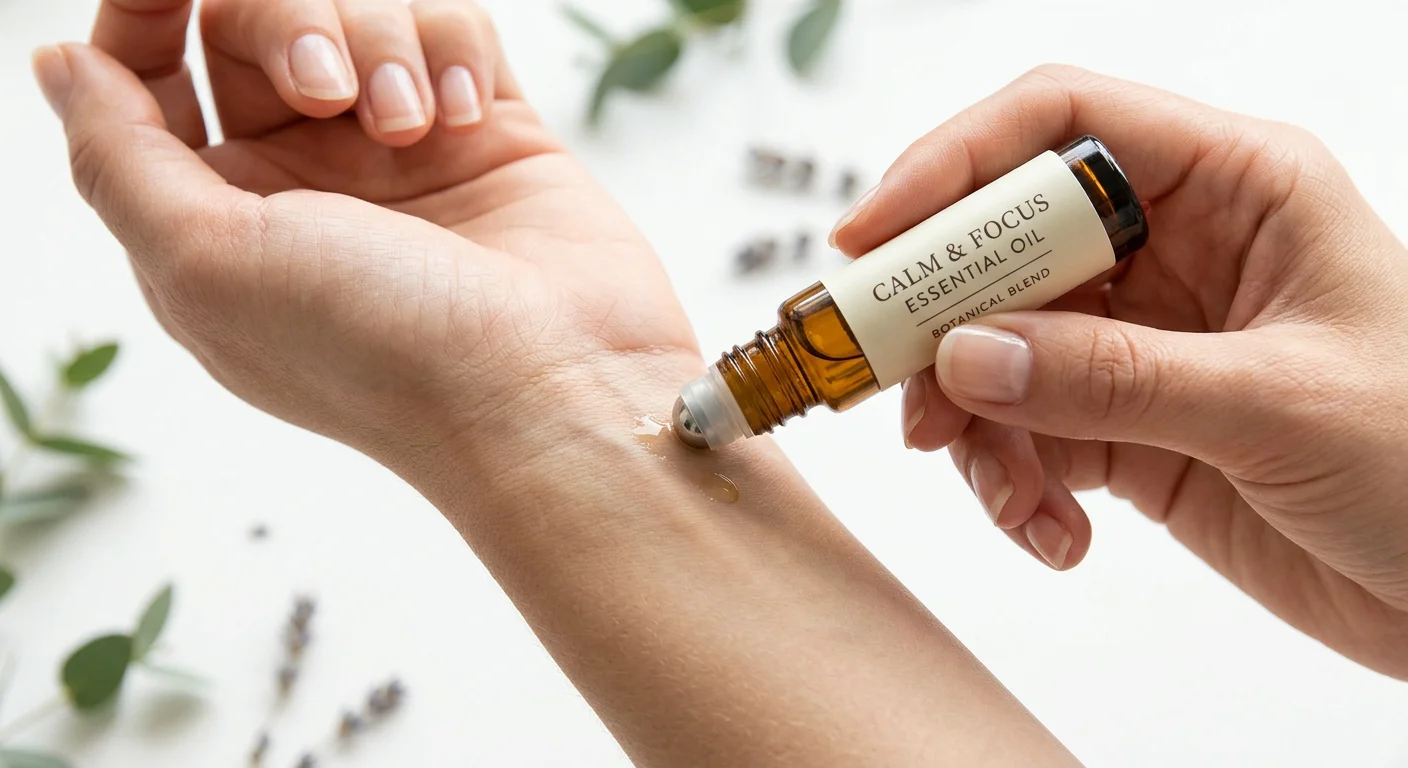
Packaging doesn’t just hold a product. It makes a promise.
A customer picks up your bottle before they read the label. Before they smell the blend. Before they even unscrew the cap — they’ve already formed an opinion. A glass roll-on bottle has weight. Literal, physical weight. It sits in the hand differently than plastic does. It feels like something worth keeping. That sensation is no accident. It’s a brand signal, delivered through material.
Consumer psychology research backs this up. Studies on packaging perception show that Glass packaging increases the perceived value of a product by 20–45% compared to plastic alternatives. Shoppers connect glass with purity, quality, and longevity. In the wellness space — where trust is currency — that connection does serious work. A $38 roller blend in a frosted glass vial reads as a different product than the same formula in a plastic tube. The formula hasn’t changed. The perception has.
What Customization Opens Up for Your Brand
This is where glass roll-on bottles move from functional to strategic.
The customization options for essential oil brands today are broader than most small-batch formulators expect:
-
Frosted glass softens the look and catches light in a distinct way — it signals sophistication without a single word
-
Screen printing and labeling let you put branding straight onto the glass surface, no paper label needed — cleaner, more durable, stronger shelf presence
-
Embossing builds your logo into the glass itself — tactile branding that customers feel before they see it
-
Cap color variations — gold, matte black, rose gold — each one shifts the product’s visual position in a real, noticeable way
-
Roller ball material choices (glass vs. stainless steel) add another layer of distinction at the product detail level
Many suppliers now offer these customizations at MOQs as low as 100–500 units. That makes premium presentation reachable even at the small-batch stage. You don’t need to be a large brand to look like one.
How Category Leaders Use Glass to Win the Shelf
Look at the most recognized names in aromatherapy, CBD wellness, and clean beauty. See how they position their roller products. The pattern is clear. Glass is the standard at the premium tier — not because these brands are being fussy, but because glass performs at the point of purchase.
On a retail shelf, a cobalt blue or amber glass roll-on stands out from a row of plastic tubes. Think of it like a hardcover book sitting among paperbacks — the eye goes straight to it. On an e-commerce listing, glass catches light in ways plastic doesn’t. That creates scroll-stopping product photos that push click-through rates up.
For wellness brands building direct-to-consumer audiences, this has a measurable impact. Higher perceived value means customers are more willing to pay. It also means they come back. Glass doesn’t just hold your essential oil. It holds your brand’s position in a crowded, competitive market.
Sustainability Profile: Glass Roll-On Bottles as an Eco-Responsible Packaging Choice
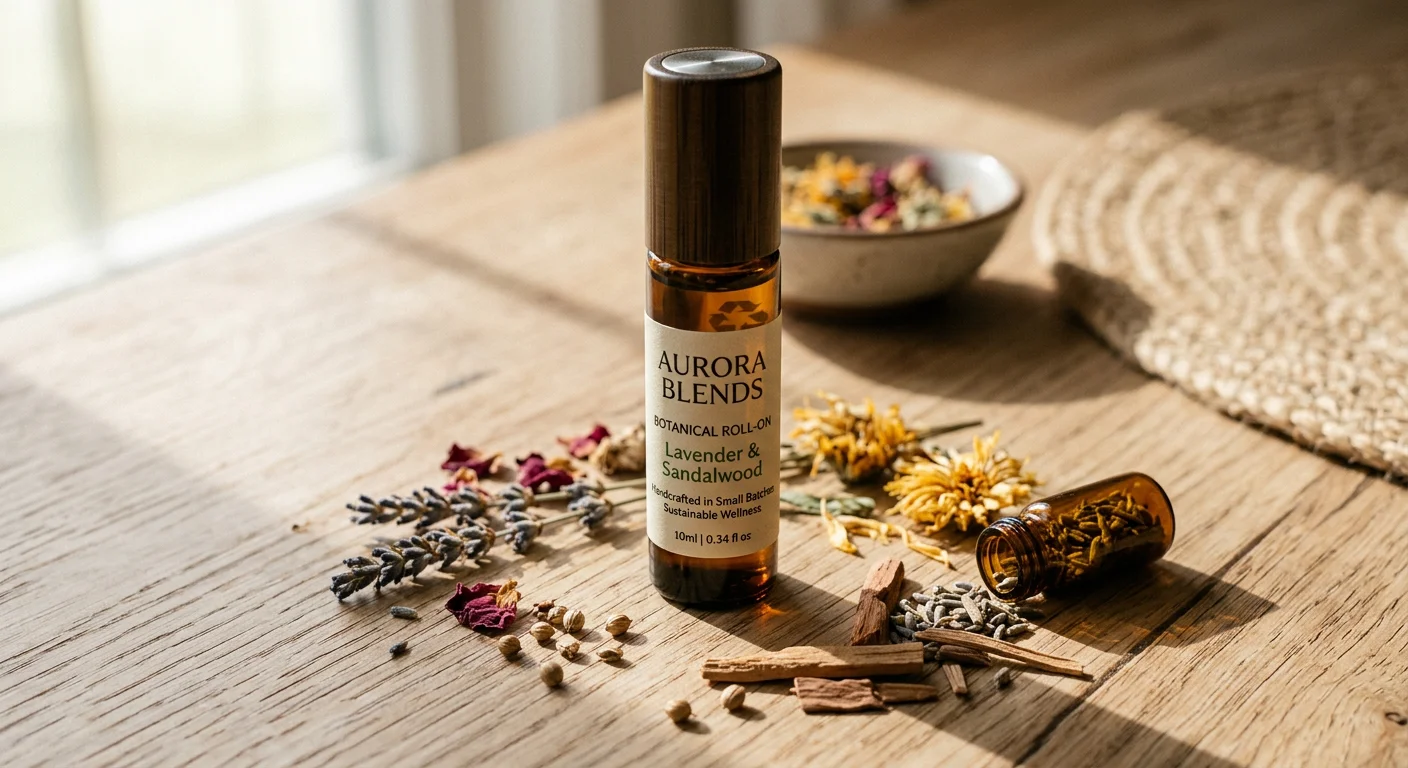
The recycling bin at the end of your customer’s journey tells a story. Right now, plastic is writing a bad one.
Only 9% of all plastic ever produced has been recycled. Even the “better” plastics — the #1 PET and #2 HDPE bottles we toss in the blue bin — have real recycling rates around 20–30% in most markets. Far lower in others. The rest ends up in landfill, incineration, or somewhere it was never supposed to be.
Glass tells a different story. Glass is 100% recyclable — and it stays that way through every cycle. Quality doesn’t drop in the recycling process. The same material melts down and remakes into something just as good. No loss of properties. In the EU, glass container recycling rates already exceed 70–80%. That’s not a marketing claim. That’s a real, measurable end-of-life outcome.
Your wellness brand uses words like “clean” and “conscious.” The packaging needs to back that up — not contradict it.
Refillability Changes the Math
Here’s what most recycling conversations miss: the best environmental outcome isn’t recycling. It’s not needing to recycle at all.
A standard 10mL glass roll-on bottle handles dozens of refill cycles without breaking down. Glass doesn’t absorb odor. It doesn’t hold onto residue the way plastic does. Rinse it, dry it, and it’s ready again — same performance, zero new material needed.
Consumer habits are shifting faster than most brands realize. In wellness and clean beauty, refillable product programs have become a real loyalty driver. Customers who refill come back. They’re connected to the brand — not just buying a product.
For small-batch essential oil makers, this opens a clear path: launch a refill program. Sell the bottle once. Sell the oil again and again. The glass roll-on becomes something customers hold onto — and return to fill.
The Sustainability Story Your Brand Gets to Tell
Eco-conscious packaging isn’t just the right call. It’s a positioning asset.
Millennial and Gen Z wellness buyers — the core audience for essential oil roller blends — factor sustainability into what they buy. Studies show over 60% of millennials will pay more for products in responsible packaging. That preference doesn’t fade at checkout. It builds into long-term brand loyalty.
Glass roll-on bottles give your brand real things to say. Not vague gestures — specific, honest claims:
-
“Our bottles are recyclable, cycle after cycle.”
-
“Refill and reuse — we’ll show you how.”
-
“No plasticizers. No petrochemicals. Nothing your skin or the planet didn’t ask for.”
These aren’t just taglines. They’re claims you can actually back up — and they match what a growing group of wellness consumers already believe. Add third-party certifications where they apply — ISO 14001, FSC, or B Corp — and you’re not just saying you’re sustainable. You’re proving it.
The Glass Bottle on your shelf isn’t only protecting the oil inside. It’s protecting the story your brand is working to build.
Conclusion
Glass roll-on bottles are the optimal choice for essential oils, as they effectively preserve the oils’ potency, avoid chemical interactions, and provide a convenient, mess-free application experience—addressing all key needs of both users and essential oil brands. Unlike other materials, glass ensures the integrity of essential oils while offering a clean, professional presentation that enhances brand credibility. As a trusted TP Glass Bottle Manufacturer, we specialize in crafting high-quality, custom glass roll-on bottles tailored to essential oil brands. Our bottles are designed to protect your products, align with your brand aesthetic, and deliver the reliable performance your customers expect, helping you stand out in the competitive essential oil market.