

Sparkling water and other carbonated drinks lose their fizz quickly when exposed to air. Using airtight glass bottles is an effective way to slow down that process and keep your beverages fresh for longer. Swing top caps, cork stoppers, borosilicate construction, pressure resistance ratings — there’s a lot more to this than it looks. That’s what we’re here to help you sort out.
Table of Contents
Why Airtight Glass Bottles Are the Gold Standard for Sparkling Water Storage
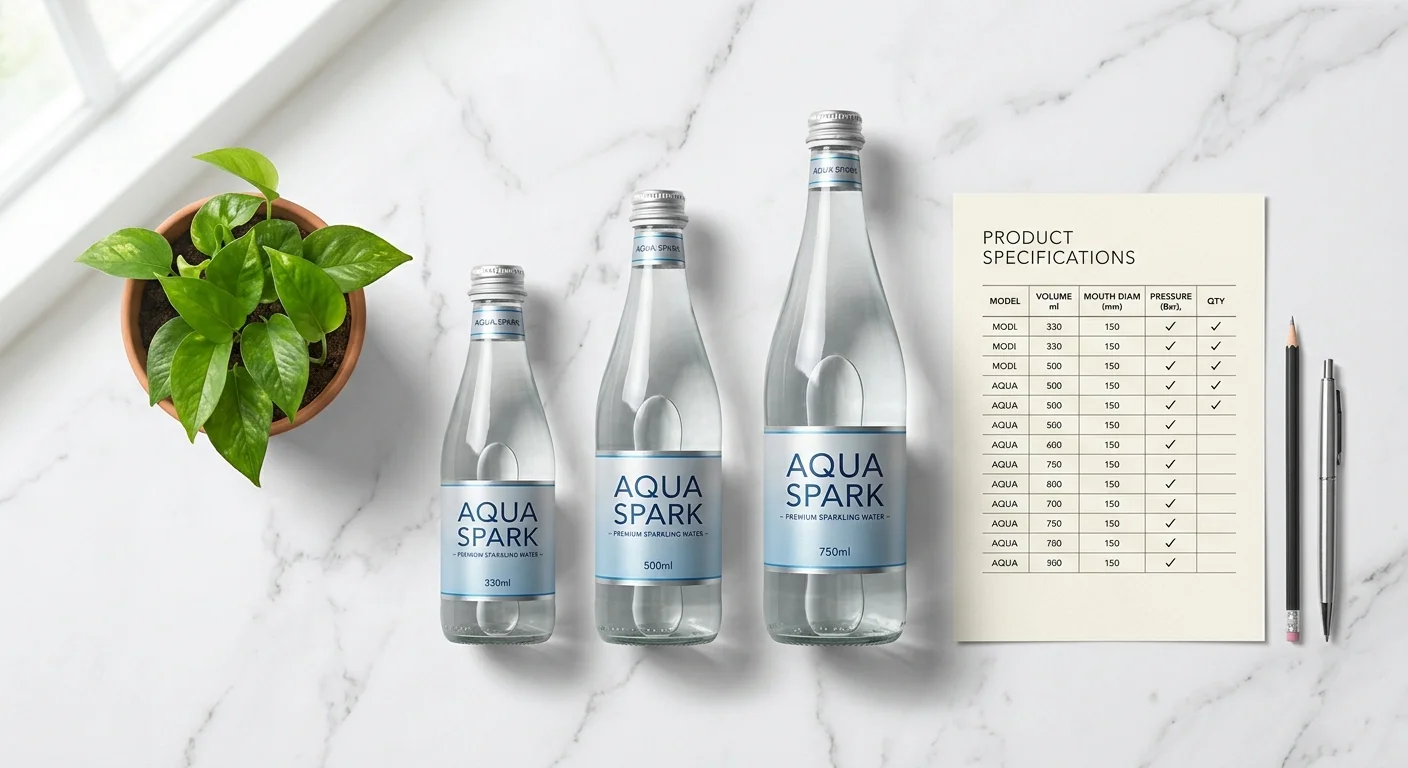
Glass doesn’t breathe. That’s the whole point.
At the molecular level, glass is a solid with zero gas permeability. CO₂ molecules cannot pass through the container wall at all. Plastic works differently — its porous polymer structure lets gas slowly escape over time. You can measure that loss. Aluminum holds up better, but seam integrity and coating interactions bring their own problems.
The real-world difference shows up fast:
- 24 hours: Plastic bottles can lose up to 15–20% of dissolved CO₂, even sealed
- 48 hours: That loss builds up. The taste profile flattens — you’ll notice it
- 72 hours: Glass bottles with a proper airtight seal — swing top or cork stopper — hold carbonation levels close to the original fill pressure
For a beverage brand, that gap matters. It’s the difference between a product that tastes alive on the shelf and one that lets customers down with every sip.
Borosilicate glass adds another layer of reliability. Its dense, stable structure resists expansion from heat. So pressure stays consistent — even through temperature shifts during shipping and storage. Your carbonation doesn’t suffer just because the truck got hot.
Buyers searching for a pressure-resistant glass bottle or an airtight glass bottle for carbonated drinks aren’t just after good looks. They’re protecting what’s inside. From the filling line all the way to the customer’s first sip, the container has to hold.
How the Seal Mechanism Determines Carbonation Longevity
The seal does the heavy lifting. Every day, it stands between your carbonated beverage and a flat, lifeless disappointment — and not all seals are built the same for that job.
B2B buyers sourcing airtight glass bottles for carbonated drinks need to understand seal mechanics. There’s no skipping this part. It’s the difference between a product that arrives at the restaurant table still full of bubbles and one that lost its fizz somewhere between the warehouse and the dining room.
The Four Main Seal Types — and What They Can Handle
Swing Top Caps (Flip Caps)
This is the workhorse of carbonated beverage packaging. The hinged wire bail locks the rubber gasket tight against the bottle mouth. That creates a compression seal that holds internal pressure with no fuss. Swing tops work well for high-carbonation drinks — sparkling water, kombucha, craft sodas. CO₂ pressure tolerance runs from 3 to 6 bar. For a glass bottle with swing top cap, that rubber gasket is everything. Replace it when it wears out. Don’t skip that step.
Cork Stoppers
Cork is a good fit for low-carbonation beverages — think still-infused waters or mild effervescent drinks. Pressure tolerance runs lower, usually under 2 bar. A glass bottle with cork stopper gives you charm and strong shelf appeal. But it’s not the right choice for products with heavy carbonation.
Screw Caps
Practical and cost-efficient for moderate carbonation. Thread engagement needs to be consistent — poor tolerances lead to leaks. These work well for mid-range fizz applications.
Crown Caps
The standard in commercial bottling lines. High-volume, high-pressure capable, and efficient — but not resealable. Once you open it, the carbonation starts dropping right away.
Matching the Seal to Your Carbonation Level
| Seal Type | Pressure Range | Best For |
|---|---|---|
| Swing Top Cap | 3–6 bar | High carbonation: sparkling water, kombucha |
| Cork Stopper | Up to 2 bar | Low carbonation: infused water, light spritz |
| Screw Cap | 2–4 bar | Moderate carbonation beverages |
| Crown Cap | 4–6 bar | Commercial high-volume bottling |
Getting this match wrong costs more than a bad batch. It costs customer trust. A pressure-resistant glass bottle paired with the wrong seal is still the wrong bottle for the job. Pick your seal type based on your exact CO₂ specification. Then check that the bottle construction supports it.
Borosilicate vs. Soda-Lime Glass: Which Handles Carbonation Pressure Better?
Two glass bottles sitting side by side can look almost identical — yet perform in completely opposite ways under pressure.
That gap comes down to composition.
Borosilicate glass contains 12–15% boron trioxide. That additive tightens the molecular structure and produces a denser, more stable material. Soda-lime glass — the standard for most commercial bottles — is built from silica, sodium carbonate, and calcium oxide. It’s affordable, easy to source, and solid for still beverages.
But carbonated drinks aren’t still beverages.
The Pressure Numbers That Matter
Standard sparkling water carries 2.5 to 4 volumes of CO₂. That translates to 2.5–4 bar of internal pressure. At those levels, your bottle material needs to hold firm — no flex, no micro-cracking, no seal failure over time.
Here’s how the two materials stack up:
| Glass Type | Burst Pressure (typical) | Thermal Stability | Best Fit |
|---|---|---|---|
| Borosilicate | 25,000–30,000 PSI | Excellent | High-carbonation, temperature-variable environments |
| Soda-Lime | 15,000–20,000 PSI | Moderate | Low-to-moderate carbonation, stable conditions |
Borosilicate’s structural edge is real. Products move through warm warehouses, refrigerated trucks, and ambient shelf displays. Those shifts in temperature drive pressure fluctuations inside the bottle. Borosilicate absorbs those swings without losing structural integrity. Soda-lime does not handle that stress as well.
What This Means for OEM Buyers
Ordering custom borosilicate glass water bottles comes with a clear tradeoff. The material costs more upfront. MOQs also tend to run a bit higher. Lead times can stretch by a week or two compared to standard soda-lime production runs.
That said, for a reusable glass sparkling water bottle or any high-carbonation product with a premium price point, that upfront cost protects every single bottle — from the filling line to the final sip. You’re not paying for extra material. You’re paying to avoid breakage, pressure failure, and brand damage in the field.
Soda-lime is a solid choice for low-pressure or lightly sparkling applications where cost efficiency takes priority. It does the job well under the right conditions.
Match the glass to your CO₂ spec — not the other way around.
Health & Safety Advantages: BPA-Free Glass vs. Plastic Sparkling Water Containers
The chemistry is not on plastic’s side — and the research makes that plain.
Plastic bottles contain BPA (bisphenol A) and phthalates. These are chemical compounds that stabilize polymer structures. Under normal conditions, leaching is slow. But sparkling water is not a normal condition. Carbonation creates a mild acidic environment (pH 3–4). The internal pressure makes it worse. Studies show that acidic, pressurized conditions can speed up BPA migration by up to 55% compared to still water in the same container. That’s not a small number. That’s a real chemical load going straight into your drink.
Glass does none of that. It’s chemically inert — full stop. No BPA, no phthalates, no flavor interference. What goes in comes out tasting the same.
Why This Matters for Your Brand
Health-conscious consumers are paying attention. The BPA-free glass water bottle market is growing — buyers are reading labels and asking harder questions. For beverage brands, that shift is a real opening.
A reusable glass sparkling water bottle sends a clear message: clean ingredients, clean packaging, nothing to hide. That positioning supports premium pricing. Brands switching from plastic to glass regularly back a 15–30% retail price increase on the health and sustainability story alone.
For B2B buyers, it’s simple: glass is the safer material. Safer materials sell better right now.
Key Specifications B2B Buyers Must Verify Before Bulk Ordering
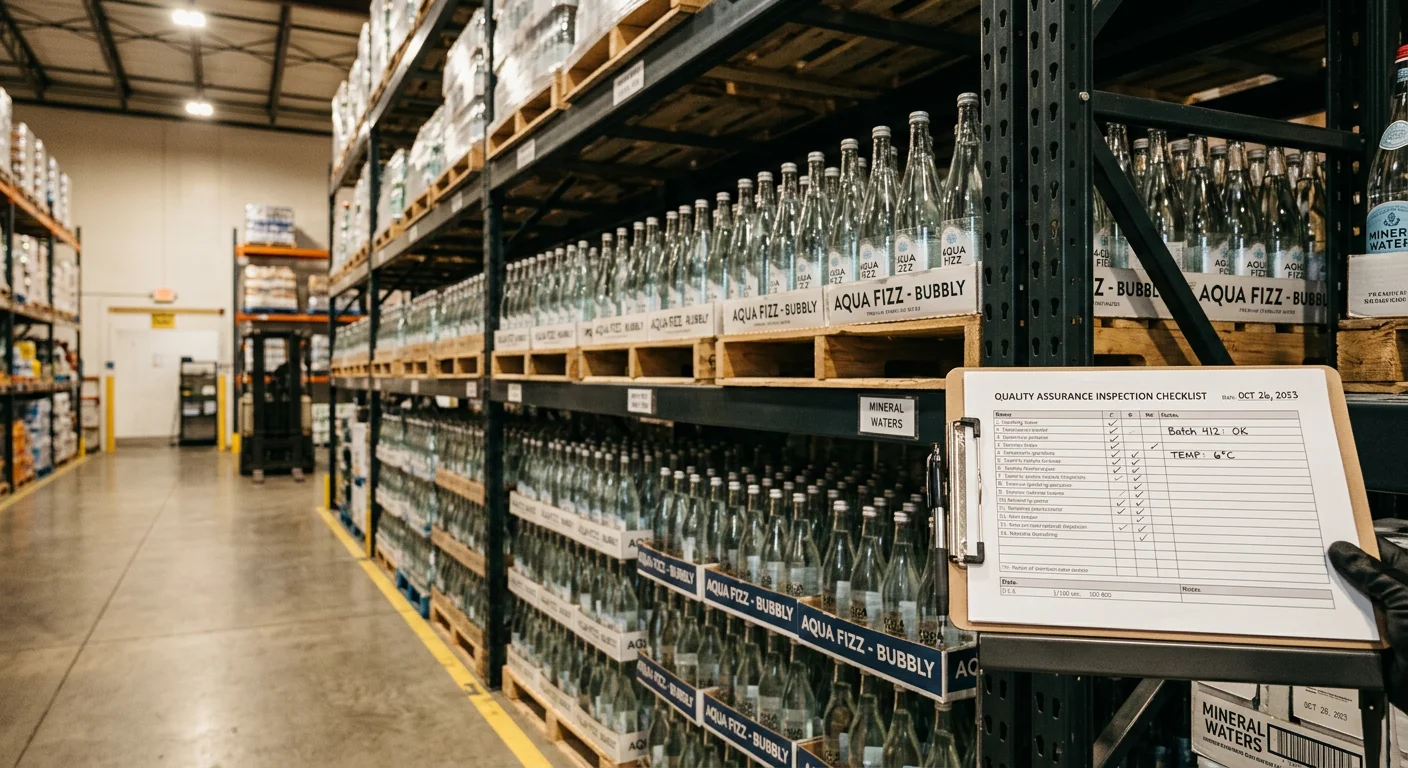
Bulk orders gone wrong teach expensive lessons. Commit to a container load of sparkling water glass bottles without checking three critical specs — and you risk ending up with bottles you can’t use.
Volume: Match the Bottle to the Market
Sparkling water glass bottles come in four standard sizes. These cover most commercial applications:
| Capacity | Best Application |
|---|---|
| 250ml | Single-serve, premium café, airline/hotel minibar |
| 330ml | Restaurant table service, retail single-serve |
| 500ml | Everyday retail, gym/convenience channel |
| 750ml | Table dining, premium retail, gifting |
Know your channel before confirming the volume. A 750ml bottle fits a white-tablecloth restaurant well. It’s the wrong size for a hotel minibar. These are different markets, and the wrong bottle size shows up fast.
Bottle Mouth Diameter: It Has to Match Your Fill Line
This spec catches buyers off guard more than it should. Bottle mouth diameter controls whether the bottle works with your existing filling and capping equipment. Get it wrong, and your fill line won’t run.
- Standard mouth (26–28mm): Works with most commercial crown cap lines
- Wide mouth (38–48mm): Common for swing top designs — easier to fill, great for café dispensing
- Custom diameter: Available for OEM orders, but tooling confirmation is required and lead time runs longer
Confirm this spec against your fill line before ordering samples. Changing the diameter after production tooling locks in creates real delays and real costs.
Pressure Rating: Don’t Guess, Verify
Your glass bottle’s pressure rating must exceed your beverage’s CO₂ fill pressure — with room to spare. Standard sparkling water runs at 2.5–4 bar. Kombucha and craft soda can push higher. Know your fill pressure before you spec the bottle.
Get the manufacturer’s certified pressure test data. Ask whether the testing ran on the final production spec — wall thickness, glass type, and seal assembly all need to be part of that test. A rating from prototype dimensions tells you little about what the real production run will hold. Those are two different things.
These three specs — volume, mouth diameter, and pressure rating — are non-negotiable. Get written confirmation on all three before your deposit clears.
Eco-Friendly & Sustainability Edge: Why Reusable Glass Bottles Win for Modern Brands
Sustainability isn’t a trend anymore — it’s a purchasing filter.
In Germany, France, and across North America, buyers are choosing suppliers based on packaging sustainability. Research from these markets shows that over 70% of consumers prefer products packaged in recyclable or reusable materials. That preference is shifting purchasing decisions at the brand level, the retail level, and the wholesale level — all at once.
Glass sits at the top of that conversation for good reason. It’s 100% recyclable — forever — with no loss in quality or purity. Plastic degrades with each cycle. Glass doesn’t. A single reusable glass sparkling water bottle can replace hundreds of single-use plastic containers over its lifetime. At end-of-life, it goes straight back into the production loop.
The carbon math matters too. Life-cycle assessments show that reusable glass bottles, refilled multiple times, carry a much lower carbon footprint per use than single-use PET alternatives. That gap grows the more times a bottle gets refilled.
For brands, that story converts. Eco-friendly glass bottle packaging has helped beverage companies:
- Earn stronger shelf placement in premium retail
- Land sustainability-focused wholesale accounts
- Build loyalty with consumers who read the label and care what it says
Switching to glass isn’t just good practice. Right now, it’s good business.
How to Customize OEM Glass Sparkling Water Bottles: From Concept to Bulk Order
Most beverage brands don’t realize how simple OEM customization is — until they’ve done it once. The process moves through clear stages. Know what happens at each one, and you’ll save time, money, and a pile of back-and-forth emails.
The Six-Stage OEM Process
1. Requirements Confirmation
Start with your specs: bottle capacity, mouth diameter, glass type, seal mechanism, and target CO₂ pressure rating. Your manufacturer needs all of this upfront. Vague briefs produce vague samples — and that costs weeks.
2. Sampling
The factory builds initial prototypes from your confirmed specs. Test everything at this stage — pressure performance, seal integrity, fill compatibility. Don’t skip past it. Problems caught here are cheap. Problems caught later are not.
3. Mold Development
Custom bottle shapes need new molds. That’s where tooling fees come in — $800–$2,500 USD depending on complexity. Lead time runs 3–5 weeks. Standard shapes skip this step and move much faster.
4. Bulk Production
Sample approved? Deposit cleared? Production starts. Standard runs take 4–6 weeks. Borosilicate glass or complex custom specs can add a week or two on top of that.
5. Quality Inspection Good glass beverage bottle manufacturers run pressure testing, dimensional checks, and seal verification on every production batch. Ask for the inspection report before shipment clears.
6. Shipment
Sort out your Incoterms, packaging spec, and freight timeline before production wraps up. Bottles ship fragile — the right carton and divider specs are not optional.
Customization Options and What They Affect
| Option | MOQ Impact | Cost Impact |
|---|---|---|
| Standard bottle shape | Lower MOQ (500–1,000 pcs) | Lower cost |
| Custom mold shape | Higher MOQ (3,000+ pcs) | Tooling fee added |
| Logo printing / silk screen | Slight MOQ increase | Per-unit print cost |
| Custom label | Minimal MOQ impact | Label setup fee |
| Gift box / retail packaging | Higher MOQ | Packaging design + material cost |
Color, logo placement, and label finish are all available for custom borosilicate glass water bottle orders. Just check your target MOQ before stacking multiple customization layers — each one raises the minimum.
FAQ: Common Questions from Sparkling Water Glass Bottle Wholesale Buyers
Wholesale buyers ask the same questions every time — and that’s a good thing. It means they’re serious. Here are the ones that come up most.
What’s the minimum order quantity?
Standard bottle shapes start at 500–1,000 pieces MOQ. Custom mold orders need 3,000+ pieces. Testing a new SKU? Start with a standard shape. It keeps costs under control.
Can I get my logo on the bottles?
Yes — silk screen printing, frosted etching, and custom labels are all available. Logo customization adds a small per-unit cost. The MOQ may go a bit higher too. For brand visibility, it’s worth the extra spend.
Do your bottles meet food safety certifications?
Good glass beverage bottle manufacturers stock bottles that meet FDA, LFGB, or EU food contact standards. Ask for documentation before you place a bulk order. Don’t skip this step.
Which bottle works best for high-carbonation drinks?
A borosilicate glass water bottle with a swing top cap is the top pick for sparkling water and kombucha. It holds 3–6 bar of internal pressure without issue.
How long does production take?
Standard orders take 4–6 weeks. Custom mold orders add another 3–5 weeks for tooling. Build that into your inventory schedule early so you’re not caught short.
Do you support mixed SKUs in one order?
Many manufacturers handle mixed sizes in one order. Confirm the MOQ per SKU upfront. That way, there are no surprises later.
Got a question not covered here? Send your specs and we’ll put together a quote built around your product.
Conclusion
In summary, keeping sparkling water and other fizzy drinks fresh comes down to two factors: an airtight seal and a stable, non-reactive container. Glass bottles with high-quality closures prevent carbon dioxide from escaping, while glass itself does not absorb flavors or release chemicals like some plastics can. For the best results, choose bottles that feature tight-sealing caps or flip-top lids designed specifically for carbonated beverages.
At TP Glass Bottle Manufacturer, we produce durable, airtight glass bottles that are ideal for sparkling water, soda, and seltzer. Our bottles are compatible with a range of pressure-resistant closures to help you maintain carbonation longer. Contact us today to order glass bottles that keep your fizzy drinks fresh from first pour to last.