

When selecting mason jars for packaging, preserving, or storage, three key specifications matter: sizes, threads, and dimensions. Sizes determine the volume a jar can hold, threads define the lid compatibility and sealing performance, and dimensions cover the overall height and width. Understanding these specifications helps you choose the right jar for your product and avoid fit issues with lids or closures.
Table of Contents
What Is a Mason Jar?

The mason jar has been around since 1858 — patented by John Landis Mason — and it hasn’t needed much reinvention since. That’s not nostalgia. That’s engineering that works.
At its core, a mason jar is a glass container with a threaded neck. It’s built for an airtight, two-piece metal lid system: a flat seal and a screw band. That threading is what matters most. It separates a mason jar from a plain glass container. Get the threading spec wrong, and lid compatibility becomes a sourcing problem fast.
Brands like Ball and Kerr standardized the format across North America. They established the two dominant thread systems still in use today — regular mouth (70-450) and wide mouth (86-400) . Those numbers aren’t just product codes. Manufacturers, wholesalers, and packaging buyers use them to confirm fit before a single unit ships.
Sourcing Canning Jars at scale? This applies to you — private-label food brands, glass packaging distributors, retail buyers. You need to know these specs. They’re not background knowledge you can skip. The gap between a clean purchase order and an expensive return often comes down to this.
The rest of this guide breaks down what those numbers mean, size by size.
Mason Jar Mouth Types: Regular Mouth vs. Wide Mouth
Two openings. That’s the whole system. Every mason jar fits into one of two categories — regular mouth or wide mouth. The difference matters more than it looks.
Regular Mouth: The Standard Opening
Regular mouth jars have an inner diameter of 60mm (2⅜”) and an outer diameter of 70mm (2¾”) . The thread finish is 70-450 — that’s the spec you put on a purchase order.
The narrower opening works well for pourable products: jams, jellies, sauces, syrups, salad dressings. Anything that flows out of the jar without needing a hand inside it. For liquid or semi-liquid fills, regular mouth is the practical choice.
Wide Mouth: The Larger Opening
Wide mouth jars open to 86–89mm (about 3–3.5″) across. Thread finish: 86-400 .
That extra diameter opens up your options. Whole pickles, fermented vegetables, large fruit pieces, snack mixes, overnight oats — these won’t fit through a regular mouth opening. Plus, you can reach in and pull items out without a mess. Wide mouth jars are also easier to fill on production lines handling chunky or solid product. Cleaning them for reuse is simpler too.
The Compatibility Issue You Can’t Ignore
Regular mouth and wide mouth lids are not interchangeable . A 70-450 band will not seat on an 86-400 jar. That much seems obvious. Still, mixed-spec errors show up in bulk orders. It happens most often when multiple SKUs come from different suppliers.
Your operation runs both jar types? Keep the thread specs documented at the SKU level. Visual sizing is not enough — don’t rely on it.
Choosing the Right Mouth Type
The decision comes down to two things:
- Product form — liquid or pourable fills suit regular mouth; solid, chunky, or fermented products suit wide mouth
- Filling equipment — check your line’s nozzle or auger diameter against the jar opening spec before locking in a format
Lock this in early. Switching mouth types mid-production means new lids, new bands, and new equipment settings. Those costs add up fast.
Mason Jar Thread Specifications Explained: 70-450, 86-400 & More
Thread codes look like serial numbers from a government form. They’re not. Once you know the logic, they read like plain English.
Here’s the key: every thread finish code has two parts , separated by a hyphen.
- First number = neck diameter in millimeters
- Second number = thread style code
So 70-450 means a 70mm neck with a 450-style thread. That’s it. The pattern clicks fast once you see it.
The thread style code is where most confusion lives. A 450 thread and a 400 thread are not the same cut — even if the neck diameter matches. The pitch, depth, and profile all differ. That’s why a 70-450 lid won’t seal on a 70-400 jar, even though both measure 70mm at the neck.
The Four Thread Standards You’ll Run Into
70-450G — Standard Glass Mason Jar
This is the one. Regular mouth mason jars from Ball, Kerr, and most glass packaging suppliers use this finish. The “G” suffix signals it’s built for glass. You get higher thread engagement and tighter seal tolerance. This is your baseline spec for traditional canning jar sourcing.
70-400 — Short-Skirt Plastic Closure
Same 70mm neck diameter. Completely different thread geometry. The 400-style thread is shallower. It’s designed for plastic closures with shorter skirts. You’ll see this on commercial food jars — dressings, condiments, sauces. It’s not a mason jar thread. Swapping 70-450G and 70-400 lids on a purchase order is a real mistake with real costs.
86/89-400 — Wide Mouth Mason Jar
Wide mouth jars use the 400-style thread, but at a larger diameter: 86mm or 89mm depending on the manufacturer. This is the 86-400 finish you’ll see throughout mason jar sourcing. Most wide mouth Ball jars sit at 86mm. Some international suppliers spec 89mm. Check the exact diameter before ordering closures in volume.
Lug 70-2030 — Twist-Off (Mayo-Style)
Not a screw thread at all. Lug closures use interrupted lugs that lock into matching tabs on the jar neck. You’ll find this on mayo jars, pasta sauce jars, and certain retail food packaging. The 2030 designates the lug pattern. These lids press and twist to seal. That’s a different system entirely from continuous-thread mason jar closures.
Why This Matters for Sourcing
Suppliers don’t always share thread finish details upfront. Ask for the full finish designation — 70-450G, not just “70mm regular mouth” — on every quote. That one number keeps you clear of mismatched lids, failed audits, and return freight costs that nobody wants to explain to procurement.
Mason Jar Lid Compatibility & Sizing Guide
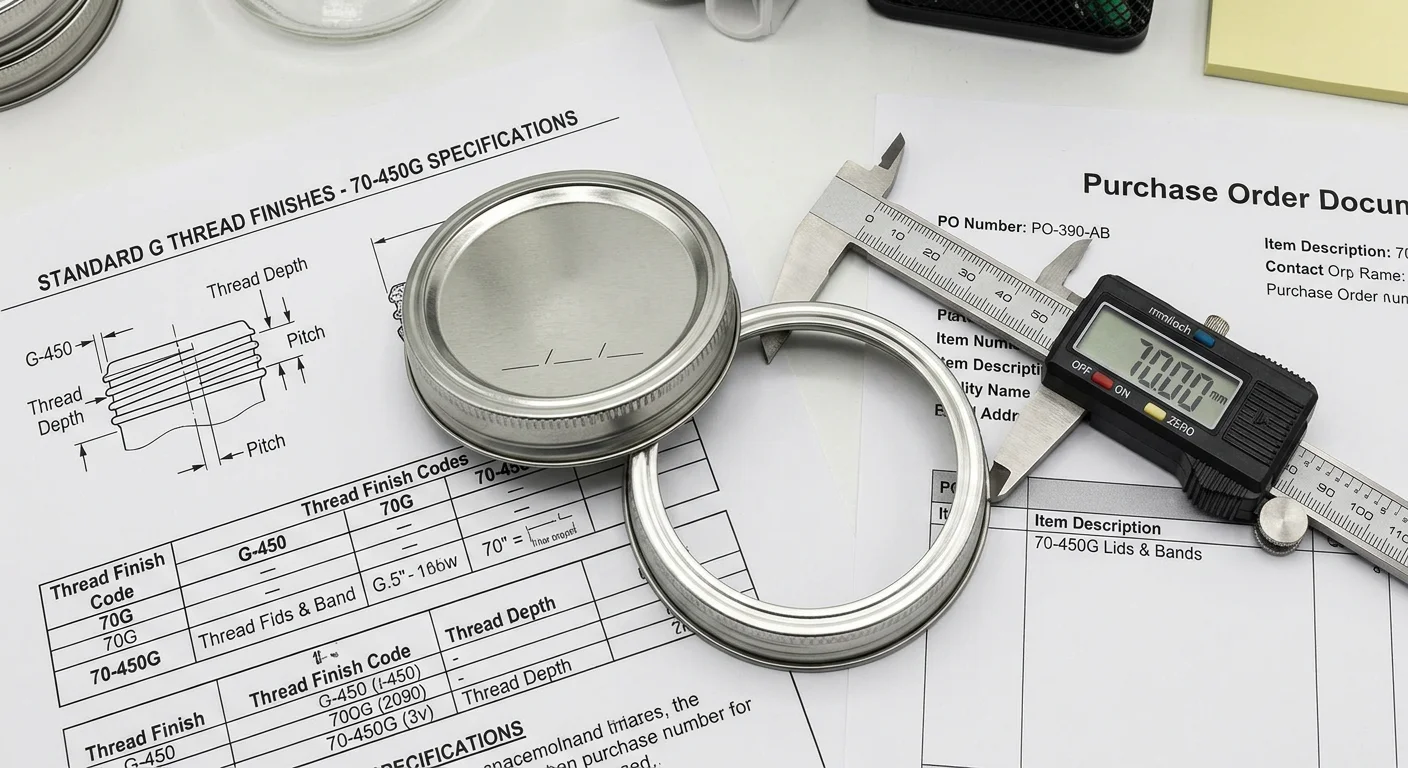
One rule covers lid compatibility: match the thread finish, not just the diameter.
Regular Mouth Lids (70-450G)
Standard regular mouth lids come as a two-piece system — a flat disc (the seal) and a screw band. Here are the numbers that matter:
- Band outer diameter : ~70mm (2¾”)
- Disc diameter : ~75mm (fits inside the band)
- Thread finish required : 70-450G
You can buy both pieces together or as separate items. Ball, Kerr, and most private-label suppliers follow this same spec. A vendor quoting you “70mm regular mouth lids” without specifying 450G? Push back. A 70-400 lid shares the same nominal diameter but uses a shallower thread cut. It won’t seal on a mason jar neck. That detail gets missed more often than it should.
Wide Mouth Lids: The 86mm vs. 89mm Problem
This is where bulk orders go sideways.
Wide mouth mason jars don’t share a single universal opening size. Two diameters exist in the market:
| Diameter | Common Brands / Sources | Thread Finish |
|---|---|---|
| 86mm | Ball, Kerr, most North American suppliers | 86-400 |
| 89mm | Some European & Asian manufacturers | 89-400 |
The 3mm difference is invisible at a glance. An 86mm band won’t seat on an 89mm jar neck — and vice versa. Mix those specs on a pallet, and you’ve got a production stoppage waiting to happen.
For bulk sourcing, here’s the fix:
- Request the exact neck finish (86-400 or 89-400) in writing on every quote
- Standardize to one diameter across your entire wide mouth SKU range
- Sourcing jars and lids from different suppliers? Confirm specs with each supplier on their own. Don’t assume they match just because both say “wide mouth”
Quick Reference: Lid Dimensions at a Glance
| Mouth Type | Neck Diameter | Thread Finish | Band Width |
|---|---|---|---|
| Regular Mouth | 70mm | 70-450G | ~13mm |
| Wide Mouth (US standard) | 86mm | 86-400 | ~13mm |
| Wide Mouth (international) | 89mm | 89-400 | ~13mm |
Band width stays consistent across both mouth types — that’s the one dimension you don’t need to stress about. Everything else, verify before the order ships.
Mason Jar Size Selection by Use Case
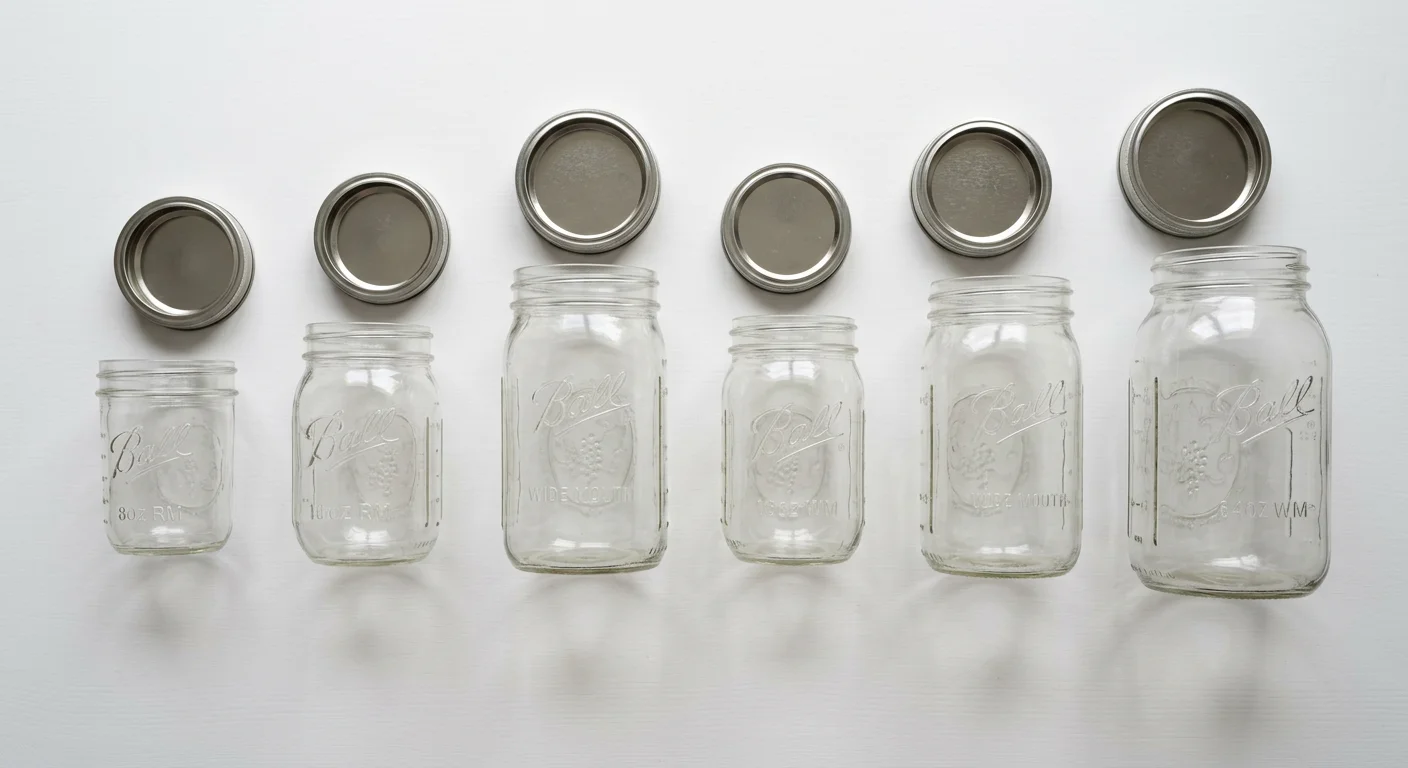
Size isn’t just a measurement — it’s a decision that shapes your entire product experience. Match the jar to the job, and everything downstream gets easier.
Small Format (4oz & 8oz): Retail, Gifting & Single-Serve
The 4oz and 8oz jars are the core of specialty food retail. Both are the go-to choice for gift sets, sampler packs, and single-serve condiments — honey, artisan jam, hot sauce, flavored salt. A smaller portion signals premium quality. It also lets customers try before committing to a full-size product.
Both sizes use the regular mouth 70-450G thread. Lids are easy to find. Costs stay low. The compact size works well for shelf displays and keeps shipping costs in check.
Mid-Range (16oz & 24oz): Beverage & Cold Storage
The 16oz jar has become a standard choice in the beverage space. Cold brew coffee, overnight oats, smoothies, infused water — the pint mason jar handles all of it. The straight-sided profile fits most wide-mouth lids. It also works with reusable straw accessories made for the 86-400 finish.
The 24oz sits between pint and quart. You get extra headspace for carbonated or layered drinks without jumping to a full quart. Building a retail beverage line? This size range is worth a serious look.
Large Format (32oz & 64oz Wide Mouth): Fermentation & Bulk Storage
This is where wide mouth jars earn their place . The 86-400 opening on a quart (32oz) or half-gallon (64oz) jar makes loading whole vegetables, fermenting kombucha, or packing trail mix easy and practical. You’re not fighting the jar to get things in or out.
For fermentation — kimchi, sauerkraut, pickles — the wide opening makes packing simple. You can press down ingredients and add weights without any hassle. The half-gallon format is also the top pick for bulk dry goods: nuts, grains, dried fruit. It holds a lot of volume without taking up the bulky footprint of a canister.
Quick Reference
| Use Case | Recommended Size | Mouth Type |
|---|---|---|
| Gift sets, condiments | 4oz / 8oz | Regular Mouth |
| Beverages, cold brew | 16oz / 24oz | Wide Mouth |
| Fermentation, bulk storage | 32oz / 64oz | Wide Mouth |
Mason Jar Specifications FAQ: Thread Compatibility, Brand Differences & Custom Sizing
Are mason jar lids universal?
No. “Universal” is a marketing word, not a specification. Lids work within a thread finish — 70-450G lids fit 70-450G jars, 86-400 lids fit 86-400 jars. Mix those two systems and nothing seals. Buy to the spec, not the label.
Do Ball and Kerr use the same thread?
Yes. Both use 70-450G for regular mouth and 86-400 for wide mouth. Their lids and bands are interchangeable. That shared standard is what makes North American mason jar sourcing work at scale. You’re not locked into one brand’s ecosystem.
What thread size is a standard mason jar?
Regular mouth: 70-450G . Wide mouth: 86-400 . Those two cover the vast majority of mason jar production in North America. Everything else is a variant.
Can I order custom mason jar dimensions?
Yes — with conditions. Most glass manufacturers accept custom orders. MOQ runs 10,000–50,000 units, based on how complex the order is. Custom neck finishes, shoulder profiles, and embossing are all doable. Custom thread geometry is a different story. Most factories build from existing tooling, so changing the thread shape takes more work. A proprietary thread finish means longer lead times and upfront tooling costs. Plan for both.
What’s the minimum thread diameter for pressure canning?
Standard 70-450G regular mouth jars are rated for pressure canning. The thread finish isn’t the weak point — the lid system is. Use lids rated for pressure canning. Decorative lids and plastic-lined lids won’t work as replacements here.
Do plastic lids fit glass mason jars?
Plastic storage lids made for 70-450G or 86-400 jars fit fine — as long as the thread finish matches. They’re not rated for heat processing or pressure canning. Storage use only. Check the finish code before placing a bulk order.
Conclusion
In summary, understanding Mason Jar Specifications—sizes, threads, and dimensions—is essential for selecting the right jar for your product or storage needs. The size determines capacity, the thread type ensures a proper fit with lids, and the dimensions help you plan packaging, labeling, and stacking. Once you know your required specs, choosing a reliable supplier makes all the difference.
At TP Glass Bottle Manufacturer, we produce high‑quality mason jars in a wide range of standard and custom sizes, with precise thread finishes for secure sealing. Contact us today to get the exact mason jar specifications you need for your project.