

Glass bottles are a staple in packaging across industries, valued for their durability, versatility, and product preservation. From small personal use to large commercial packaging, different bottle designs serve distinct needs, with some standing out for practicality and widespread use. The Boston round bottle is one such timeless, functional option, popular among businesses and individuals. This guide explores its key features, including sizes, industry applications, and practical tips for choosing and using it effectively.
Table of Contents
What Are Boston Round Bottles? (Definition + Origin)
The name tells you where it came from. Boston, late 1800s — pharmaceutical labs and apothecary shelves needed a bottle that could handle corrosive chemicals, survive rough handling, and stack without shifting. The Boston round was the answer.
The geometry is deliberate. It starts with a cylindrical body. Rounded shoulders slope down into a narrow neck, and a reinforced base spreads impact stress across the bottom. That curved shoulder isn’t decorative — it removes the weak stress points that sharp-shouldered bottles build up over time. The narrow neck controls pour rate and cuts spill risk. You get that kind of control when dispensing tinctures, reagents, or essential oils drop by drop.
What sets Boston rounds apart from other bottle types comes down to three things:
- Rounded shoulders — no sharp angles where glass stress fractures tend to start
- Narrow, threaded neck — fits droppers, pumps, sprayers, and standard caps
- Thick-walled cylindrical body — handles pressure and stays stable with harsh chemicals
That combination made Boston Round Bottles the go-to choice in pharmaceutical and laboratory settings for over a century. Today, the same structural logic holds — fill them with cough syrup, beard oil, or laboratory reagents. The bottle hasn’t changed much. The industries using it just kept expanding.
Boston Round Bottle Sizes: Complete Dimensions Chart
Picking the wrong size costs you twice — once when you order, again when you reorder. Match the right Boston round bottle dimensions to your product before you commit to a bulk run. Here’s what you need.
Standard Size Reference Table
| Size | Volume (mL) | Height (mm) | Diameter (mm) | Neck Finish | Typical Use Case |
|---|---|---|---|---|---|
| 0.5 oz | 15 mL | 64 | 28 | 18-400 | Fragrance samples, trial kits |
| 1 oz | 30 mL | 75 | 35 | 20-400 | Serums, tinctures, essential oils |
| 2 oz | 60 mL | 95 | 41 | 22-400 | Facial oils, supplement drops |
| 4 oz | 120 mL | 118 | 50 | 24-400 | Massage oils, lab reagents |
| 8 oz | 240 mL | 148 | 62 | 28-400 | Shampoo, syrups, daily-use consumables |
| 16 oz | 480 mL | 184 | 76 | 28-400 | Bulk personal care, cleaning solutions |
| 32 oz | 960 mL | 230 | 95 | 38-400 | Industrial chemicals, wholesale refills |
| 1 gallon | 3785 mL | 355 | 152 | 38-400 | Commercial supply, storage |
These dimensions are standard industry references. Sizes can vary between manufacturers. Confirm specs with your supplier before you finalize labels or packaging.
What the Numbers Mean for Buyers
The neck finish number matters more than most buyers expect. An 18-400 neck fits a narrower dropper cap. A 28-400 gives you more options — pumps, sprayers, and wider closures all work with it. Start by matching your closure type to your neck finish. Then work backward to pick the bottle size.
For B2B purchasing, these case-pack numbers help cut decision time:
- 1 oz bottles — 288 units per case. This is the standard for serum and tincture sample programs.
- 4 oz bottles — around 120 units per case. A solid fit for cosmetic and aromatherapy SKUs.
- 8 oz bottles — 60–72 units per case. This size works well for everyday consumer products.
Label sizing tip: A 2 oz Boston round fits a label around 2.5″ × 2.25″. An 8 oz handles up to 4″ × 3″. Plan your label size before you print. A label that wraps past the shoulder curve will bubble.
The 1 oz and 4 oz sizes cover the majority of specialty retail orders. Launching a new product line and haven’t locked in a size yet? Start by sampling those two first.
Glass Types & Color Options: Clear vs Amber vs Cobalt Blue
Glass color isn’t a cosmetic decision. It’s a product protection decision. Getting it wrong can compromise everything inside the bottle.
Here’s the core science: clear glass blocks almost no UV light. Amber glass filters out 99% of light in the 290–450nm range. That’s the spectrum that breaks down active compounds — it oxidizes essential oils, degrades tincture alkaloids, and cuts shelf life on anything photosensitive. Cobalt blue sits in the middle. It offers moderate UV protection, and does something amber can’t: it looks expensive.
Match the Color to the Product
Amber Boston round bottles are the standard for light-sensitive products. Pharmaceutical tinctures, CBD drops, oregano oil, citrus-based essential oils — these products break down faster in clear glass. Your formulation has volatile compounds or oxidation-prone actives? Amber isn’t optional. It’s the spec.
Clear Boston round glass bottles work best when the product is the visual. A vivid botanical extract, a colored hair serum, a craft vinegar with visible depth — these sell on appearance. Clear glass lets the product speak for itself. It’s also the right call for water-based formulas with no light sensitivity. Plus, it suits brands that lean on label design to carry the visual identity.
Cobalt blue holds a specific market position. It reads as apothecary. It reads as premium. Small-batch skincare brands, aromatherapy lines, and artisan perfumers reach for cobalt blue because it signals something — craft, intentionality, a certain aesthetic seriousness. The UV protection is real but partial. So pair it with secondary packaging like boxes or sleeves for formulas that are truly light-sensitive.
Quick Selection Reference
| Color | UV Protection | Best For |
|---|---|---|
| Clear | Minimal | Beverages, display-forward skincare, non-sensitives |
| Amber | ~99% | Essential oils, tinctures, pharmaceuticals |
| Cobalt Blue | Moderate | Premium beauty, apothecary branding, gifting |
Not sure which to pick? Default to amber for chemistry, clear for visual storytelling, and cobalt blue when the bottle itself is part of the brand.
Boston Round Bottle Uses Across Industries
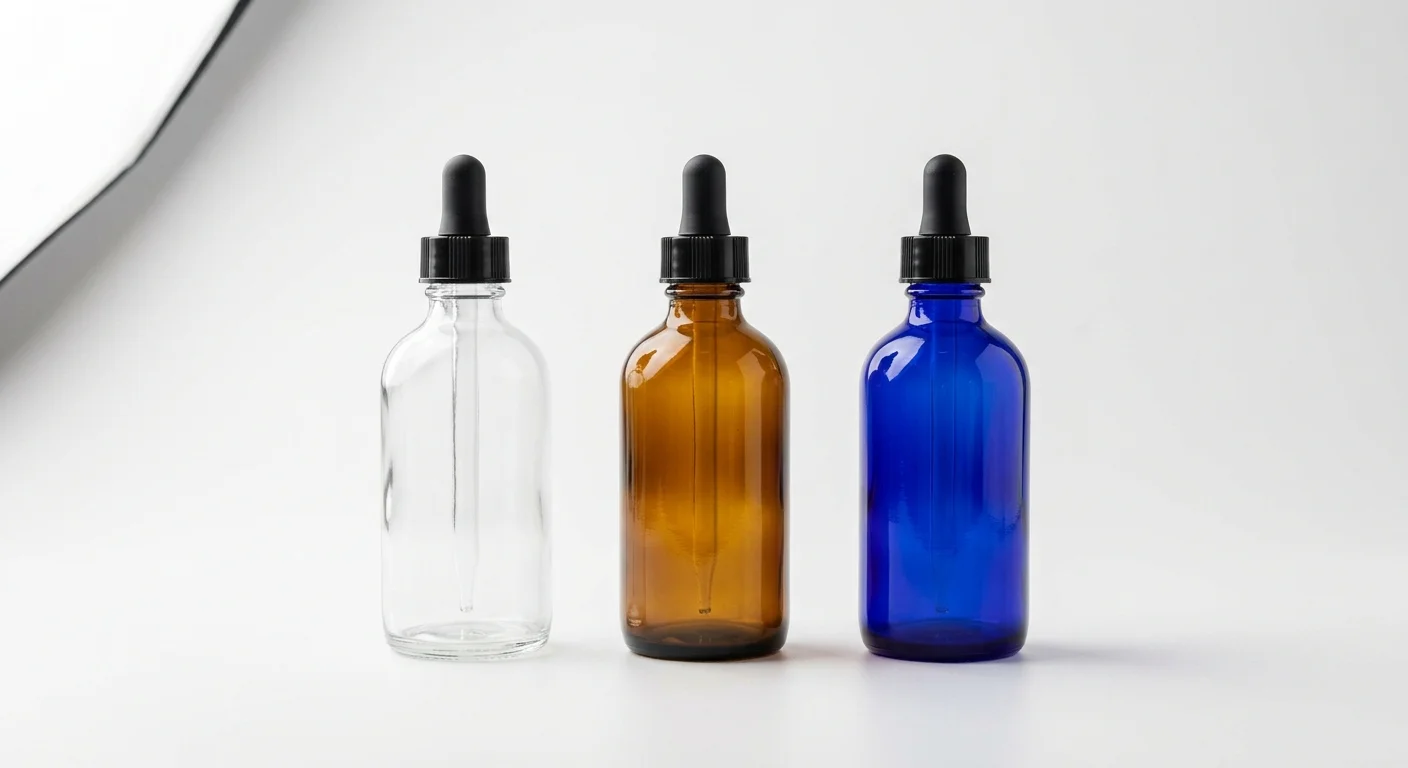
The Boston round bottle doesn’t belong to one industry. It never did. Over a century of use has proven one thing: you need a bottle that holds up in real-world conditions. This one does that.
Pharmaceutical & Laboratory
Chemical compatibility is non-negotiable here. Boston round glass bottles resist acids, alcohols, and solvents without leaching. That’s what GMP-compliant pharmaceutical packaging demands. Grab a 1 oz or 2 oz amber bottle, add a calibrated dropper cap, and you have the standard format for tinctures, CBD drops, and liquid reagents. Labs use them for the same reason pharmaceutical lines do — reliable sealing, predictable dispensing, no surprises.
Personal Care & Beauty
Facial serums ship in 1 oz bottles. Beard oils land at 1–2 oz. Massage and body oils run 4–8 oz. These aren’t random choices. They line up with standard Boston round dimensions. That’s why so many personal care brands skip custom bottle designs entirely — the sizing logic is already solved.
Clear glass suits color-forward botanical extracts. Amber protects anything with oxidation-prone actives. The bottle can disappear behind a strong label, or it can stand as the product itself. Either way, it does its job.
Food & Beverage
Cocktail bitters, flavored syrups, and small-batch hot sauces all follow the same packaging logic: small volume, precise pour, food-safe glass. Boston round bottles for consumables must meet FDA standards for food-contact glass. That means borosilicate or high-quality soda-lime construction with non-reactive sealing.
A 1 oz or 2 oz bottle with a dasher top or dropper insert gives bartenders and home cooks the control they want. The narrow neck isn’t accidental. It’s built that way on purpose.
Household & Industrial Cleaning
Step up to 16 oz or 32 oz and the use case shifts. Concentrated cleaning solutions, industrial degreasers, and chemical concentrates need thick-walled glass that holds up on contact. Boston rounds at this size work well with trigger sprayer caps. It’s a solid combination — one that handles corrosive formulas that would eat through plastic over time.
For operations that store or distribute harsh chemicals, this size range is the practical standard. Not just a preference.
The same bottle geometry — rounded shoulders, narrow neck, reinforced base — works across all four of these contexts. That’s the real value of the Boston round. It doesn’t lock into one use. It fits many.
Boston Round vs. Cosmo Round: Which Should You Choose?
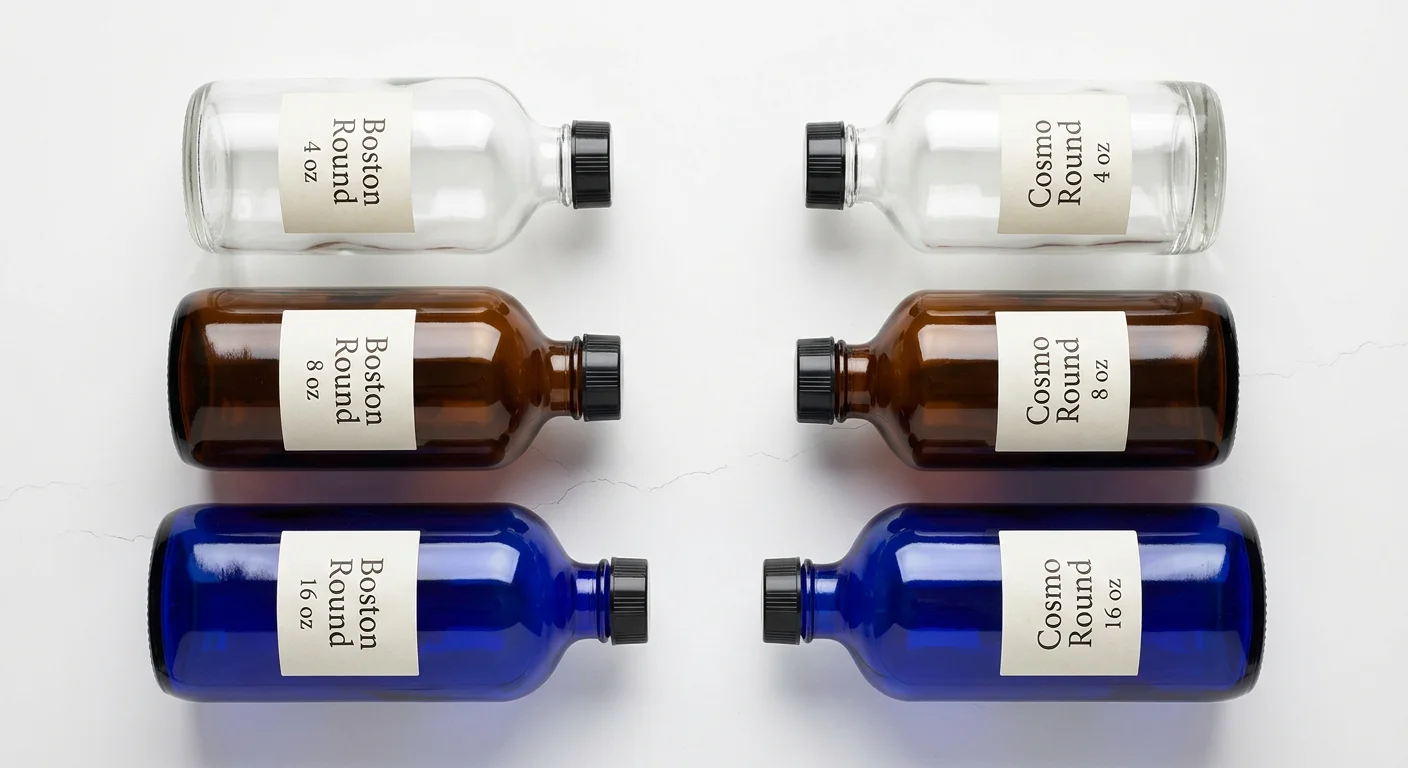
Two bottles. Similar purpose. Different geometry — and that difference matters more than you’d think.
The Cosmo Round shares the same cylindrical body as a Boston round, but the shoulder angle sets them apart. Boston rounds taper from a wide body into a narrow neck. The curve is long and smooth. Cosmo rounds have a shorter, more angular shoulder — almost a flat top with a neck punched straight through it. That makes Cosmo rounds a bit squatter in profile. You also get more surface on the shoulder panel, which makes labeling easier there. Boston rounds, with their longer curved taper, hold labels better on the body.
Shape & Dimension Comparison
| Feature | Boston Round | Cosmo Round |
|---|---|---|
| Shoulder Style | Long, gradual curve | Short, angular |
| Body Profile | Taller, narrower | Shorter, wider |
| Label Area | Cylindrical body | Body + flat shoulder |
| Neck Compatibility | Standard 18-400 to 38-400 | Same standard finishes |
| Common Use | Pharma, lab, oils | Beauty, personal care |
Cosmo rounds are popular in cosmetics and personal care. The flatter shoulder gives packaging designers more surface to work with. Boston rounds lead in pharmaceutical, laboratory, and food use. In those fields, structural reliability and chemical resistance matter more than how a bottle looks on a shelf.
How They Compare to Other Bottle Types
Winchester bottles follow the same narrow-neck design as Boston rounds, but they run taller and thinner. They’re the go-to standard in UK laboratory and reagent supply. Square bottles pack more units onto a shelf and offer more label space. But they don’t handle stress as well as rounded bottles. Boston rounds hold up better under chemical pressure because of their curved shape.
Function first? Go with the Boston round. Your product sits on a retail shelf and the bottle is part of your brand? The Cosmo round is worth a serious look.
How to Choose the Right Boston Round Bottle: A Buyer’s Checklist
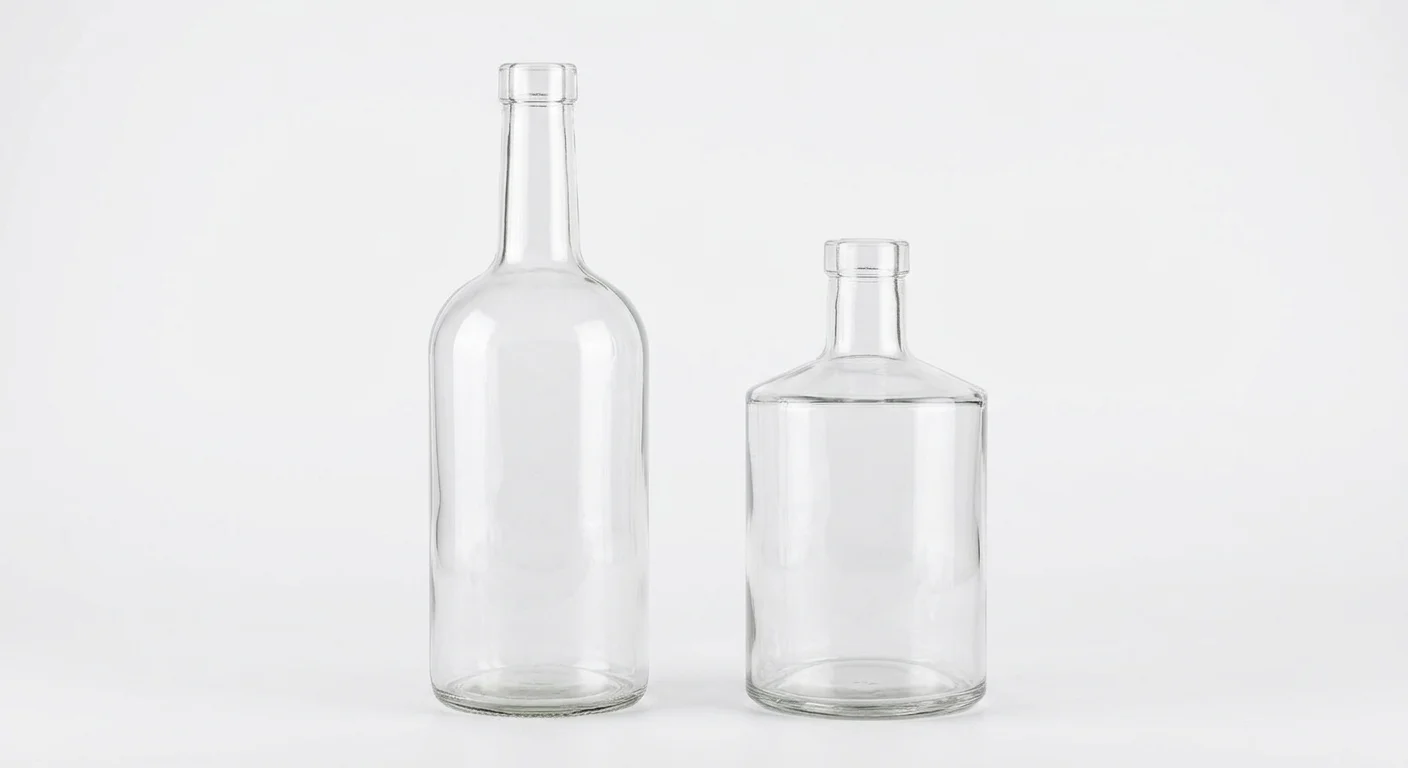
Four questions cut through most of the confusion before you open a catalog.
Is your product viscous? Thick oils and gels need a wider neck — 24-400 or 28-400 — so they pour without issue. A narrow 18-400 neck will frustrate your customers and your fill line.
Is it light-sensitive? Essential oils, tinctures, CBD drops, and anything with volatile actives degrade fast in clear glass. Go with amber. It’s not a premium upgrade — it’s a basic formulation requirement.
Is it aggressive toward glass? Acids, alcohols, and solvents need thick-walled borosilicate or high-quality soda-lime glass. Use anything less and you’re taking a risk — with compatibility and liability both.
Does it require regulatory compliance? Pharmaceutical and food-grade applications follow different rules. Confirm your glass meets FDA or GMP standards before sampling, not after.
Get those four questions answered first. The rest of the decision falls into place.
Pre-Order Checklist for B2B Buyers
Run through this before placing any bulk order:
- Volume — Does the bottle size match your fill weight and retail positioning? (1 oz for samples and serums; 4–8 oz for everyday-use products)
- Neck finish — Does your closure — dropper, pump, sprayer, or standard cap — match the neck spec? (18-400, 22-400, 28-400?)
- Glass color — Amber for light-sensitive formulas. Clear for visual products. Cobalt blue works for premium positioning, but plan for secondary packaging.
- Closure type — Lock this in before you finalize the bottle. Neck finish and closure must be confirmed together.
- MOQ — Know your supplier’s minimum. Most manufacturers require 5,000–10,000 units per SKU for custom orders.
Get these five right upfront. Labels, fill equipment, and shipping dimensions all get easier once your spec is set.
Boston Round Bottles Wholesale: What Bulk Buyers Need to Know
Bulk pricing on Boston round bottles works on simple logic: order more, pay less per unit. Most glass manufacturers set MOQ at 5,000 units per SKU for standard stock items. Custom orders — private molds, proprietary colors, embossing — start at 10,000 units minimum. That number can climb higher based on tooling complexity.
Here’s how the pricing tiers stack up:
- 5,000–9,999 units — Standard wholesale pricing, stock colors and finishes
- 10,000–49,999 units — Volume discount applies; screen printing becomes viable at this range
- 50,000+ units — Full custom tooling, dedicated production runs, negotiable per-unit cost
Customization options are real — and worth asking about. You can get embossed logos pressed into the glass. Proprietary amber formulations are available. So are cobalt variants outside the standard palette. Private mold development for unique bottle profiles is on the table too. None of these are unusual requests. Manufacturers handle all of them as part of standard business.
The tradeoff is lead time and upfront tooling cost. Budget $800–$3,000 for mold work, depending on complexity.
Your brand is scaling and packaging sets you apart from competitors. Get the custom mold conversation started with your supplier now — not later. Early planning saves time and avoids production delays down the line.
Conclusion
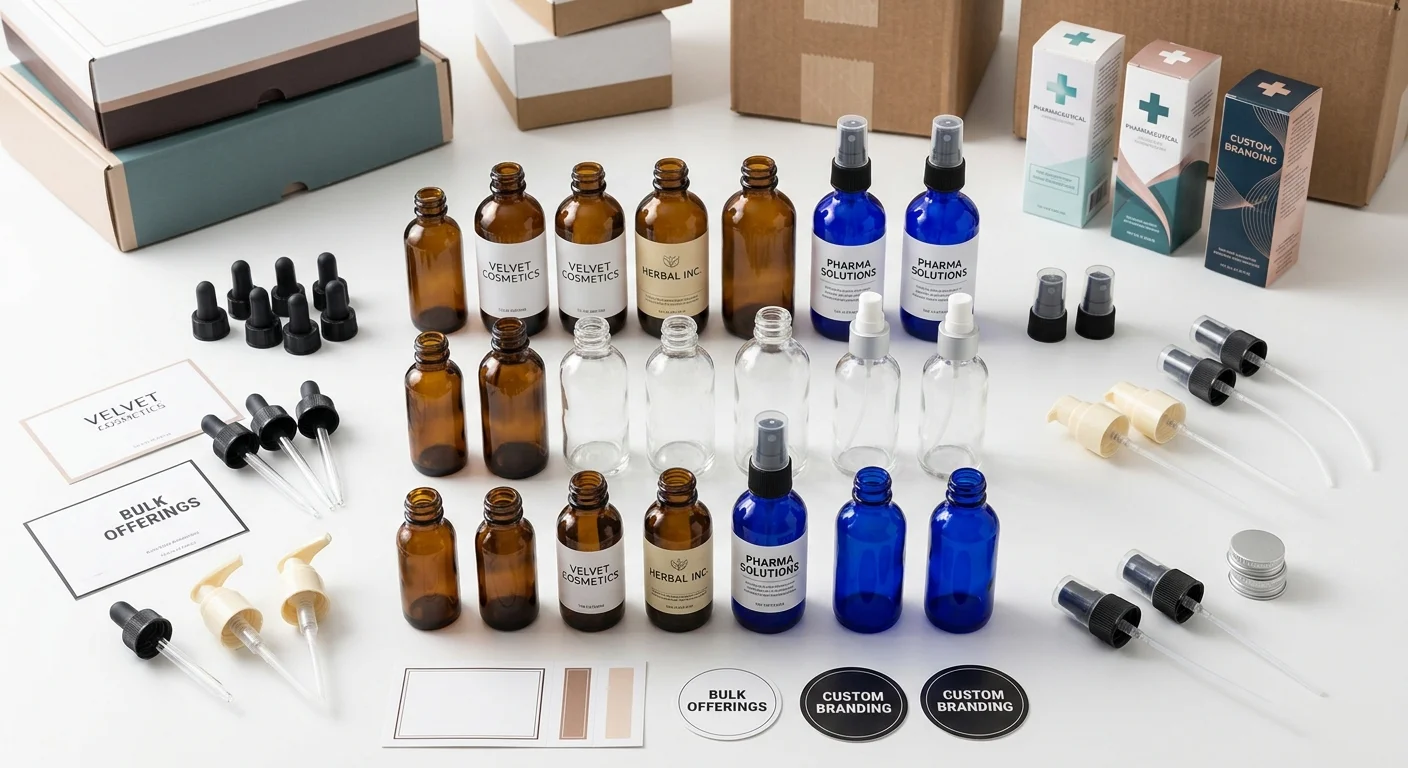
Glass bottles are an industry staple for packaging, valued for durability, versatility and product preservation. Different designs serve distinct needs, and the Boston round bottle is a practical, timeless option popular with businesses and individuals. This guide covers its key features: sizes, applications and tips for use.
In summary, Boston round bottles are versatile, with sizes for personal and commercial use, and applications in cosmetics, food, pharmaceuticals, etc. Their durable design makes them a reliable choice. For high-quality bottles, partner with TP Glass Bottle Manufacturer. We craft premium Boston round bottles in standard sizes, with custom options, backed by advanced facilities, strict quality control and a dedicated team. Choose us as your trusted partner for packaging that meets your business goals.