

Canning Jars have handled food preservation for over a century — and they don’t get nearly enough credit for it.
You might be a food brand scaling up production. Or a packer sourcing glass preservation jars in bulk. Or maybe a buyer trying to sort out the difference between wide mouth and regular mouth before placing that first big order. No matter where you stand, the options can feel like a lot to take in.
Here’s the good news: once you know how these jars are built, sized, and sealed, the decisions get much easier.
This guide covers it all — quart to half gallon, standard lids to custom OEM options. You’ll walk away ready to source smarter, spec with confidence, and make clear decisions without second-guessing yourself.
Table of Contents
What Are Canning Jars? Definition, Materials & Key Standards
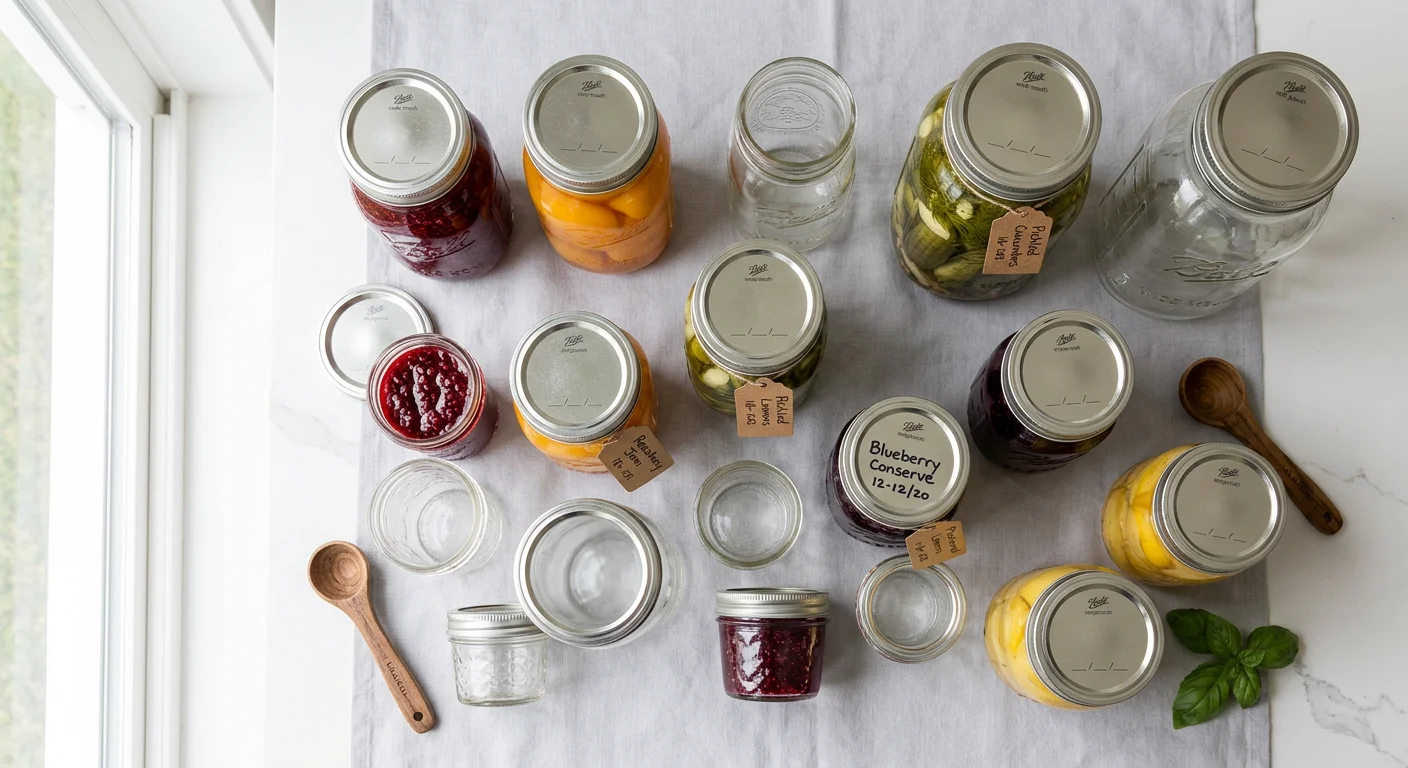
Not every glass jar qualifies as a canning jar — and that difference matters more than most people think.
A true canning jar is a piece of engineered equipment. It’s built to handle the heat stress of food processing — whether that’s a boiling water bath or a pressure canner running above 240°F. Regular glass storage containers aren’t made for that kind of stress. Put them through those conditions and you risk cracked seals, shattered glass, or worse — unsafe food.
Here’s what makes glass preservation jars different at a technical level:
- Tempered, food-grade glass — thicker walls and a reinforced base that absorb rapid temperature changes without cracking
- Standardized mouth threads — built to pair with two-piece canning jar lids and bands, forming a vacuum-tight seal as contents cool
- BPA-free construction — all trusted BPA-free Glass Jars meet FDA and EU food contact material standards, making them safe for acidic foods like tomatoes and citrus preserves
- Uniform sizing tolerances — essential for commercial filling lines where consistent jar dimensions affect production efficiency
Most buyers reference the USDA’s tested processing guidelines as the industry benchmark. Those guidelines are built around standard airtight Glass jars that meet these exact specs.
For B2B buyers, this isn’t just background knowledge. It’s your first filter when evaluating suppliers.
Regular Mouth vs Wide Mouth Canning Jars: Which Is Right for Your Product?
The mouth diameter of a canning jar drives every decision that follows — what you pack inside, and which filling equipment runs on your production line.
Two standards exist in the industry. They are not interchangeable.
Regular mouth jars come in two primary thread finishes: 58-400 and 70-450. The opening runs narrower — around 58mm to 70mm — which makes them a natural fit for pourable or liquid-forward products. Think fruit preserves, pickled vegetables, jams, sauces, and broths. That smaller opening works in your favor. It cuts down surface exposure during filling, which helps hold product quality and extend shelf life. On automated filling lines running liquid products, regular mouth food storage glass containers run cleaner. You get fewer drips and less product waste per cycle.
Wide mouth jars take a different approach — the opening is built for volume. Common thread finishes include 70-400, 70-2030, and 110-400. The opening is wide enough to load whole tomatoes, large fruit halves, pickled peppers, or dense spreads — without crushing the product on the way in. Packing whole or chunky solids? Wide mouth glass preservation jars are the practical choice, not just a convenient one. Cleaning and reusing these jars is also much easier, and that matters to a lot of buyers.
The B2B Production Angle
Here’s where things get more specific for commercial buyers.
Your filling line equipment must match your jar mouth finish — no exceptions. Regular mouth and wide mouth jars need different capping heads, different conveyor guides, and different seal tooling. Switching formats mid-production is not a small adjustment. It costs time, costs money, and adds risk.
Map your jar format against your existing equipment before you spec anything. Building a line from scratch? The jar format you lock in now sets the specs for every machine you buy next.
- Wide mouth canning jars offer more flexibility for manual or semi-automated operations.
- Regular mouth canning jars perform better on high-speed automated lines, where precision and consistency come first.
Know your product. Know your line. Then pick your mouth.
How to Choose the Right Canning Jar Size for Your Food Product
Size isn’t just a number on the side of a box. Pick the wrong one, and you’re either wasting headspace in a jar that’s too big or cramming product into something that won’t seal right. Neither outcome is good for your bottom line.
Jar sizing starts with what’s inside. Everything else follows from there.
Match the Jar to the Product
Here’s a category-by-category breakdown to help you think it through:
4 oz to 8 oz — Jams, Jellies & Specialty Preserves
These smaller pint size canning jars — and their even tinier counterparts — hit the sweet spot for high-value, small-batch products. Gift-ready berry jams, artisan honey, flavored butters — they all shine in a compact format. Smaller jars also push perceived value higher per unit at retail. That matters if you’re selling through specialty grocers or food subscription boxes.
8 oz to 16 oz — Sauces, Dressings & Hot Condiments
Salsa, hot sauce, vinaigrettes, pasta sauce — this is their home. Regular mouth canning jars in this size range are a strong fit. The narrower opening keeps pourable products contained during filling. The portion size also lines up with how most consumers actually use these products. One jar, one recipe. Clean and simple.
24 oz to 32 oz — Pickles, Whole Fruits & Chunky Vegetables
This is where wide mouth canning jars earn their place. Quart size canning jars hold enough volume for whole cucumbers, pickled peppers, preserved peaches, or layered fermented vegetables. You get that capacity without crushing the product on the way in. For food brands in the specialty pickle or fermented food space, this size range is hard to skip.
64 oz and Up — Juices, Bulk Sauces & Foodservice
Half gallon canning jars are built for volume. Cold-pressed juices, bulk tomato sauce, large-format fermented products — this tier serves foodservice buyers, meal kit brands, and wholesale channels where portion sizes run large.
One More Thing Worth Knowing
Headspace is not optional — it’s engineering. Every tested canning recipe calls for an exact headspace measurement. That number has a direct impact on vacuum seal formation. Too much headspace and the seal weakens. Too little and the lid may buckle under pressure. So, specify airtight glass jars for a commercial filling line? Build headspace requirements into your jar spec from day one — not as an afterthought.
Know your product category. Know your portion logic. The right jar size follows naturally from there.
Bulk & Wholesale Canning Jars: B2B Procurement Guide
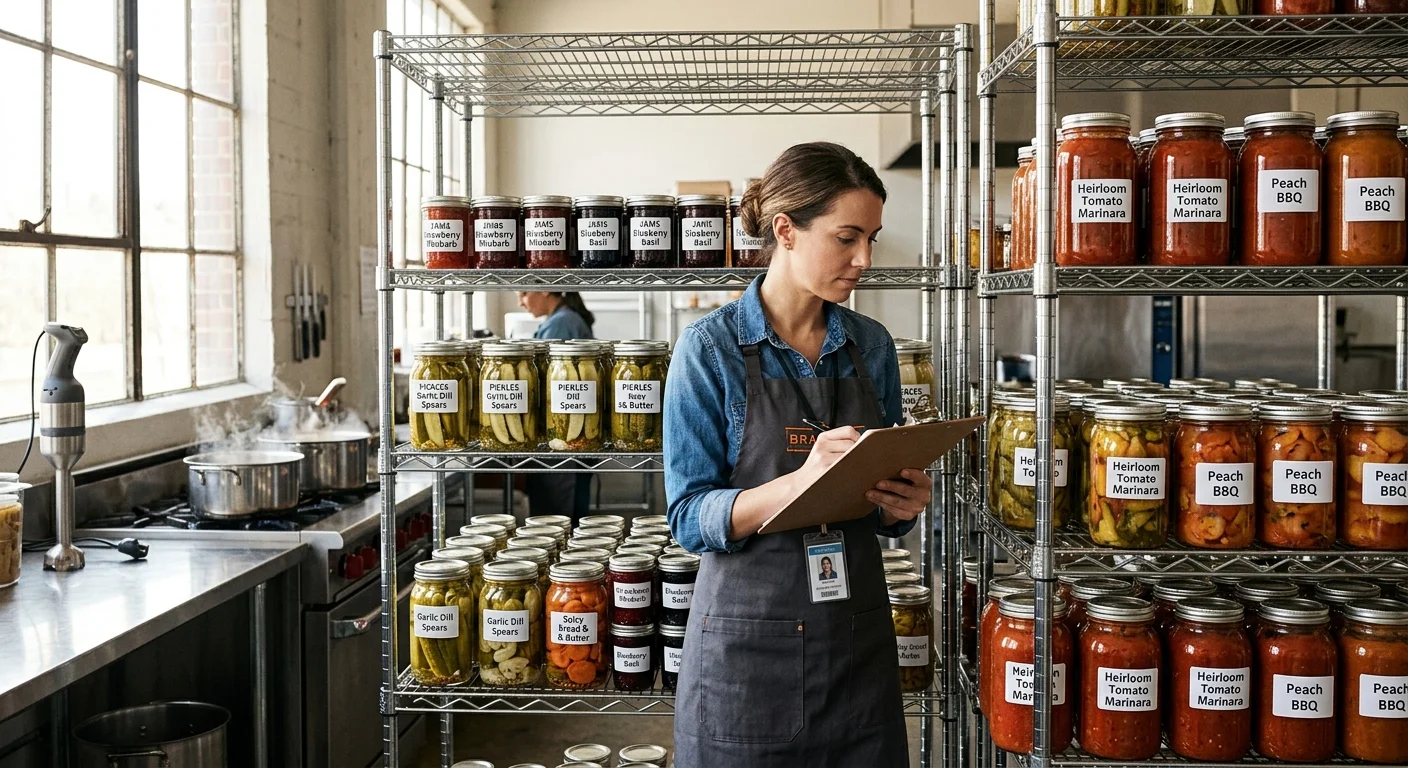
Sourcing canning jars at scale works differently than retail buying. The rules matter — and knowing them before your first large order saves you real money.
You might be a food brand running quarterly replenishment orders. Or a packaging distributor expanding your glass portfolio. Either way, bulk procurement pricing changes once you know how tiers and customization options work. Here’s a plain breakdown.
MOQ, Pricing Tiers & What to Expect at Scale
Most glass jar manufacturers use a tiered pricing structure. Order more, pay less per unit — simple enough. But the thresholds vary by jar size, and that’s where it gets specific.
Here’s a general reference range for standard food storage glass containers across common sizes:
- 2 oz – 8 oz (small-format jams, honey, condiments): MOQs start at 1,000–3,000 units per SKU. Entry-level unit costs run higher. Price breaks kick in around the 5,000+ unit mark.
- 16 oz – 32 oz (pint size canning jars, quart size canning jars): MOQs sit between 500–2,000 units. This mid-range tier is where most food brands land for their core SKU.
- 64 oz – 128 oz (half gallon canning jars, bulk foodservice formats): Order volumes per SKU tend to be lower here. Weight and freight drive that. Per-unit costs stay competitive even at modest quantities.
Freight costs on glass preservation jars deserve real attention — not an afterthought. Glass is heavy. Build palletization, container loading efficiency, and destination port costs into your landed price. The FOB unit price alone doesn’t tell the full story.
OEM & ODM Customization: What’s on the Table
Standard airtight glass jars cover most needs. For brands that want something distinct on shelf, customization opens up more options.
Most reputable manufacturers — including dedicated glass preservation jar factories — offer these custom options:
- Bottle shape & mold design — proprietary silhouettes that set your product apart on shelf. Custom molds need an upfront tooling investment, but the mold belongs to you.
- Neck finish & mouth diameter — specify your thread finish to match capping equipment or closures already in your supply chain. No guesswork, no mismatches.
- Glass color — clear, amber, and green are the most common choices. Amber BPA-free glass jars work well for UV-sensitive products like cold-pressed juices and herbal preparations.
- Embossed logo — your brand mark pressed straight into the glass. No label needed. Minimum quantities for embossing start around 10,000–20,000 units, depending on mold complexity.
Wide mouth canning jars and regular mouth canning jars are both available across most customization programs. The format doesn’t limit your choices.
OEM glass is one of the strongest ways to lock in brand identity at the packaging level — and it cuts your dependence on generic commodity jars that any competitor can source just as easily.
Custom Canning Jars: OEM Options for Food Brands & Packers
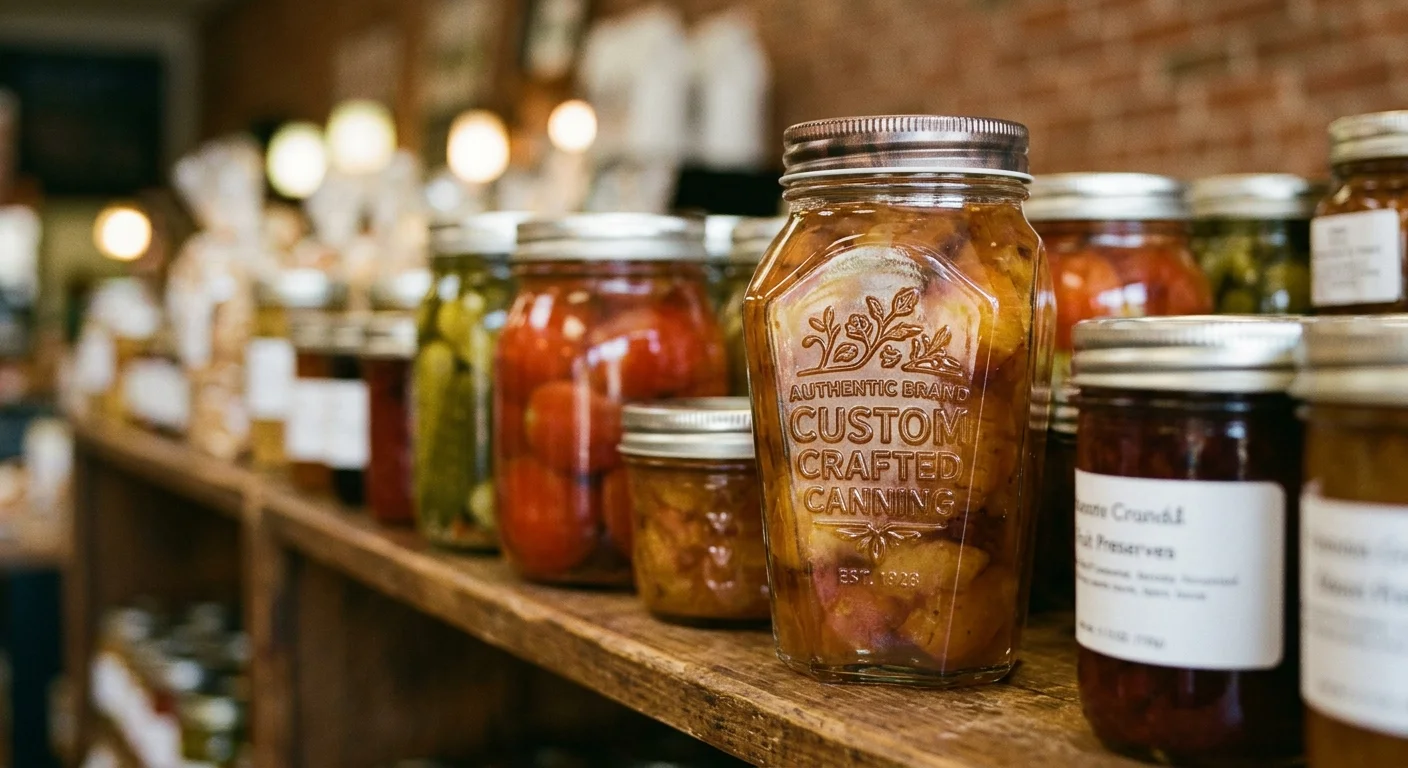
Want to stand out on a crowded specialty shelf? The jar itself is part of the story.
Generic stock jars get the job done. Nobody disputes that. But here’s the truth: a hundred different brands are all filling their artisan hot sauce or small-batch peach preserves into the exact same wide mouth canning jars. At that point, the packaging stops selling for you. OEM customization changes that.
Why Food Brands Go Custom
Food brands push toward custom glass preservation jars for three reasons — and all three are practical, not just aesthetic.
Shelf differentiation. A proprietary bottle silhouette catches the eye before the label does. Shoppers decide fast. A jar shape they haven’t seen before buys you those extra two seconds.
Brand consistency. You might manage multiple SKUs across retail, foodservice, and e-commerce. A standardized custom jar format ties every product together. Everything looks intentional and polished.
Filling line compatibility. Custom neck finishes and mouth diameters mean your canning jar lids and bands — and your capping equipment — work the way they’re supposed to. No awkward workarounds.
What Custom Options Look Like
Most OEM programs for food storage glass containers offer a solid range of options. Here’s what food brands and packers request most:
- Shaped molds — irregular silhouettes, faceted panels, or tall-shouldered profiles that signal premium positioning at a glance
- Embossed or debossed designs — your logo or brand pattern pressed into the BPA-free glass jars, no label required. MOQs for embossed tooling start around 10,000–20,000 units
- Surface finishes — matte frosted or soft-touch treatments are growing in popularity for premium condiment and wellness brands. They photograph well and feel high-end
- Glass color options — beyond standard clear, amber airtight glass jars protect UV-sensitive contents like cold-pressed juices or botanical infusions
The MOQ Reality Check
Custom molds need an upfront tooling investment — that cost is real, and it belongs to you once production begins. For shaped bottles with embossed branding, most manufacturers require a commitment in the 10,000–20,000 unit range. Surface finishes like frosted or matte treatments can start lower, around 5,000 units, depending on the method.
For brands at the scaling stage — ready to own their packaging identity, not just test it — that investment pays off. You get stronger shelf presence, fewer lost sales to lookalike competitors, and a packaging asset that grows with your brand.
Your product deserves its own jar. Start that conversation with your manufacturer early.
Common Questions About Wholesale Canning Jars
Buyers ask good questions. Here are the ones that come up most often — answered straight.
When purchasing wholesale canning jars, understanding key details about usability, safety and efficiency is essential. Below is a concise overview of critical information for buyers.
Canning jar glass can withstand multiple high-temperature sterilization cycles, but standard two-piece lids and bands are single-use (their sealing compound degrades after one cycle). For commercial repeated fills, use multi-use lids or include lid replacement in per-cycle costs.
Quality food-processing glass jars handle boiling water bath (212°F/100°C) and pressure canning (up to 240°F/116°C). Always verify thermal specs with your supplier before pressure processing.
Reputable glass canning jars are BPA-free (glass contains no BPA) and meet FDA/EU food contact standards. Ensure lids/bands from your supplier meet the same compliance standards.
Airtight glass jars are suitable for freezing after hot filling, but leave at least ¾ inch of headspace to prevent cracking from liquid expansion during freezing.
When vetting suppliers, request at minimum FDA food contact compliance, EU Regulation (EC) No 1935/2004, and ISO 9001 certification. For exports, check destination-country requirements before finalizing specs.
Conclusion
In summary, this ultimate guide has covered all key aspects of canning jars, including materials, sizes, temperature resistance, sterilization, reusability, food safety, and bulk purchasing tips. For home preservers, small businesses, or large wholesalers, choosing the right canning jars is key to safe, long-lasting food preservation.
TP Glass Bottle Manufacturer experienced factory crafts premium food-grade jars—durable, functional, and versatile for home and commercial use—with standard sizes, custom solutions, bulk orders, and OEM support. Our strict quality control, on-time delivery, and competitive pricing make us your reliable long-term partner. Let TP Glass Bottle Manufacturer be your go-to source for top-tier canning jars to simplify preservation and elevate your products.