

In the competitive world of spirits, a bottle is rarely just a container. Long before a customer reads the label, checks the price, or hears a recommendation, the shape, color, and texture of the bottle have already started a conversation. A cool Liquor Bottle works as your most reliable brand ambassador—it sits on the shelf, demands attention, and communicates quality and personality without saying a single word. This article takes a closer look at how thoughtful bottle design turns passive packaging into a powerful selling tool that works around the clock.
Table of Contents
The $0 Salesperson Standing on Every Shelf
Packaging doesn’t just contain your product — it sells it.
Research shows that consumers form a quality judgment about a spirits bottle within seconds of seeing it. That judgment sticks. Nielsen’s packaging studies back up what any experienced brand manager already suspects: consumers pay 20–30% more for a product when the packaging signals premium quality — before they’ve tasted a single drop.
Two brands made this impossible to ignore:
- Crystal Head Vodka built an entire brand identity around a skull-shaped bottle. No legacy. No heritage distillery story. Just an unmistakable silhouette that made it impossible to walk past without picking it up. The shape was the marketing.
- Clase Azul sells tequila in a hand-painted ceramic decanter that looks more like art than alcohol. That bottle is a core reason customers accept — even expect — a price point above $100. The vessel earns the premium.
Both cases point to the same truth: a distinctive bottle does the brand-building work that advertising budgets struggle to replicate. You can spend heavily on ads. Or you can let the bottle speak first — and louder.
Your bottle stands on that shelf for hours. It gets glanced at, picked up, turned over. Every curve, every weight, every color either builds trust or loses the sale. That’s not a design choice. That’s a business decision.
How a Cool Liquor Bottle Shape Stops a Shopper Cold
The human brain is wired to notice what doesn’t fit.
Eye-tracking research on retail shelf behavior confirms it: non-standard bottle shapes get longer first-fixation times than standard cylindrical designs. Shoppers don’t decide to look longer. Their visual system just can’t skip past something unexpected. Designers call it a pattern interrupt. Marketers call it free attention.
A spirits aisle holds thirty bottles, all fighting for the same three seconds of shopper attention. That involuntary pause is everything. It’s the difference between being seen and being invisible.
The shape doesn’t just attract the eye. It earns the hand.
Pick up a bottle, and sale probability climbs fast. Weight distribution, tactile texture, the way a silhouette sits in the palm — these details signal quality faster than any label copy. An eye-catching spirits packaging design doesn’t need to shout. It just needs to feel like it belongs on someone’s shelf at home.
The Back Bar Effect Nobody Talks About
There’s a second stage where distinctive alcohol bottle design pays off — and most brand owners miss it.
The back bar is live advertising. Every bottle behind the counter stays visible for hours. Dozens of people see it — people who didn’t walk in with any plan to buy. They’re relaxed, curious, open. A striking silhouette across a low-light bar shelf does something a digital ad can’t: it builds ambient brand recognition.
Bartenders notice this too. Bottles with strong glass bottle aesthetics for spirits get placed at eye level. Forgettable shapes get pushed to the rail.
- Unusual silhouettes hold visual attention 2–3x longer in cluttered shelf environments
- Back-bar placement at eye level can deliver thousands of passive brand impressions per week — at zero media cost
- Recognizable bottle shapes build recall before a consumer ever makes a deliberate choice to buy your brand
The shape is doing the work. No noise. No cost. All the time.
The Instagram Effect: Unique Liquor Bottles as Earned Media
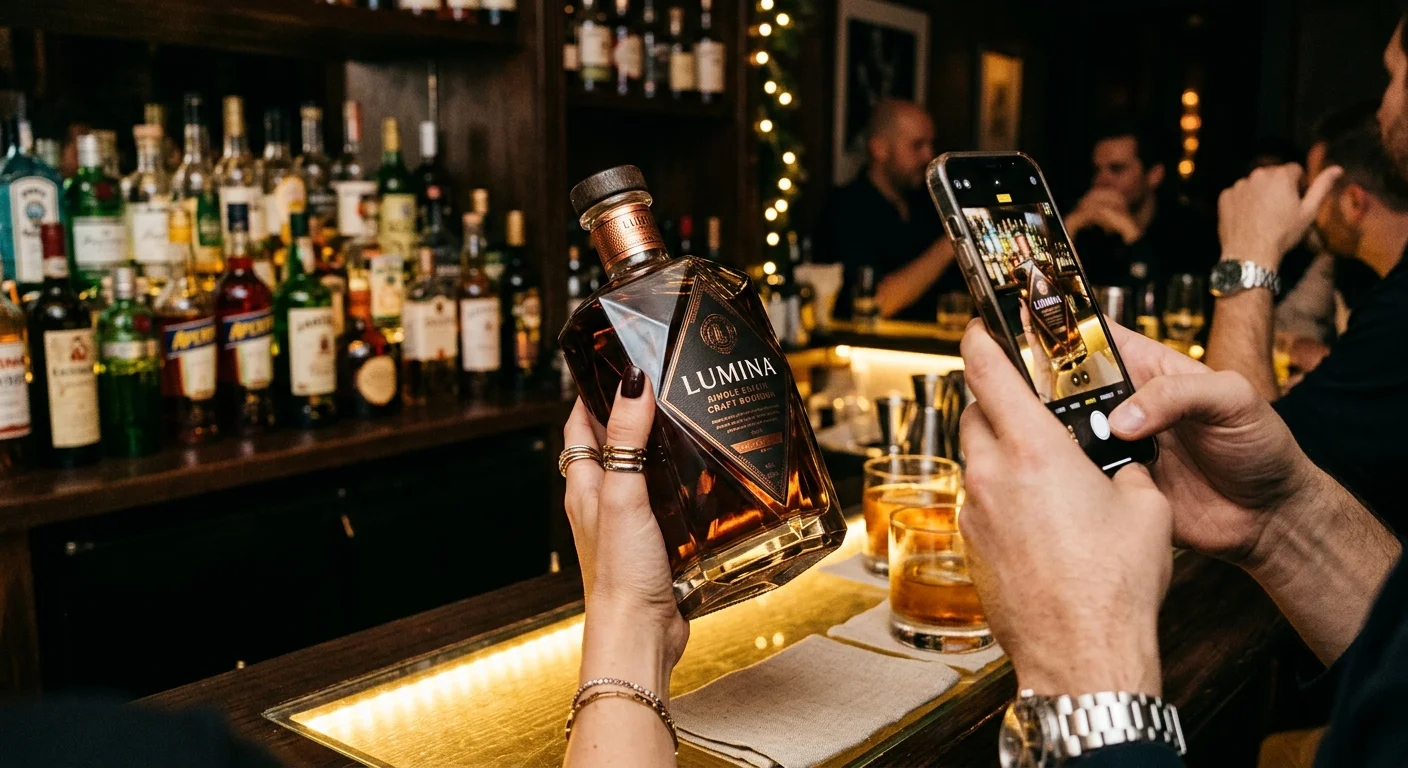
Somewhere between the unwrapping and the first pour, someone reaches for their phone.
It happens all the time — at dinner parties, at bar counters, in the middle of a bottle shop aisle. A bottle catches the light in an interesting way. The silhouette stops you cold. The glass feels heavy and sculptural, almost too good to leave undocumented. And just like that, your packaging travels somewhere no media budget could send it.
That’s the quiet shift happening inside the spirits industry right now.
On Instagram, hashtags like #bottleporn and #spiritsunboxing have pulled in millions of posts. Engagement rates on this type of content beat standard food and beverage content by a wide margin. On TikTok, unboxing and “shelfie” videos featuring eye-catching bottles pull hundreds of thousands of organic views — with zero paid promotion. Nobody bought that reach. The bottle earned it.
The Brands That Let Their Bottles Go Viral
D’Ussé Cognac is the clearest example. Its angular, armorial bottle — heavy, architectural, impossible to mistake for anything else — became a fixture in hip-hop culture. Not through traditional advertising. People kept photographing it and posting it. The bottle looked like it meant something. That visual authority spread through earned media before most consumers had ever tasted the liquid inside.
Casamigos followed a similar path in its early days. The clean, wide-shouldered bottle with its understated label photographed well in natural light. It fit right at home on an Instagram grid. That aesthetic became aspirational shorthand — long before the brand became a billion-dollar acquisition.
The pattern holds: a well-designed spirits bottle becomes a content asset the moment it leaves your hands.
- Every customer who photographs it acts as an unpaid brand ambassador
- Every post becomes a distribution channel you didn’t have to buy
- Every share puts your bottle in front of new audiences you never targeted
For spirits brands investing in distinctive alcohol bottle design, this shifts the ROI calculation in a big way. Custom novelty vodka bottle designs and luxury whiskey bottle shapes don’t just perform on the shelf. They perform across every platform where your future customers spend their time.
The bottle goes home. Then it goes online. Then it sells itself — again and again, in spaces you never even planned to enter.
Matching Your Cool Bottle Design to Your Brand’s Positioning (A Practical Guide)
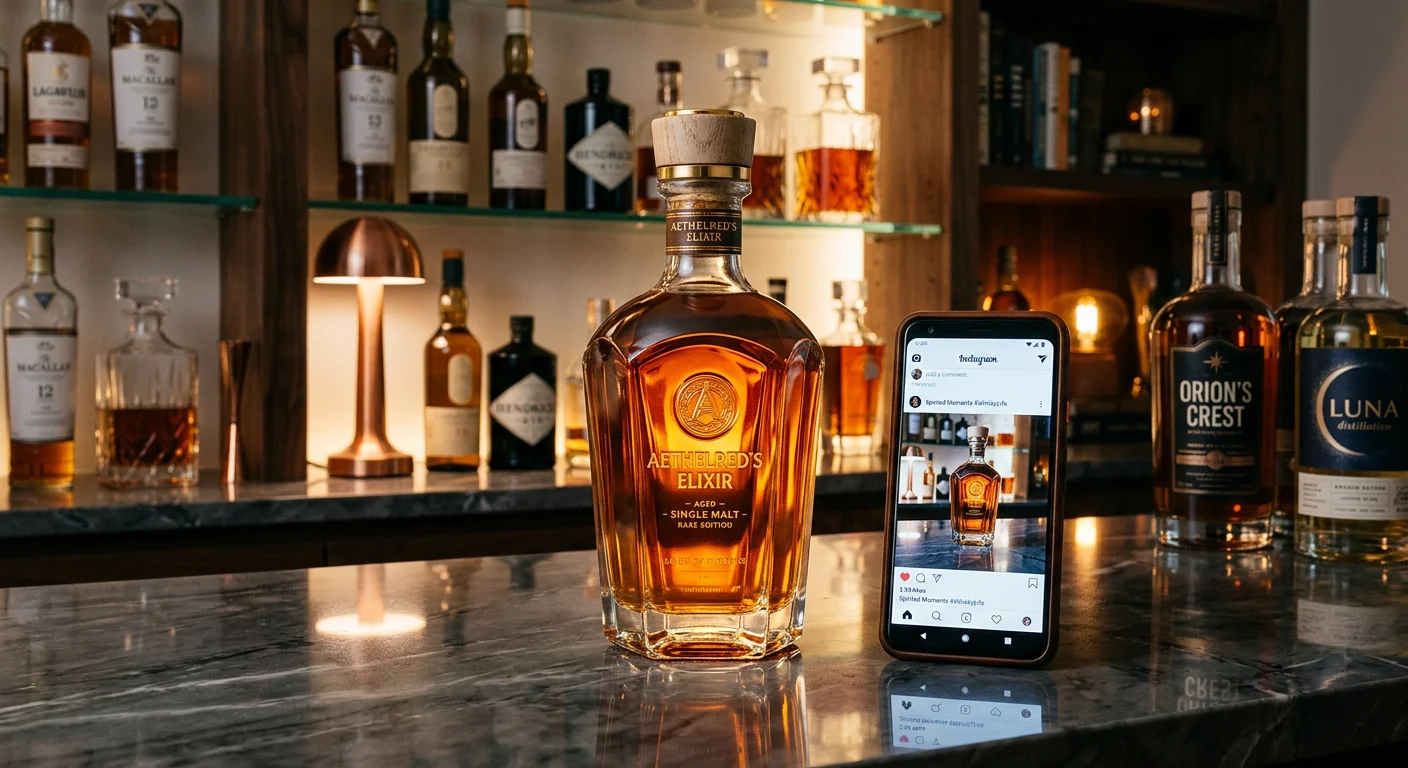
Not every cool Liquor Bottle should look the same — and that’s the point.
A skull-shaped vodka bottle works great for one brand and would kill another. The mistake most emerging spirits brands make isn’t choosing a bad design. It’s choosing a design that belongs to a different brand’s story. Before you finalize a single curve or color, ask yourself one real question: what does your brand feel like?
Here’s a practical framework to match your bottle design to your positioning — not just your aesthetic taste.
Brand Personality × Bottle Design Language
Think of your brand as a person walking into a room. How they’re dressed tells the whole story before they say a word. Your bottle works the same way.
Heritage / Classic brands — established whiskey houses, century-old distilleries — go for tall, broad-shouldered silhouettes in deep amber or forest green glass. Embossed crests, thick walls, and clean labels all say “we’ve been doing this a long time, and we’re proud of it.” The bottle should feel like it has a history.
Modern / Minimalist brands target a younger, design-conscious drinker. Clean geometry wins here. Frosted glass, straight lines, understated typography, a silhouette that looks sharp against a white kitchen counter. Less decoration. More confidence.
Craft / Artisan brands are built on the maker’s story. Irregular shapes, hand-applied wax seals, textured glass, matte finishes — these details say someone cared about every part of this bottle. The slight imperfection is the point. It’s proof of human hands.
Bold / Experimental brands — the ones built to disrupt — need a bottle that fits no expected category. Asymmetrical forms, unusual materials, sculptural stoppers, colors that have no business being on a spirits shelf. The design is a statement. It’s meant to divide opinions, because that’s what people remember.
Matching your bottle’s design language to your brand personality isn’t just good-looking. It’s smart business. Misalignment confuses the shopper in three seconds and loses the sale in four.
Price Tier × Packaging Investment Logic
Your price point should drive your branded liquor bottle manufacturing decisions.
| Tier | Design Priority | Typical Approach |
|---|---|---|
| Value | Cost efficiency | Standard mold, high-volume run, differentiate through label |
| Core | Shelf differentiation | Semi-custom shapes, selective decoration, balanced MOQ |
| Premium / Luxury | Full brand expression | Custom mold, complex finishes, heavier glass, custom closures |
The logic is simple: an $18 bottle doesn’t need a custom mold. A $90 bottle can’t afford to look like it doesn’t have one.
For premium and luxury spirits packaging, the bottle must justify the price before the purchase happens. Weight, finish, and silhouette all send signals. Your customer reads them as proof that what’s inside is worth the number on the tag.
For core-tier brands — the sweet spot for many independent distilleries — the smartest move is often a semi-custom bottle shape paired with a distinctive closure or embossed detail. You get real shelf presence without the tooling cost of a fully custom design.
The right custom glass bottle supplier does more than quote you a price per unit. At TP Glass, we start with your brand story, your target shelf, and your growth stage. The bottle shape comes from there.
Custom Liquor Bottles: Stock Bottles Stop Working for Your Brand
There’s a ceiling every stock bottle hits.
It’s not obvious at first. A standard mold gets your product on the shelf. It’s practical, fast, and affordable. But over time, something breaks down: your bottle looks like everyone else’s. In a spirits aisle crowded with thirty competing labels, looking like everyone else is its own kind of invisibility.
Stock bottles carry a structural problem no label redesign can fix. Anyone can order the same mold, so your silhouette is never fully yours. A competitor — sometimes a direct one — can stand right next to you on the shelf, in the same shape, at a lower price. Worse, standard bottle shapes don’t qualify for design patent protection. You can’t own what you didn’t create. Any brand equity built around your bottle’s look stays legally exposed — with no way to change that.
The brands that feel iconic almost always own their shape. That’s not a coincidence.
Three Moments Custom Becomes the Clear Move
Most brands don’t switch to custom glass bottle manufacturing because someone told them to. They switch because something specific forces the question.
Building from zero. A new spirits brand has no shelf history, no reputation, no word-of-mouth yet. The bottle is the first impression. A stock shape signals right away that this brand borrowed someone else’s identity. Custom distinctive alcohol bottle design from day one gives your brand a silhouette that belongs to you alone.
Moving upmarket. An existing brand launching a premium line runs into a hard truth fast: the same bottle can’t carry a higher price. The packaging has to earn that new price point before the customer opens the box. A custom luxury whiskey bottle shape or elevated spirits packaging design does that job. It closes the gap between what you’re charging and what the customer believes it’s worth.
Limited editions and collaborations. A special release deserves a special vessel. Custom bottles for seasonal drops or brand partnerships build urgency, collectability, and earned media. Standard packaging can’t do that.
The right custom glass bottle supplier makes all three scenarios work — on timeline, on budget, and with your brand story driving every design decision.
From Concept to Cool: How TP GLASS Brings Your Bottle Vision to Life
Most glass bottle suppliers quote you a price and send a catalog. TP Glass starts somewhere different — with your brand.
A founder sketching ideas on a napkin needs a different starting point than a packaging manager ready to place a production order. We have a clear path for both.
Three ways to work with us:
- Semi-custom — Take a proven bottle form and make it your own. Add a frosted finish, an embossed logo, or a custom closure. You get real shelf presence without the cost of full tooling. It’s the smart move for core-tier brands that need to stand out without the premium price tag.
- Fully custom — Your silhouette. Your mold. Your design patent. Luxury whiskey bottle shapes, sculptural vodka designs, any brand where the bottle is the identity — we take you from concept sketch to finished glass. Every curve belongs to you.
- Frosted & specialty finishes — Sometimes the shape works. The finish is what’s missing. Frosted glass, matte coatings, and surface textures can turn a standard bottle into something that reads as artisan spirits packaging the moment it hits a shelf.
The brands that get remembered don’t leave their bottle design to chance — or to whoever had the lowest MOQ that week.
Ready to see what your bottle could look like?
→ Submit your custom brief and tell us about your brand → Browse our product catalog for inspiration and starting points → Contact our team to request samples or discuss your timeline
Your bottle vision deserves more than a stock answer.
Conclusion
Ultimately, the story of a cool liquor bottle comes down to one simple truth: what customers see first often determines what they buy. Throughout this article, we have looked at how a distinctive silhouette, a carefully chosen color palette, an interesting texture, and a memorable unboxing experience all work together as silent sales tools. Unlike a salesperson or a social media ad, your bottle never clocks out—it keeps telling your brand story on retail shelves, back bars, and in countless user-generated photos long after the initial purchase is made.