

When most people think of a champagne bottle, they picture the standard 750ml size you see at every grocery store. But champagne actually comes in an incredible range of sizes, each with a unique name that often traces back to biblical kings and ancient history. This guide will walk you through everything you need to know, from the smallest split all the way up to the massive Nebuchadnezzar.
Table of Contents
Champagne Bottle Size: Complete Reference from Split (187.5ml) to Nebuchadnezzar (15L)
Ten sizes. Ten names. One logical system — once you see it laid out.
Here’s the full champagne bottle size chart, from the tiny Split all the way up to the massive Nebuchadnezzar:
| Name | Volume | Standard Bottles | Flutes (125ml) | Glasses (150ml) | Approx. Height |
|---|---|---|---|---|---|
| Split (Piccolo) | 187.5ml | ¼ | 1.5 | 1.25 | ~19 cm |
| Demi (Half) | 375ml | ½ | 3 | 2.5 | ~24 cm |
| Standard | 750ml | 1 | 6 | 5 | ~30 cm |
| Magnum | 1.5L | 2 | 12 | 10 | ~38 cm |
| Jeroboam | 3L | 4 | 24 | 20 | ~46 cm |
| Rehoboam | 4.5L | 6 | 36 | 30 | ~52 cm |
| Methuselah (Imperial) | 6L | 8 | 48 | 40 | ~57 cm |
| Salmanazar | 9L | 12 | 72 | 60 | ~65 cm |
| Balthazar | 12L | 16 | 96 | 80 | ~72 cm |
| Nebuchadnezzar | 15L | 20 | 120 | 100 | ~79 cm |
Beyond Nebuchadnezzar: The Ultra-Large Special Orders
Want to go even bigger? A few sizes exist beyond the standard range. These are rare, custom-production bottles. You won’t find them sitting on any shelf:
- Melchior — 18L (24 bottles)
- Solomon — 20L (26.6 bottles)
- Primat (Goliath) — 27L (36 bottles)
- Melchizedek (Midas) — 30L (40 bottles)
Producers make these on special order. They go to major celebrations, luxury hotels, and high-profile auction events.
One Important Note on Sizing Standards
Here’s something that catches a lot of people off guard: the same bottle name doesn’t always mean the same volume. A Jeroboam in the Champagne AOC region holds 3 liters. A Jeroboam in Bordeaux? That’s 4.5 liters — a much larger bottle.
The same naming mismatch shows up across Prosecco, Cava, and still wines too. So always confirm the exact milliliter capacity before ordering for events or sourcing bottles for production. The name alone isn’t enough.
Split & Demi: The Small-Format Champagne Bottles for Solo and Intimate Occasions
Small bottles, big personality. That’s the best way to describe the Split and the Demi.
The Split (187.5ml) — also called a Piccolo or Quarter bottle — is the single-serve choice in the champagne world. Airlines stock them on first-class carts. Hotel minibars tuck them in next to the overpriced cashews. At weddings, they work beautifully as personalized favors. Add a custom label and a ribbon, and you’ve got something guests actually want to take home.
The Demi (375ml), or Half bottle, takes that idea a step further. It pours about two to three glasses. That’s a good fit for a quiet dinner for two or a low-key business lunch — something celebratory, without going overboard.
For retailers and glass bottle suppliers, these small formats are in high demand. Custom printing on mini bottles sells fast. The gifting and hospitality segments drive a lot of that volume. Sourcing or designing small-format champagne bottles at scale? These two sizes are a solid place to start.
Standard Bottle & Magnum: The Two Most Popular Champagne Bottle Sizes
Go to any wine shop, restaurant, or grocery store with a drinks aisle — these are the two sizes you’ll find every time.
The Standard 750ml bottle is the industry baseline. Every price comparison, every production calculation, every “how many bottles do I need?” conversation starts here. One standard bottle pours 6 flutes at 125ml each. That’s your math. Simple, reliable, and recognized across every market in the world.
Not sure which size to order? Default to this one. It’s the right call most of the time.
Then there’s the Magnum at 1.5L — two standard bottles in one. Magnums show up at celebrations, and that reputation is well earned. But here’s what most people miss: the Magnum isn’t just a bigger bottle. It’s a better bottle for aging champagne.
The reason is pure physics. The Magnum opening is the same size as a standard bottle, but holds twice the liquid inside. So the ratio of wine to air exposure is smaller. Less oxygen contact. The aging process slows down and stays controlled. The champagne develops deeper, more complex flavors over time — something a standard bottle can’t match at the same pace.
That’s why serious collectors and sommeliers go for Magnums. They buy wine to keep, and the Magnum format protects it better over the long run.
Sourcing or producing champagne bottles at scale? These two sizes drive the highest volume demand in the market. Get them right, and the rest of your range falls into place.
Jeroboam to Balthazar: Large Format Champagne Bottles for Events and Celebrations
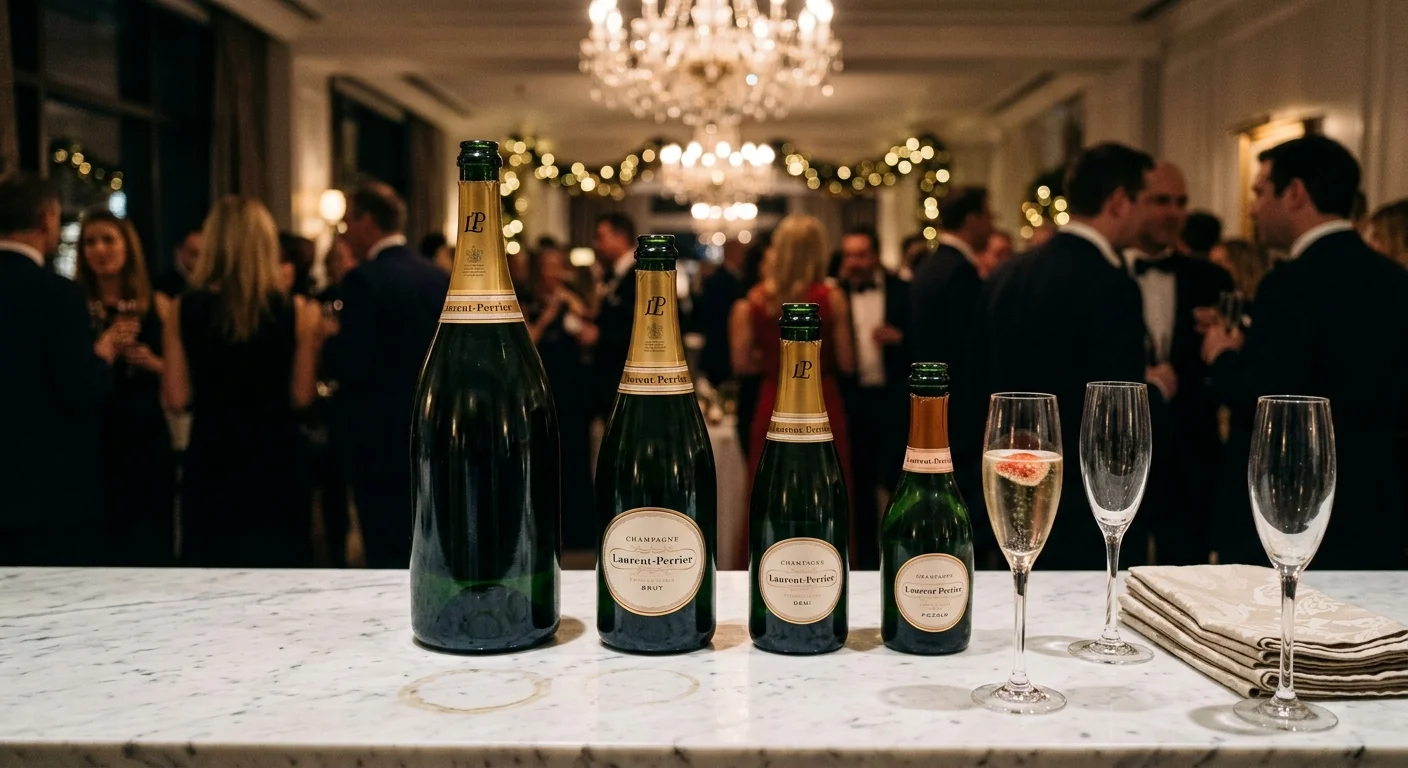
Cross the Magnum threshold and the bottles stop being just bottles. They become centerpieces.
The five large-format sizes — Jeroboam through Balthazar — each serve a specific purpose at events. Pick the right one for your guest count and you save money, cut waste, and make the whole celebration look well-planned.
Here’s how each size stacks up:
| Name | Volume | Flutes (125ml) | Guest Range |
|---|---|---|---|
| Jeroboam | 3L | 24 | 20–30 guests |
| Rehoboam | 4.5L | 36 | 30–40 guests |
| Methuselah | 6L | 48 | 40–50 guests |
| Salmanazar | 9L | 72 | 60–75 guests |
| Balthazar | 12L | 96 | 80–100 guests |
Matching the Bottle to the Occasion
The Jeroboam (3L) is the sweet spot for smaller celebrations. Think rehearsal dinners, corporate milestone toasts, or birthday parties with a tight guest list. It pours 24 flutes and looks impressive without going overboard.
Move up to a Rehoboam (4.5L) or Methuselah (6L) and you’re in mid-size wedding and gala territory. Both handle 30 to 50 guests with ease. The Methuselah is a crowd favorite at venue events. It’s large enough to grab attention and light enough that a skilled server can pour from it without trouble.
The Salmanazar (9L) and Balthazar (12L) are built for big headcounts. Large wedding receptions, brand launch events, luxury hotel galas — these are their home. The Balthazar alone pours 96 flutes. For a room of 100 guests, one bottle covers almost everyone.
The Visual Power Nobody Talks About Enough
Large-format bottles don’t get enough credit for one thing: they photograph well. A Balthazar on a table surrounded by guests creates a shot that no flower arrangement can match.
Event planners know this by feel. Brand sponsors know it too. A company logo placed next to a 12-liter Balthazar at a sponsored gala isn’t just a bottle on a table. It’s a prop, a statement, and a social media moment — all at once.
For event buyers and glass bottle sourcing professionals, large-format champagne bottles deliver strong value that goes beyond what’s inside them. The scale is the selling point.
Nebuchadnezzar (15L): The Ultimate Champagne Showpiece Bottle
The Nebuchadnezzar doesn’t just sit on a table — it commands one.
At 15 liters, this is the largest bottle in the standard champagne size lineup. That’s 20 standard bottles of champagne in a single vessel. It stands 79 centimeters tall. Pour it and you’ll fill 120 flutes — enough for 100 guests, with drinks to spare.
This isn’t a bottle you pick up at the wine shop. Nebuchadnezzars are special-order bottles. You get them built for big moments — grand wedding receptions, high-profile brand launches, luxury hotel celebrations.
The name itself carries weight. Nebuchadnezzar was the ancient king of Babylon. This bottle earns that title. Place one on a reception table and every person in the room turns to look.
The Biblical Origins Behind Champagne Bottle Names: History and Cultural Significance
Here’s something that rarely comes up in champagne conversations: those big bottle names aren’t random. Somebody chose them with purpose, and there’s a real story behind each one.
In 19th-century Champagne, négociants — the wine merchants who built the region’s reputation — faced a real marketing problem. Selling a bottle that holds 6, 9, or 12 liters of sparkling wine? “Really big bottle” just doesn’t work as a description. They needed names that matched the scale of what they were selling.
So they reached for the Bible.
Nebuchadnezzar. Methuselah. Balthazar. Salmanazar. Rehoboam. Jeroboam. These weren’t random scripture picks. They were kings, patriarchs, and rulers. Men of legendary power, long lives, and authority. The merchant logic was clear: a bottle sitting at the center of a grand celebration should carry a name that sounds like it belongs there.
Methuselah lived 969 years, according to Genesis — the oldest person in the Bible. His name on an 8-bottle format signals something built to endure. Nebuchadnezzar, king of Babylon, ran one of the ancient world’s most powerful empires. His bottle is the largest in the standard lineup. That’s no coincidence.
This naming tradition still matters today — and not just as trivia. In luxury gifting and event marketing, the name on the bottle is part of the product. A brand sponsor places a Nebuchadnezzar at a gala. They’re not just providing champagne. They’re putting a word on the table that carries centuries of weight.
For glass bottle manufacturers and brand clients sourcing large-format bottles, that cultural history is real commercial value. The name sells the moment before a single drop is poured.
Champagne vs. Prosecco vs. Sparkling Wine: Do Bottle Size Names Differ?
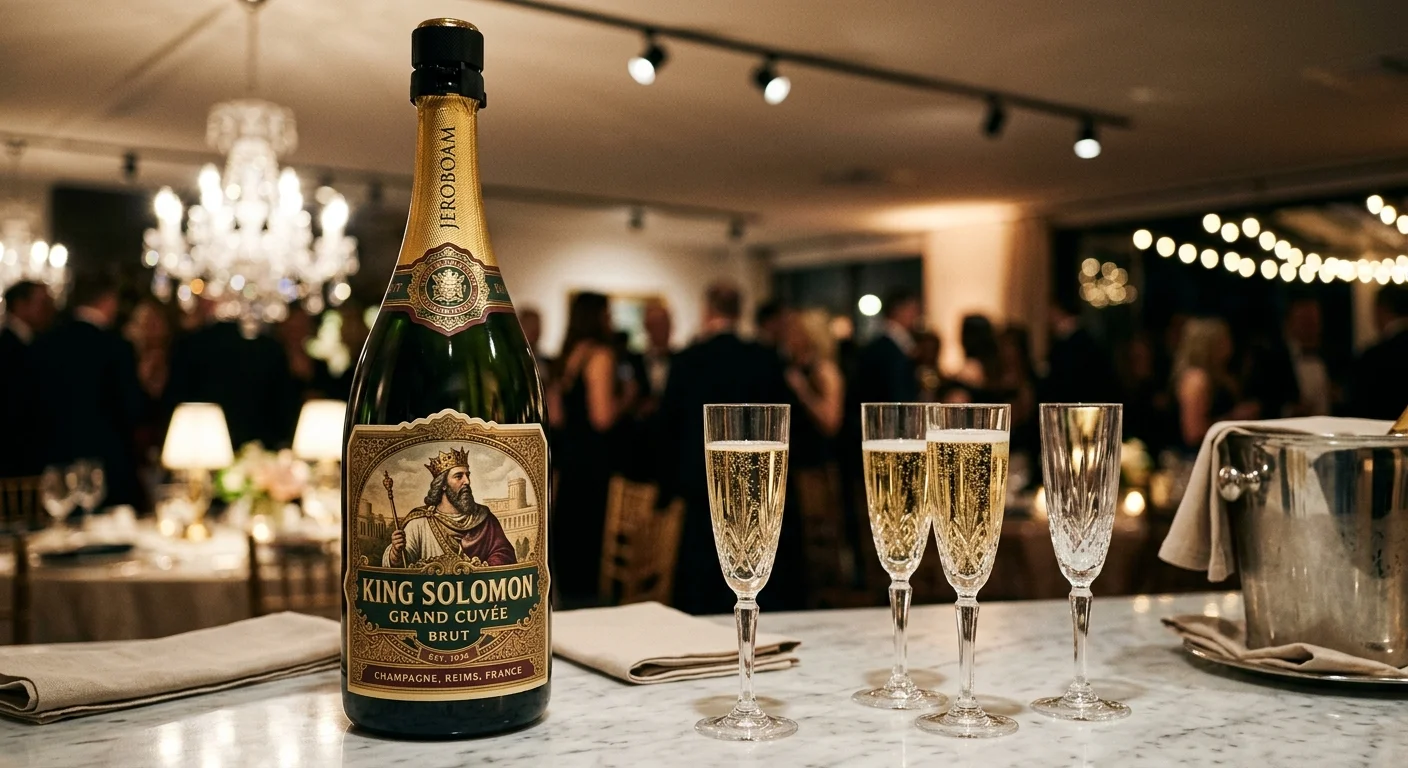
Short answer: yes. And it’ll catch you off guard if you’re not paying attention.
The same bottle name can mean different volumes depending on what’s inside — and where it comes from. Nobody warns you about this until you’ve already ordered wrong for a 200-person event.
Here’s where the real confusion lives:
The Jeroboam problem. In Champagne, a Jeroboam holds 3 liters. Order a Jeroboam of Bordeaux, and you’re getting 4.5 liters — 50% more wine than you planned for. Same name. Different bottle. Prosecco and Cava have the same issue. Their regional sizing rules don’t always match Champagne AOC standards.
The Imperial/Methuselah overlap. In Champagne, “Imperial” and “Methuselah” both refer to the 6-liter format. They mean the same thing there. But in Burgundy and some other regions, “Imperial” points to a different size. That difference has tripped up more than a few caterers mid-order.
The takeaway is simple: always confirm the exact milliliter volume, not just the name. The name is a starting point. For production sourcing or large event orders, the ml number is what you need to get right.
Custom Champagne Bottle Sizes: What Wineries and Brands Need to Know
Most wineries start with standard sizes. Then, somewhere along the way, they realize the bottle is the brand — and standard stops being enough.
Customization requests fall into three categories:
- Logo and branding — embossed labels, screen-printed designs, or frosted glass finishes on existing bottle shapes
- Non-standard volumes — a winery might want 200ml instead of the traditional 187.5ml Split, or a clean 500ml format that sits between a Demi and a Standard
- Proprietary mold development — a one-of-a-kind bottle shape built from scratch for a flagship product or limited release
That third option is where things get serious. It’s also where real brand differentiation happens.
Technical Specs That Matter
Move into custom territory, and three parameters drive every production decision:
Cork finish (bottle neck) — this must match your closure system. Whether you’re using a traditional mushroom cork, a crown cap, or a Zork-style alternative, compatibility is non-negotiable.
Glass wall thickness — thicker walls handle the pressure of secondary fermentation. For sparkling wine, this isn’t optional. Thin glass simply won’t hold.
Color — traditional Champagne green, deep antique black, clear flint, or a custom tint. Each choice affects UV protection, shelf presentation, and perceived value. So pick based on more than just aesthetics.
Producers sourcing custom champagne bottles at volume should nail these specs upfront. Get them wrong, and retooling costs add up fast. Planning a new label launch or a private-label line? Reach out to our team before the design is locked — the earlier, the better.
FAQ: Champagne Bottle Sizes Answered
Real questions from real people — here are the straight answers.
What size champagne bottle is best for a wedding?
It depends on your guest count. A Jeroboam (3L) works well for 20–30 guests. Step up to a Methuselah (6L) for 40–50 people, or a Balthazar (12L) for a full room of 100. Most wedding planners go with the Magnum or Jeroboam. It’s the sweet spot — big enough to impress, easy enough to handle.
What is the largest standard champagne bottle?
The Nebuchadnezzar at 15 liters. It holds 20 standard bottles worth of champagne and fills 120 flutes. Past that, you have the Melchior (18L) and Melchizedek (30L). Those are custom special-order sizes — not off-the-shelf.
Does champagne age better in a Magnum?
Yes — and there’s a real reason for it. The Magnum has the same neck opening as a standard bottle, but twice the volume inside. Less oxygen gets in per liter. That means slower aging, better control, and more complex flavor over time.
How do I order large-format champagne bottles in bulk?
Go straight to a glass bottle manufacturer. That’s the most reliable route for Jeroboam size and above. Lead times, minimum order quantities, and packaging specs all differ by producer. Reach out early — the more time you give, the smoother the process.
Is there a minimum order quantity for custom champagne bottles?
MOQs depend on two things:
– Are you using an existing mold?
– Or are you building a new proprietary shape?
Standard sizes carry lower MOQs. A custom mold needs a higher volume commitment to make production viable. Contact our team for a quote based on your project details.
Conclusion
We hope this complete guide has clarified the different Champagne Bottle Sizes, their capacities, and when to use each one. From the convenient split to the majestic Nebuchadnezzar, there’s a perfect bottle size for every celebration.
TP Glass Bottle Manufacturer is your trusted partner for high-quality champagne bottles in all standard and custom dimensions. Visit our website or contact us today to learn more about our champagne bottle solutions.