

Your product deserves packaging that works as hard as you do. Sourcing containers for essential oils, food products, cosmetics, or pharmaceuticals? The amber glass jar isn’t just an aesthetic choice. It’s a scientific one.
That distinctive dark brown tint blocks up to 99% of harmful UV radiation. This preserves potency, extends shelf life, and protects everything you’ve put resources into creating.
But here’s where most buyers get stuck — not all amber glass jars are built the same. The wrong specification, the wrong grade, the wrong supplier — and you end up with damaged products, failed compliance checks, or MOQs that blow your budget.
Table of Contents
What Makes Amber Glass Jars Different: UV Protection Science Explained
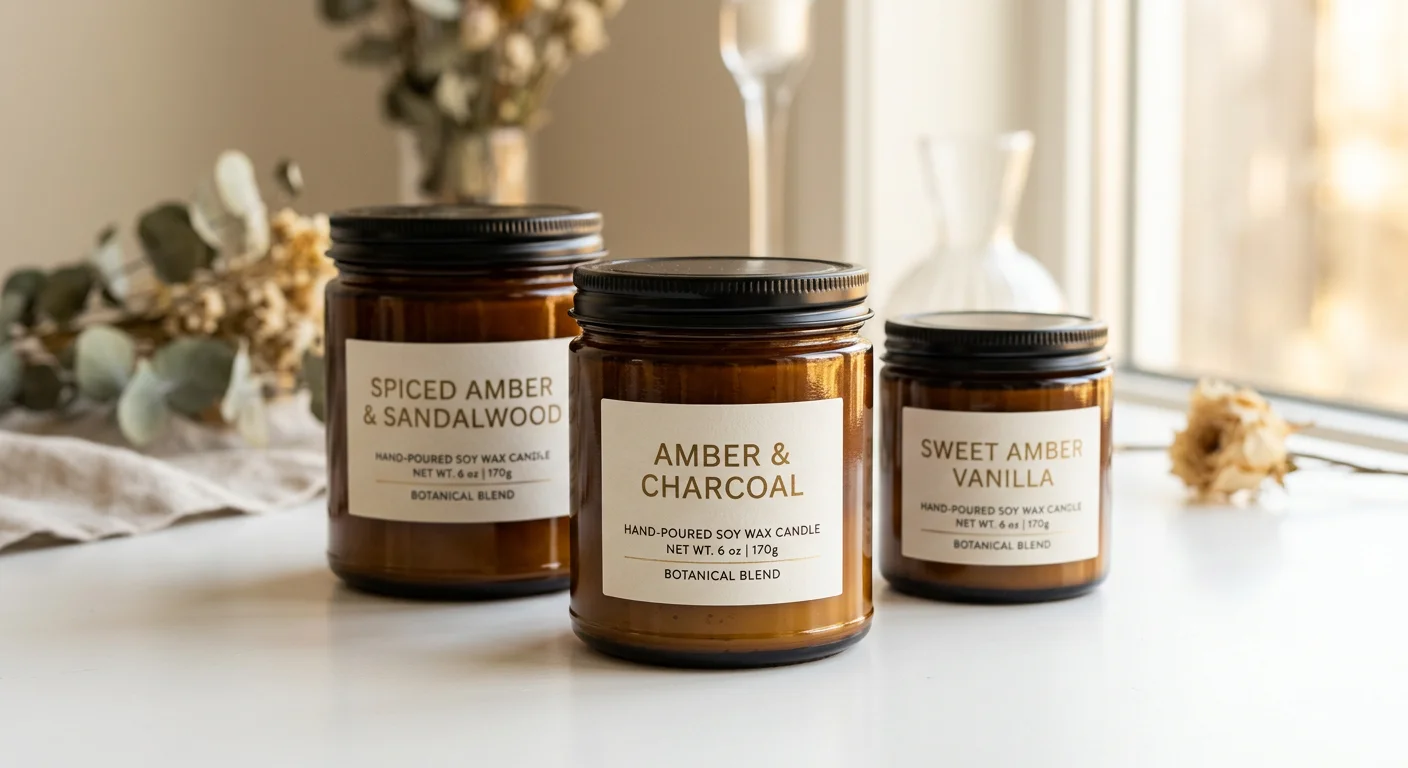
The secret is in the glass itself — baked in during manufacturing.
Amber glass gets its brown color from iron and sulfur metal oxides mixed into the molten glass. This isn’t a coating. It’s not a film. It’s a permanent chemical change that alters how the glass handles light.
Here’s the physics: those metal oxide compounds absorb and block wavelengths below 450 nanometers. That’s the UV range that does the most damage to organic compounds, active ingredients, and volatile essential oils. Light in this range triggers oxidation, breaks down cannabinoids, strips vitamins, and speeds up rancidity in food. Amber glass cuts that off before it starts.
How Amber Compares to Other Glass Colors
The gap between glass types is real — and worth knowing before you lock in a packaging choice:
| Glass Type | UV Transmission Rate |
|---|---|
| Clear/Flint Glass | 80–90% |
| Green Glass | ~50–60% |
| Cobalt Blue Glass | ~40–50% |
| Amber Glass | ≤1% |
Clear glass is a wide-open window for UV radiation. Green and cobalt blue glass give you partial protection — better than clear, but not solid enough for light-sensitive formulations. You can’t count on them.
Amber glass is in a different category.
Some products can’t afford to lose potency, freshness, or shelf-life — pharmaceuticals, essential oils, fermented foods, botanical extracts. For those, UV-blocking isn’t a bonus feature. It’s a functional requirement.
That’s the science. Everything else — size, lid type, branding — comes after you get this part right.
7 Industries That Rely on Amber Glass Jars (And Why Each One Matters)
One packaging material keeps showing up across seven different industries. That’s not a coincidence. Nothing else does the job as well.
Here’s where amber glass jars earn their place.
1. Essential Oils & Aromatherapy
Essential oils are volatile. UV light and oxygen break down the therapeutic compounds — terpenes, esters, phenols — within weeks. Plastic containers leach chemicals into the oil. Clear glass lets UV radiation pass straight through.
Amber glass jars create a stable, inert environment. Potency stays locked in from the production line all the way to the end user’s hands.
2. Pharmaceuticals & Herbal Medicine
Regulatory bodies don’t suggest UV-protective packaging for medicines. They require it. Active ingredients — aspirin, antibiotics, botanical alkaloids — break down fast under light exposure. Amber glass meets USP and EP pharmacopoeia standards for light-resistant containers. That makes it the go-to choice for tablets, capsules, and tinctures.
Plastic fails the compliance bar for many formulations. Full stop.
3. Cosmetics & Skincare
Vitamin C serums, retinol creams, niacinamide formulas — these ingredients are highly unstable. A clear glass jar sitting on a bright retail shelf can drop a serum’s active concentration by up to 30% before it even reaches you.
Amber glass jars protect formula integrity and signal premium quality. Those two things together affect both product performance and how customers see your brand.
4. Food, Spices & Dry Herbs
Chlorophyll, flavonoids, and volatile aromatic compounds are what make herbs and spices potent. All of them are sensitive to light. Store paprika or dried oregano in clear packaging and the color fades. The aroma weakens. The flavor flattens.
Amber glass keeps your product looking and tasting the way it should — through months of shelf storage.
5. Fermented Foods & Raw Honey
Fermentation is a living process. Kombucha, kimchi brine, sauerkraut, and raw honey all contain active enzymes and beneficial bacteria. These respond to both temperature and light. UV exposure speeds up spoilage and throws off the microbial balance.
Amber glass jars give these products the light-stable, non-reactive environment they need. Plus, you avoid the off-gassing risks that come with plastic containers.
6. Candles & Home Fragrance
Candle wax and fragrance oils yellow and fade under long UV exposure. For premium candle brands, that’s a branding problem just as much as a product problem.
Amber glass jars protect the wax color and scent profile. They also deliver a warm, high-end look that justifies premium retail pricing on the shelf.
7. Nutritional Supplements & Tinctures
CBD oils, liquid vitamins, adaptogen tinctures — the supplement market runs on bioavailability claims. UV degradation tears those claims apart. A tincture stored in clear plastic or flint glass loses measurable potency before the customer finishes the bottle.
Serious supplement brands use amber glass jars as their packaging standard. It’s how they back up label promises with real-world performance.
The pattern is clear. Product integrity matters — whether it’s a pharmaceutical compound, a handcrafted candle, or a cold-pressed herb extract. Amber glass keeps showing up as the non-negotiable choice. The industries change. The logic doesn’t.
Amber Glass Jar Types & Specifications: Sizes, Lids, and Grades Decoded
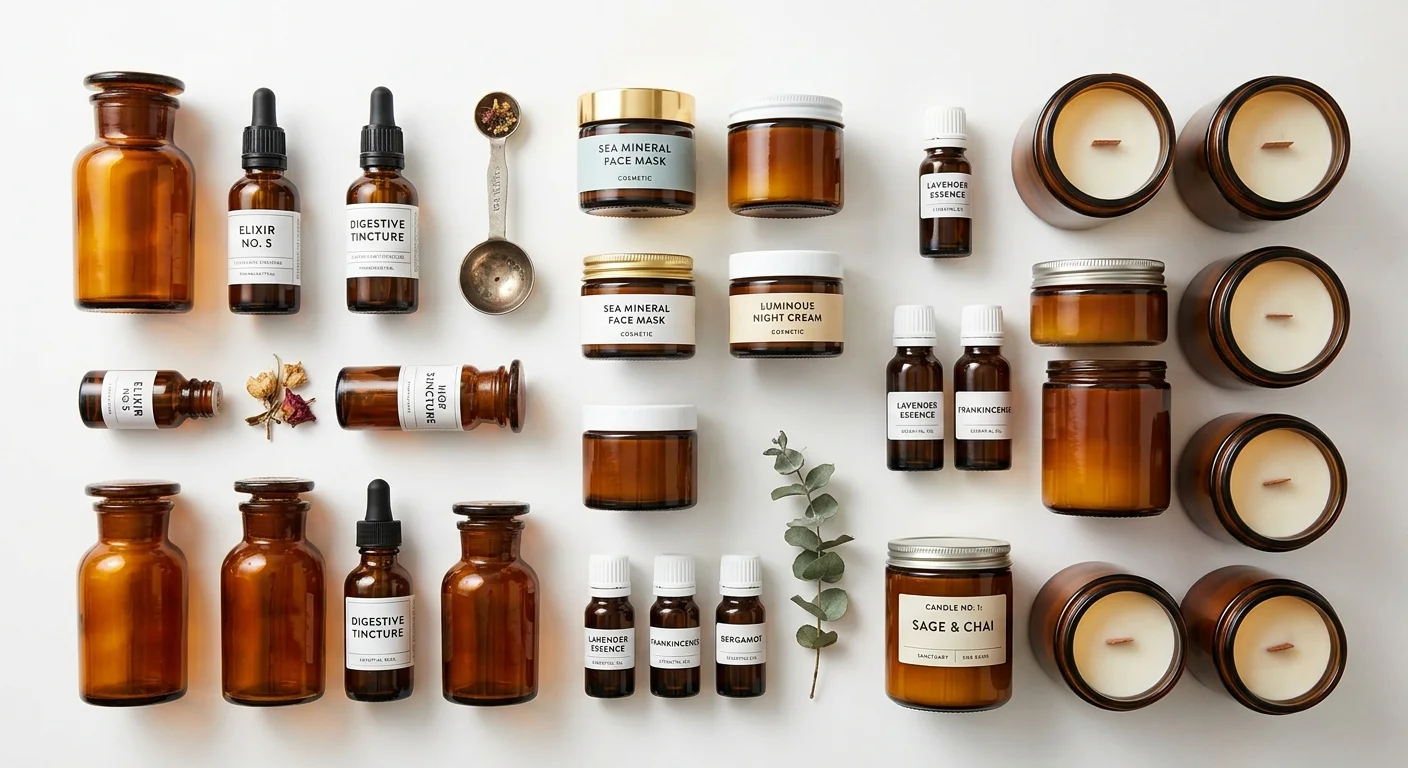
Specifications are where sourcing decisions get made — or fall apart.
Get the size wrong and your fill line looks off. Choose the wrong lid and you’ve got a leaking shipment. Order food-grade glass for a pharmaceutical application and you’re facing a compliance problem. Here’s what matters on a spec sheet.
Capacity: Matching Size to Application
Amber glass jars follow a standard capacity range. Each size maps to specific industry use cases:
| Capacity | Common Applications |
|---|---|
| 2 oz (60ml) | Essential oils, tinctures, lip balms, sample sizes |
| 4 oz (120ml) | Serums, herbal salves, specialty honey, spice blends |
| 8 oz (240ml) | Candles, body butters, supplements, facial creams |
| 16 oz (480ml) | Fermented foods, bulk herbs, protein powders |
| 32 oz (960ml) | Commercial food storage, raw honey, large candle pours |
Smaller sizes lead in cosmetics and pharmaceuticals. Larger formats move product in food and home fragrance. Know your fill weight before you commit to a mold size.
Lid Types: Seal Performance by Application
The lid isn’t an afterthought. It’s half the packaging decision.
- Metal Screw Caps — Airtight and tamper-evident. Ideal for food, pharmaceuticals, and supplements. This is the go-to choice where seal integrity cannot be compromised.
- Bamboo Lids — Strong visual appeal for natural and organic brands. Good for cosmetics and candles where premium shelf presence counts.
- Dropper Caps — Built for precision dispensing. Use these with tinctures, essential oils, and liquid supplements. They fit best with 1–4 oz formats.
- Pump Dispensers — Made for high-end skincare and serum packaging. Each pump keeps the product sealed from air and contamination between uses.
- Cork Stoppers — A handcrafted look for specialty foods, apothecary products, and botanical collections. Not the right choice for long-term airtight storage.
Glass Grade: Food-Grade vs. Pharmaceutical-Grade
Most buyers miss this distinction. It matters a lot.
Food-grade glass meets FDA standards for direct food contact. It’s safe for acidic, oily, and alcoholic contents. It holds up to standard cleaning temperatures and keeps chemicals out of your product.
Pharmaceutical-grade glass (Type I or Type III borosilicate) clears a higher bar. It meets USP and EP pharmacopoeia standards — lower chemical extractability, higher heat resistance, and tighter size tolerances. Packaging medicines, nutraceuticals, or regulated botanical extracts? Pharmaceutical-grade is required, not optional.
Not sure which grade you need? Ask your supplier for the ISO certification and chemical resistance classification. That paperwork keeps you covered during regulatory review.
Amber Glass vs. Clear Glass vs. Plastic: Which Packaging Is Right for Your Product?
Three packaging materials dominate the market. Just one is right for your product — and picking the wrong one costs you more than money.
Here’s a direct comparison across four dimensions that matter:
| Dimension | Amber Glass | Clear Glass | Plastic |
|---|---|---|---|
| UV Protection | ≤1% transmission | 80–90% transmission | Varies (poor in most cases) |
| Chemical Inertness | Inert | Inert | Leaches chemicals over time |
| Durability | Rigid, breakable | Rigid, breakable | Flexible, impact-resistant |
| Sustainability | 100% recyclable | 100% recyclable | Low recycling rates |
Clear glass fails on UV protection right away. Plastic falls short on chemical safety — and sustainability. Amber glass wins three out of four categories.
The Right Choice by Product Type
Stop debating in the abstract. Here’s what the data points to for specific products:
- Raw honey — Amber glass. UV exposure breaks down enzymes and antioxidants fast. Plastic also carries a real risk of chemicals leaching into an acidic, high-sugar product.
- Essential oils — Amber glass, no exceptions. Terpenes eat through plastic compounds. Clear glass speeds up oxidation.
- Herbal powders — Amber glass or amber jars with dark lids. Chlorophyll and aromatic compounds need full light blockage to stay stable.
- Liquid supplements & tinctures — Pharmaceutical-grade amber glass. Your bioavailability claims rest on the packaging you choose.
The pattern is clear. Your product has active compounds, live cultures, or volatile ingredients? Amber glass is the answer. Clear glass and plastic are fine to use where light sensitivity is truly zero — and that’s a short list.
Custom Amber Glass Jars for Brand Packaging: Logo, Color & MOQ Options
Packaging is a purchase decision made before the product is even opened.
Studies show that branded packaging raises perceived product value by up to 45%. For cosmetics, premium food, and candle brands, that gap drives repeat purchases. Amber glass already signals quality. Custom branding pushes that signal further — into something customers remember.
Here’s what customization looks like at the manufacturing level.
Customization Options That Move the Needle
Surface Decoration
– Screen printing — Ink goes straight onto the glass surface. Clean, durable, and cost-effective for logos and label copy. Works across most jar sizes.
– Hot stamping (foil stamping) — Metallic gold or silver logo application. Luxury skincare and apothecary brands use this finish to justify premium shelf pricing.
– Frosted/matte surface treatment — Acid etching or sandblasting creates a soft, tactile finish. High-end cosmetic and candle brands use this to say “premium” without a single word of copy.
Structural Customization
– Custom mold development — Unique jar shapes built to your brand spec. This is the highest-commitment option. Tooling costs run from $1,500–$5,000, depending on how complex the shape is.
MOQ Reality Check
Standard decorated jars start at 500–1,000 units per SKU. Custom mold orders need 3,000–5,000 units minimum to cover tooling costs.
For newer brands, stock amber glass jars with screen-printed logos are the practical path. You get a lower MOQ, faster lead time, and a fully branded product.
One thing to sort out early: confirm whether your supplier owns the mold or just licenses it. Mold ownership protects your design over the long run.
How to Source Amber Glass Jars from China: Supplier Vetting Checklist
China makes over 60% of the world’s glass packaging. For bulk amber glass jar buyers, that concentration gives you real power over price, lead time, and customization.
But that power only works if you choose the right supplier.
Factory vs. Trading Company: Know the Difference
Two main supplier types dominate the Chinese glass market:
Direct factories — based in production hubs like Xuzhou (Jiangsu) and Cangzhou (Hebei). You get lower unit costs, tighter control over customization, and direct access to quality management. The trade-off: communication can take more effort, and MOQ thresholds run higher.
Trading companies — more flexible on MOQ, easier to talk to, and often able to combine mixed SKU orders into one shipment. The trade-off: you pay a middleman markup, and you get less visibility into actual production quality.
For B2B buyers placing repeat bulk orders, a direct factory relationship wins on total cost and reliability. Most of the time, there’s no close second.
The Supplier Vetting Checklist
Before you send a single sample request, run every prospective supplier through these checkpoints:
- Certifications — Look for food-grade ISO 9001, FDA compliance, and pharmaceutical-grade USP/EP documentation where needed. Ask for the actual certificates. A logo on a website proves nothing.
- Glass grade transparency — Can they specify Type I vs. Type III borosilicate? Vague answers are a red flag. Push for specifics.
- Mold ownership — Do they own their production molds outright? This protects your custom design over the long run.
- Sample policy — Good manufacturers send pre-production samples before full runs start. No samples means no order. Full stop.
- Production audit trail — Request batch inspection reports. Ask whether third-party QC audits through SGS or BV are available.
- MOQ and lead time clarity — Standard decorated jars start at 500–1,000 units. Custom molds start at 3,000–5,000 units. Vague timelines point to operational problems. Get firm dates in writing.
TP Glass Bottle (tpglassbottle.com) runs as a direct amber glass jar manufacturer. They carry verified food-grade and pharmaceutical-grade production lines, full customization capability, and export experience across cosmetics, food, and supplement industries. That’s the profile you want in a supplier.
The right factory partner does more than fill your order. They protect your product, your brand, and your supply chain.
Amber Glass Jar FAQs: What B2B Buyers Ask Before Placing Orders
Same questions come up every time a buyer gets serious about placing a bulk order. Here are the ones that matter most.
Can amber glass jars hold essential oils?
Yes — and they’re your best option. Essential oils react with plastic and break down in clear glass. Amber glass doesn’t react with oils at all. It also blocks UV light, so terpenes and therapeutic compounds stay stable from production all the way to the end user.
What wall thickness do I need for honey storage?
For raw honey, go with a wall thickness of 3–4mm. That’s the standard for a reason. It supports the weight of dense fills without cracking. It also holds up through the repeated handling that commercial operations put jars through day after day.
Will the metal lid rust?
Not with a qualified supplier. Food-grade tinplate lids carry a corrosion-resistant lacquer on the interior. That coating keeps rust out under normal conditions. For high-acid or high-moisture contents, ask for plastisol-lined caps. They put an extra barrier between the metal and your product — worth it for anything sensitive.
What sizes work best for candles?
8 oz amber glass jars are the go-to for candles across the industry. You get a clean single-wick pour with room to spare. Plus, the warm amber tone gives your product that premium shelf presence — the kind that supports higher retail price points.
What’s the minimum order for a 4 oz amber apothecary jar with custom printing?
Most direct manufacturers start at 500–1,000 units for stock shapes with screen-printed logos. Custom mold amber apothecary jars are a different story — you’ll need at least 3,000 units to cover tooling costs.
Conclusion
Amber glass jars aren’t just containers. They’re a strategic packaging decision that protects your product’s integrity, raises your brand perception, and hits your bottom line.
You now have everything you need: the UV protection science, the industry applications, the supplier vetting framework, and the customization roadmap. Brands that win on shelf and brands that don’t — the gap often comes down to one overlooked detail. It’s the packaging that shields what’s inside.
Sourcing UV protection glass jars for a premium skincare line? Scaling bulk orders for a food-grade product launch? The next move is simple: stop researching and start requesting samples.
The best amber glass jar supplier isn’t the cheapest one. It’s the one that delivers quality at volume, on time, every time.
Ready to lock in your packaging? Request a custom quote from TP Glass Bottle today →