

Many households and businesses end up with empty liquor bottles after use, and most are simply thrown away or recycled without a second thought. However, these sturdy, well-shaped glass containers can easily be given a new purpose instead of being discarded. With simple tools and basic creativity, empty liquor bottles can be transformed into practical and decorative items for daily use. In this article, we share easy, practical DIY and upcycle ideas to help you reuse empty liquor bottles in useful and attractive ways.
Why Empty Liquor Bottles Are Perfect for Upcycling (Not Just Recycling)
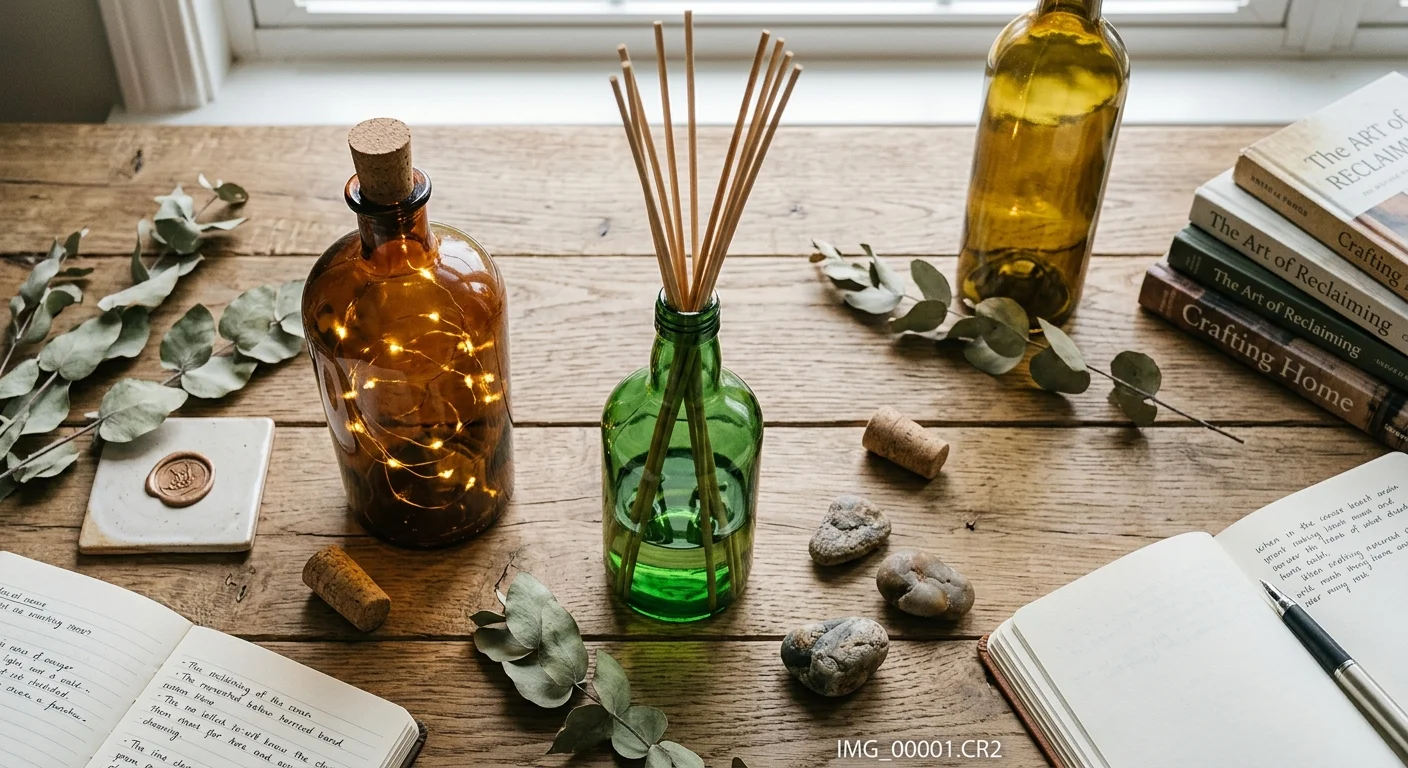
Glass ranks among the most recyclable materials on the planet — but recycling still burns energy, uses water, and requires transportation. Upcycling cuts all of that out.
Turn an empty whiskey bottle into a lamp or a planter. You’re not just being creative. You’re keeping that object in its highest-value form. Studies suggest that glass upcycling projects can reduce household glass waste by up to 40% compared to curbside recycling alone. That’s a real difference, even at the individual level.
So what makes liquor bottles stand out for DIY work?
- Thick, heavy-gauge walls — most spirits bottles are built to handle shipping and stacking. That durability carries over into home décor pieces that last for years.
- Heat resistance — the same glass that holds aged bourbon handles candle heat with no problem. That makes glass bottle lamp DIY projects safe and stable by design.
- Wide variety of shapes — from the broad shoulders of a scotch bottle to the slim taper of a gin bottle, you get a natural design library. No extra spending required.
Standard household Glass Jars don’t offer this combination. Pull bottles from your liquor cabinet and you’re working with premium raw material. The kind that holds its beauty for decades, not months.
That’s the real case for upcycling over recycling. Not guilt. Just good design sense.
How to Turn an Empty Liquor Bottle Into a Drinking Glass (Step-by-Step)
Cutting a Liquor Bottle into a drinking glass is one of those projects that feels almost too satisfying. You start with something headed for the bin. You end with something beautiful sitting on your table.
The process is simpler than most people expect. No fancy equipment. Just a glass cutter, water, and a little patience.
Best bottle shapes to start with:
Not every bottle cuts well. Shape matters more than you’d think. Two styles give you the best results:
- Baileys-style short round bottles — the low center of gravity and wide base make these solid and stable as glasses. They feel substantial in your hand.
- Tequila straight-sided bottles — the uniform cylindrical walls score and break with clean lines. That means less chipping and a smoother finished edge.
Skip bottles with heavy embossing or texture for your first attempt. Flat, smooth walls give you the most control.
Step-by-step cutting process:
Step 1 — Score the line. Use a handheld glass cutter to draw a single, continuous score line around the bottle at your desired height. Press firm and even. One clean pass is all you need. Going over the same line twice weakens the cut.
Step 2 — Apply thermal shock. This is where the bottle separates. Pour near-boiling water (around 90–95°C) over the score line, then follow with ice-cold water. Rotate the bottle as you pour. Repeat three to five cycles. The temperature contrast builds stress along the score line. The glass splits along that path.
Step 3 — Sand the rim. The cut edge will be sharp. Work through wet/dry sandpaper in stages — start at 80-grit to knock off any rough breaks, move to 150-grit, then finish with 220-grit for a smooth, lip-safe rim. Keep the sandpaper wet the whole time.
The whole process takes under 30 minutes once you’ve done it once.
A repurposed empty whiskey bottle or tequila bottle sitting on your dinner table as a custom glass? It’s one of those small details that tells a story without a word — and guests always ask about it.
How to Make a Liquor Bottle Candle (With Scent Customization Tips)
Candle-making inside a liquor bottle is one of the most beginner-friendly glass bottle upcycling projects you can try — and the results look surprisingly high-end.
The process is straightforward: clean the bottle, pour in melted wax, set a wick, let it cure. The details inside those steps are what separate a good candle from one that cracks, tunnels, or smells off. Here’s what really matters.
Choosing the Right Wax for Glass Containers
Wax type changes everything. This is especially true inside thick empty liquor bottles, where heat spreads differently than it does in thin-walled jars.
- Soy wax is the most forgiving choice for beginners. It shrinks a little as it cools. That gives you clean, even surfaces and fewer air pockets. It also burns at a lower temperature, which is a real plus inside a sealed glass container.
- Paraffin wax burns hotter and throws scent with more force — great for fragrance performance. The higher heat can stress the glass over time, though. Use it with caution in bottles with any chips or stress marks.
- Beeswax burns the longest and produces a warm, honeyed glow. The tradeoff: it pulls away from the glass more during cooling, often leaving a visible gap at the edges. Plan on doing a second top-up pour.
For most liquor bottle home decor candle projects, soy wax is the practical winner.
Scent Customization: Fragrance Oil Ratios + 3 Signature Blends
A general rule: add 6–10% fragrance oil by weight per 100g of wax. Start at 6% for your first pour and adjust from there. Going past 10% can stop the wax from curing the way it should.
Three blends worth trying:
- Woody — cedarwood + sandalwood + a hint of black pepper (ratio: 5:3:2)
- Floral — lavender + jasmine + ylang ylang (ratio: 4:4:2)
- Citrus — bergamot + sweet orange + lemongrass (ratio: 4:4:2)
Pour your wax at around 60–65°C for the cleanest finish. Let the candle cure for at least 48 hours before the first burn.
DIY Reed Diffuser Using an Empty Whiskey or Gin Bottle
A gin bottle makes a beautiful reed diffuser. The narrow neck controls how much scent releases into the room — it does the job well.
The diffuser liquid comes together in minutes. Combine a carrier oil (fractionated coconut oil or sweet almond oil both work well) with about one teaspoon of alcohol. This helps the scent travel up the reeds. Then add 20–30 drops of your favorite essential oil. That ratio keeps the fragrance balanced — present without being overwhelming.
Reed count matters more than most tutorials admit:
- Small bottle necks (≤2cm) — 4 to 6 reeds is the sweet spot. Crowd more in and you’ll burn through your diffuser liquid in a week.
- Wider openings — use fewer reeds, but wrap the neck with natural twine or jute rope. It looks intentional. Plus, it slows the evaporation rate at the same time.
Flip the reeds every few days to refresh the scent throw. That’s all the maintenance it needs.
The best part of using an empty whiskey bottle for this project? The amber glass filters light and makes the whole thing feel warm and polished. It looks like something from a boutique hotel bathroom, not a craft project. A tall, slim gin bottle leans more modern. Either way, you’re turning a beautiful piece of glass bottle upcycling into something your home uses every day.
Budget-Friendly Decorative Techniques (Dollar Tree Supplies Only)
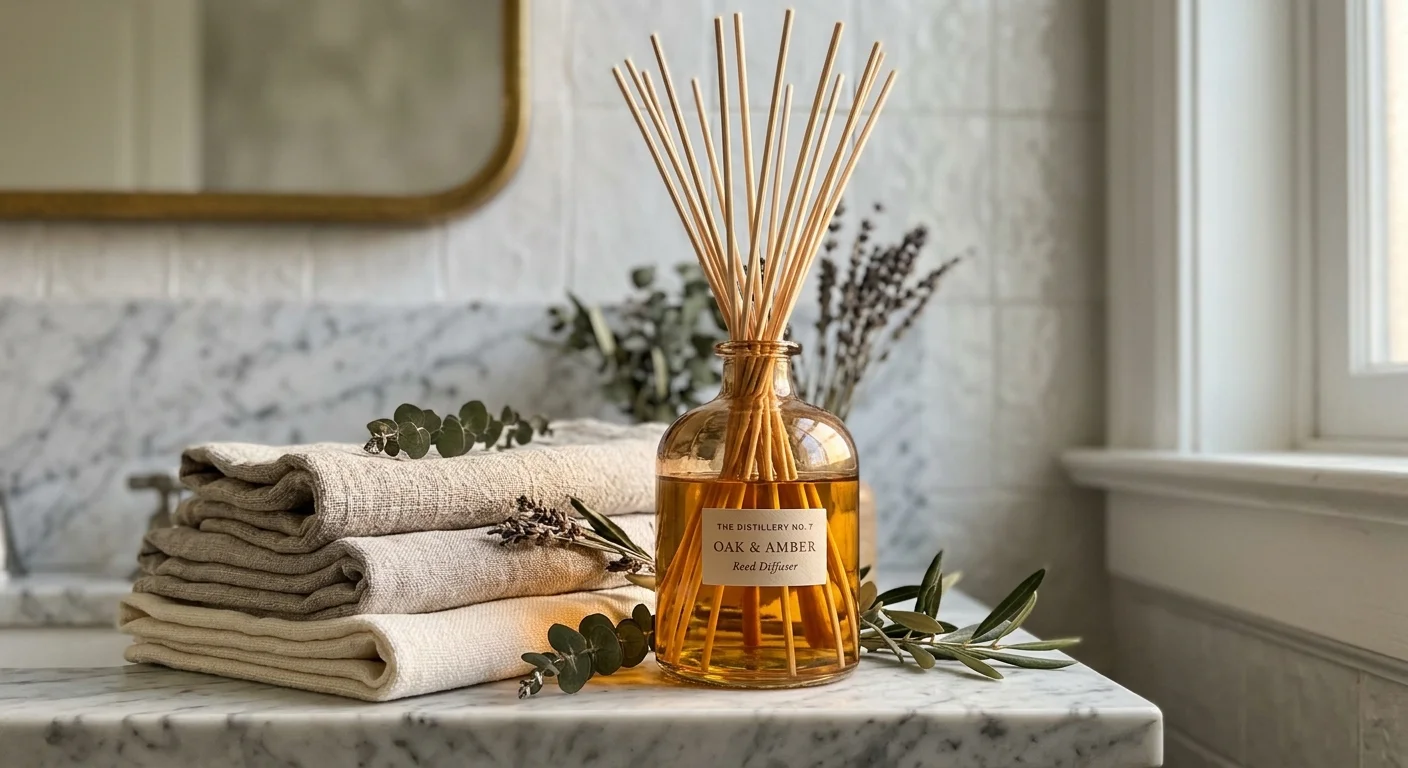
Five dollars. That’s all it takes to turn a plain Empty Liquor Bottle into something that looks like it came off an Anthropologie shelf.
Dollar Tree has everything you need for five different surface finishes — and each one gives you a totally different look. Here’s how they break down:
5 Surface Finish Techniques at a Glance
1. Sandy Matte Finish
Mix white acrylic paint with fine sand (or salt in a pinch). Brush it on in thin, uneven layers. You get a soft, coastal texture that sits well with liquor bottle home decor arrangements on open shelving.
2. Faux Ceramic (Baking Soda + Acrylic)
Stir baking soda into white acrylic paint until it turns thick and paste-like. Spread it on with a palette knife or an old credit card. Dry it out, sand it smooth, and it looks like real ceramic. This technique also photographs the best out of all five.
3. Hot Glue Texture
Use a hot glue gun to draw raised patterns on the bottle — geometric lines, abstract swirls, whatever feels right. Let it set, then paint over everything. The raised texture catches light in a way flat paint can’t. Great for glass bottle upcycling projects with a sculptural edge.
4. Rope-Wrapped Bohemian Style
Wind jute twine or cotton rope from base to neck, and lock it in place with craft glue. This is the most forgiving technique on the list. No painting, no drying time, and you can undo mistakes fast. The wrapped finish works well on tall, straight bourbon bottle reuse projects.
5. Clay Relief Appliqués
Press small pieces of air-dry clay onto the glass to build raised floral or leaf shapes. Smooth the edges with a damp fingertip. Let it dry, seal it with Mod Podge, then paint the whole bottle one unified color. The 3D detail makes it look handcrafted and intentional.
Pick one technique or stack two together. Either way, the bottle stops looking recycled — and starts looking designed.
Liquor Bottle Garden & Outdoor Decor Ideas (No Cutting Required)
Your garden already has good bones. A few empty bottles tucked into the right spots can take it from plain to polished — no cuts, no tools, no complicated steps.
Here are three ways to put those bottles to work outside.
Self-Watering Planters (The Upside-Down Trick)
Fill an empty liquor bottle with water. Cap it, flip it upside down, and push the neck a few inches into the soil. That’s the whole method. The bottle releases water as the soil dries out — a built-in drip system that holds up well through the week.
Best plant pairings for this setup:
- Succulents — low water demand makes them ideal partners for slow-release bottle planters
- Herbs like basil and mint — they do well with steady moisture. Group them in a liquor bottle planter cluster along a sunny patio edge or windowsill for a clean, functional display
Whiskey and bourbon bottles shine in this role. Their heavy base keeps things stable, and the amber glass adds warmth against green foliage.
Wind Chimes — No Crafting Experience Needed
Tie three to five whole bottles together with jute twine or nylon cord. Use varying lengths. Hang them from a tree branch or pergola beam. Glass on glass makes a soft, hollow sound as the wind moves through — nothing sharp or jarring.
Want more visual detail? Weave in a few pieces of sea glass or small shells between the bottles. The light hits each bottle at a different angle throughout the day. It changes the whole look without any extra effort.
Garden Border Markers
Press empty bottles neck-down into the soil along garden bed edges. Space them at equal intervals. Alternate colors or shapes as you go. You get a charming border that also helps define planting zones clearly.
Recycling alcohol bottles this way looks deliberate — not thrown together. Colored glass makes the biggest difference here. Deep green wine bottles and amber bourbon bottle reuse pieces placed side by side create a warm, layered feel. Plain plastic stakes can’t match that.
No cutting. No heat. Just good placement.
Where to Source Empty Liquor Bottles for Crafting (Beyond Your Bar)
Running out of bottles faster than you expected is a good problem to have — it means the projects are working.
Free and low-cost sources are easier to find than most people think. Local bars and restaurants set aside glass on a regular basis — a polite ask (and maybe a business card) goes a long way. Community recycling drop-off points are another overlooked spot. Glass often sits sorted and unclaimed there. Check Facebook Marketplace too: type “empty glass bottles” and filter by your zip code. People offload whole collections for next to nothing.
Buying pre-cleaned bottles makes sense if you’re working in volume. On Etsy, expect to pay around $3–6 per bottle for popular shapes — D’Ussé runs on the higher end, Baileys and Crown Royal sit in the mid-range. It saves cleaning time, and the condition is reliable. Running a small craft business or producing in batches? This route keeps quality consistent. No sourcing headache either.
For serious makers and businesses, there’s a smarter option out there.
Sourcing through a dedicated Glass Bottle Supplier — like TP Glass Bottle — gives you something free-sourcing can’t match: custom shapes, consistent sizing, branded finishes, and wholesale pricing. Building a candle line, a diffuser brand, or a boutique product? Starting with a bottle built for your product changes the outcome. A purpose-built bottle looks different from a repurposed one. You notice it in the weight, the finish, and the way it photographs.
Custom glass isn’t just for large manufacturers. Minimum order quantities have dropped a lot in recent years. That makes it reachable for small-batch makers who want their packaging to carry the same quality as what’s inside.
Conclusion
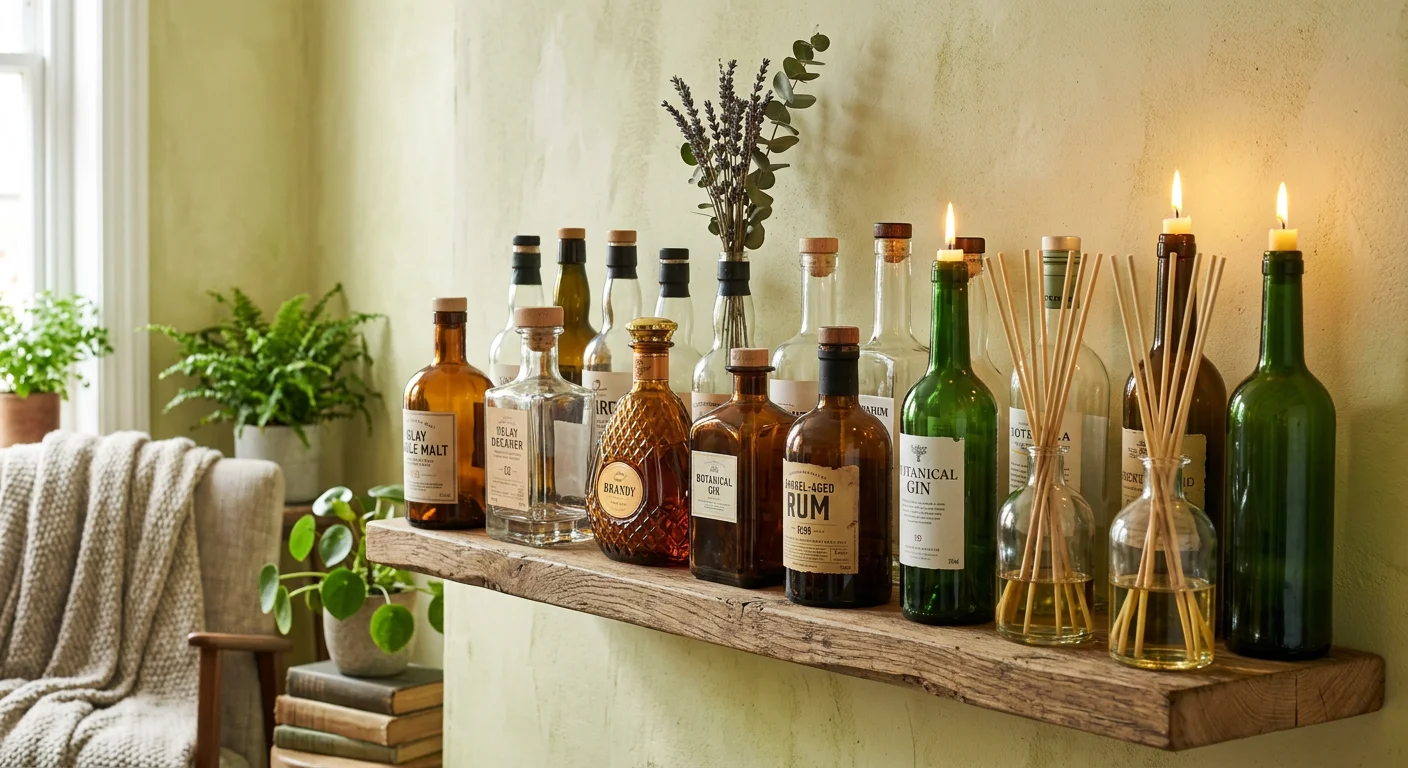
Empty liquor bottles have far more potential than simply being discarded or recycled. With simple DIY and upcycling ideas, they can be transformed into practical home decor, organizers, lighting, and more, adding both style and functionality to daily life. At TP Glass Bottle Manufacturer, we specialize in producing high-quality, durable, and beautifully designed liquor glass bottles that not only elevate your product packaging but also hold great potential for reuse and upcycling. Whether you are looking for standard liquor bottles or custom-designed glass packaging, we provide reliable solutions tailored to your brand needs.