

Nowadays, both consumers and businesses are placing increasing emphasis on sustainable, healthy, and eco-friendly daily products. As plastic waste becomes a growing concern, glass water bottles have emerged as a popular alternative due to their non-toxic, BPA-free properties and reusability. This buying guide is designed to walk you through the key factors to consider, helping you choose the perfect glass water bottle wholesale that meets your needs and resonates with your target customers.
Table of Contents
What Makes a Glass Water Bottle “Wholesale-Ready”: Key Quality Benchmarks
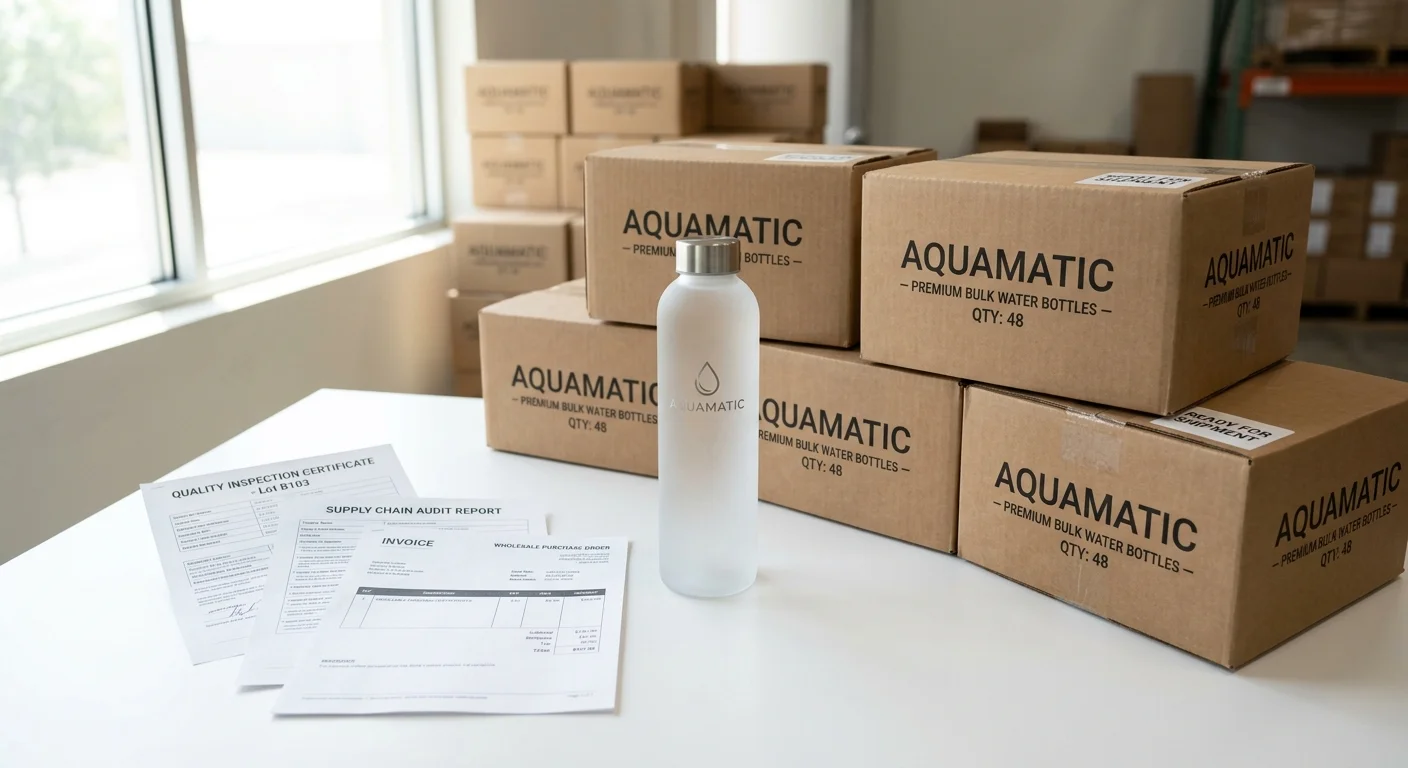
Not every glass bottle that looks premium performs like one at scale. This distinction matters more than most buyers realize. Place a 500-unit order with a 3% failure rate, and that gap bleeds straight into your margins — and your brand reputation takes the hit too. The single most important quality benchmark to nail down first? The glass composition itself.
Borosilicate vs. Soda-Lime: The Difference That Matters
Two types of glass dominate the wholesale water bottle market. You need to understand both. Every smart sourcing decision you make starts here.
Borosilicate glass is built for thermal resistance. It’s the same material used in lab equipment and high-end cookware. Pour boiling tea into a borosilicate glass water bottle, then set it on a cold countertop — nothing happens. No cracking. No stress fractures. No warranty claims flooding your inbox.
Soda-lime glass costs less to produce — 20–40% lower cost per unit at comparable MOQ levels. It’s also far more vulnerable to thermal shock. A temperature swing of just 50°F (10°C) can trigger micro-fractures. Those fractures won’t show up during inspection. They show up when a bottle breaks in a customer’s hand.
Here’s how that cost gap plays out in practice:
- Borosilicate: Higher upfront unit cost, lower return rates, stronger durability claims, better for premium retail positioning
- Soda-lime: Lower unit cost, higher breakage risk, better suited for ambient-temperature use cases like infused water or room-temperature hydration products
Here’s the real problem: suppliers regularly label soda-lime bottles as borosilicate on spec sheets. It’s more common than you’d expect. To verify the claim, request third-party material testing documentation. Or run a thermal shock stress test on samples before you commit to volume. Both steps are worth doing.
A real wholesale-ready glass water bottle passes that test. No back-and-forth needed. The spec sheet confirms what the product already proves.
That’s the benchmark worth holding suppliers to.
Choosing the Right Capacity and Size Range for Your Wholesale Lineup
Capacity decisions look boring on paper. In reality, they’re one of the fastest ways to accelerate sell-through — or silently kill your inventory turns.
The four sizes that dominate commercial wholesale orders for glass water bottles — 12 oz, 16 oz, 20 oz, and 32 oz — are not interchangeable. Each one serves a distinct buyer, a distinct retail channel, and a distinct use case. Stock them as if they’re equal and you’ll end up overstocked on a size that barely moves in your market.
Match Size to Channel — Not Just Consumer Preference
Here’s how the data breaks down across retail segments:
- 12 oz: Strong performer in gift retail, children’s wellness, and premium café settings. Lower price point per unit — easier impulse purchase for end consumers
- 16 oz: The workhorse size. It crosses over well into gym retail, office supply channels, and everyday hydration. Sell-through rates stay consistent across most wholesale accounts
- 20 oz: Leads in outdoor and fitness-focused retail. Buyers here are not browsing — they know what they want and they’re replacing something they already use
- 32 oz: Moves slower, but holds strong in wellness subscription boxes, health food retail, and bulk hydration-focused segments
Build your opening wholesale lineup around 16 oz as your anchor SKU. Add one adjacent size based on your primary channel. Don’t stock all four at once until you have real sell-through data to back the inventory commitment.
The Dimension Problem Nobody Talks About
Size doesn’t just affect the end consumer. It hits your freight economics too.
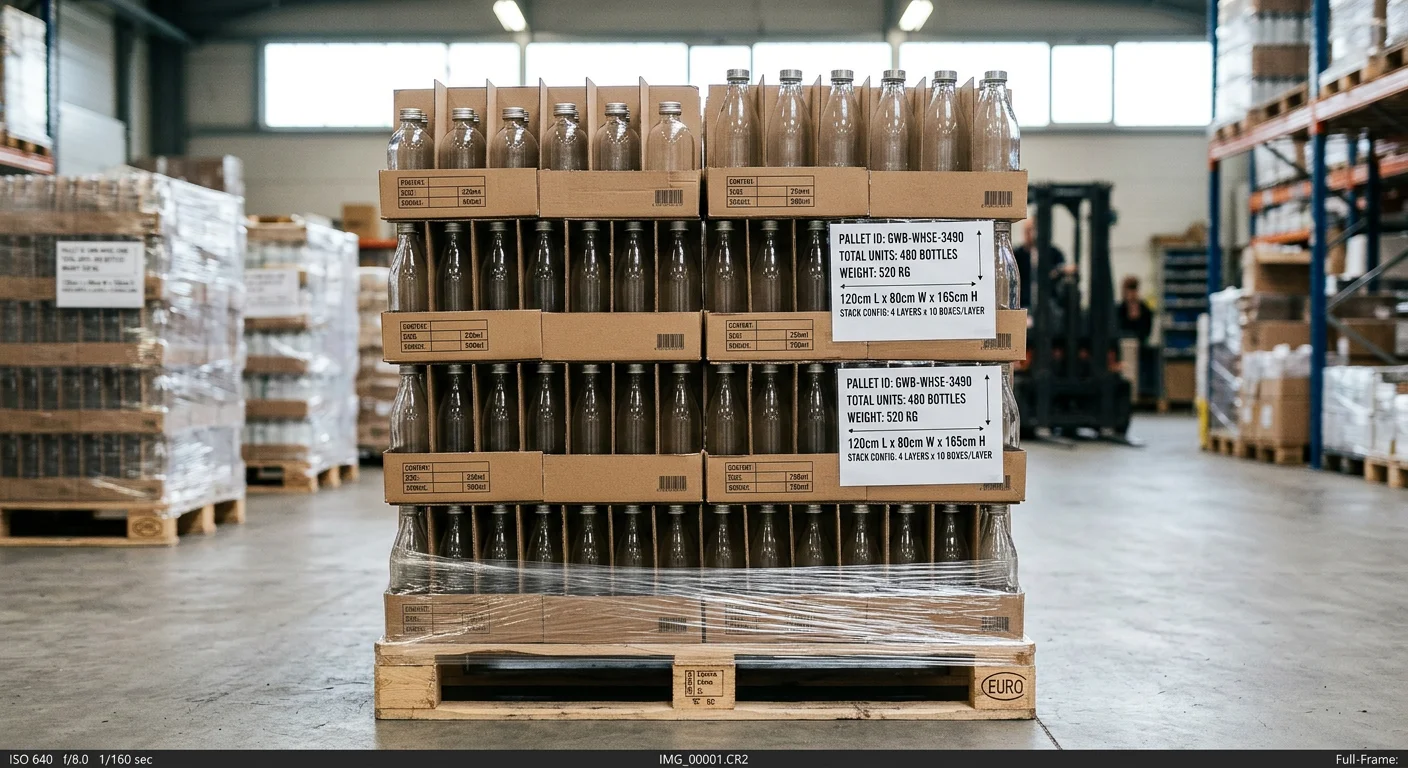
Taller, narrower bottles — common in 32 oz formats — reduce pallet loading efficiency. You end up paying for cubic space you’re not using. Shorter, wider profiles stack better and load denser. At volume, that gap matters. Freight costs run per pallet, not per unit.
Before you lock in your size mix, request dimensional specs alongside unit pricing. Run a quick pallet configuration estimate. The freight savings from a better-loading size often cover the cost difference between size variants — sometimes in full.
Evaluating Caps, Seals, and Lid Systems at Wholesale Scale
The lid is the last thing most buyers think about. It’s also the first thing that fails.
At wholesale scale, a weak seal doesn’t just create a leaky bottle. It creates a return, a refund request, and a customer who tells three people why they’ll never buy from your brand again. The lid system you choose is a margin decision as much as a design decision.
Here’s what that looks like across the four lid types that lead the glass water bottle wholesale market:
Matching Lid Type to Use Case — and Margin Strategy
Flip-top lids are built for convenience. One-handed use, fast open-close cycle, strong appeal in gym and commuter retail. The tradeoff is the hinge. Hinge mechanisms wear out over time. At volume, that wear shows up as warranty claims — around the 6–9 month mark after purchase. So before you commit to flip-tops, ask for hinge durability test data. Don’t sign off without it.
Straw lids are big right now, especially in wellness and lifestyle retail. They photograph well. They sell well to younger buyers. Plus, they carry a slight price premium that’s easy to pass on to the end customer. The weak point is the straw seal junction — that’s where leaks start. Ask suppliers how that junction is reinforced. Get a direct answer, not a vague one.
Bamboo caps are the positioning play. They signal sustainability. They support premium price points — sometimes 15–25% higher than equivalent bottles with standard caps. The catch is bamboo is a natural material, and natural materials vary. Uneven finishing across a bulk order will kill the premium look you’re paying for. Check sample batches in detail before placing a full order.
Stainless screw caps are the workhorse option. Durable, easy to clean, solid seal integrity across temperature ranges. You don’t get the lifestyle premium that bamboo brings. But these caps hold up — and in wholesale, consistent performance beats aesthetic novelty nearly every time.
One principle applies across all four: never evaluate a lid on its own. Test it on your actual bottle sample. Fill it, flip it upside down, and check it at both cold and warm temperatures. The seal you see in a product photo means nothing. Real-condition performance is the number that matters.
Customization Options That Drive Real Brand Value
Customization is where most wholesale buyers either build a real brand asset — or burn budget on options that look great in a supplier’s catalog and do nothing on a retail shelf.
The gap between those two outcomes comes down to one thing. You need to know which customization options are available at your MOQ level. Some options require volume commitments your first order simply can’t support.
Here’s a clear breakdown of what’s accessible, and at what scale.
What You Can Get — and When
Logo engraving is the most durable branding option for a glass water bottle. The laser etches straight into the glass surface — it won’t peel, fade, or wear off in a dishwasher cycle. Most suppliers offer this starting at 300–500 units. Below that threshold, per-unit setup costs eat your margin fast. At 500+ units, engraving becomes one of the most cost-effective brand moves in the entire product category.
Frosted finishes work on a different level. A full-body acid-etch or sandblast treatment changes how the bottle feels in your hand — matte surface, softer grip, higher perceived value. Retail buyers notice it. End consumers notice it. This option starts at 500 units minimum. It can justify a 10–20% retail price premium with no extra brand storytelling needed.
Color sleeves — silicone or neoprene wraps over the bottle body — are the easiest entry point for customization. Many suppliers offer them at 150–200 unit minimums. They protect the glass, add grip, and give you a full-color branding surface. The tradeoff is durability. Sleeves can slip, stretch, or break down faster than the bottle itself. Use them as a feature, but test durability before you build your brand identity around them.
Custom packaging lifts the value of every other option on this list. A printed box or branded kraft sleeve doesn’t change the bottle — but it changes the unboxing moment. That moment drives social sharing, repeat purchases, and gifting behavior. Most suppliers require 500+ units for custom box tooling. Plan for it from order one, even if you roll it out later.
One Rule That Covers All of It
Don’t treat customization as decoration. Every option you pick should tie straight to your channel strategy. Frosted engraving reads one way in a premium spa retail account. It reads a completely different way in a gym membership gift program. Match the customization to the context. Do that, and you’re no longer just selling a glass water bottle. You’re building a product your buyers can’t swap out for someone else’s.
MOQ Strategy: How to Negotiate Minimums That Match Your Cash Flow
MOQ is the number suppliers quote first and explain last. What sits behind it shapes every wholesale conversation you’ll have.
The minimum order quantity a supplier gives you isn’t arbitrary. It reflects their production economics — setup costs, raw material batching, kiln runs, and labor allocation. Understand that, and you stop treating MOQ as a wall. You start treating it as a variable.
Trading Company vs. Direct Manufacturer: The MOQ Gap Is Real
Where you source from sets your starting position before you say a word.
Trading companies start at 300–500 units per SKU. They pool orders across multiple buyers and spread factory minimums across that group. The tradeoff is markup — you pay for their margin layer on top of production cost.
Direct manufacturers open at 500–1,000 units, sometimes higher for custom specs. The per-unit cost drops at volume, but the upfront commitment is steeper. On a first order for an unproven SKU, that’s real cash flow exposure.
Here’s the move most buyers miss: use a manufacturer’s pricing tier structure to push a trading company’s MOQ down. Walk into that trading company conversation with a manufacturer’s quote in hand. That quote shifts the dynamic fast. You’re no longer asking for a favor — you’re a buyer with a benchmark.
Three Levers That Move MOQ
Negotiating minimums isn’t about pushing back harder. It’s about giving suppliers a clear reason to say yes.
Commit to a reorder timeline. Show a supplier a 90-day reorder commitment and they have a business reason to cut your opening minimum. You’re not a one-time buyer — you’re a recurring revenue line. That shifts how they weigh the risk.
Consolidate SKUs into one order. Instead of 300 units across three different glass water bottle sizes ordered separately, negotiate 900 units split across those sizes in one order. Total volume hits their threshold. Your per-SKU commitment stays manageable.
Offer faster payment terms. Net-30 is standard. Move to a 50% deposit with full payment on shipping, and some manufacturers will drop their MOQ floor by 20–30%. Faster cash in their cycle has real value to them.
The Sample Order as a Negotiation Tool
Before committing to volume, request a sample order — 5–10 units of your target glass water bottle configuration. Use that conversation to test for flexibility. Ask straight: “What would the MOQ look like if we moved into production within 60 days?” You’ll learn more about a supplier’s real floor from that one question than from three rounds of back-and-forth email.
Ready to put this into practice? Get a Wholesale Quote to open a conversation with verified manufacturers who work within your volume range.
Conclusion
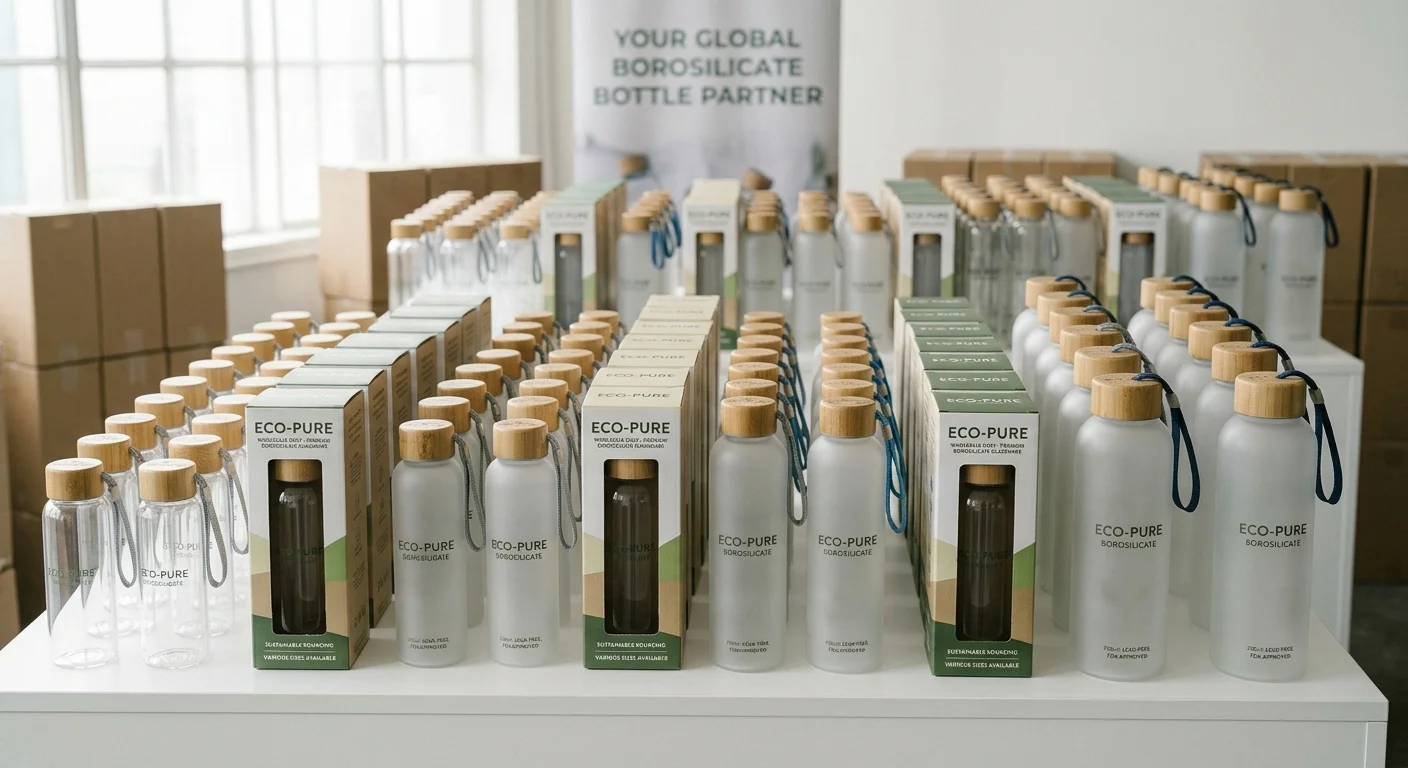
By focusing on these key points, you can avoid common pitfalls and select wholesale glass water bottles that align with your brand positioning and market needs. Sourcing the right glass water bottle at wholesale isn’t just a procurement decision — it’s a brand decision.
As a professional TP Glass Bottle Manufacturer with years of experience in the industry, we are committed to providing high-quality, cost-effective glass water bottles for wholesale partners. Our factory adheres to strict quality control standards from raw material selection to production, ensuring each bottle is non-toxic, durable, and safe for daily use. We also offer flexible customization services, supporting personalized designs, logo printing, and size adjustments to meet your specific business requirements. Feel free to contact us for a detailed quote and more information about our wholesale services.