

Vintage Green Glass Bottles remain a popular packaging choice for business buyers across cosmetics, beverages, and home goods. This expert buying guide covers the essential factors to consider when sourcing these bottles for commercial use, helping you make smart, practical purchasing decisions for your brand. Finalizing packaging for a product launch? Vetting manufacturers for an OEM project? Benchmarking pricing tiers? You’ll walk away with a clear framework for making faster, smarter sourcing decisions.
Table of Contents
What Are Vintage Green Glass Bottles? Definition, Color Origins
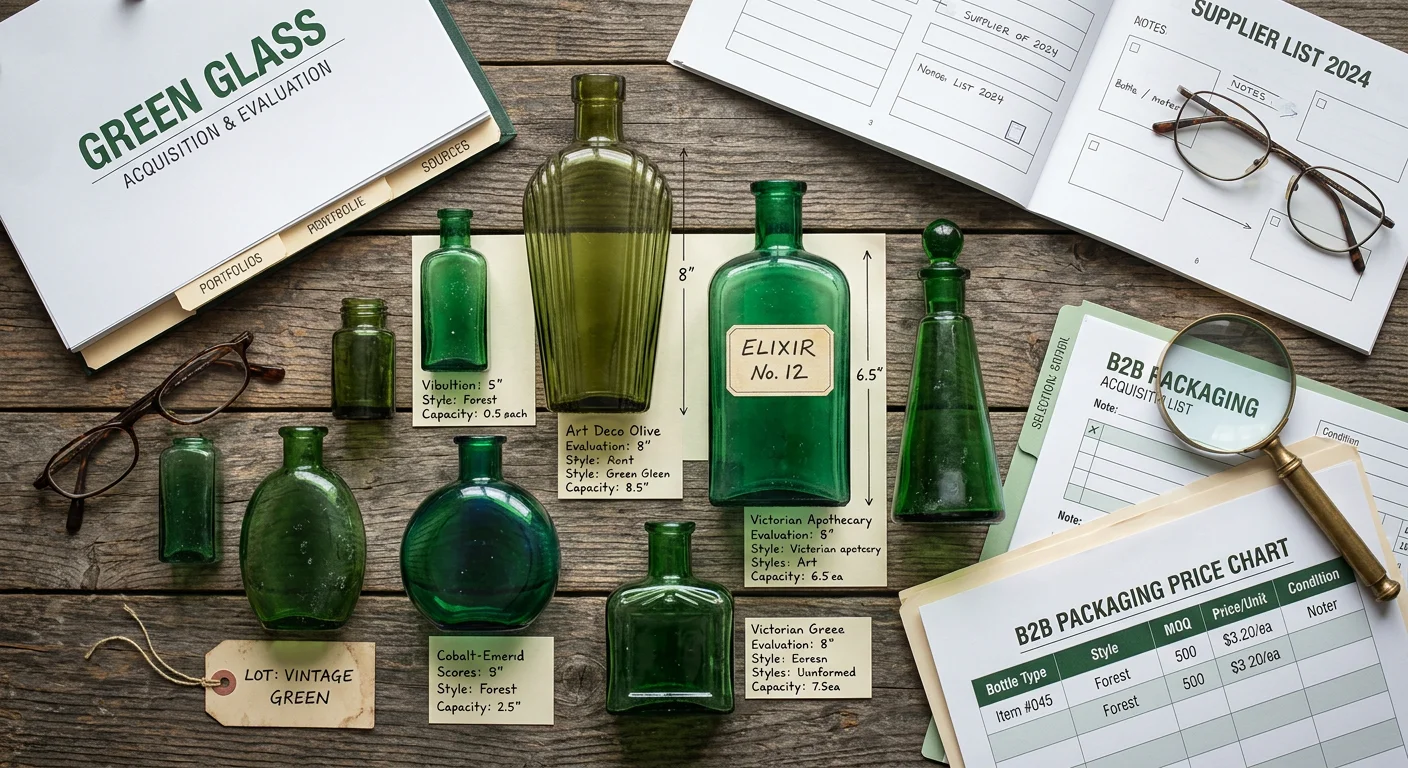
“Vintage green glass bottle” isn’t a single product. It’s a category that covers several distinct color profiles, each with different market positioning.
Three main color families define this segment:
- Emerald green — a deep, jewel-toned green tied to premium spirits and apothecary aesthetics
- Olive green — a muted, earthy tone that feels artisanal and Mediterranean; common in olive oil and natural skincare packaging
- Forest green — darker and more neutral, a go-to choice for wine and botanical product lines
The color comes from iron and chromium oxide compounds added during glass production. At first, this wasn’t about looks — it was practical. Green glass blocks UV light. This protects light-sensitive contents like wine, beer, and herbal extracts. Over time, that function became part of the brand identity.
The “vintage” label refers to design style, not actual age. It points to hand-blown proportions, embossed lettering, irregular silhouettes, and a heavy base — visual cues that consumers link to craft and authenticity.
That connection carries real commercial weight. McKinsey’s 2023 consumer sentiment data shows products positioned as “artisan” or “heritage” command price premiums of 15–25% over standard packaging. For B2B buyers, the bottle isn’t just a container — it’s a measurable margin driver.
Style Classification Guide: Victorian, Apothecary & Art Deco Green Glass Bottles
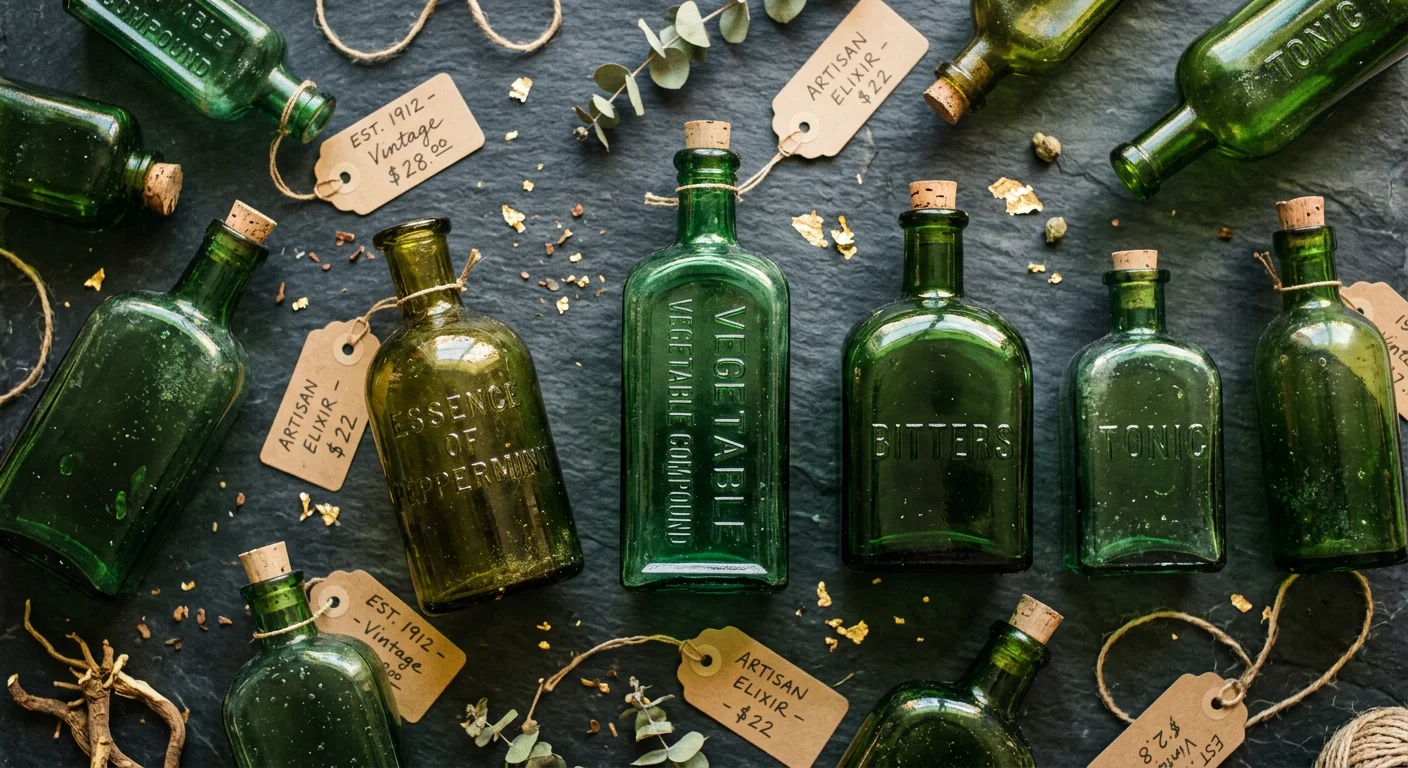
Vintage green glass isn’t one style — it’s at least three. Pick the wrong one, and you send the wrong signal to your customer.
Each era has its own visual language. Each one also maps to a specific brand position. Here’s how to match them.
Victorian (1837–1901): Heritage and Craft Credibility
Victorian bottles have tall, narrow necks, rounded shoulders, and deep embossed lettering. Decorative reliefs are pressed right into the glass. The silhouette looks handmade — even when it isn’t.
Best fit: Small-batch spirits, craft gin, heritage beer labels, artisan preserves.
The brand logic here is authenticity. Victorian styling tells customers that your product has a story, a history behind it. Your brand uses words like “traditional,” “handcrafted,” or “small-batch”? This era carries that message on the shelf — before a customer reads a single word of copy.
Apothecary (Late 19th–Early 20th Century): Clean Authority
Apothecary green glass bottles are straighter and more functional. Flat panels, minimal decoration, cork or dropper finishes. The shape feels precise and clinical — but in a premium way.
Best fit: Natural skincare, herbal extracts, CBD oils, botanical wellness brands.
This style works because it pulls credibility from science. It tells the customer: this product was formulated, not just made. For natural beauty and wellness brands, that difference has real commercial weight. It can shift how customers justify the price and trust the formula.
Art Deco (1920s–1930s): Modern Premium
Art Deco bottles are geometric. Angular shoulders, symmetrical facets, and structured lines take the place of the organic curves from earlier eras. The look is sharp and deliberate.
Best fit: Premium spirits, luxury olive oil, high-end fragrance.
The positioning is aspirational. Art Deco packaging shows sophistication without leaning on nostalgia — it feels vintage in construction, yet contemporary in feel. Brands targeting upscale retail or gift markets tend to land on this profile. The geometry reads as intentional luxury, which is exactly what those buyers respond to.
How to Choose
| Style | Visual Cue | Brand Positioning |
|---|---|---|
| Victorian | Embossed, rounded, ornate | Heritage, craft, storytelling |
| Apothecary | Flat panels, minimal, functional | Natural, scientific, wellness |
| Art Deco | Geometric, angular, structured | Luxury, aspirational, modern premium |
The right style isn’t the one you like most. It’s the one your target customer recognizes and trusts the fastest.
Application-Specific Selection: Which Vintage Green Glass Bottle Style Fits Your Product
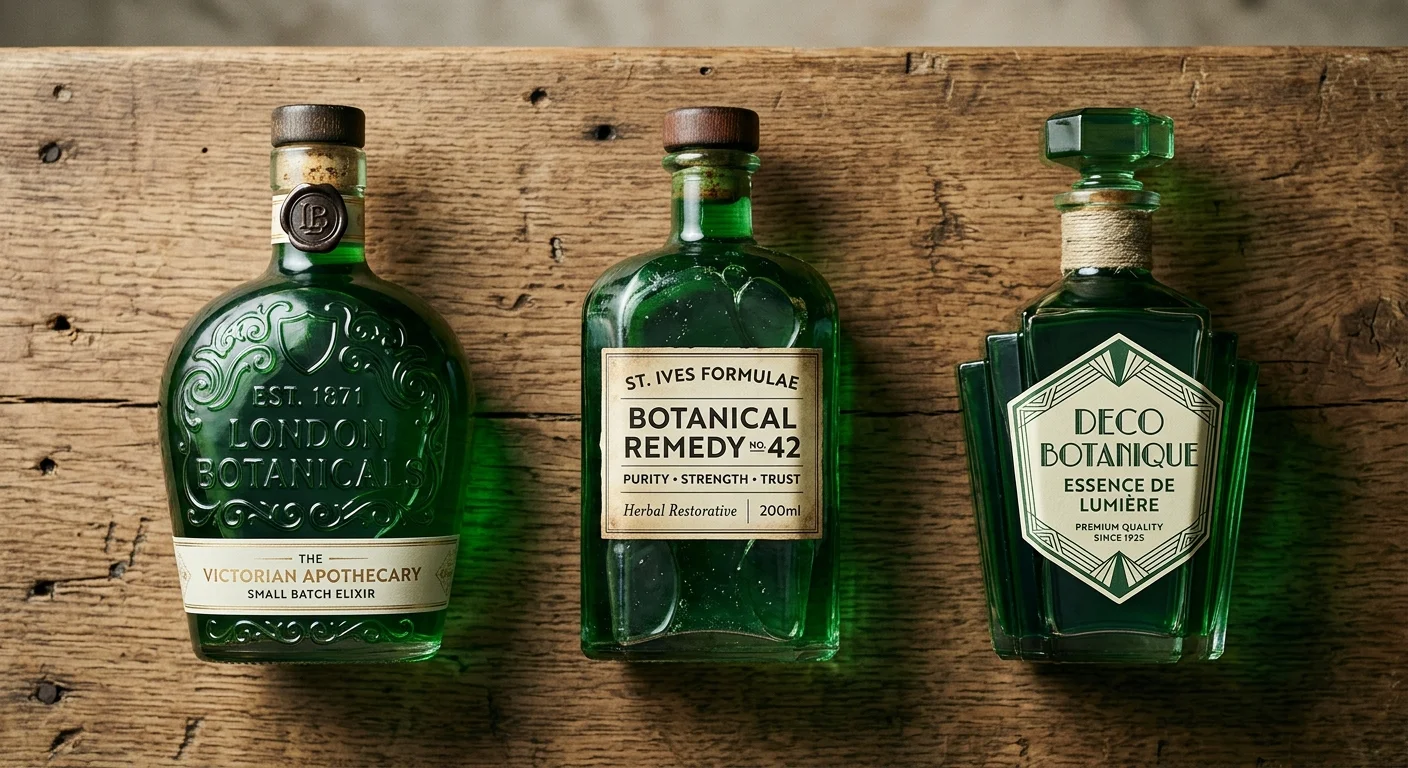
Style classification is the starting point. Application is where the real decision happens.
The same emerald green bottle that works for a craft gin label can ruin the shelf presence of a botanical face serum. Format, volume, and finish must match how your customer shops — and what they expect to pick up.
Here’s how it breaks down by category.
Spirits & Wine: 750ml Victorian and Apothecary Formats
For premium spirits and wine, 750ml is the standard. It’s what buyers expect. Go outside that size and you create friction at retail and with distributors.
Within that standard, bottle design does the heavy lifting. Victorian formats — tall necks, rounded shoulders, embossed detailing — create an instant sense of age and scarcity. The visual weight tells customers this product was made in limited quantities with real care. That perception directly affects what they’re willing to pay.
Apothecary-style spirits bottles take a different approach. Flat panels and clean surface design project precision and purpose. This format works well for gin, botanical spirits, and small-batch whiskeys where the formula itself is the brand story.
For green wine bottles vintage formats, olive green and forest green glass are the most recognized colors in the category. These shades carry over a century of buying habits behind them — customers link those colors to wine without thinking twice.
Olive Oil & Craft Beer: 500ml–1L, Shelf Conversion
In food retail, the decision happens fast. Olive oil and craft beer buyers scan shelves. They don’t study labels.
Forest green and olive green glass bottles in the 500ml–1L range beat clear glass alternatives in premium positioning. The color signals naturalness and origin — two qualities olive oil and craft beer buyers are looking for.
For olive green glass bottles used in artisan olive oil packaging, a wider base and shorter neck improves pourability and shelf stability. Both details matter to retail buyers checking your product specs.
For craft beer, the 500ml Victorian-profile bottle adds a “heritage brewery” feel. That signal supports higher price points at independent retailers and specialty grocery stores.
Beauty & Skincare: 50–250ml Apothecary Formats
Apothecary green glass bottles have seen the sharpest growth in DTC skincare brands. The “luxe nostalgic” look — clean lines, dark glass, minimal labeling — has become the go-to visual style for natural and premium skincare.
In practice, this means:
- 50–100ml formats with dropper caps for serums, facial oils, and tinctures
- 100–250ml formats with pump or cork finishes for cleansers and botanicals
- Narrow-neck construction that keeps dropper cap compatibility across most standard fittings
Several DTC skincare brands have used this packaging format to set price points 30–40% above comparable products in plastic or clear glass. The bottle sends a clear message — what’s inside is worth protecting, and worth paying for.
One spec to confirm with your supplier: check the inner neck diameter before locking in a dropper or pump SKU. A mismatch at this stage is a sourcing problem that’s easy to avoid and hard to fix later.
Supplier Evaluation Framework: How to Qualify a Vintage Green Glass Bottle Manufacturer
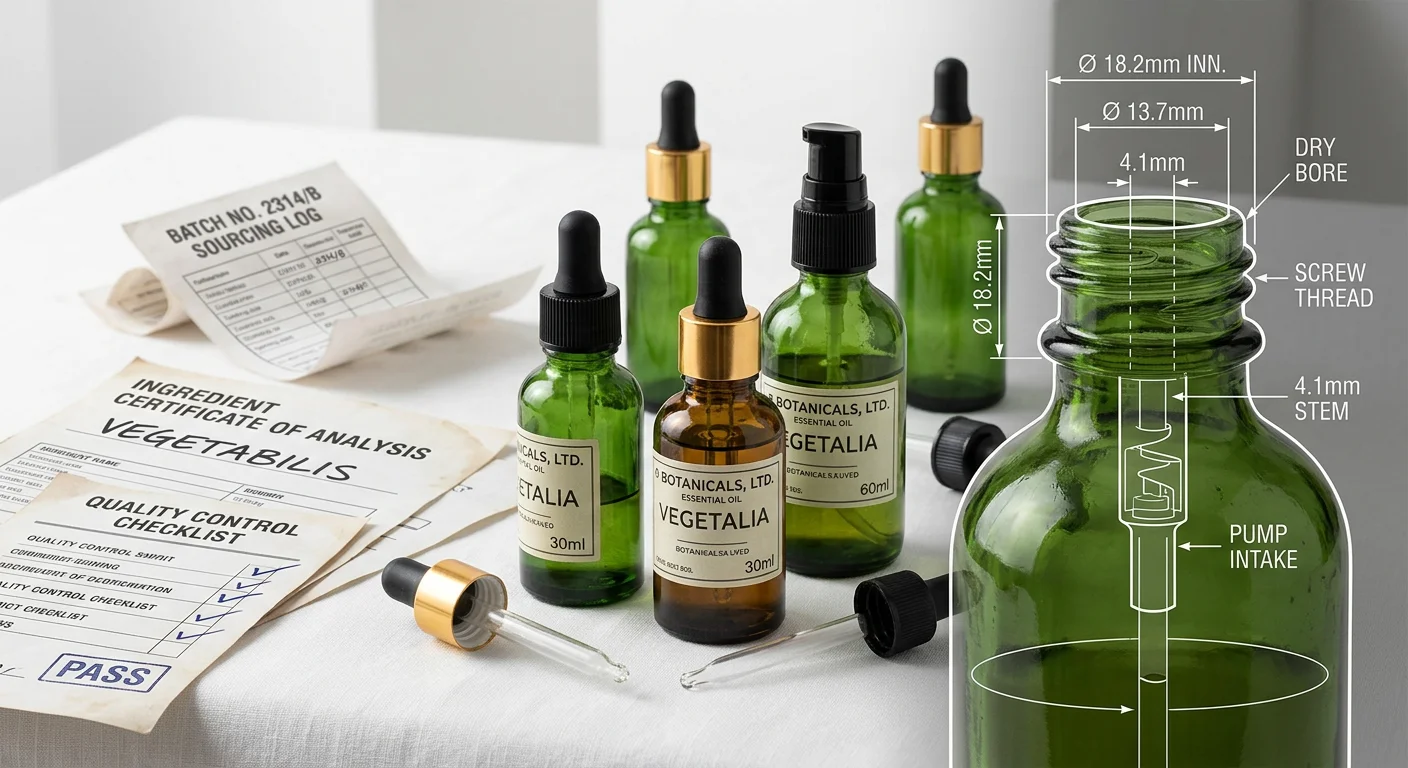
Most sourcing mistakes happen before the first sample arrives. The wrong supplier doesn’t fail on quality — they fail on timelines, mold specs, or a dropper cap that doesn’t fit. Qualifying a manufacturer before you commit covers all of that.
Here’s the framework that matters.
OEM/ODM Capability: What to Ask Before You Sign Anything
Developing a custom shape or adding embossed branding? These four questions separate capable manufacturers from ones that will slow you down:
1. What is your custom mold development timeline?
Standard is 45–60 days for a new mold. A supplier quoting under 30 days — ask for documented case references. A quote over 75 days needs to go straight into your launch schedule.
2. What is the mold fee structure?
Mold costs range from $800–$3,500 USD depending on complexity. One-time fees are standard. Confirm ownership upfront. Some suppliers retain mold rights. That creates real problems if you switch factories later.
3. What closures does your bottle neck finish support?
Cork, dropper, screw cap, and bar top closures each need different neck diameters. Get this spec confirmed in writing before locking in any shape. A mismatch found after production costs a lot to fix.
4. How do you verify actual production capacity?
Ask for a factory video walkthrough. In-person auditing isn’t always possible, so video is the next best option. Look for furnace scale, annealing lehr length, and QC station setup. A real manufacturer shares this without pushing back.
China vs. EU Suppliers: The Real Trade-Offs
Both regions produce quality vintage green glass bottles. Your decision comes down to what you’re optimizing for.
| Factor | China Suppliers | EU Suppliers |
|---|---|---|
| Unit pricing | 20–40% lower on average | Higher, with small runs costing more |
| MOQ | 500–3,000 units typical | Often 1,000–5,000+ |
| Custom flexibility | High — shape, emboss, color | Moderate — more standardized lines |
| Lead time | 45–75 days (sea freight) | 30–50 days, more predictable |
| Certifications | Varies — verify per factory | Consistent across most factories (ISO, REACH) |
For B2B buyers sourcing hand blown green glass bottles or apothecary green glass bottles at scale, Chinese manufacturers offer the strongest mix of price and customization range.
How to Find and Filter Suppliers
On Alibaba, search “vintage style glass bottle manufacturer” — not “supplier.” Manufacturer listings give you direct factory pricing. Filter by Trade Assurance and Verified Supplier status as your starting point.
Then move off-platform. Request the factory’s business license, export records, and at least two client references in your product category. A supplier who can’t pull these together fast is worth skipping.
One more check: ask directly whether they stock your target green glass color as a standard run or need a custom batch. Standard color runs cut your lead time and lower your minimum order risk by a wide margin.
MOQ, Pricing Tiers & Commercial Terms: What Business Buyers Need to Know
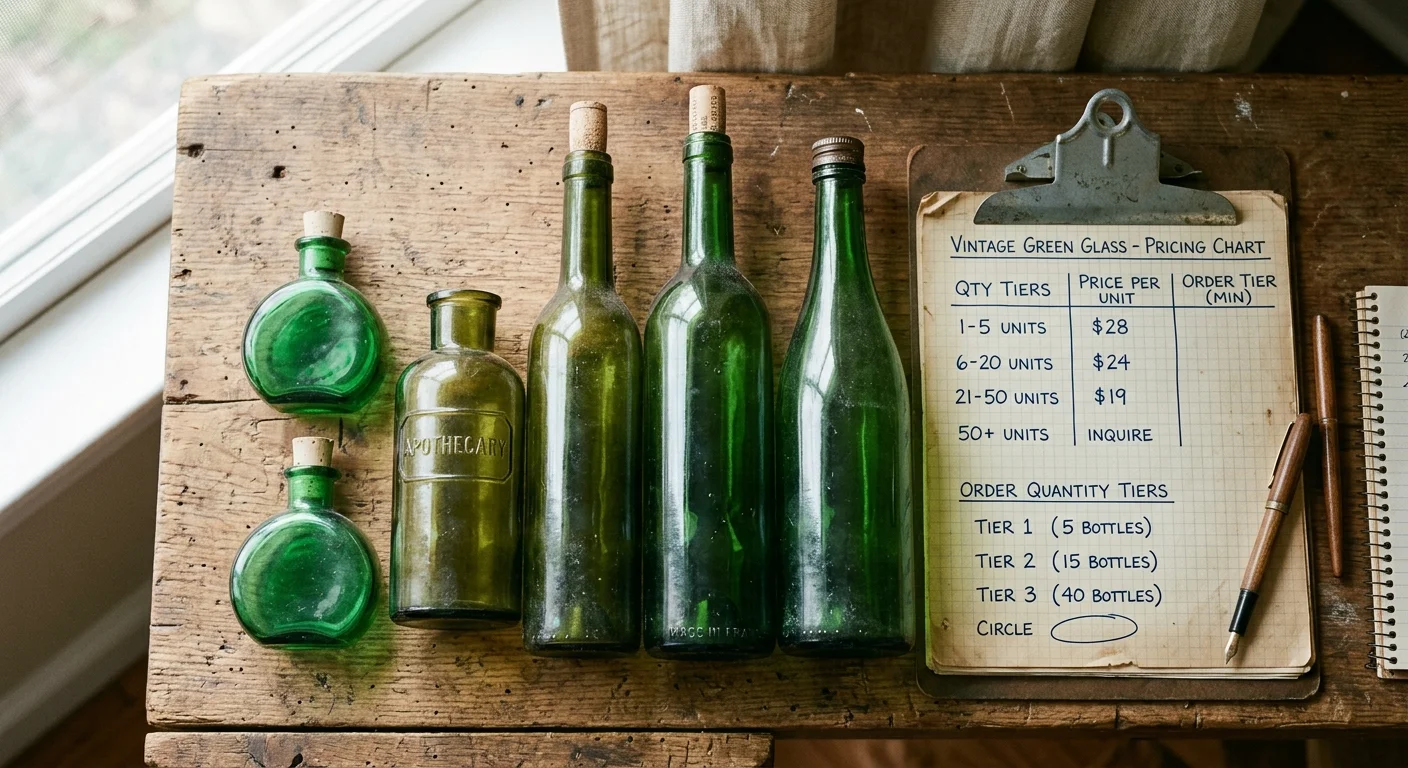
Pricing for vintage green glass bottles follows a predictable structure. You just need to know what drives it.
Most manufacturers set standard MOQs between 10,000 and 30,000 units per SKU. That’s the market baseline. A few factories will go lower for stock shapes. But anything under 5,000 units means paying a premium per unit. That premium eats into your packaging margin fast.
Here’s how the numbers break down.
Volume Pricing: The Batch Discount Curve
Glass bottle pricing drops fast as volume climbs. The jump from 10,000 to 30,000 units is not a straight line — that’s where most of the cost reduction happens.
| Order Volume | Typical Unit Price Range (USD) |
|---|---|
| 5,000–10,000 units | $0.85 – $1.40 |
| 10,000–30,000 units | $0.55 – $0.90 |
| 30,000–100,000 units | $0.35 – $0.60 |
| 100,000+ units | $0.22 – $0.40 |
These ranges cover standard emerald green glass bottles and olive green glass bottles in common formats (250ml–750ml). Hand blown green glass bottles or designs with deep embossing land at the higher end of each band.
So here’s the practical read: orders below 10,000 units are sampling runs. Build your real unit economics on 30,000+ projections.
Custom Add-Ons: Where Costs Accumulate
The base bottle price is just part of the total. Custom work adds cost in clear, predictable steps:
- Custom mold (new shape): $800–$3,500 one-time fee, spread across production runs
- Embossing or relief detail: +$0.05–$0.15 per unit based on complexity
- Non-standard green color batch: +$0.08–$0.20 per unit vs. standard stock colors
- Specialty closures (bar top, wax-dip compatible, cork-graded neck): +$0.10–$0.30 per unit
Apothecary green glass bottles and Art Deco formats with geometric faceting carry both a mold fee and a per-unit emboss surcharge. Plan for both costs from day one.
Payment and Lead Time Terms
Most verified manufacturers use these standard commercial terms:
- Payment: 30% deposit, 70% balance before shipment — T/T is most common
- Production lead time: 35–60 days after deposit and artwork approval
- Sampling: 7–15 days for stock shapes; 30–45 days for custom molds
One smart move: negotiate a blanket order for high annual volume commitments. Lock in the per-unit price at your target volume tier. Then release shipments in smaller batches. You get 100,000-unit pricing without moving all that inventory at once.
Top Questions from Business Buyers Sourcing Vintage Green Glass Bottles
These questions come up in almost every sourcing conversation. Straight answers only.
Q: What’s the minimum order quantity for vintage green glass bottles in bulk?
Most manufacturers set MOQs at 10,000–30,000 units for standard stock shapes. Some factories drop to 3,000–5,000 units for smaller entry points — but the per-unit cost goes up. For antique green glass bottles wholesale orders, staying above 10,000 units is where pricing makes commercial sense.
Q: Can I get embossed green glass bottles OEM with my own logo or shape?
Yes. Most qualified manufacturers offer full OEM/ODM capability. Custom mold fees run $800–$3,500, depending on complexity. Production starts after mold approval — 45–60 days from that point. Get mold ownership confirmed in writing before you sign anything.
Q: How do I verify a supplier manufactures glass bottles versus just trading?
Ask for a factory video walkthrough, export records, and two client references in your product category. Real manufacturers share all of this without hesitation. Trading companies often can’t produce any of it.
Q: Are recycled green glass bottles available for sustainable packaging projects?
Yes. Some manufacturers offer recycled glass content options — 30–70% post-consumer recycled material is the common range. Pricing sits close to virgin glass at volume. Ask for PCR glass certification if sustainability claims matter for your brand.
Q: How long does sampling take for custom apothecary or Art Deco bottle shapes?
- Stock shape samples: 7–15 days
- Custom mold samples: 30–45 days
Build both timelines into your launch schedule before you lock in a supplier.
Q: What’s the typical lead time for green glass bottles bulk production?
35–60 days after deposit and artwork approval for standard runs. Add 15–25 days for sea freight on top of that for international shipments.
Need samples or a custom quote? Reach a verified manufacturer with your volume requirements, target format, and closure type — that gets you accurate pricing faster than any other route.
Conclusion
Choosing the right vintage green glass bottles means balancing aesthetic appeal, durability, UV protection, and commercial usability — all key points covered in this guide to help business buyers source effectively.
At TP Glass Bottle Manufacturer, we work with brand owners and wholesale buyers on custom vintage glass packaging. Our team handles everything — from initial shape selection to OEM embossing and closure configuration.
Your brand deserves packaging that does the selling. Let’s build it together.