

Your packaging is often the first thing a customer touches — before they ever taste, smell, or use what’s inside. That moment carries more weight than most brands give it credit for. Custom glass containers have become a key choice for businesses looking to stand out in the market, whether for food, beverages, cosmetics, or other products. This ultimate guide is designed to walk you through everything you need to know about custom glass containers—from understanding the basics of customization to making informed decisions that align with your brand and product requirements.
Table of Contents
What Are Custom Glass Containers? Types & Industry Applications
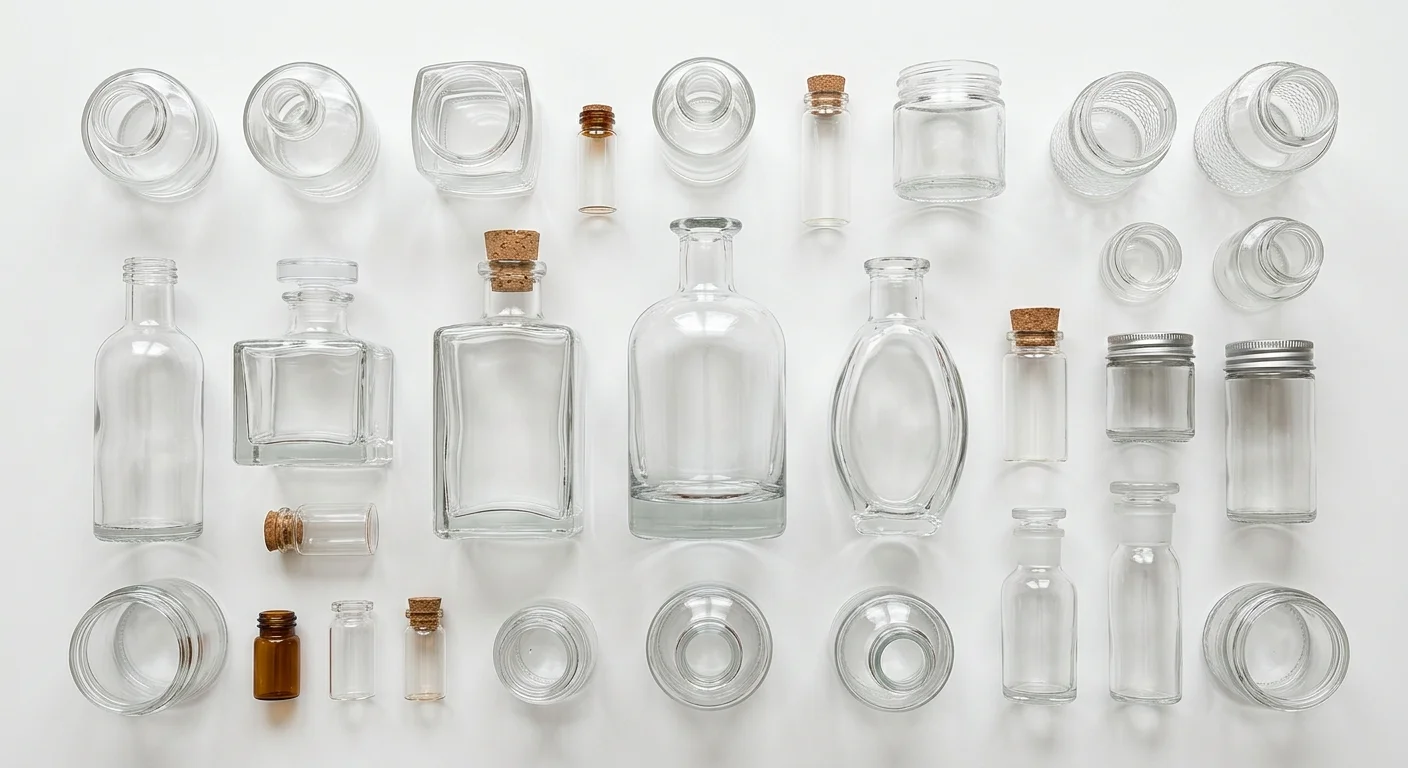
Custom glass containers are glass packaging built to your specifications — not pulled off a shelf. The difference between custom and standard is significant. It covers everything: the shape of the bottle, the diameter of the opening, the wall thickness, the glass color, the surface finish, and whether your logo is etched, screen-printed, or embossed into the material.
Standard glass containers come in fixed molds, made at scale, and sold as-is. Custom means you drive the decisions — or at least the ones that matter most.
Who Uses Custom Glass Packaging?
Food & Beverage
Jams, hot sauces, honey, olive oil, cold-brew coffee — food grade glass containers are a go-to for specialty food brands. Glass doesn’t leach. It doesn’t absorb odors. It also photographs well, which matters for product marketing. Glass jar customization in this category focuses on shape, capacity, and closure style — lug caps, cork, or clamp-top.
Cosmetics & Skincare
Serums, creams, facial oils — branded glass containers signal quality in a space where packaging is the product promise. Frosted finishes, amber glass, custom dropper bottles — design details carry serious weight here. The container shapes the first impression before the product even gets used.
Fragrance & Perfume
Custom glass bottles for fragrance rank among the most design-intensive projects in glass packaging. The bottle itself is part of the luxury experience. Shape, weight, clarity — every detail feeds into how the product feels in hand.
Essential Oils & Wellness
Volumes here run smaller — 5ml to 100ml — with tight-seal closures. Dark glass, amber or cobalt, is the standard choice for UV protection. It keeps light-sensitive formulas stable on the shelf.
Spirits & Specialty Drinks
Distinctive bottle shapes help premium spirits stand out at the shelf level. Buyers make decisions in seconds. A strong custom silhouette gives your product an edge before anyone reads the label.
Glass Types & Colors: Choosing the Right Material for Your Product
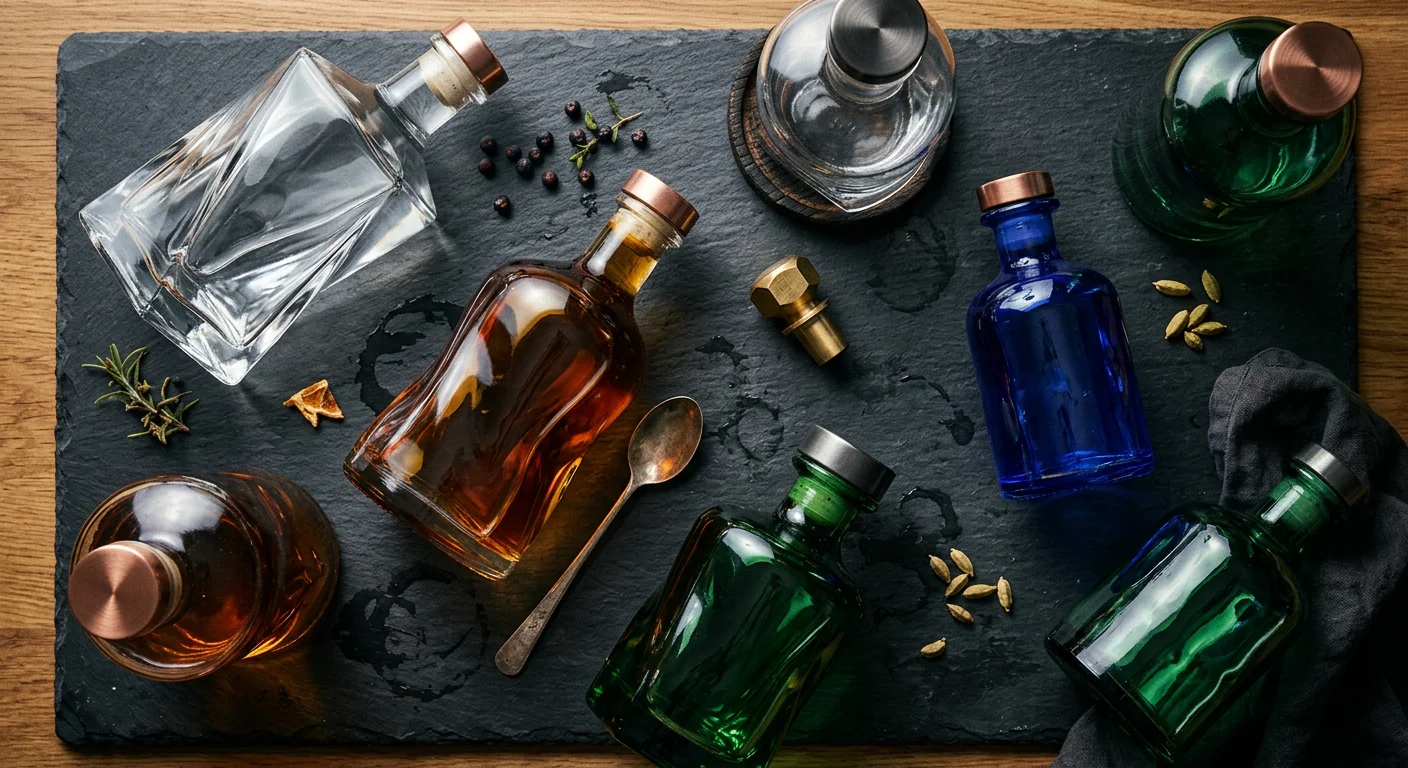
Not all glass is the same — and the differences matter. Clarity, color consistency, cost, and product stability six months after it leaves the warehouse all depend on what you pick.
Here’s a quick breakdown of the main options.
Clear Glass: Three Tiers of Clarity
Standard clear glass (sometimes called regular flint) is the most common and affordable option. It works well for everyday food packaging — pickles, sauces, pantry staples — where perfect clarity isn’t the priority. Thick glass will show a faint greenish or bluish tint.
High white glass cuts down on that tint. The color looks cleaner and more neutral. That makes it a popular pick for cosmetic and premium food brands who want their product color to show true through the container.
Super flint glass (also called ultra-clear or low-iron glass) is the highest tier. It has near-zero iron content, which gives you exceptional clarity. Think luxury perfume bottles, high-end skincare, anything where the glass itself needs to look expensive. It costs more, but the visual difference is real.
Colored Glass: Function Meets Aesthetics
Amber glass blocks UV light. That makes it the go-to choice for light-sensitive products: essential oils, tinctures, certain food-grade items. It’s functional first. Plus, it carries a natural, apothecary-style look that works well for wellness brands.
Cobalt blue gives you moderate UV protection with a bold visual impact. It’s as much a brand statement as a material choice.
Emerald green sits in similar territory — strong shelf presence, often used in spirits, olive oil, and botanical skincare lines.
What This Means for Your Budget
Material choice affects price more than most buyers expect. Super flint glass can run 20–40% higher than standard clear glass. Colored glass pricing shifts by color and batch size. Amber tends to be the most budget-friendly. Cobalt and emerald can carry a premium, particularly at lower MOQs. Match the glass tier to the perceived value of your product. A $45 facial serum deserves different packaging than a $6 grocery-store jam.
Key Customization Options: Shape, Size, Finish & Closure
Four decisions define your custom glass container: shape, size, finish, and closure. Get these right, and everything else — the label, the formula, the unboxing moment — falls into place around them.
Shape & Size: Where the Design Begins
Standard glass shapes (round, square, cylindrical) use existing molds. That keeps costs low. Custom silhouettes — asymmetrical bottles, faceted jars, tapered necks — need new mold development. That adds an upfront cost, usually $800–$3,000 depending on complexity. It’s a one-time investment, though. Your product gets a shape no competitor can copy.
The core dimensions to nail down early:
- Height and diameter — these determine shelf presence and how the bottle fits in the hand
- Neck finish (opening diameter) — this must match your closure, so lock it in before finalizing anything else
- Wall thickness — heavier walls feel more premium and protect better; thinner walls cut weight and shipping cost
Custom glass covers a wide capacity range — from 5ml vials up to 5L jars and beyond. So whether you’re packaging single-use serums or bulk pantry items, there’s room to work.
Surface Finishes: The Detail That Does the Talking
The finish on your glass is what people notice before they read a single word on your label.
- Frosted (acid-etched or sandblasted) — soft, matte texture with a premium feel; popular in skincare and fragrance
- Embossing — your logo or pattern pressed into the glass; no ink, no wear, just structure
- Screen printing — color goes straight onto the surface; cleaner than a label, and it doesn’t peel
- Hot stamping (gold or silver foil) — adds a metallic accent; high-end cosmetics and spirits brands use this often
- Spray coating — full-body color coverage for an opaque or semi-opaque effect; good for products where the color inside doesn’t need to show through
These finishes can be combined. A frosted bottle with gold hot stamping, for example, is a common pairing in luxury beauty packaging.
Closure Types: More Than Just a Cap
The closure shapes both function and feel — and it needs to be chosen alongside your neck finish.
| Closure Type | Best For | Notes |
|---|---|---|
| Screw cap | Food, beverage, skincare | Most compatible with standard filling lines |
| Cork | Spirits, specialty food, home fragrance | Adds artisanal character; less airtight |
| Dropper cap | Essential oils, serums, tinctures | Needs a specific neck diameter; check pump compatibility |
| Lug/clamp-top | Jams, preserves, fermented goods | Good for high-temp filling and pressure sealing |
One thing to sort out early: confirm closure compatibility before the mold gets cut — especially with automated filling equipment. Changing neck dimensions after tooling is expensive.
Custom Glass Container Manufacturing Process: From Concept to Production
Here’s the honest truth about custom glass: the product you imagine on day one won’t be in your hands for 60 to 70 days. That’s not a flaw — it’s just how glass manufacturing works. Knowing the timeline upfront cuts a lot of stress later.
The process breaks into five stages.
Design Confirmation — ~3 days
Your specs get locked in here: dimensions, neck finish, wall thickness, color, surface treatment. Both sides sign off, and the clock starts. Changes after this point cost time — sometimes money too.
Sample Mold Development — ~20 days
Your factory cuts a prototype mold from your approved drawings. This isn’t the full production mold. It’s a lower-cost version built to produce initial samples. Budget $300–$800 for this stage.
Sample Testing & Approval — ~15 days
Physical samples land in your hands. Check dimensions, clarity, color accuracy, and closure fit. This is your best chance to catch issues before production scales up. Most experienced buyers plan for one revision round here.
Production Mold Tooling
Running a custom silhouette? The factory cuts a full production mold at this point. Cost falls between $800–$3,000, depending on complexity. Standard shapes skip this step — one solid reason to start simple on a tight budget or timeline.
Bulk Production — ~25 to 30 days
Molds approved, production starts. The factory melts, forms, anneals, inspects, and ships your glass.
MOQ, Pricing & Cost Factors for Custom Glass Containers
Let’s talk numbers — this is where decisions get made.
Custom glass pricing isn’t random. It follows a clear logic. Once you understand it, budgeting gets a lot easier.
MOQ: What to Expect by Container Size
MOQ shifts based on container size. Here’s a rough industry baseline:
| Container Size | Typical MOQ |
|---|---|
| Small (≤100ml) | 30,000 – 50,000 units |
| Medium (100ml – 500ml) | 10,000 – 3,000 units |
| Large (500ml+) | 5,000 – 10,000 units |
Not ready for those volumes yet? Shared mold programs are a real option. Some manufacturers offer standard molds shared across multiple clients. MOQs can drop to 5,000 – 10,000 units. The tradeoff is straightforward: the shape isn’t yours alone. Still, it’s a solid way to test a market or run your first order without a big upfront commitment.
What Drives the Price Per Unit
Five factors move the price the most:
- Glass grade — Super flint and high-white glass cost more than standard clear. The visual difference is real, and so is the price gap — sometimes 20–40% higher.
- Container capacity — More glass means more cost. Larger containers use more raw material and take longer to form.
- Wall thickness — Heavier walls feel premium and offer better protection. They also add material cost and shipping weight.
- Surface treatments — Each decoration layer (frosting, screen printing, hot stamping) adds to the unit price. One finish is easy to absorb. Three layers start to stack up fast.
- Order volume — This is the biggest lever. Unit cost between 1,000 pieces and 10,000 pieces can shift dramatically — sometimes 30–50% lower at higher volumes.
A Practical Way to Think About It
Match your glass spec to your retail price point. A product selling at $40+ can absorb super flint glass and two surface treatments. A $9 grocery item can’t — and doesn’t need to. Set a clear target unit cost first. Then work backward through your material and finish choices. This cuts down a lot of back-and-forth with your supplier.
How to Find & Evaluate a Reliable Custom Glass Container Manufacturer
The wrong supplier doesn’t just cost you money. It costs you time you can’t get back — and sometimes a product launch you can’t reschedule.
Finding a reliable Glass Bottle Supplier isn’t about the cheapest quote. It’s about finding a manufacturer whose capabilities match what your project needs. Here’s what to check before you commit.
Certifications That Matter
Start with the paperwork. It’s not exciting, but it tells you a lot fast.
- ISO 9001 signals a documented quality management system. There’s a real process behind the product — not just a production line.
- FDA compliance is non-negotiable for food grade glass containers and any glass that touches consumable products. Ask for documentation. A verbal confirmation isn’t enough.
- SGS testing reports add another layer of verification. These are useful when sourcing from overseas and you can’t inspect the facility in person.
A supplier who hesitates to share these documents is one worth stepping back from.
Production Scale & Export Track Record
Certifications confirm standards. Experience confirms execution. Ask how long they’ve been exporting. Find out which markets they serve. Check whether they’ve worked with brands in your industry — food, cosmetics, fragrance. A factory with solid OEM/ODM export experience understands lead times, packaging requirements, and the small details that tend to get lost along the way.
Why Buyers Work With TPGlassBottle
TPGlassBottle produces custom glass packaging solutions across food, beverage, cosmetics, and fragrance. Our production holds ISO 9001 certification, FDA-compliant standards, and SGS-verified quality checks. We offer low MOQs and full customization — from shape to closure. Our team has worked with brands across North America and Europe.
Ready to move from concept to sample? Get in touch here — most inquiries get a response within 24 hours.
Conclusion
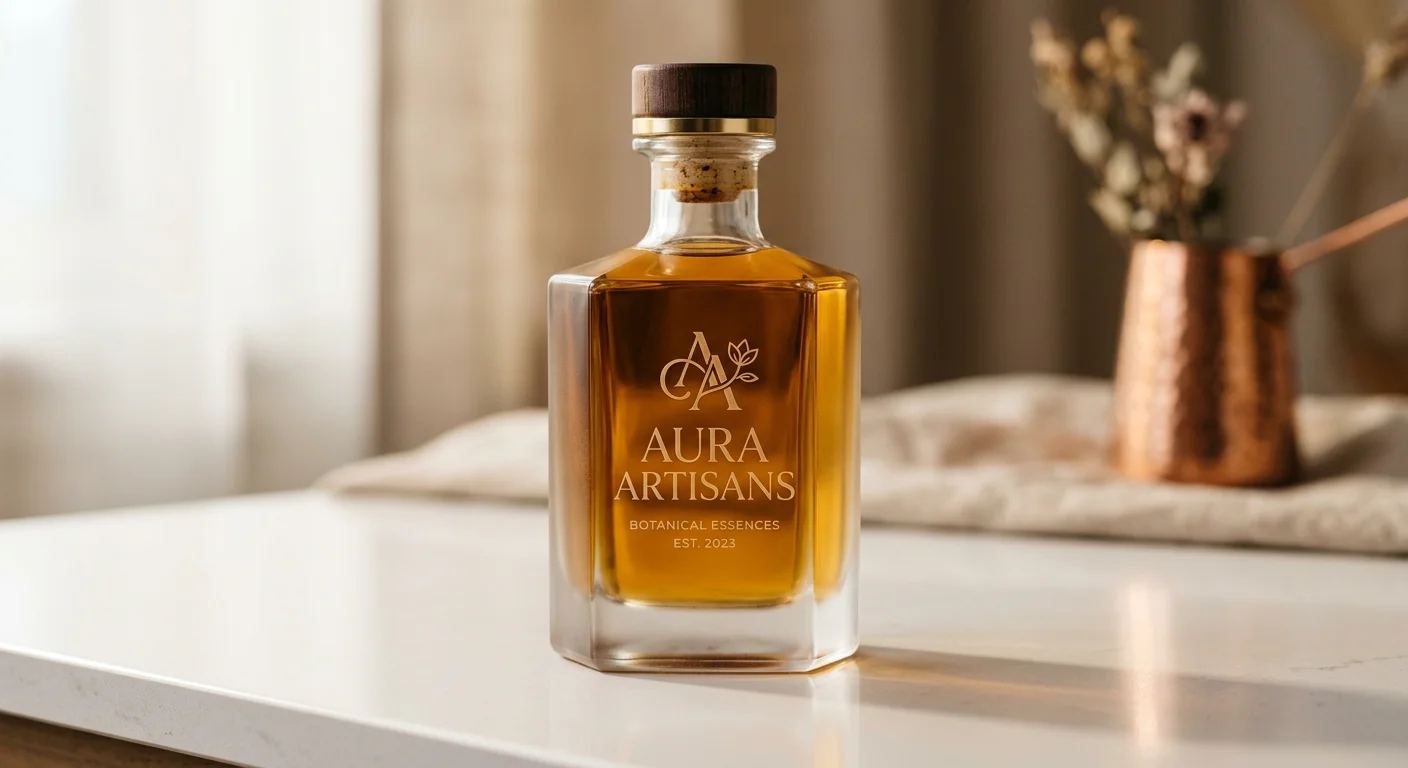
Custom glass containers aren’t just packaging — they’re the first physical touchpoint between your brand and a customer. Get that right, and everything else falls into place. At this point, you have a clearer picture of what the customization process looks like. That includes material decisions that protect your product, design choices that build your brand, and supplier relationships that shape your timeline. None of it needs to feel overwhelming. You just need to know the right questions to ask. The best custom glass packaging projects don’t start with a purchase order — they start with a conversation. Still sketching ideas? Already finalizing specs? Either way, contacting a trusted Glass Bottle Supplier early gives you more options. You’ll get better pricing too, and far fewer surprises along the way.
Ready to bring your packaging vision to life? TP Glass Bottle Manufacturer is here to support you. As a professional glass packaging factory, we provide full-cycle custom services including mold development, OEM/ODM solutions, and strict quality control, all backed by food-safe certifications and competitive bulk pricing. Whether you need customized jars, bottles, or specialized glass containers, we deliver durable, well-crafted products tailored to your business. Let TP Glass Bottle Manufacturer be your reliable partner for high-quality custom glass packaging solutions.