
Walk into a liquor store and you will find whisky, vodka, gin, rum, brandy, and many other spirits packaged in glass bottles. Although alternative packaging materials are available, glass remains one of the most widely used materials for liquor packaging.
So, why is alcohol in glass bottles? Glass has a combination of chemical stability, barrier properties, storage performance, appearance, and design flexibility that makes it well suited to alcoholic beverages. For liquor manufacturers, the bottle is also more than a container. It protects the product, supports the brand image, and provides an important part of the consumer experience.
Table of Contents
Why Is Alcohol in Glass Bottles?
Alcoholic beverages are commonly stored in glass because glass is relatively inert and provides an effective barrier between the liquor and its surroundings.
Unlike some packaging materials, glass does not easily absorb the liquid, transfer unwanted flavors, or react with the alcohol under normal storage conditions. A properly sealed glass bottle can also limit exposure to air, moisture, and external contaminants.
For spirits that may remain on shelves or in storage for months or years, these characteristics are particularly useful. There are several important reasons why glass continues to be the preferred packaging material for many types of liquor.
1. Glass Is Chemically Stable With Alcohol
One of the most important reasons for using glass bottles for liquor is the chemical stability of glass. Spirits contain ethanol as well as water and, depending on the product, various flavor compounds and other ingredients. The packaging material needs to remain stable when it comes into contact with these components.
Glass is non-porous and generally does not interact significantly with alcoholic beverages under normal conditions. This helps prevent the container from affecting the composition, aroma, or flavor of the liquor. This is especially important for products such as whisky, vodka, gin, rum, and brandy, where maintaining the intended characteristics of the spirit is an important part of product quality.
2. Glass Helps Preserve the Flavor of Liquor
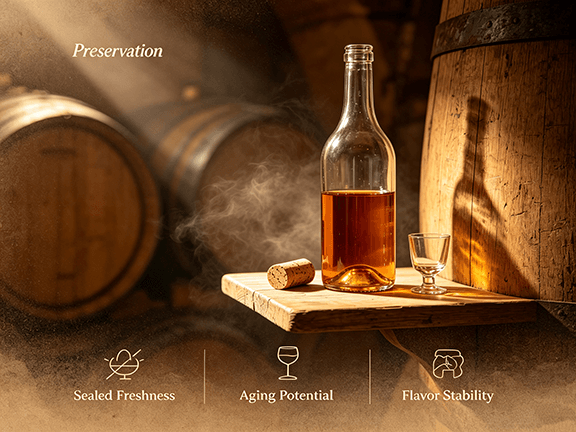
The taste and aroma of a spirit are influenced by many factors, including its ingredients, distillation process, aging, and storage conditions. Glass helps protect the finished product by providing a stable barrier between the liquor and the outside environment. Because glass is non-porous, it does not readily absorb the liquid or allow the beverage to penetrate the container. The bottle closure is also important. While the glass itself provides the main physical barrier, the cap, cork, or other closure helps control the exchange of air between the bottle and its surroundings.
For commercial liquor packaging, the combination of glass bottle + suitable closure helps maintain product quality throughout transportation, storage, and retail display.
3. Glass Bottles Protect Liquor From External Contamination
A sealed glass bottle helps keep dust, moisture, odors, and other external contaminants away from the liquor. Glass also does not readily absorb surrounding odors. This can be useful during transportation and storage, particularly when bottles are kept in warehouses or shipped together with other products.
The overall packaging system still matters. A glass bottle cannot compensate for an unsuitable closure, damaged seal, poor storage conditions, or excessive exposure to heat and light. However, glass provides a strong foundation for protecting the contents.
4. Colored Glass Can Reduce Light Exposure
Light is another factor that can affect some alcoholic beverages. Ultraviolet and visible light can contribute to chemical reactions in certain beverages, potentially affecting their color, aroma, or flavor over time. For this reason, some liquor manufacturers use colored glass rather than completely clear glass.
Common options include:
- Amber glass bottles
- Dark green glass bottles
- Flint or clear glass bottles
- Other custom glass colors
The level of protection depends on the color, thickness, and formulation of the glass. Clear glass provides excellent product visibility but offers less light protection than darker glass. This creates an important packaging decision for liquor brands: whether to prioritize product visibility, traditional appearance, light protection, or a combination of these factors.
5. Glass Is Suitable for Long-Term Liquor Storage
Many spirits are products that may remain in distribution channels for extended periods. After bottling, the product may spend time in warehouses, shipping containers, retail stores, bars, or private collections. Glass is well suited to this type of storage because it is stable, impermeable, and resistant to many common environmental conditions.
For manufacturers and distributors, this makes glass bottles practical for a wide range of spirits, including:
- Whisky
- Scotch whisky
- Bourbon
- Vodka
- Gin
- Rum
- Brandy
- Tequila
- Liqueurs
- Other distilled spirits
However, it is important to distinguish bottle aging from barrel aging. Most spirits do not continue aging in the same way once they have been transferred from a wooden barrel into a glass bottle. The main purpose of the glass bottle is to store and protect the finished spirit rather than provide the aging environment.
6. Glass Bottles Create a Premium Product Appearance
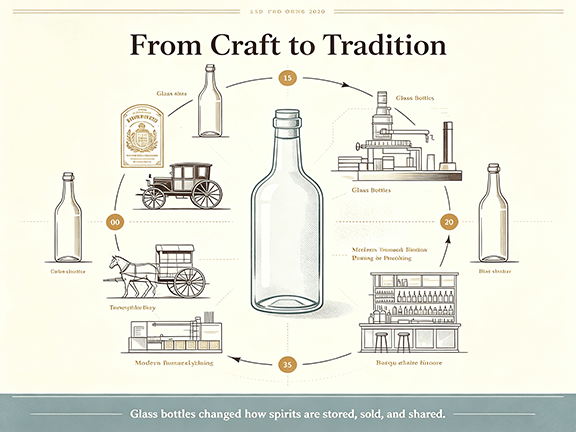
Liquor packaging is not only about protecting the beverage. For many spirits, the bottle is one of the first things a customer sees. Glass gives manufacturers considerable freedom to create different shapes, proportions, surface finishes, and visual effects.
A heavy glass base, embossed logo, distinctive shoulder, unusual silhouette, or colored glass can all contribute to the appearance of a liquor bottle. This is one reason glass has become strongly associated with premium spirits.
A well-designed bottle can communicate characteristics such as:
- Traditional craftsmanship
- Premium positioning
- Modern design
- Heritage
- Luxury
- Simplicity
- Brand identity
The physical weight and feel of glass can also influence how consumers perceive the product when they pick up the bottle.
7. Glass Gives Liquor Brands More Design Options
Another major advantage of glass is its flexibility in bottle design. A standard bottle can be produced in different capacities and shapes, while custom molds allow brands to create a more distinctive bottle structure.
Depending on the project, a custom liquor bottle may include:
- Custom bottle shapes
- Embossed logos
- Debossed patterns
- Custom shoulders
- Special bottle bases
- Colored glass
- Frosted surfaces
- Special surface finishes
- Custom neck dimensions
- Different closure configurations
For established liquor brands, a recognizable bottle shape can become part of the brand identity. This is particularly useful when several products compete for attention on the same retail shelf. The bottle itself can help a product become recognizable before a customer reads the label.
8. Glass Bottles Support Different Liquor Bottle Sizes
Liquor is sold through many different channels, so one bottle size does not suit every application.
Glass bottles can be manufactured in a wide range of capacities, from small bottles intended for individual servings or promotional use to larger formats for commercial applications.
The appropriate capacity depends on the target market, sales channel, filling equipment, transportation requirements, and product positioning.
For B2B buyers, bottle capacity should therefore be considered together with neck finish, closure compatibility, dimensions, weight, carton packaging, and shipping requirements.
9. Glass Bottles Are Recyclable
Glass is also widely recognized as a recyclable packaging material.
Used glass bottles can be collected, processed, and manufactured into new glass products. Glass can also be recycled repeatedly without the same type of material degradation associated with some other packaging materials.
However, the environmental impact of a glass bottle depends on the entire supply chain. Bottle weight, transportation distance, manufacturing energy, recycling infrastructure, and whether bottles are reused or recycled can all affect the overall environmental footprint. For liquor manufacturers looking to improve packaging sustainability, these factors can be considered when selecting bottle weight, packaging design, and logistics methods.
Is Glass Better Than Plastic for Liquor Bottles?
For many commercial spirits, glass offers several advantages over plastic.
Glass is chemically stable, non-porous, impermeable, and widely accepted for alcoholic beverage packaging. It also provides a premium appearance and offers extensive design possibilities. Plastic, on the other hand, can be lighter and more resistant to breakage, which may be useful for certain applications. Therefore, the question is not simply whether glass is universally “better.” The right packaging material depends on the type of alcoholic beverage, distribution conditions, cost requirements, product positioning, and regulatory considerations.
For many premium and mainstream spirits, however, glass remains a practical and established choice.
Why Are Whisky, Vodka, Gin, Rum, and Brandy Sold in Glass Bottles?
Different spirits have different production methods and characteristics, but many of them share the same basic packaging requirements.
Whisky
Whisky is commonly packaged in glass bottles because glass provides a stable container for the finished spirit and allows brands to create traditional or premium bottle designs.
Vodka
Vodka is often clear, making transparent glass useful for displaying the appearance of the product. Minimalist and premium bottle designs are also common in the vodka market.
Gin
Gin brands often place considerable emphasis on botanical ingredients and brand identity. Glass bottles provide opportunities for distinctive shapes, embossing, and label designs.
Rum
Rum is available in many styles and markets. Glass bottles can be adapted to both traditional and modern brand designs.
Brandy
Brandy has a long association with premium glass packaging. Bottle shape, weight, color, and closure can all contribute to the traditional presentation of the product.
Conclusion
The reason people put liquor in glass bottles goes beyond tradition. Glass provides a combination of chemical stability, impermeability, storage performance, light-control options, recyclability, and design flexibility that makes it suitable for many types of alcoholic beverages.
At the same time, the bottle has become an important part of how liquor is presented. Its shape, weight, color, surface, and overall design can communicate the character of a spirit and help a brand distinguish its products.
For liquor manufacturers and beverage brands, the choice of glass bottle should therefore consider both product protection and packaging requirements. Whether using a standard 750 ml bottle or developing a fully customized liquor bottle, factors such as capacity, glass color, neck finish, closure compatibility, bottle weight, production volume, and transportation should all be evaluated before mass production.
Frequently Asked Questions About Liquor in Glass Bottles
Why is alcohol in glass bottles?
Alcohol is commonly packaged in glass bottles because glass is chemically stable, non-porous, and impermeable. It helps protect the liquor from external contamination and does not readily affect its flavor under normal storage conditions. Glass also provides good durability for storage and transportation and allows manufacturers to create a wide range of bottle designs.
Does liquor last longer in a glass bottle?
A properly sealed glass bottle can provide suitable long-term storage for many spirits. Glass itself is stable and does not readily absorb the liquor. However, storage conditions, closure quality, temperature, light exposure, and the type of spirit can all affect product quality.
Does glass change the taste of liquor?
Under normal conditions, glass has very little interaction with liquor, which is one reason it is widely used for spirits. The flavor of the finished product is more strongly influenced by its ingredients, production process, aging, storage conditions, and closure than by the glass itself.
Why are some liquor bottles brown or green?
Colored glass can reduce the amount of light reaching the liquor. This can be useful for products that are sensitive to light. Brown and green glass are also associated with traditional packaging styles for certain spirits and beverages.
Why are liquor bottles usually made of glass instead of plastic?
Glass provides chemical stability, good barrier properties, product visibility, premium appearance, and extensive design possibilities. Plastic can offer advantages such as lower weight and better resistance to breakage, but glass remains a common choice for many spirits.