
Introduction
When choosing glass bottles for your products, appearance is only one part of the decision. You also need to check the bottle’s dimensions, capacity, weight, neck finish, and closure compatibility. These specifications affect more than just how much product the bottle can hold. They can also influence labeling, filling, packaging, storage, shipping, and the overall appearance of your finished product.
Whether you are sourcing liquor bottles, food jars, beverage bottles, or custom glass packaging, understanding the basic specifications makes it easier to compare different bottle designs and communicate your requirements with a manufacturer. In this guide, we explain the main glass bottle specifications and what they mean when you are selecting or customizing a bottle.
Table of Contents
What Are Glass Bottle Specifications?
Glass bottle specifications are the key measurements and technical details used to define a bottle. They help buyers and manufacturers make sure that the selected bottle is suitable for the product, closure, filling process, and packaging requirements.
Some of the most common specifications include:
| Specification | What It Tells You |
|---|---|
| Height | The overall height of the bottle |
| Diameter | The width of the bottle at its widest point |
| Base Diameter | The diameter of the bottom of the bottle |
| Capacity | The nominal amount of product the bottle is designed to hold |
| Weight | The weight of the empty glass bottle |
| Neck Finish | The bottle neck design and closure interface |
| Opening | The usable opening for filling and pouring |
| Tolerance | The acceptable variation in production |
Glass Bottle Dimensions
Glass bottle dimensions are usually the first specifications buyers check because they affect how the bottle fits into labels, cartons, filling equipment, and storage systems.
Height and Diameter
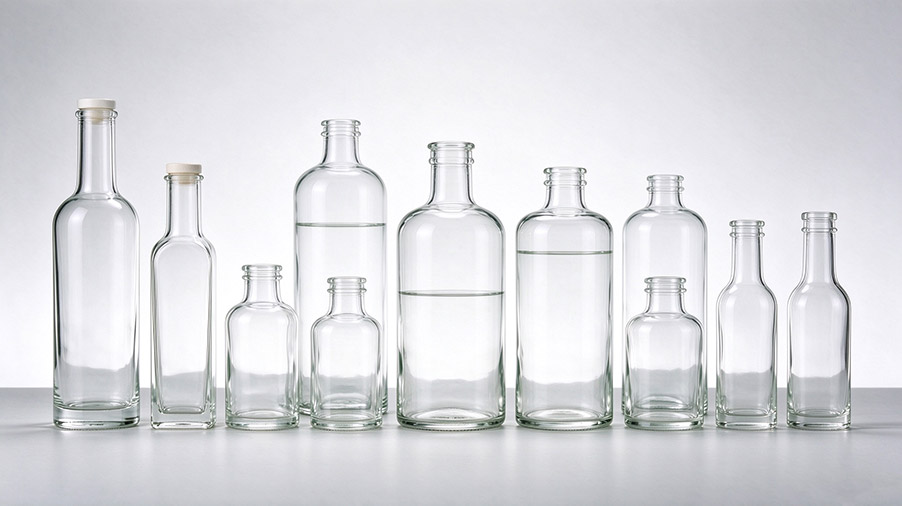
The two most basic measurements are overall height and diameter. Bottle height is the total distance from the bottom of the bottle to its highest point. Depending on the design, measurements may be taken with or without considering certain closure components.
Bottle diameter refers to the width of the bottle. For bottles with shoulders or irregular shapes, the maximum diameter is especially important because it determines the amount of space the bottle needs during packaging and storage.
Other useful measurements may include:
- Overall height
- Maximum body diameter
- Base diameter
- Shoulder dimensions
- Neck height
- Opening diameter
For example, two 750ml glass bottles may have completely different shapes. One may be tall and narrow, while another may be shorter and wider. Both can have the same nominal capacity but require different labels, cartons, and pallet configurations.
How Glass Bottle Dimensions Are Measured
When checking a bottle drawing or specification sheet, look at the complete dimensional drawing rather than relying on only one measurement. A typical drawing may show:
Overall Height → Maximum Diameter → Base Diameter → Neck Height → Opening
This information becomes particularly important when you already have packaging equipment or secondary packaging designed around a specific bottle. For custom projects, it is also useful to confirm dimensional tolerances with the manufacturer. Small variations are normal in glass production, so the acceptable production range should be agreed on before mass production.
Glass Bottle Capacity
Bottle capacity describes how much liquid a bottle is designed to contain. Common capacities include 250ml, 330ml, 500ml, 750ml, and 1000ml, although many other sizes are available.
Nominal Capacity
The number shown on a bottle, such as 500ml or 750ml, normally refers to its nominal capacity. Nominal capacity is the target fill volume used to identify the bottle commercially. It does not necessarily mean that the glass container has exactly that internal volume with no additional space.
For example, a bottle identified as a 750ml bottle may have additional internal volume above the nominal fill level.
Capacity and Filling Requirements
Capacity should be considered together with your filling process. Before selecting a bottle, consider:
- Your target fill volume
- Required headspace
- Filling equipment
- Product characteristics
- Closure and sealing requirements
A bottle with the correct nominal capacity may still be unsuitable if the shape, opening, or internal volume does not work with your filling process. For example, a narrow-neck bottle and a wide-mouth jar may both hold 500ml, but they can perform very differently when filling, pouring, or dispensing the product.
Glass Bottle Weight
Glass bottle weight is the weight of the empty bottle before the product and closure are added. Bottles with the same capacity do not necessarily have the same weight. A heavier bottle may have a different wall thickness, base design, or overall shape.
Why Bottle Weight Matters
Bottle weight can affect several parts of your supply chain.
Shipping: Heavier bottles increase the total weight of cartons and pallets.
Handling: Bottle weight affects manual handling and the overall packaging system.
Packaging: The bottle weight needs to be considered when designing cartons, dividers, and pallet loads.
Product positioning: In some markets, a heavier bottle may be selected to create a more substantial or premium feel.
Weight should therefore be evaluated together with the bottle’s dimensions and design rather than as an isolated number. For a custom bottle, the final weight should be confirmed using the manufacturer’s technical drawing or approved sample before large-scale production.
Glass Bottle Neck Finish
The neck finish is one of the most important specifications because it determines how the bottle connects with the closure. A bottle can have the right capacity and appearance but still be unsuitable for your project if the neck finish does not match the required cap, cork, or other closure.
What Is a Neck Finish?
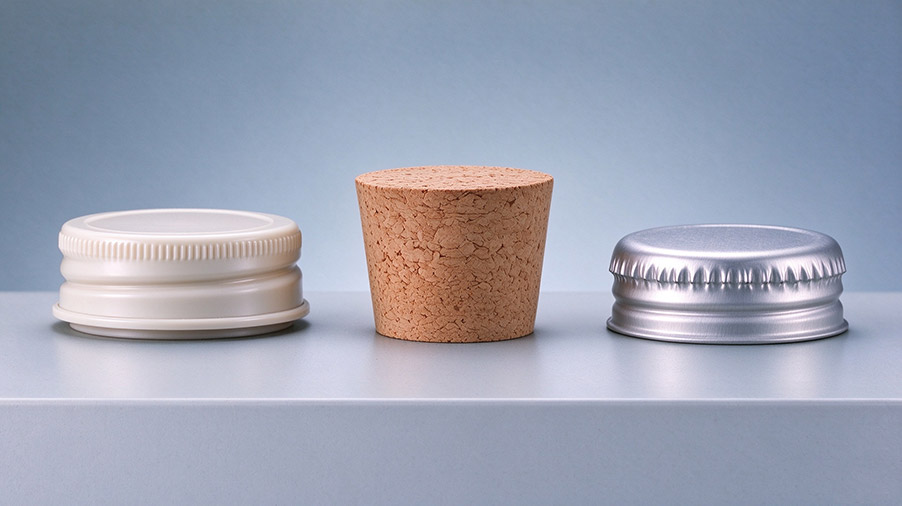
The neck finish is the shaped portion at the top of the bottle that interfaces with the closure. It includes the dimensions and features needed for the bottle to work with a specific closure system.
Common neck finish types include:
- Screw neck
- Cork finish
- ROPP finish
- Crown finish
- Snap-on or press-on finish
Different neck finishes are designed for different closure systems and applications. For a more detailed comparison of neck finish types and closure compatibility, see our Glass Bottle Neck Finish Guide: Types, Sizes and Closure Compatibility.
Why Neck Size and Closure Compatibility Matter
When selecting a bottle, do not confirm the bottle and closure separately. They should be treated as one packaging system.
You should confirm:
- Neck finish type
- Neck diameter
- Opening size
- Closure type
- Closure dimensions
- Sealing method
For example, a 750ml liquor bottle may look suitable for your product, but the project can still require a different neck specification depending on whether you use a cork, screw cap, or ROPP closure. If you already have a preferred closure, provide its specifications to the bottle manufacturer. This allows the manufacturer to confirm whether the bottle neck is compatible before sampling.
How to Read a Glass Bottle Specification Sheet
A glass bottle specification sheet usually brings all the important measurements together in one place.
Here is a simplified example:
| Item | Example |
|---|---|
| Capacity | 750 ml |
| Height | 285 mm |
| Maximum Diameter | 78 mm |
| Weight | 650 g |
| Neck Finish | ROPP |
| Closure | Aluminum ROPP Cap |
| Glass Color | Flint |
| Glass Type | Soda-Lime Glass |
When reviewing a specification sheet, do not look only at the capacity. Check whether the bottle dimensions fit your packaging, whether the weight works for your shipping requirements, and whether the neck finish matches the closure you plan to use. It is also important to confirm whether the listed measurements are target dimensions or production dimensions with specified tolerances.
What Glass Bottle Specifications Should You Confirm Before Ordering?
Before placing an order, make sure the manufacturer has confirmed the specifications that are important to your application. At a minimum, you should review:
1. Bottle capacity
Confirm the nominal fill volume and whether the actual internal volume meets your filling requirements.
2. Overall dimensions
Check the height, maximum diameter, base diameter, and other dimensions that affect packaging.
3. Bottle weight
Make sure the weight is suitable for your shipping, handling, and product positioning requirements.
4. Neck finish and opening
Confirm that the bottle neck works with the intended closure.
5. Closure compatibility
Check the cap, cork, or other closure together with the bottle neck rather than treating them as separate components.
6. Production tolerance
Confirm acceptable dimensional and weight variation before mass production.
For custom glass bottles, a technical drawing and approved sample are especially useful for confirming these specifications before production begins.
FAQs About Glass Bottle Specifications
What are the most common glass bottle sizes?
Common glass bottle sizes vary by application and market. Frequently used capacities include 250ml, 330ml, 500ml, 750ml, and 1000ml. However, there is no single standard size that works for every product. Beverage bottles, liquor bottles, food jars, and cosmetic containers often use different capacity ranges based on their intended application. When choosing a size, consider both the required product volume and the bottle’s overall dimensions.
Is 750ml a standard glass bottle size?
750ml is a widely used bottle capacity, particularly for wine and spirits, but it is not a universal standard for all glass bottles. A 750ml bottle can also have very different dimensions depending on its shape and design. For example, a tall cylindrical bottle and a square liquor bottle may both hold 750ml while having different heights, diameters, and weights. For this reason, capacity alone should not be used to identify a bottle.
How do I measure a glass bottle for a box or label?
For packaging, measure the bottle’s overall height and maximum diameter first. You may also need the base diameter and the dimensions of the shoulder area. For labels, the usable labeling area is especially important. A bottle’s maximum diameter does not always represent the actual surface available for a label. If you are developing a new package, it is better to work from the manufacturer’s technical drawing or a physical sample before finalizing the carton or label design.
Can glass bottle dimensions be customized?
Yes. Glass bottle dimensions can be customized as part of a new bottle design or modified mold project, depending on the requirements of the project. Customization may involve the bottle’s height, diameter, shoulder shape, base, overall profile, capacity, and neck design. However, changing one dimension can affect other parts of the bottle. For example, increasing the height or changing the shoulder shape may change the internal capacity and overall appearance. Custom dimensions should therefore be reviewed with the manufacturer before a mold is finalized.
Does bottle shape affect glass bottle specifications?
Yes. Bottle shape directly affects several specifications, including dimensions, weight, internal capacity, labeling area, and packaging requirements. A round bottle, square bottle, and rectangular bottle with similar capacity may need completely different cartons and pallet configurations. When selecting a bottle for a product launch, it is useful to evaluate the shape together with the full specification sheet rather than treating appearance as a separate decision.
Conclusion
Glass bottle specifications provide the practical information you need to evaluate a bottle before sampling or production. Dimensions determine how the bottle fits into your packaging and equipment. Capacity defines the target fill volume. Weight affects handling, shipping, and packaging. The neck finish determines whether the bottle works with the selected closure. For standard bottles, these specifications make it easier to compare different options.
For custom glass bottles, they provide a clear starting point for technical drawings, samples, and mold development. Before placing a production order, make sure the bottle dimensions, capacity, weight, neck finish, closure compatibility, and production tolerances have all been confirmed with your manufacturer.