
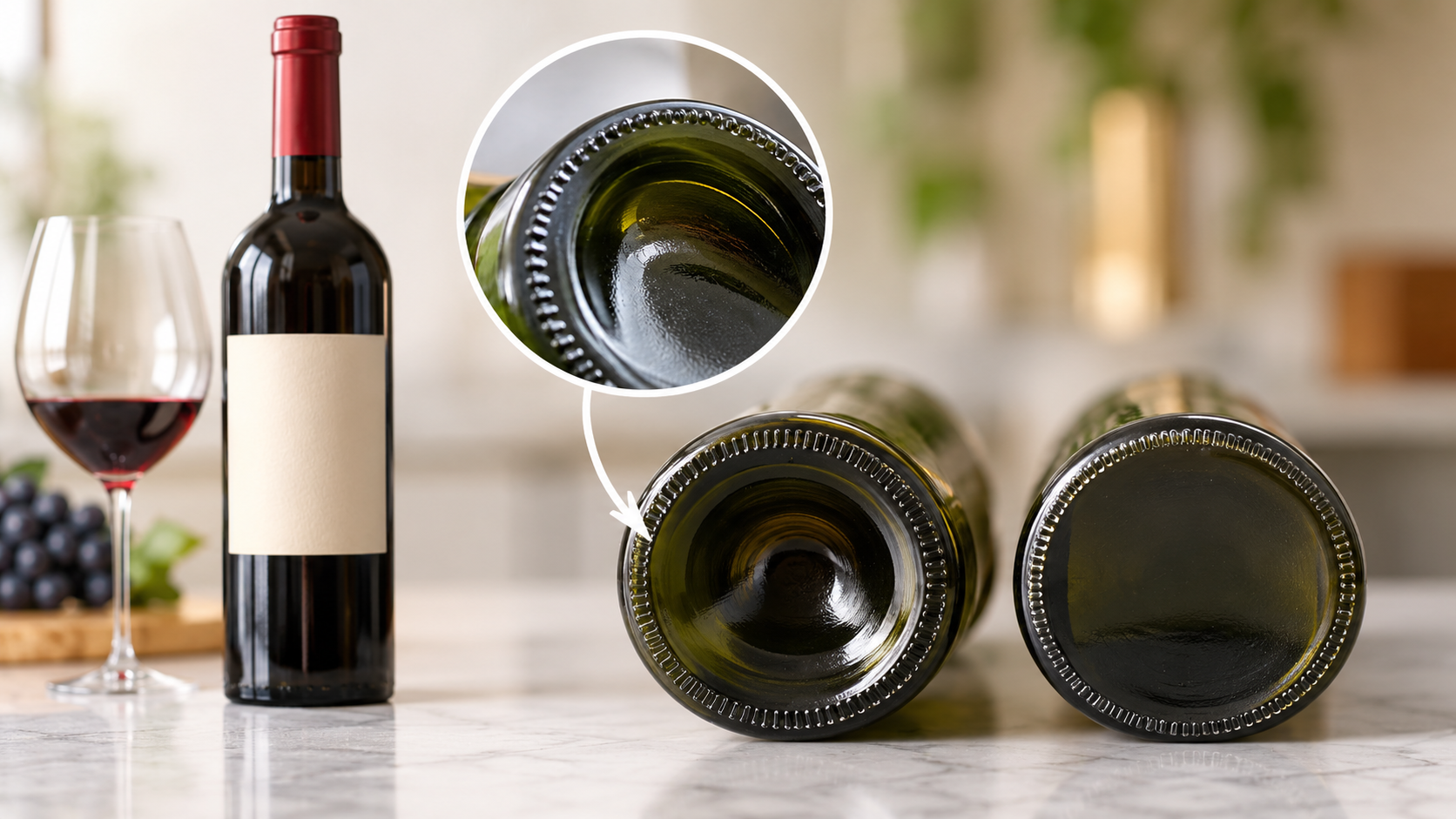
Have you ever noticed the indentation at the bottom of a wine bottle? This inward curve, known as a punt, is a familiar feature of many wine bottles. Some have a deep indentation, while others have a shallow or almost flat bottom. So, why do wine bottles have a punt? The answer involves a combination of traditional glassmaking methods, bottle structure, practical use, and design preferences. Although the punt is often associated with Champagne and premium wines, it does not serve just one purpose, and its depth does not necessarily indicate the quality of the wine.
In this article, we explain what a wine bottle punt is, why it became a common design feature, and what to consider when choosing or designing glass wine bottles.
Table of Contents
What Is a Punt on a Wine Bottle?
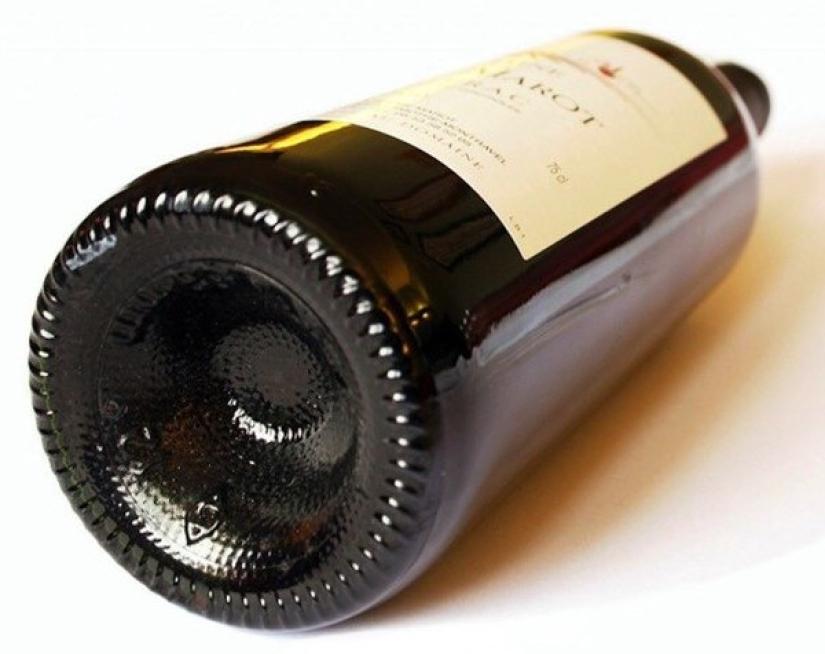
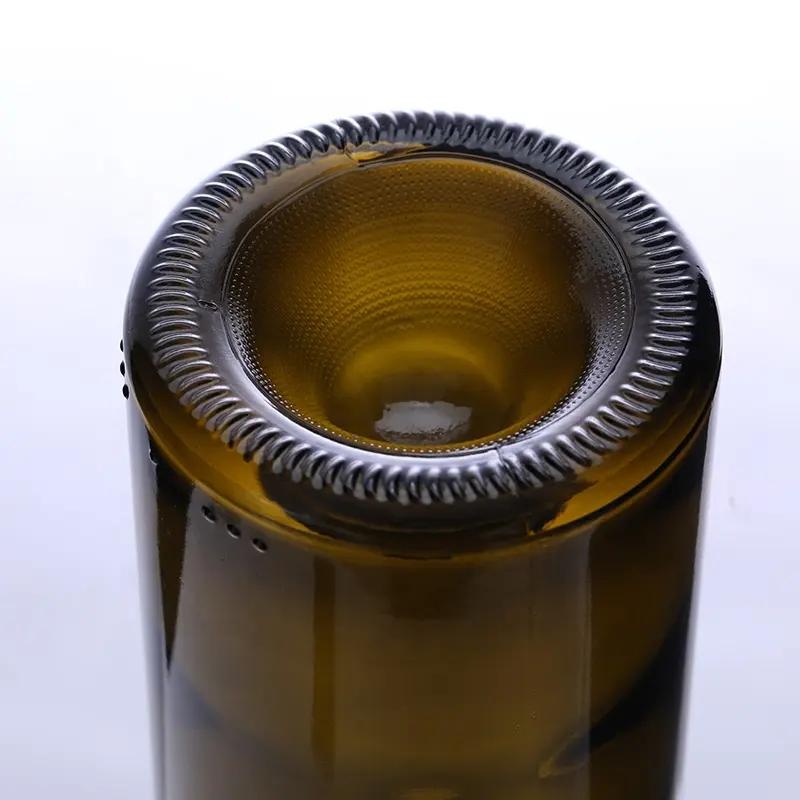
A wine bottle punt is the inward indentation found at the bottom of a glass wine bottle. It is also commonly called a push-up or kick-up. The shape and depth of this indentation vary depending on the bottle design.
Some traditional wine bottles, especially Champagne bottles, have a noticeably deep punt. Other wine bottles have a shallow indentation, while some use a relatively flat base.
The bottom of a wine bottle generally includes three important areas:
- Punt: The recessed section pushed upward into the bottle’s bottom.
- Standing Ring: The outer bottom area that makes contact with a flat surface and supports the bottle.
- Heel: The curved transition between the bottle body and its base.
These features are part of the overall bottle design. A wine bottle’s bottom shape can affect its appearance and may be considered when designing the bottle’s structure and manufacturing process.
Why Do Wine Bottles Have a Punt?
There is no single explanation for why wine bottles have a punt. The design has historical roots and continues to serve several practical and aesthetic purposes.
1. Historical Roots in Traditional Glassmaking
One commonly cited explanation for the wine bottle punt comes from early glassmaking techniques.
Before modern automated production, many glass bottles were made by hand. During the process, glassmakers sometimes used a metal rod called a pontil rod to hold or support the bottle while shaping it. This process could leave a rough mark on the bottom, known as a pontil mark.
An inward-pushed bottom helped keep this uneven area away from the surface where the bottle stood, making the base easier to finish.
As glassmaking techniques developed, manufacturing methods changed significantly. However, the indented bottom remained part of many traditional wine bottle designs.
This historical connection helps explain why the punt became a familiar feature of glass wine bottles, even though modern bottles are manufactured differently.
2. A Role in Bottle Structure and Pressure Design
Another reason why wine bottles have a punt is its role in the overall bottle structure.
The bottom of a glass bottle is an important area in its design. Its shape, glass thickness, and distribution of material all contribute to how the bottle performs during use.
This is particularly relevant to sparkling wine bottles. Champagne and other sparkling wines contain dissolved carbon dioxide, which creates internal pressure inside the bottle. Their glass packaging must therefore be designed to meet specific pressure requirements.
A deep wine bottle punt is commonly found on Champagne bottles as part of their traditional structural design. However, the punt alone does not determine how much pressure a bottle can withstand.
Factors such as glass thickness, overall bottle geometry, material distribution, and manufacturing quality all matter. A deeper punt does not automatically make a wine bottle stronger.
3. Easier Handling and Pouring
The indentation at the bottom of a wine bottle can also provide a convenient place to hold the bottle when pouring.
Some people, particularly professional servers and sommeliers, place their thumb inside the punt while supporting the bottle with their other fingers. This grip can offer additional control when pouring wine into glasses.
However, this is a practical use rather than a necessary function. Wine can be poured comfortably without using the punt, and not everyone prefers this holding method.
4. Traditional Appearance and Brand Identity
Over time, the wine bottle punt has also become part of traditional wine packaging design.
Different bottle shapes communicate different styles and create distinct visual impressions. A deep punt is often associated with classic Champagne bottles, while other wine bottles may have a shallower or flatter base.
For wine producers, the bottom design can contribute to the overall appearance of the packaging. Combined with bottle shape, glass color, weight, and label design, the punt can help create a recognizable product presentation.
Today, many wine bottle designs retain the punt not simply because of its historical background, but also because it fits the traditional appearance of wine packaging.
Why Do Some Wine Bottles Have Deeper Punts?
Not all wine bottles have the same punt depth. Some have a deep push-up, while others feature a relatively shallow indentation or flat bottom.
Several factors influence this difference.
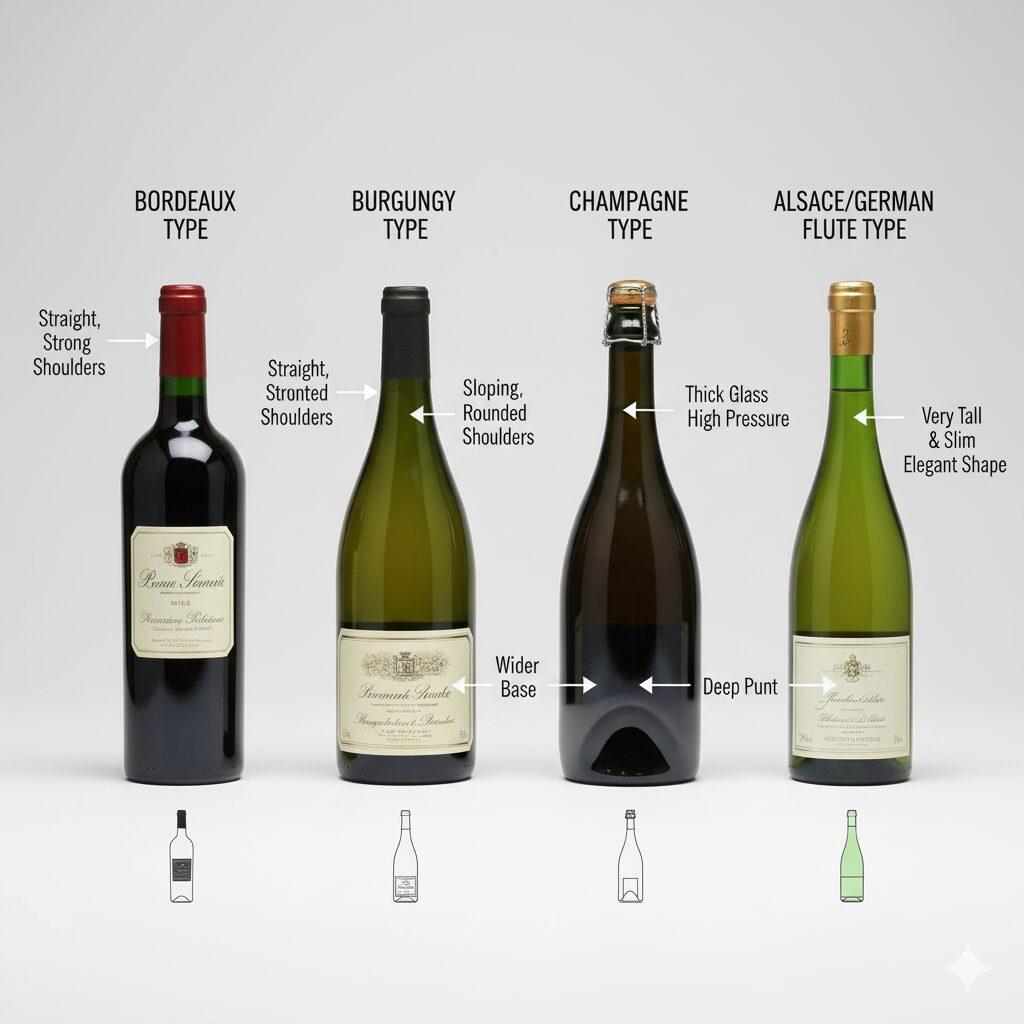
Wine Type: Sparkling wine bottles, especially Champagne bottles, commonly feature deeper punts. Their packaging must accommodate internal pressure, so the bottle’s overall structure is designed accordingly. Still wine bottles generally have more variation in bottom design.
Bottle Structure: The punt is one part of the bottle’s base geometry. Its shape and depth are considered alongside glass thickness, bottle dimensions, and material distribution.
Traditional Bottle Styles: Certain wine bottle styles have established design conventions. Maintaining a familiar bottle shape can be important for producers who want to preserve a traditional appearance.
Brand Preferences: Some brands prefer a deep punt because it creates a particular visual impression. Others choose a simpler, shallower design to suit their packaging style.
The following comparison shows some common differences:
| Bottle Type | Common Bottom Design | Design Consideration |
|---|---|---|
| Champagne Bottles | Often deep punt | Overall structure must accommodate internal pressure |
| Sparkling Wine Bottles | Often deep or moderately deep punt | Pressure requirements and bottle construction |
| Still Red Wine Bottles | Deep, shallow, or moderate punt | Traditional style and packaging preferences |
| White Wine Bottles | Often shallow or moderate punt | Bottle shape and product presentation |
| Some Modern Wine Bottles | Shallow or nearly flat base | Simple design and production requirements |
These are general design tendencies rather than fixed rules. Bottle designs vary between manufacturers and individual wine brands.
Does a Deeper Punt Mean Better Wine?
No. A deeper punt does not necessarily mean that a wine is better or more expensive.
Some people associate a deep wine bottle punt with premium wine because it is commonly seen on Champagne bottles and certain traditional wine bottles. However, this is mainly a packaging and design association.
The quality of wine depends on factors such as grape varieties, growing conditions, winemaking methods, and storage. The depth of the bottle’s bottom indentation does not determine these qualities.
Similarly, a deep punt does not automatically indicate thicker glass, greater durability, or better wine storage performance.
When comparing wine bottles, it is more useful to consider their actual specifications and intended use rather than judging them by punt depth alone.
Does Punt Design Matter When Choosing Wine Bottles?
For wine producers and packaging buyers, the punt is more than a decorative detail. It is one of several design elements to consider when selecting or developing glass wine bottles.
Before choosing a bottle, you should look at the following factors:
- Bottle Capacity and Dimensions: Make sure the bottle size and overall dimensions meet your packaging and filling requirements.
- Base Stability: The standing ring and bottom geometry should provide a stable contact surface, allowing the bottle to stand properly.
- Glass Distribution and Weight: Glass thickness and material distribution should be considered as part of the complete bottle structure.
- Pressure Requirements: Sparkling wine and other carbonated products require bottle designs that meet their specific pressure requirements.
- Mold Design: For custom wine bottles, the punt shape and depth can be incorporated into the mold design to achieve the desired appearance and structure.
For brands developing custom glass wine bottles, these details should be evaluated together rather than treating punt depth as an isolated specification. An experienced glass bottle manufacturer can help assess bottle dimensions, base structure, glass distribution, and manufacturing requirements during the design process.
FAQ
1. Do All Wine Bottles Have a Punt?
No. Many traditional wine bottles have an indented bottom, but not all wine bottles do. Some modern designs use a shallow punt or a nearly flat base, depending on the bottle style and intended application.
2. Does a Wine Bottle Punt Collect Sediment?
The punt is sometimes said to help collect wine sediment, but this is not its primary or proven universal function. Sediment naturally settles at the bottom of a bottle during storage. The bottle’s shape may influence where it gathers, but the punt does not filter or remove sediment.
3. Why Do Champagne Bottles Have Deep Punts?
Champagne bottles commonly have deep punts as part of their traditional bottle design. They are also engineered to handle the internal pressure created by carbon dioxide. However, pressure resistance depends on the entire bottle structure, not just the depth of the punt.
4. Can Wine Bottles Have a Flat Bottom?
Yes. Some wine bottles have a shallow indentation or an almost flat bottom. A deep punt is not a universal requirement for wine packaging. The appropriate base design depends on the bottle’s intended use, structural requirements, and overall design.
Conclusion
So, why do wine bottles have a punt? This familiar indentation has historical roots in traditional glassmaking and continues to be part of modern wine bottle design. It can contribute to the bottle’s overall structure, provide a convenient grip when pouring, and maintain the traditional appearance of wine packaging.
However, a deeper punt does not automatically mean better wine or a stronger bottle. Its design should be considered alongside bottle dimensions, glass thickness, material distribution, and the intended application.For wine brands looking to develop custom glass bottles, choosing the right bottom design is one part of creating packaging that balances appearance, functionality, and manufacturing requirements.