
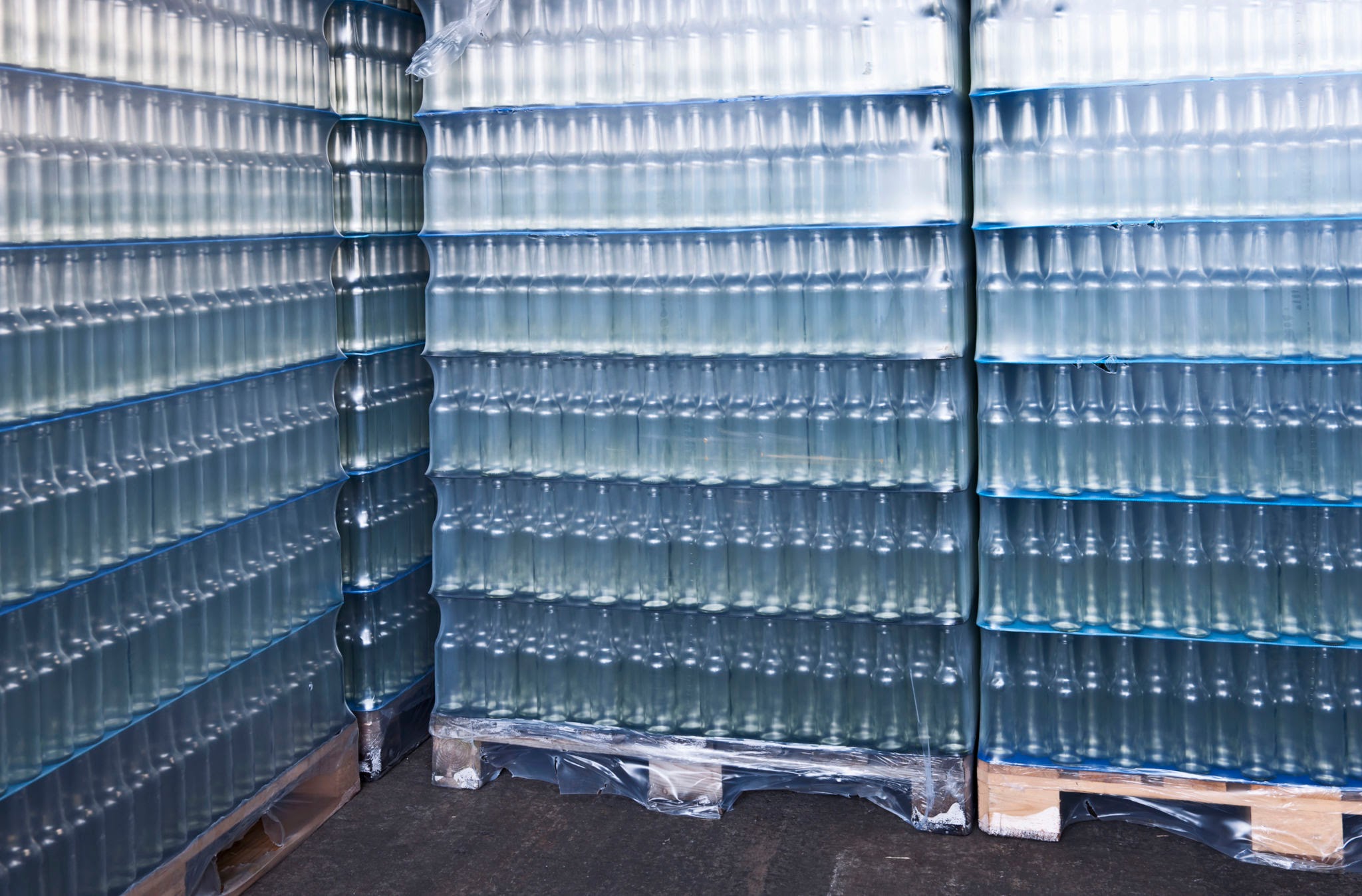
When sourcing containers directly from a glass bottle manufacturer, choosing the right bottle design is only half the battle. The real test happens during cross-ocean sea freight. Industry-wide, poorly packed glass shipments suffer an average breakage rate of 2% to 5%—a loss that not only eats into your margins but can also introduce dangerous glass shards into your filling facility and delay your product launch.
Table of Contents
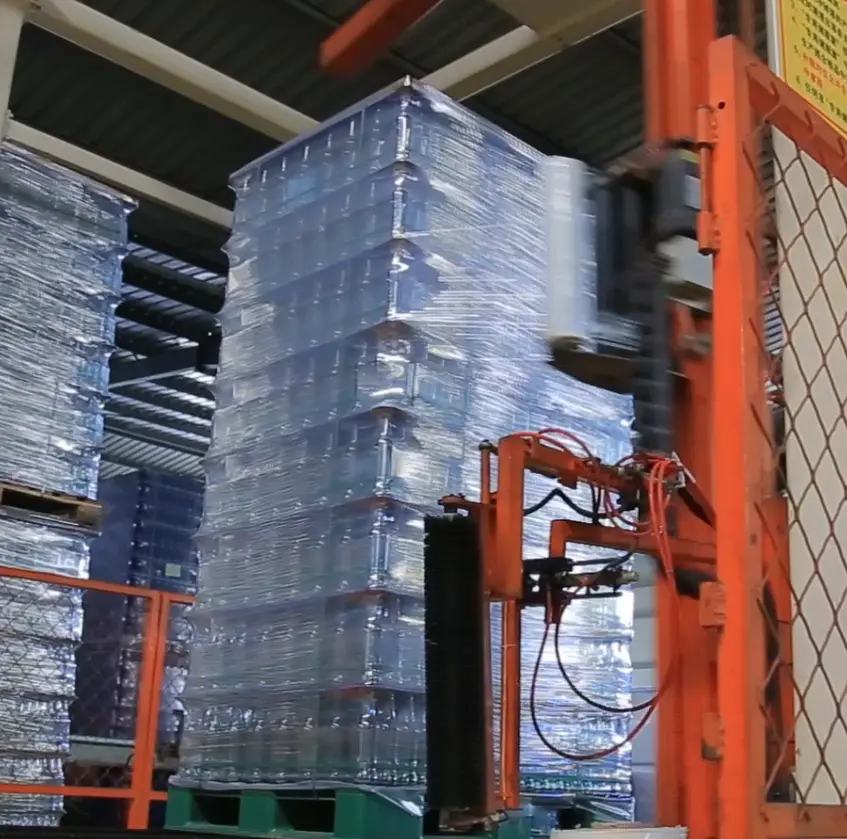
Bulk Palletization: Built for Automated Filling Lines & High-Volume Orders
For large-scale distilleries, breweries, and beverage brands operating automated depalletizers and high-speed bottling lines, bulk palletization (layer-by-layer pallet packing without individual cartons) is the most cost-effective and efficient solution.
In our manufacturing complex—equipped with 12 automated 6S–9S production lines—bulk palletization is executed right after our camera and crack inspection machines verify every container:
- ISPM-15 Certified Pallets: We use heat-treated, IPPC-stamped wooden pallets (or heavy-duty plastic pallets) with deck boards at least 15mm thick to support heavy loads without flexing during forklift transfers.
- Layer Pad Separation: Bottles are arranged in tight, interlocking matrices. Between every tier, we insert high-grammage kraft paper layer pads or corrugated PP sheets to prevent base-to-finish friction and distribute vertical compression evenly.
- Glass-Grade Matching: Based on our factory’s packing protocols, bulk palletization with layer pads is ideal for common flint glass bottles and standard wine bottles (such as Bordeaux or Burgundy styles) that do not feature delicate exterior coatings.
- Controlled Stack Height: Depending on bottle center-of-gravity and container height (20GP vs. 40HQ), we cap pallet heights—typically around 1.2m to 1.3m for tall spirit bottles—to eliminate top-heavy tipping during rough sea transit.
The Bottom Line: Bulk palletization maximizes container cubic utilization, allowing you to fit 15% to 20% more bottles per 40HQ container compared to boxed shipments, significantly lowering your landed freight cost per unit.
Carton with Dividers: Maximum Protection for Craft Brands & Decorated Glass
When shipping super flint glass bottles, custom-decorated vessels (frosted, spray-coated, screen-printed, or electroplated), or orders destined for manual filling lines and retail distribution, corrugated cartons with dividers are the gold standard.
- Double-Wall Export Cartons: Standard retail boxes collapse when exposed to ocean humidity. We utilize 5-ply double-wall corrugated cartons (ECT 44+ rating) engineered to withstand high stacking pressure inside a shipping container.
- Cell-by-Cell Partitioning: Inside every master carton, precision-cut corrugated dividers isolate each bottle in its own cell (e.g., 6-pack, 12-pack, or 24-pack configurations). Bottles never touch one another, eliminating micro-abrasions and clinking breakage.
- Extra Surface Shielding: For luxury perfume bottles, cosmetic jars, and heavy-bottomed liquor bottles with custom finishes, we place each bottle inside an individual PE polybag before inserting it into the divider cell.
- Carton-on-Pallet vs. Floor-Loaded: For faster unloading at your warehouse, we stack sealed cartons onto export pallets using column stacking (aligning box corners vertically for maximum load strength). Alternatively, for importers looking to squeeze maximum volume out of a container for smaller jars or bottles, we also offer floor-loaded carton configurations.

Quick Comparison: Bulk Pallets vs. Divided Cartons
Not sure which export packaging format fits your supply chain? Here is how our two primary configurations compare for international buyers:
| Evaluation Factor | Bulk Palletization (Layer Pads + Shrink Wrap) | Carton with Dividers (Carton + Pallet / Floor Load) |
| Best For | High-volume beverage, beer, wine, and food brands with automated depalletizers | Craft spirits, cosmetics, essential oils, decorated bottles, and manual filling lines |
| Container Loading Volume | Highest (+15–20% more units per container) | Moderate (dividers and walls occupy extra cubic space) |
| Surface Scratch Protection | Moderate (suitable for uncoated flint, amber, and green glass) | Maximum (zero bottle-to-bottle contact; supports individual polybags) |
| Unloading & Line Speed | Ultra-Fast (forklift offloads an entire pallet directly onto the depalletizer) | Manual / Moderate (requires manual unboxing onto the conveyor) |
| Packaging Material Cost | Lower (eliminates individual box and partition costs) | Higher (requires custom die-cut cartons and inserts) |
| Retail / Secondary Use | Requires repacking after filling | Master cartons can often be reused for downstream shipping |
Container Loading & Breakage Rate Control
Even the strongest pallet packaging can fail if a shipping container is loaded carelessly. Our warehouse logistics team follows strict container stuffing SOPs to neutralize transit vibration and sudden braking forces:
- Pre-Loading Container Audit: Before a single pallet enters the container, we inspect the doors, roof, and walls for pinholes or rust leaks, and verify that the wooden floor is completely dry and free of protruding nails.
- Zero Pallet Overhang: Every pallet footprint is engineered to match standard 20GP and 40HQ internal dimensions with zero overhang, ensuring flush wall-to-wall alignment.
- Dunnage Air Bags & Void Filling: Any lateral or rear gaps between pallets and container walls are braced using inflatable kraft dunnage air bags or wooden blocking. When inflated, these air bags cushion lateral sway during heavy seas.
- Pre-Shipment Drop & Compression Verification: Prior to mass dispatch, our in-house testing laboratory conducts simulated vibration, stack-load compression, and carton drop tests—backing up our 0% breakage commitment (if any transit breakage occurs due to packaging failure, we provide full compensation for the affected bottles).

FAQ
-
Can we mix different glass bottle SKUs in a single container?
Yes. If you are ordering multiple sizes or shapes—such as 750ml liquor bottles alongside 200ml sample bottles—we recommend carton-on-pallet packaging. Heavy bottles are placed on bottom-tier pallets while lighter cosmetic or food jars are secured on top, maximizing space without compromising structural stability.
-
Do your wooden pallets comply with US, EU, and Australian customs regulations?
Absolutely. All wooden pallets used for export undergo certified ISPM-15 heat treatment and carry visible IPPC stamps, ensuring smooth customs clearance without quarantine delays. We also offer fumigation-free plywood and plastic pallets upon request.
-
What is your minimum order quantity (MOQ) for custom export packaging?
For standard stock molds (from our library of 3,000+ ready molds), our MOQ starts at 6,000 units with palletized carton packing. For custom-printed retail cartons or full bulk palletization runs, our team will calculate the exact pallet and container configuration during your 20-day sampling stage.
Get a Custom Container Loading Plan for Your Next Order
Not sure how many bottles will fit into a 20GP or 40HQ container—or whether bulk pallets or divided cartons will save you more on landed costs?
At TP Glass Bottle, with over 30 years of export experience of glass containers annually across North America, Europe, and Southeast Asia, we treat bulk glass bottle packaging as an extension of our precision manufacturing. Send our engineering team your target bottle capacity, shape, and destination port. Within 12 hours, we will provide a customized Container Loading & Packaging Proposal along with free functional bottle samples for your line testing.