
Choosing the right packaging is an important decision for hot sauce and condiment brands. A glass bottle needs to do more than present the product on a retail shelf. Its shape, capacity, opening, and closure must also work with the sauce’s consistency, dispensing requirements, and filling process.
For food manufacturers and purchasing managers, sourcing glass hot sauce bottles involves balancing product functionality, brand presentation, and production requirements. A bottle that works well for a thin chili sauce may not be suitable for a thick BBQ sauce or a condiment containing solid ingredients.
This guide covers the key factors to consider when sourcing glass bottles for hot sauce and other condiments, from bottle design and closure selection to production compatibility and bulk ordering.
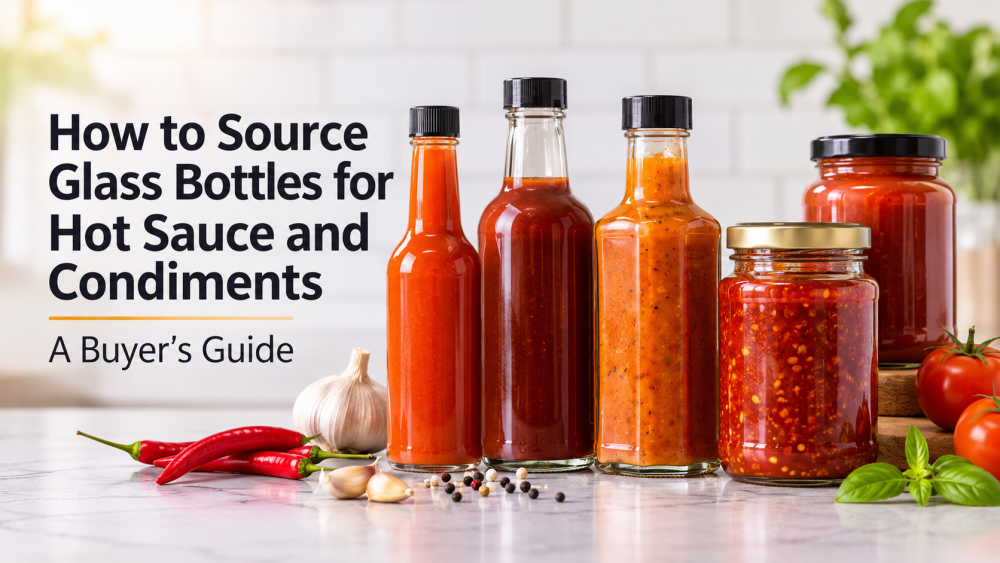
Table of Contents
1. Common Glass Bottle Designs for Sauces and Condiments
Different sauce products require different bottle designs. When selecting glass sauce bottles, start with the product’s consistency, ingredients, and intended dispensing method rather than choosing a shape based on appearance alone.
Narrow-Neck and Woozy Glass Bottles
Narrow-neck bottles, particularly the traditional Woozy-style design, are commonly used for hot sauce. Their relatively slim openings help control pouring and make them suitable for liquid sauces, vinegar-based chili sauces, and other condiments with a relatively thin consistency.
These glass hot sauce bottles can also be paired with orifice reducers to provide more controlled dispensing. This is useful for products that consumers typically use in small amounts.
Round and Square Glass Sauce Bottles
Round glass bottles are a versatile option for BBQ sauce, cooking sauce, chili sauce, and other everyday condiments. Their familiar shape works well for different label designs and retail packaging styles.
Square glass bottles offer a different appearance and provide relatively flat surfaces for branding and labeling. They can be considered by brands looking to create a distinctive shelf presentation or make better use of available packaging space.
Both designs can be manufactured in different capacities and paired with suitable closures, depending on the product and filling requirements.
Wide-Neck Bottles and Glass Food Jars
Not every sauce is suitable for a narrow-neck bottle. Thick sauces, chili pastes, and condiments containing larger particles may be difficult to fill or dispense through a small opening.
For these products, wide-neck glass bottles or glass food jars may be a more practical option. They provide easier access for filling and product removal, especially when consumers use a spoon or other utensil.
For products such as chunky chili sauce, thick tomato-based condiments, and certain specialty food products, comparing glass bottles with wide-mouth food jars can help brands find a more suitable packaging format.
| Sauce Type | Recommended Packaging | Key Considerations |
|---|---|---|
| Thin hot sauce | Narrow-neck or Woozy bottle | Controlled pouring, orifice reducer |
| Chili sauce | Narrow or wide-neck bottle | Viscosity, pepper and spice particles |
| BBQ sauce | Round or square glass bottle | Capacity, opening size, dispensing |
| Ketchup | Suitable wide-opening bottle | Filling efficiency, product flow |
| Thick chili paste | Wide-mouth glass jar | Easy filling and product removal |
| Salad dressing | Round glass bottle | Pouring control, closure sealing |
The final choice should always be based on the actual product formulation and intended use.
2. How to Choose the Right Bottle Capacity and Opening
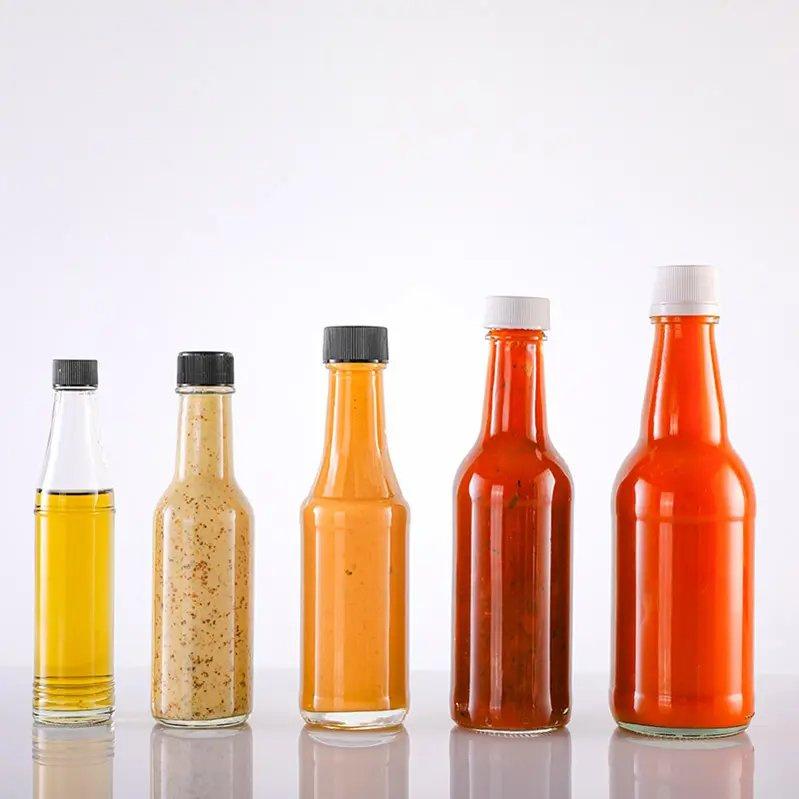
Bottle capacity and opening size are two important specifications when sourcing glass bottles for condiments. They affect not only packaging appearance but also filling efficiency, storage, and the consumer’s experience.
Selecting the Right Bottle Capacity
The appropriate capacity depends on the sales channel, product positioning, and expected consumption.
- Retail products: Smaller bottles are often suitable for hot sauce and specialty condiments sold for individual or household use.
- Foodservice products: Larger bottles may be more practical for restaurants, commercial kitchens, and frequent-use applications.
- Gift sets and sample packaging: Compact bottles can help brands introduce different flavors or product varieties.
- Premium products: Capacity should complement the brand’s positioning, price point, and overall packaging design.
When selecting wholesale hot sauce bottles, consider the target market and distribution channel before finalizing the bottle size. The most attractive capacity is not necessarily the most practical one for production or everyday use.
Choosing the Right Bottle Opening
The bottle opening should match the sauce’s viscosity and ingredients.
Thin sauces can generally flow through smaller openings, while thicker products may require a wider mouth. If the sauce contains pepper pieces, herbs, seeds, or other solid ingredients, the opening must be large enough to allow the product to pass through without frequent blockage.
The dispensing method also matters. A narrow opening may help control pouring, while a wider opening can make thicker sauces easier to dispense or remove.
Before confirming the specifications, consider both filling requirements and how consumers will use the finished product.
3. Matching Bottle Closures to Sauce Products
A suitable closure is just as important as the glass bottle itself. When purchasing glass sauce bottles, brands should confirm that the closure matches the bottle’s neck finish, provides the required seal, and supports the intended dispensing method.
Screw Caps with Liners
Screw caps are a common closure option for glass bottles used in food packaging. Depending on the product and packaging requirements, they can be supplied with different liner materials to support sealing performance.
When selecting screw caps, confirm the neck finish, cap dimensions, liner compatibility, and intended filling and storage conditions.
Orifice Reducers and Dasher Inserts
Orifice reducers are useful for sauces that require controlled dispensing. They fit into compatible bottle openings and restrict the flow of liquid, helping consumers pour smaller amounts more easily.
Dasher inserts can also be used in certain condiment packaging applications where controlled dispensing is required. The appropriate insert depends on the bottle design and product characteristics.
These accessories are particularly worth considering when sourcing Woozy hot sauce bottles or other narrow-neck glass sauce bottles.
Tamper-Evident and Dispensing Closures
For retail food packaging, tamper-evident closures can provide visible evidence of whether a package has been opened. Other dispensing closures may be suitable for products that require more convenient application.
Not every closure works with every bottle. Buyers should confirm the neck finish, closure dimensions, sealing structure, and compatibility with their capping equipment before placing a bulk order.
4. Filling, Sealing, and Production Line Compatibility
A glass bottle may look suitable for a product but still create problems during manufacturing if it does not match the existing production line. Before ordering glass bottles for hot sauce or condiments, brands should provide their supplier with information about the filling and packaging process.
Filling method and temperature: Confirm whether the product uses hot filling, cold filling, or another filling process. For hot-fill applications, the bottle must be suitable for the actual filling conditions. Temperature requirements should be confirmed with the glass bottle supplier rather than assumed.
Filling equipment: Check the dimensions of the filling heads and other equipment that interact with the bottle. Bottle height, opening dimensions, and overall shape can affect filling operations.
Capping equipment: The selected closure must match both the bottle’s neck finish and the requirements of the capping machine. Incompatible caps or dimensions may cause sealing and production problems.
Labeling equipment: Consider the bottle’s shape, diameter, shoulder design, and available labeling area. These factors can affect how easily labels are applied and positioned.
Sealing requirements: The complete bottle-and-closure combination should be tested under the intended packaging and storage conditions. Requirements may differ depending on the sauce formulation, distribution method, and shelf-life expectations.
Discussing these details with a glass sauce bottle supplier early in the sourcing process can reduce the risk of compatibility issues during mass production.
5. Decoration and Labeling Options for Glass Sauce Bottles
Packaging appearance plays an important role in how consumers recognize and distinguish food brands. Glass bottles offer several decoration options that can support different branding strategies.
Glass Color and Appearance
Clear glass is a popular choice for hot sauce and condiment packaging because it allows consumers to see the product’s color and texture. This can be particularly useful for colorful chili sauces, specialty condiments, and visually distinctive recipes.
Amber or other colored glass can be considered when a brand prefers a different visual style or has specific packaging requirements. The glass color should be selected according to both branding and product needs.
Custom Decoration and Branding
For brands seeking more distinctive packaging, several decoration options are available:
- Screen printing: Applies logos, product names, or other designs directly onto the glass surface.
- Labels and decals: Offer flexibility for product information, brand graphics, and different product varieties.
- Frosted or colored finishes: Create a different surface appearance and help establish a recognizable brand style.
- Embossed logos: Add raised branding details to custom glass bottle designs.
Labeling Considerations
Before finalizing a bottle design, check the available label area and the curvature of the bottle surface. The label should fit properly without interfering with the bottle’s shape or important product information.
For products that may be refrigerated or exposed to moisture, label material and adhesive performance should also be evaluated.
6. What to Confirm Before Ordering Wholesale Glass Sauce Bottles
Once the bottle design has been selected, the next step is to confirm the specifications and supplier capabilities. A clear specification sheet helps avoid misunderstandings and makes it easier to compare different glass sauce bottle suppliers.
Product and Packaging Specifications
Before requesting a quotation, prepare the following information:
- Sauce type, viscosity, and whether it contains solid ingredients.
- Required bottle capacity, dimensions, and glass color.
- Bottle opening and neck finish specifications.
- Preferred cap, liner, and dispensing accessories.
- Filling method, filling temperature, and sealing requirements.
- Labeling and decoration preferences.
The more detailed the requirements, the easier it is for a supplier to recommend a suitable standard bottle or develop a custom design.
Supplier Capabilities and Order Requirements
When evaluating a glass sauce bottle supplier, consider more than the unit price. Check whether the supplier can provide the bottle specifications, matching closures, samples, and customization services your project requires.
Other important factors include:
- Product availability: Whether standard bottle designs are available for your application.
- Custom mold development: Whether new bottle shapes and capacities can be developed.
- Accessories: Whether compatible caps and dispensing components can be supplied.
- Minimum order quantity (MOQ): Whether the order quantity matches your purchasing plan.
- Production lead time: Whether the supplier can meet your launch and delivery schedule.
- Quality inspection: Whether inspection procedures are available for bulk production.
- Export packaging: Whether the bottles are packed appropriately for transportation and handling.
Test Samples Before Mass Production
Request samples and test them with your actual sauce and production equipment before confirming a large order.
Check whether the sauce flows smoothly, whether the bottle opening is suitable for the ingredients, and whether the closure provides the required sealing performance. It is also important to test filling, capping, and labeling operations under representative production conditions.
For wholesale hot sauce bottles, confirming the specifications and sample performance before mass production can help reduce avoidable packaging and production issues.
7. FAQ
What Type of Glass Bottle Is Best for Hot Sauce?
Narrow-neck and Woozy-style glass bottles are commonly used for liquid hot sauces because they help control pouring. However, thicker sauces or products containing solid ingredients may require wider openings. The best design depends on the sauce’s consistency and dispensing requirements.
What Size Glass Bottle Is Commonly Used for Hot Sauce?
Hot sauce is available in various bottle capacities depending on the target market, sales channel, and product positioning. Smaller bottles are popular for retail products and specialty sauces, while larger formats may suit foodservice applications. Brands should confirm capacity based on their packaging strategy and expected consumption.
Do Glass Sauce Bottles Need an Orifice Reducer?
Not necessarily. An orifice reducer is useful when a sauce requires controlled dispensing, particularly for thinner liquids. Thicker sauces or products containing particles may need a larger opening instead. The decision should be based on actual product testing.
Are Glass Jars Better Than Bottles for Thick Sauces?
Glass jars can be more practical for thick sauces, chili pastes, and products containing larger pieces of ingredients because their wide openings make filling and product removal easier. Narrow-neck glass bottles are generally more suitable for sauces that can flow through a smaller opening.
What Should I Provide When Requesting a Wholesale Glass Sauce Bottle Quote?
Provide the sauce type, required capacity, bottle design, neck finish, closure preferences, filling conditions, decoration requirements, and estimated order quantity. Sharing reference images or existing bottle samples can also help a supplier understand your requirements and recommend suitable options.
Conclusion
Sourcing the right glass bottles for hot sauce and condiments requires more than selecting an attractive bottle shape. Capacity, opening size, closure compatibility, filling requirements, and branding options all need to work together.
At TP, we provide standard and custom glass bottle solutions for food and condiment packaging, including hot sauce bottles in different designs and specifications. Whether you need wholesale glass sauce bottles, matching closures, custom decoration, or new mold development, our team can help you evaluate packaging options based on your product and production requirements.
Contact TP to discuss your glass sauce bottle requirements and find a suitable packaging solution for your brand.