

In the packaging industry, Frosted Glass Bottles have become a widely used and versatile option, finding applications across multiple sectors including cosmetics, pharmaceuticals, food and beverages, and more. Unlike clear glass containers, their frosted finish creates a subtle, matte texture that serves both practical and aesthetic purposes—it helps protect light-sensitive contents from UV damage while delivering a sleek, professional appearance that many brands and consumers prefer. This article aims to break down these key aspects, providing a clear and practical overview of frosted glass bottles, their applications, and the customization possibilities.
What Are Frosted Glass Bottles? Definition & Core Characteristics
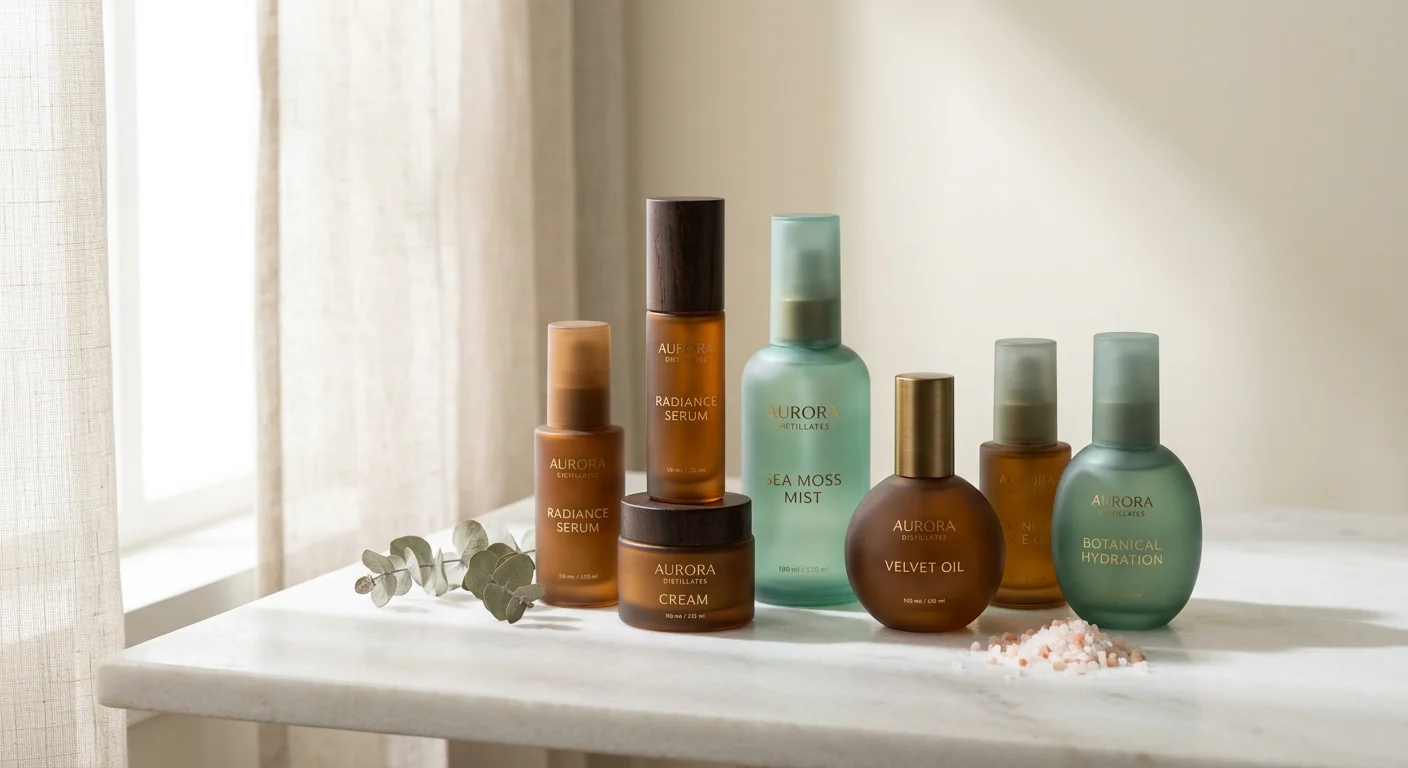
Frosted glass bottles are exactly what they sound like — and a lot more.
At the surface level, they’re glass containers treated to create a matte, semi-opaque finish. Light passes through, but softly. The contents stay visible, just diffused — like looking through morning fog instead of a clear window. Run your fingers across one and you’ll feel a fine, velvety texture that smooth glass can’t replicate.
That combination — visual softness plus tactile warmth — is what makes frosted glass packaging such a powerful tool for premium brands.
The Core Characteristics That Define Frosted Glass
Appearance: A uniform matte surface that scatters light instead of reflecting it. No glare. No harsh shine. Just an even, luminous haze that feels naturally sophisticated.
Translucency: Frosted glass lets filtered light pass through, unlike opaque packaging. This creates depth — a visual quality that feels more alive than solid-color containers, and more refined than clear ones.
Texture: The surface carries a subtle micro-roughness, produced by either chemical etching or mechanical abrasion. It signals quality through touch before the product is even opened.
Structural integrity: The frosting process touches the surface only. The glass beneath stays as durable and stable as standard glass — no compromise on strength.
How Frosted Glass Compares
| Feature | Frosted Glass | Clear Glass | Plastic |
|---|---|---|---|
| Premium perception | ✦✦✦✦✦ | ✦✦✦ | ✦✦ |
| UV protection | Moderate | Low | Varies |
| Sustainability | High | High | Low–Medium |
| Tactile experience | Distinctive | Neutral | Generic |
Brands in skincare, fragrance, spirits, and wellness keep reaching the same conclusion. The product needs to feel like an investment. Frosted glass packaging carries that message. Clear glass and plastic just don’t.
How Frosted Glass Bottles Are Made: Acid Etching vs Sandblasting
Two manufacturing methods create that signature frosted finish. Each works differently, feels different, and suits different production needs. Here’s what happens.
Acid Etching: Chemistry at the Surface
Acid etching — also called chemical etching — is the industry standard for high-volume frosted glass bottle manufacturing. The process uses a hydrofluoric acid solution (or a buffered etching compound) to roughen the glass surface at a microscopic level. That controlled roughness scatters light and creates the smooth, even matte finish you associate with premium frosted cosmetic glass bottles and frosted perfume bottles.
Manufacturers apply the etching solution in three ways. Each option has a specific use case:
- Immersion (dip etching): Workers submerge the bottle in an etching bath. This works well for complex shapes — round bottles, curves, and contoured shoulders all get even, uniform coverage.
- Spray etching: A spray gun or automated nozzle applies the solution across the surface. This is faster and easier to control. It suits high-volume production lines where consistency across thousands of units is a must.
- Flow coating: The etching liquid pours or flows over the surface in a controlled stream. This is less common, but it works well for specific decorative effects or partial frosting.
Acid etching produces a fine, refined surface texture. The matte finish feels silky to the touch. That’s why this method leads frosted cosmetic glass bottle and frosted perfume bottle production — tactile quality is a core part of the brand experience.
Sandblasting: Mechanical Precision
Sandblasting (also called abrasive blasting or physical sanding) takes a different approach. Fine abrasive particles — aluminum oxide or silica sand — fire at high speed against the glass surface. The impact creates a coarser, more textured matte finish than acid etching delivers.
This method gives manufacturers precise control over where the frosting lands. You can target specific areas, create sharp edges, or build gradients. That makes it the go-to choice for partial frosting, decorative patterns, and custom glass bottle etching — any design that needs defined clear-and-frosted contrasts on the same bottle.
Which Method Is Right for Your Product?
| Acid Etching | Sandblasting | |
|---|---|---|
| Surface feel | Silky, fine-grain | Coarser, tactile |
| Best for | Full-surface frosting, high-volume runs | Custom patterns, partial frosting |
| Consistency | Excellent at scale | High precision for detail work |
| Typical applications | Frosted essential oil bottles, cosmetic packaging | Decorative spirits bottles, custom designs |
Neither method beats the other across the board. The right pick depends on your bottle design, your production volume, and the sensory experience your brand wants to deliver.
Frosted Glass Bottles for Cosmetics & Skincare: Applications & Design Logic
Skincare brands don’t sell moisturizer. They sell a promise — that your skin will look better, feel better, be better. The packaging has to deliver that promise before you ever read the ingredient list.
That’s why frosted cosmetic glass bottles have become the go-to visual language of premium skincare. Walk through the skincare aisle of any luxury department store — or scroll through top brands on Sephora’s website — and you’ll spot the pattern right away. Brands charging $80 for a serum don’t put it in clear plastic. They put it behind a soft, luminous matte surface that says this is different before a single word is read.
Why Frosted Glass Fits the Skincare Brand Narrative
The cosmetics market has a segmentation problem. Every brand claims to be “clean,” “natural,” “results-driven,” or “dermatologist-developed.” Words have gotten cheap.
Frosted glass packaging does solid, reliable work across specific brand categories:
Pharmaceutical-grade and dermocosmetic brands use frosted glass to project clinical credibility. The matte finish reads as precise and measured — less “beauty counter,” more “lab-developed.” These brands often pair full-surface frosting with minimal labeling: a small embossed logo, a clean sans-serif typeface, and nothing else.
Natural and organic skincare brands use frosted glass in a different way. The softness of the matte finish echoes the brand’s core values — earth tones, botanical ingredients, nothing harsh or synthetic. A frosted glass bottle feels closer to nature than a glossy, reflective container.
Luxury anti-aging and prestige skincare lines use frosted glass to signal value. Premium perception matters here above almost everything else. A $150 face cream in clear glass looks ordinary. The same cream in a frosted glass jar with a gold-stamped logo looks like something you’d display on your vanity — not hide under the sink.
Design Combinations That Work in Practice
The most effective frosted cosmetic glass bottle designs don’t stop at full-surface frosting. They use the contrast between frosted and clear areas as a design element on its own.
Two combinations show up across high-performing skincare packaging:
- Partial frosting with a clear window: The bottle body carries the matte finish, but a vertical or horizontal strip of clear glass runs along one side. The product inside becomes visible — its color, its texture. You get a real moment of transparency that builds consumer trust. For serums and facial oils with distinctive colors or textures, this design turns the formula itself into a visual asset.
- Full-surface frosting with hot-stamped or embossed branding: The entire bottle surface is frosted, creating a uniform, premium matte base. A brand logo or wordmark is then applied in gold or silver foil stamping — or pressed into the glass. The contrast between the soft matte field and the sharp metallic detail creates an elevated, gift-ready look. That kind of shelf presence commands attention and supports a higher price point.
The Light Protection Benefit — A Functional Bonus
There’s a practical side to this aesthetic choice that skincare formulation teams care about. Many active ingredients — vitamin C, retinol, certain peptides — break down with UV exposure. Frosted glass bottles offer a moderate level of light diffusion that clear glass doesn’t provide.
It’s not a substitute for full UV-protective glass in products with serious photosensitivity concerns. But for everyday serums, facial oils, and toners, the frosted surface adds a real layer of ingredient protection. The packaging looks better and works better. That’s a clear argument for product developers who are weighing material options.
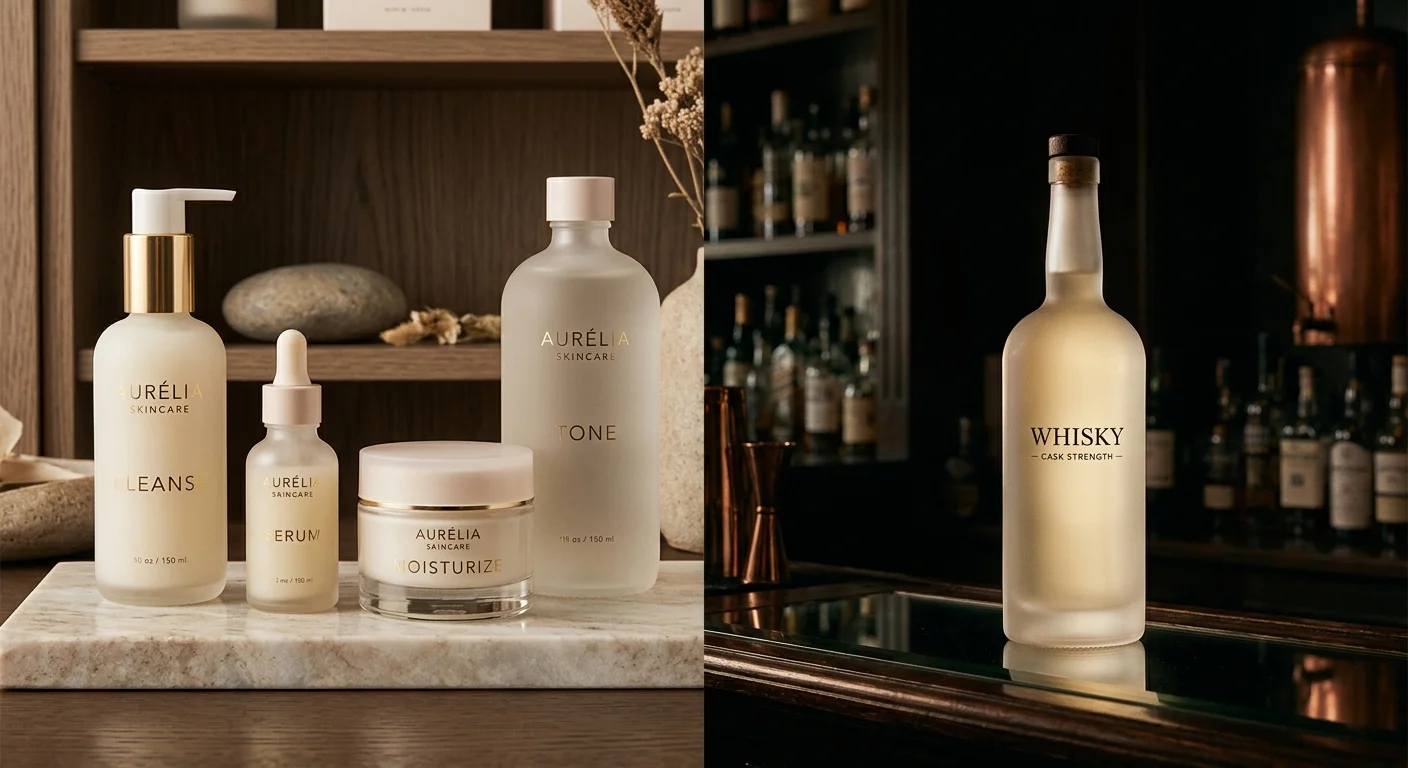
For brands building a cohesive product line, frosted glass scales well. Apply the same finish across a cleanser pump, a serum dropper bottle, and a moisturizer jar — you get a shelf presence that looks planned and polished, not pieced together.
Frosted Glass Bottles for Spirits & Beverages: Elevating Liquor Packaging
Why the Spirits Industry Is Moving Toward Frosted Glass
The shift is real and measurable. Across whiskey, baijiu, craft gin, and premium sake, producers are dropping ornamentation-heavy packaging. They’re choosing materials that communicate quality through texture and form instead. Frosted glass bottle manufacturing sits at the center of that transition.
Here’s what’s driving it:
- Shelf differentiation at the premium tier. In the $50-and-above spirits category, bottles fight for attention in a crowded, saturated environment. A frosted finish creates instant visual separation. The matte surface looks considered and deliberate against a sea of shiny competitors.
- Tactile brand experience. Spirits purchase decisions are emotional. The second a customer picks up a bottle, the packaging starts talking. A frosted glass surface — with its fine, velvety texture — signals craftsmanship before anyone even pours a drop.
- Partial frosting as a design strategy. Many high-end spirits bottles use sandblasted frosting to create clear-and-matte contrast zones. Think a frosted lower body with a clear neck that shows off the liquid’s color, or a frosted panel with an embossed brand mark. This style of custom glass bottle etching shows up often in limited-edition and collector-series releases.
The Beverage Category Is Following the Same Logic
It’s not just spirits. Craft beer brewers, premium sake producers, and high-end botanical water brands are all exploring frosted beverage glass bottles to justify premium pricing and build a strong shelf identity. A frosted amber bottle for a craft IPA communicates something a standard clear bottle never could — that someone made this product with real intention.
Translucent glass packaging in beverages also brings a practical benefit. The frosted surface softens the look of fill-level variations and sediment. Every bottle in a batch stays visually clean and consistent.
How to Choose a Frosted Glass Bottle Supplier: Key Evaluation Criteria
Sourcing frosted glass bottles is not a simple commodity purchase. Get it wrong, and you end up with a warehouse full of unusable packaging. You face a delayed product launch, a brand story that lands flat, and a supplier relationship that costs more to exit than it ever should have cost to begin.
The criteria below separate manufacturers worth calling from ones worth skipping.
Production Capability Comes First
A supplier’s process range tells you more than any sales deck will. Ask them straight: do they offer both acid etched glass bottles and sandblasted glass bottles? A manufacturer skilled in both methods can recommend the right technique for your design — not just the one process their equipment supports. A supplier who pushes every project toward the same finish has a capability gap. They just dress it up as a preference.
Volume capacity matters just as much. Check these three things:
- Minimum order quantities
- Typical lead times at scale
- Whether they run dedicated production lines for frosted finishing — or treat it as a side process
Consistency across 10,000 units is a very different challenge from consistency across 500 samples. Make sure they can handle both.
The China Sourcing Advantage — and Where to Stay Careful
China’s glass packaging industry is mature, technically strong, and price-competitive. Factories in Shandong, Guangdong, and Zhejiang provinces have supplied custom glass bottle etching and full-surface frosted finishes to global brands for decades. The cost-per-unit advantages are real on high-volume runs.
The risk is not the country. The risk is skipping verification. Here is what to do before placing any production order:
- Request physical samples first
- Review quality control documentation
- Confirm the facility you are talking to is the one producing your bottles — not a middleman
TP Glass Bottle operates as a verified manufacturer — not a trading company. We offer both acid etching and sandblasting capabilities, ISO-compliant production, and full sample programs before any bulk commitment. Ready to evaluate us? [Request a sample or get a quote here] and judge the standard for yourself.
Conclusion
To summarize, frosted glass bottles stand out as a practical, aesthetically pleasing packaging solution, with applications spanning cosmetics, pharmaceuticals, food and beverages, and beyond—their frosted texture offers both UV protection for light-sensitive products and a sophisticated look that elevates brand identity.
At TP Glass Bottle Manufacturer, we specialize in turning these custom visions into reality, leveraging years of experience in glass bottle production to deliver high-quality frosted glass bottles that meet industry standards and exceed client expectations. Contact us today to discuss your frosted glass bottle needs and start your customization journey with a trusted partner.