
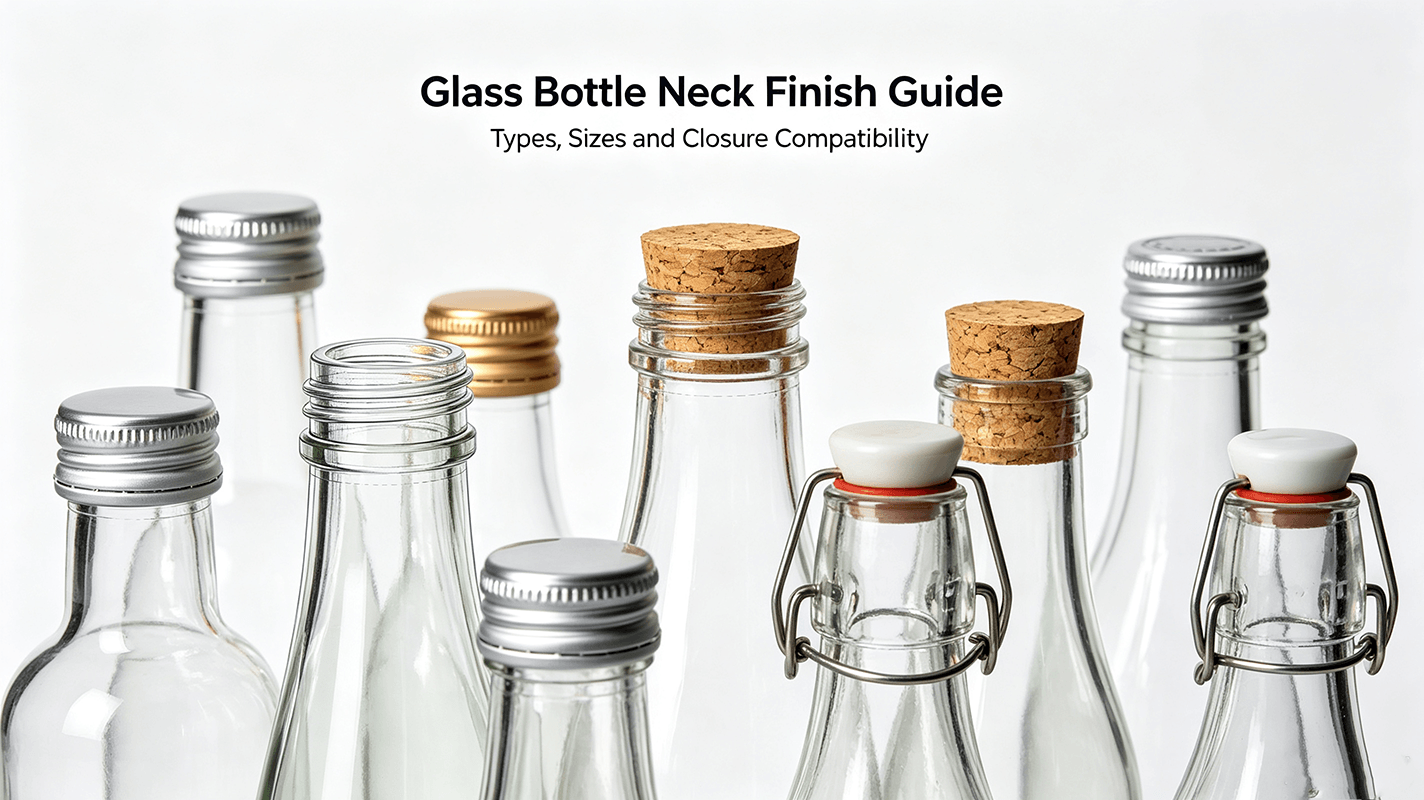
When choosing a glass bottle, the bottle shape and capacity are usually the first things people notice. However, the neck finish is just as important because it determines which closure the bottle can use and how the product is sealed.
Different glass bottles are designed with different neck finish types. Screw finishes, cork finishes, crown finishes, ROPP finishes, lug finishes, and snap finishes all have different characteristics and applications. Understanding these common bottle neck finish types can make it easier to choose the right bottle, closure, and packaging design for your product.
Table of Contents
What Is a Glass Bottle Neck Finish?
A bottle neck finish is the part of the bottle opening that is designed to work with a specific closure. It includes the shape and features around the bottle mouth that allow a cap, cork, or other closure to fit securely.
In simple terms, the bottle body holds the product, while the neck finish helps close and protect it. The neck finish needs to match the closure correctly. A screw cap, for example, requires a threaded bottle neck, while a cork closure requires a different type of bottle opening. This is why choosing a glass bottle is not only about finding the right capacity or appearance. The bottle neck and closure should also be considered together.
Common Glass Bottle Neck Finish Types
There are several bottle neck finish types used across beverage, liquor, food, pharmaceutical, and other packaging applications. The following are some of the most common.
Glass Bottle with Screw or Continuous
A screw finish, also called a continuous thread finish, has threads around the bottle neck that allow a screw cap to be twisted onto the bottle. This is one of the most familiar glass bottle neck types because it is simple to open, close, and use repeatedly. Screw caps can also provide a practical solution when products need frequent opening and closing.
Screw finish bottles are commonly used for:
- Beverages and drinking products
- Food and sauces
- Personal care products
- Some pharmaceutical products
One of the main advantages of a threaded glass bottle is convenience. The cap can usually be removed and replaced several times without changing the basic closure system. Screw cap glass bottles are available in many shapes and sizes, making this finish suitable for both everyday packaging and customized bottle designs.
Glass Bottle with Cork Finish
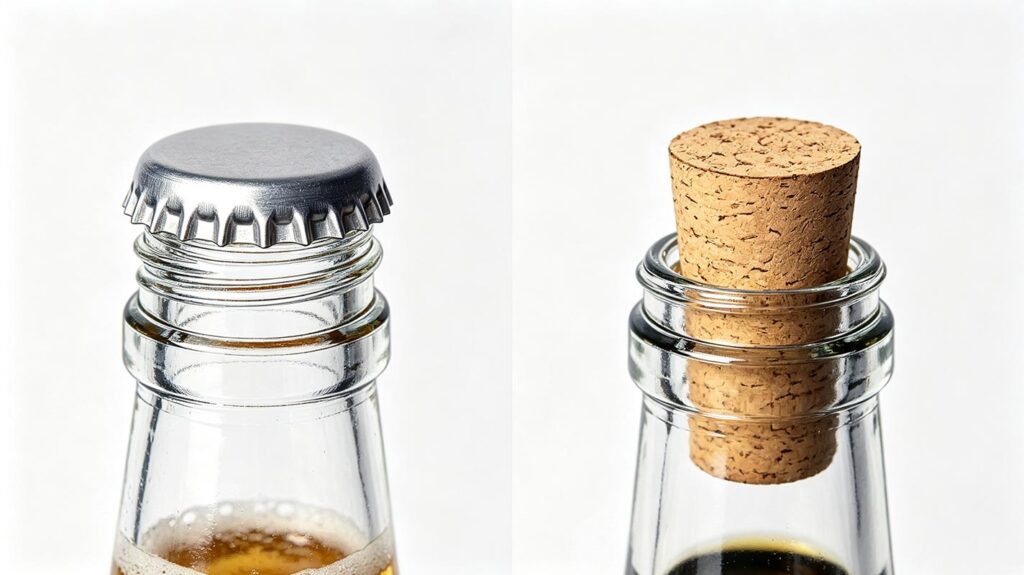
A cork finish is designed to work with a cork or similar stopper rather than a threaded cap. It is widely associated with products where packaging appearance and traditional presentation are important.
Glass bottles with cork closures are especially common in:
- Whiskey and other spirits
- Wine
- Specialty beverages
- Premium food products
A cork finish can give a bottle a more traditional or premium appearance. Different stopper designs can also change the overall look and user experience of the package. For liquor brands, the neck finish is often considered together with the bottle shape, glass weight, closure, and decoration. A distinctive bottle neck and cork can become part of the overall packaging design.
Glass Bottle with Crown Finish
The crown finish is commonly associated with beer bottles and beverages that use a crown cap. Instead of being screwed on, a crown cap is pressed onto the bottle neck to create a seal. This closure style has been widely used for bottled beer and other carbonated beverages.
Crown cap glass bottles are often used for:
- Beer
- Craft beer
- Carbonated beverages
- Some specialty drinks
One reason crown finishes remain popular is their familiar packaging format and simple closure design. For products such as beer, the cap can also become an important part of the brand presentation. When selecting a crown finish bottle, the bottle neck and crown cap need to be designed to work together for proper sealing.
Glass Bottle with ROPP Finish
ROPP stands for Roll-On Pilfer-Proof. This type of finish is commonly paired with aluminum ROPP closures. Unlike a standard screw cap, a ROPP closure is formed around the bottle neck during the capping process. The closure can provide a tamper-evident feature that shows whether the package has been opened.
ROPP glass bottles are commonly found in:
- Spirits and liquor
- Oils and food products
- Pharmaceutical packaging
- Other products requiring tamper-evident closures
ROPP finishes are especially useful when packaging needs a balance between a clean appearance, secure sealing, and tamper evidence. The neck finish, bottle design, and closure should be selected as a complete system rather than as separate components.
Glass Bottle with Lug Finish
Lug finishes are commonly found on glass jars, especially food jars. They use a lug cap with short threads or lugs that lock into matching points on the glass finish. Unlike a conventional continuous thread closure, a lug cap usually requires only a partial turn to open or close.
Lug finish glass jars are widely used for:
- Jam
- Pickles
- Honey
- Sauces
- Preserved foods
- Other food products
You will often see this type of closure described as a twist-off glass jar. The combination is practical for food packaging because the jar can be opened and closed relatively easily. Although lug finishes are more common on glass jars than narrow-neck bottles, they are an important part of the wider range of glass packaging neck finishes.
Glass Bottle with Snap or Snap-On Finish
Snap finishes are designed for closures that are pressed onto the bottle rather than screwed into place. A snap cap bottle can be convenient for products that need quick opening and closing. The closure design varies depending on the product and packaging requirements.
Snap-on closures can be found in applications such as:
- Beverages
- Food products
- Personal care
- Some pharmaceutical packaging
Compared with screw finishes, snap closures can provide a different user experience and a simple packaging format. The most suitable finish depends on the closure design, bottle application, filling process, and how the product is expected to be used.
How Bottle Neck Finish and Closures Work Together
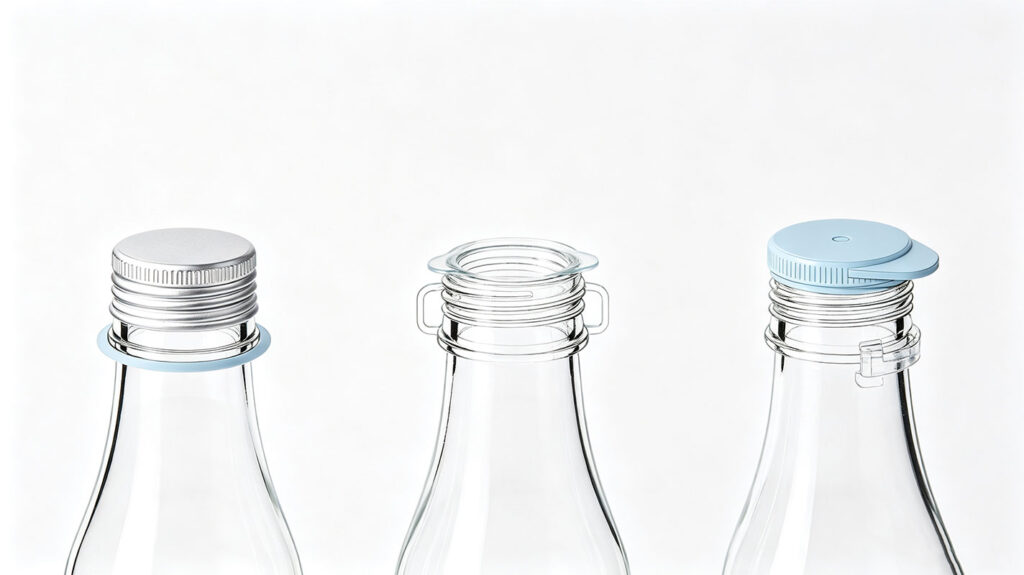
A glass bottle neck finish is designed to work with a compatible closure. Choosing the bottle and closure separately can lead to fit or sealing problems, so both should be considered during the packaging design stage.
Here is a simple overview of common combinations:
| Neck Finish | Common Closure | Typical Applications |
|---|---|---|
| Screw / Continuous Thread | Screw Cap | Beverages, Food, Personal Care |
| Cork Finish | Cork / T-Top | Liquor, Wine, Specialty Products |
| Crown Finish | Crown Cap | Beer, Carbonated Beverages |
| ROPP Finish | ROPP Cap | Spirits, Oils, Pharmaceuticals |
| Lug Finish | Lug Cap | Food Jars, Sauces, Preserves |
| Snap Finish | Snap Cap | Beverages, Food, Personal Care |
The correct combination depends on more than the appearance of the bottle. Closure style, sealing requirements, product characteristics, filling equipment, and user experience can all affect the final choice.
How to Choose the Right Bottle Neck Finish
The right bottle neck finish depends on how the bottle will be used and which closure best fits the product.
Consider the Product
Different products are commonly packaged with different closure systems. Beer often uses crown caps, while spirits may use cork or ROPP closures. Food jars frequently use lug caps, and many everyday products use screw caps. Starting with the product application can quickly narrow down the available options.
Consider the Closure
The closure should match the bottle neck finish. If you already have a preferred closure, make sure the bottle is designed for that closure before production. It is also important to consider how the customer will open and close the package. A screw cap, cork, crown cap, and lug cap all provide different opening experiences.
Consider Bottle Appearance
The neck finish can also affect the overall appearance of a glass bottle. For premium liquor packaging, for example, a cork or specialized closure can contribute to a more distinctive presentation. For food or beverage packaging, a simple screw or lug closure may be more practical. The neck should work visually with the bottle shape rather than being treated as a separate detail.
Consider Filling and Packaging Requirements
The bottle finish should also be suitable for the intended filling and capping process. When developing a custom glass bottle, it is helpful to discuss the bottle, neck finish, and closure together at an early stage. This reduces the risk of selecting a bottle that does not work with the intended closure system.
Bottle Neck Size and Opening Size
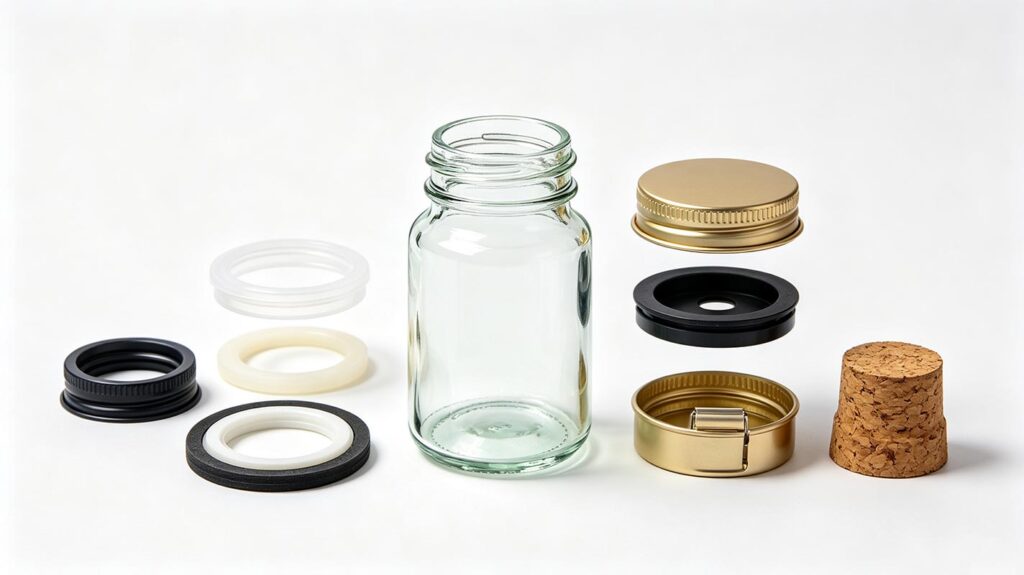
Bottle neck size is another important part of the packaging design. The neck determines the size and shape of the bottle opening, while the finish provides the features needed for the closure. Different bottle neck sizes are used for different products and packaging formats.
When comparing glass bottle neck sizes, you may come across terms such as:
- Neck diameter
- Bottle opening size
- Finish size
- Neck height
For most buyers, the most important point is simple: the bottle neck size and closure must be compatible. You should confirm the required neck and closure specifications before ordering large quantities, especially when using custom bottles or sourcing closures separately.
Glass Bottle Neck Finish vs. Bottle Shape
The neck finish is only one part of a bottle’s design. Two bottles can have completely different shapes while using a similar neck finish. On the other hand, bottles with similar body shapes may use different neck finishes depending on the closure and intended application.
For example, a liquor bottle can have a screw finish, cork finish, or ROPP finish depending on the packaging concept. Similarly, glass food jars can use different closure systems while keeping a similar overall jar shape. This flexibility allows manufacturers and brands to combine bottle appearance with practical closure requirements.

Conclusion
Choosing the right glass bottle neck finish is an important part of bottle design. The finish affects which closure can be used, how the bottle is opened and sealed, and how the package fits the intended application. Common bottle neck finish types include screw or continuous thread finishes, cork finishes, crown finishes, ROPP finishes, lug finishes, and snap finishes. Each has its own typical closures and applications.
For a new glass bottle project, it is best to consider the bottle shape, neck finish, closure, capacity, and application together rather than choosing each element separately. For custom glass bottles, TP Glass Bottle can work with you to develop bottle designs based on your required neck finish, closure, capacity, and overall packaging concept.