
Yes, glass bottles can be used for hot-fill packaging. In fact, glass is widely used for products such as fruit juice, sauces, jams, preserves, and other heat-processed foods and beverages. However, using glass bottles for hot filling is not simply a matter of choosing a container that can handle a high temperature. The main concern is thermal shock—the stress created when the temperature of the glass changes too quickly.
For commercial hot-fill applications, the bottle, filling temperature, preheating process, cooling method, and closure should be considered together. A standard glass bottle should not automatically be assumed to be suitable for every hot-fill process.
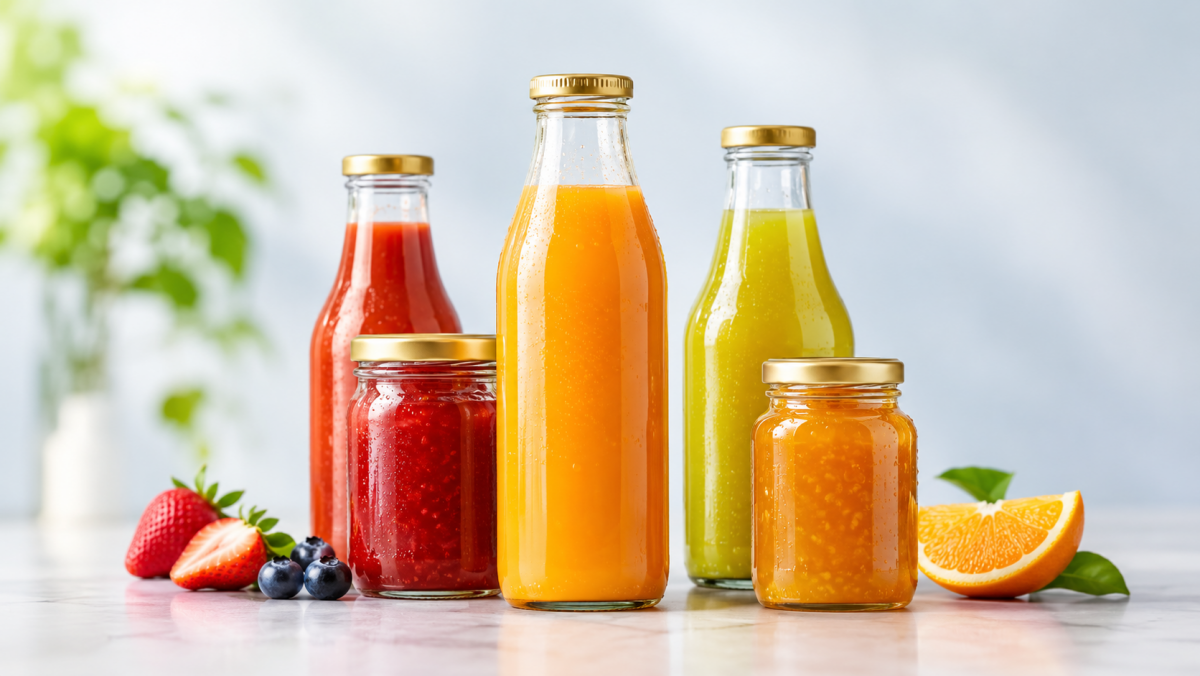
Table of Contents
What Is Hot-Fill Packaging?
Hot filling is a packaging process in which a product is heated before being filled into its container. The product is then sealed while it is still hot, helping control microorganisms and extend shelf life.
Hot-fill packaging is commonly used for:
- Fruit and vegetable juices
- Sauces and condiments
- Jams and preserves
- Fruit products
- Syrups and concentrates
- Some ready-to-drink beverages
Glass is well suited to many of these applications because it does not soften or deform like some plastic packaging when exposed to high temperatures. It also provides a strong barrier against oxygen and moisture and does not easily react with most food and beverage products.
The challenge is not simply the heat itself. It is how quickly the glass heats up and cools down.
Can Glass Bottles Be Used for Hot Filling?
Yes, but not every glass bottle is automatically suitable for hot filling.
When hot liquid enters a cooler glass bottle, the inner surface of the bottle heats up faster than the outer surface. Because different parts of the glass expand at different rates, stress can develop within the container.
If the temperature difference is too large or changes too quickly, the stress can cause cracking or breakage.
The same issue can occur during cooling. After hot filling, a bottle may pass through cooling equipment or come into contact with cooler air or water. A sudden temperature change at this stage can also create thermal shock.
For this reason, hot-fill glass bottles should be selected based on the actual filling and cooling process rather than temperature alone.
Why Does Thermal Shock Matter for Glass Bottles?
Thermal shock is one of the most important considerations when using glass bottles for hot filling.
Imagine a glass bottle at room temperature being filled with a product at a much higher temperature. The inside of the bottle becomes hot while the outside is still relatively cool. This creates a temperature gradient across the glass wall.
The greater the temperature difference and the faster the change occurs, the greater the potential stress.
Thermal shock can occur during both heating and cooling, although rapid cooling can be particularly demanding for glass containers. This is why controlled temperature changes are important throughout the filling process.
This also means that a thicker bottle is not necessarily a better hot-fill bottle. Very thick or uneven glass can experience greater temperature differences between its inner and outer surfaces. Bottle design and wall distribution are therefore more important than simply adding more glass.
What Makes a Glass Bottle Suitable for Hot Filling?
Several factors affect whether a glass bottle is appropriate for a particular hot-fill application.
Filling Temperature
The first thing to consider is the actual product temperature at the time of filling.
Hot-fill products are often filled at elevated temperatures, but the required temperature varies by product and process. The bottle should therefore be evaluated according to the actual filling conditions rather than a general statement such as “glass is heat resistant.”
The temperature of the bottle before filling also matters. A bottle that has been conditioned or preheated has a smaller temperature difference when hot product enters it.
Thermal Shock Resistance
A suitable hot-fill glass bottle needs sufficient thermal shock resistance for the intended process.
Thermal shock resistance describes how well a glass container can withstand a rapid temperature change without cracking. The required performance depends on the bottle design and the temperature differences created on the filling line.
For commercial applications, thermal shock performance should be considered together with the actual filling and cooling conditions rather than treated as a universal temperature rating.
Bottle Design and Wall Distribution
The shape and structure of a glass bottle also affect its performance.
Large changes in wall thickness, heavy sections, sharp transitions, and certain bottle shapes can create areas that heat or cool at different rates. A well-designed bottle aims for a more consistent wall distribution and avoids unnecessary stress concentrations.
This is particularly important when developing a custom glass bottle. The visual design should be evaluated together with the intended filling process before the mold is finalized.
Glass Quality and Annealing
The manufacturing process also matters.
Proper annealing helps reduce residual stress in the glass after forming. Surface condition is important as well, because scratches, impact marks, or manufacturing defects can create weak points where cracks may start.
This is why the manufacturing quality of the bottle is part of the hot-fill equation, rather than something that can be considered separately.
How Are Glass Bottles Prepared for Hot Filling?
The bottle itself is only one part of the process. How it is handled on the filling line also affects performance.
Preheating the Glass Bottle
One common approach is to preheat or condition the bottles before filling.
For example, if a bottle is at room temperature and the product is significantly hotter, the initial temperature difference can be large. Preheating the bottle reduces this difference and can lower the risk of thermal shock.
In commercial juice production, preheating has been used before filling hot products into glass bottles specifically to reduce the temperature difference between the product and the container.
Hot Filling and Capping
The hot product is then filled into the prepared bottle and sealed with a compatible closure.
The bottle finish, closure, filling level, and headspace should all be considered as part of the packaging system. Hot filling can also create a vacuum as the product cools, so the closure needs to be suitable for the expected conditions.
Controlled Cooling
Cooling is another important stage.
A hot glass bottle should not be exposed to a sudden and extreme temperature change without considering the thermal shock risk. Commercial filling lines can use controlled or staged cooling to reduce the temperature difference across the glass.
In other words, successful hot-fill packaging is not only about getting the hot product into the bottle. The bottle also needs to survive what happens immediately afterward.
What Products Use Hot-Fill Glass Packaging?
Hot-fill glass packaging is used across several food and beverage categories.
| Product | Common Glass Packaging |
|---|---|
| Fruit juice | Glass juice bottles |
| Sauces | Glass sauce bottles |
| Jams and preserves | Glass jars |
| Syrups | Glass bottles |
| Fruit products | Glass food jars |
| Some ready-to-drink beverages | Glass beverage bottles |
Glass is particularly attractive for these products because it combines good barrier properties with a rigid, premium package format.
For food and beverage brands, the bottle can also contribute to product presentation while supporting the required filling and processing conditions.
How to Choose Glass Bottles for Hot-Fill Products
If you are sourcing glass bottles for a hot-fill product, it is useful to provide the bottle manufacturer with the actual packaging conditions as early as possible.
Important information includes:
- Product type
- Filling temperature
- Bottle temperature before filling
- Cooling method
- Bottle capacity and shape
- Neck finish and closure
- Expected filling-line conditions
- Required thermal shock performance
This information allows the manufacturer to evaluate whether an existing bottle is suitable or whether a different design should be considered.
For a new custom glass bottle, these requirements should ideally be discussed before mold development. A bottle designed only for appearance may require changes once the filling process is considered.
Are All Glass Bottles Suitable for Hot Filling?
No.
A bottle that works well for water, spirits, or another ambient-temperature product should not automatically be used for hot filling.
Two bottles can have the same capacity but behave differently because of their shape, wall distribution, manufacturing process, and surface condition. The filling and cooling process can also create very different thermal conditions.
For this reason, glass bottles for hot filling should be evaluated according to their intended application.
If you are unsure whether a standard bottle is suitable, discuss the product temperature and filling process with the glass bottle manufacturer before placing a large production order.
FAQ About Hot-Fill Glass Bottles
Can glass bottles withstand hot-fill temperatures?
Yes. Glass bottles are widely used for hot-fill applications, but the appropriate bottle depends on the filling temperature, bottle design, thermal shock requirements, and cooling process.
What causes a glass bottle to break during hot filling?
The main cause is usually thermal shock. A rapid temperature difference between different parts of the glass can create stress that leads to cracking.
Do glass bottles need to be preheated before hot filling?
Preheating may be used when the temperature difference between the bottle and the hot product is significant. The exact process depends on the filling line and product.
Is thicker glass better for hot filling?
Not necessarily. A thicker or heavier bottle does not automatically have better thermal shock resistance. Wall distribution and controlled temperature changes are also important.
How should I choose a glass bottle for hot filling?
Start with the product and filling process. Confirm the filling temperature, bottle temperature, cooling method, bottle design, closure, and thermal shock requirements with the manufacturer.
Choosing the Right Glass Bottle for Hot-Fill Packaging
Hot-fill packaging is a practical application for glass bottles, but the right container needs to be matched to the process.
For juice, sauces, jams, food products, and other hot-fill applications, factors such as thermal shock resistance, bottle design, manufacturing quality, and controlled cooling should be considered before mass production.
Tianpu provides standard and custom glass bottles for beverage and food packaging applications. If your product requires hot filling, we can help evaluate bottle specifications and develop a suitable glass bottle design, including new mold development for custom projects.
Choosing the right bottle at the design stage can help reduce breakage risks and create a more reliable packaging solution for your filling line.