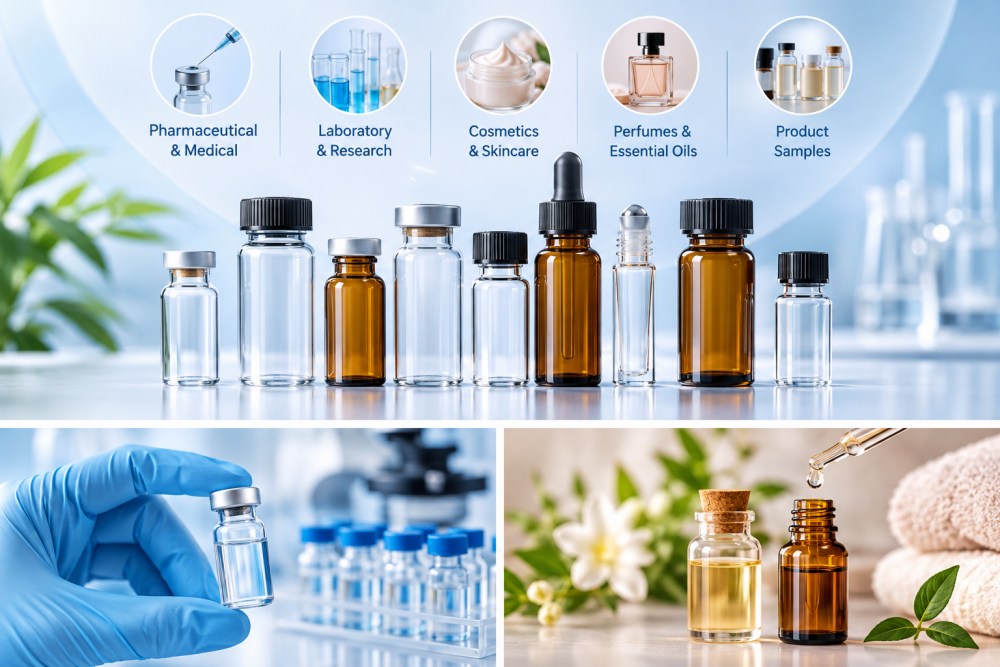
Glass vials are small glass containers designed to store, protect, and dispense liquids, powders, and other small-volume products. They are widely used in pharmaceutical packaging, laboratory testing, cosmetics, perfumes, and essential oil products. Their compact size, different closure options, and material versatility make them suitable for many applications.
However, not all glass vials are designed for the same purpose. Different products require different vial sizes, glass colors, materials, and sealing methods. Understanding these differences can help businesses select suitable glass vial packaging for their products.
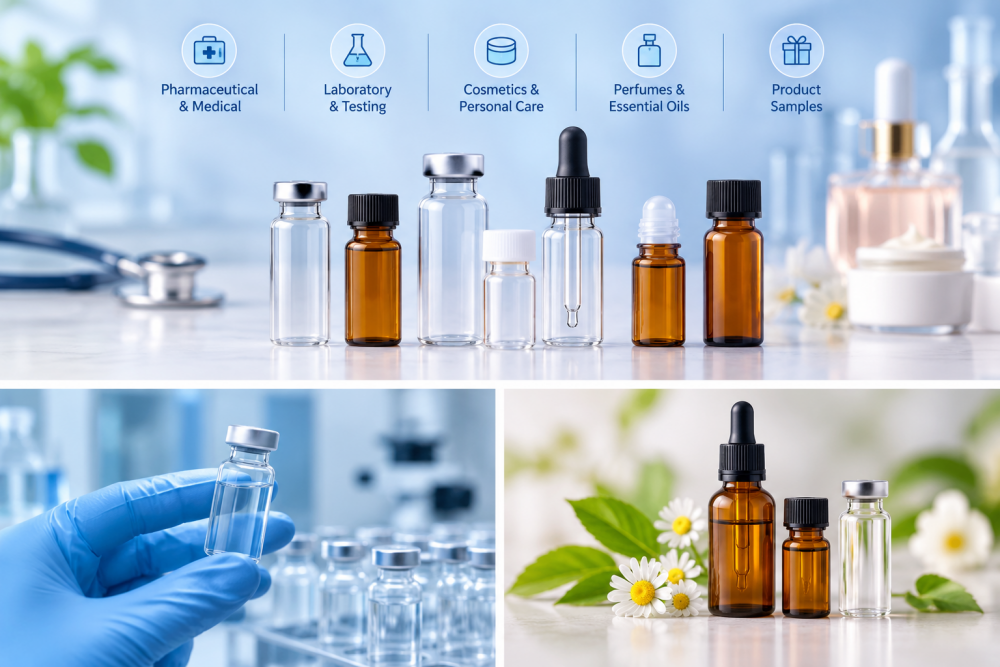
Table of Contents
What Is a Glass Vial?
A glass vial is a small container typically made from glass, with a narrow or relatively compact body and an opening designed for a suitable closure. Compared with standard glass bottles, glass vials generally have smaller capacities and are often used for products that need to be stored, sampled, or dispensed in limited quantities.
Glass vials are available in different shapes, sizes, and colors. Depending on the application, they can be fitted with screw caps, rubber stoppers, crimp seals, droppers, or roll-on applicators.
One of the main advantages of glass vial packaging is its versatility. Glass does not absorb many substances as readily as some packaging materials, and suitable glass formulations can offer good chemical resistance. It is also transparent in its clear form, allowing users to inspect the contents.
These characteristics make glass vials a practical packaging option for products that require controlled storage, convenient dispensing, or a compact presentation.
What Are Glass Vials Used For?
Glass vials serve different purposes across several industries. Their applications mainly depend on the product being stored, the required capacity, and the type of closure.
1. Pharmaceutical and Medical Products
Pharmaceutical packaging is one of the most established applications of glass vials. They are commonly used to store liquid medicines, injectable drugs, vaccines, and certain powdered pharmaceutical products.
Many pharmaceutical vials use rubber stoppers and aluminum crimp seals to create a secure closure. This design allows the contents to be accessed through a needle when required, while helping maintain a closed container during storage.
For pharmaceutical applications, glass material selection is particularly important. The chemical properties of the glass, its resistance to interaction with the product, and the quality of the closure must meet the requirements of the intended medicine.
Not every glass vial is suitable for pharmaceutical or injectable use. These applications require specific material grades, compatibility assessments, and relevant regulatory testing.
2. Laboratory and Testing Samples
Glass vials are also widely used in laboratories for collecting, storing, and handling small quantities of samples.
Common applications include chemical samples, analytical solutions, liquid reagents, and materials prepared for testing. In analytical laboratories, specialized sample vials are used with instruments such as gas chromatography (GC) and high-performance liquid chromatography (HPLC).
Different laboratory vials are available with screw-top, crimp-top, and snap-top closures. The choice depends on sample properties, testing procedures, and sealing requirements.
Clear glass vials are useful when researchers need to inspect samples visually, while amber glass vials can help reduce exposure to certain wavelengths of light.
3. Cosmetics and Personal Care Products
In the cosmetics industry, small glass vials are often used for packaging products that require controlled dispensing or small quantities per application.
Typical examples include:
- Facial serums and concentrated skincare formulas
- Essential skincare oils and treatment products
- Cosmetic samples and trial-size products
- Hair and beauty treatment concentrates
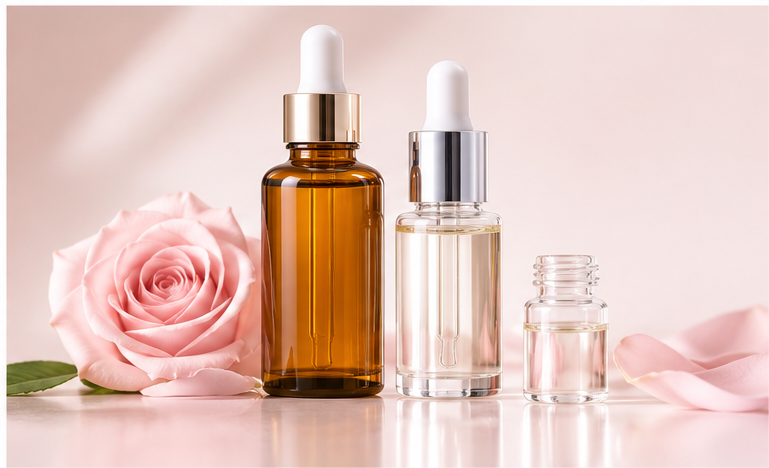
Glass dropper vials are particularly useful for liquid formulations that need to be dispensed in small amounts. They allow users to control the quantity applied and provide a convenient packaging format for concentrated products.
For cosmetic brands, glass vial packaging can also support a premium product presentation. Different colors, surface finishes, and closure designs help create packaging that matches the brand’s visual identity.
4. Perfumes and Essential Oils
Perfume and essential oil packaging is another common application of small glass vials.
Perfume sample vials allow fragrance brands to distribute small quantities of different scents for customer trials, promotional campaigns, and product testing. Their compact design also makes them convenient for travel and sample collections.
For essential oils, glass vials are commonly used to store concentrated oils and small-volume formulations. Amber glass is often preferred for light-sensitive products because it filters some incoming light that may affect product quality over time.
Different closures provide different dispensing experiences. Dropper caps are suitable for controlled liquid dispensing, while roll-on caps are designed for direct application to the skin.
The compatibility of the glass, closure, and internal components should also be checked against the specific fragrance or oil formula.
5. Small-Volume Product Samples
Beyond these major industries, glass vials are useful for packaging and distributing small quantities of different products.
Manufacturers can use small glass vials for product samples, formula testing, promotional sets, and product development. Instead of preparing a full-size package, businesses can provide customers with smaller quantities for evaluation.
This is particularly useful for brands introducing new fragrances, cosmetic formulations, or specialty liquid products.
What Are the Different Types of Glass Vials?
Glass vials can be classified in several ways, including glass color, material, closure design, and overall bottle structure.
1. Clear and Amber Glass Vials
Glass color is an important consideration when selecting packaging.
Clear Glass Vials
Clear glass vials allow users to see the contents directly. They are commonly used for laboratory samples, cosmetic liquids, perfume samples, and other products where product visibility is important.
Their transparent appearance also makes them suitable for brands that want to display the color and texture of their products.
Amber Glass Vials
Amber glass vials provide additional protection against certain wavelengths of light. They are frequently used for essential oils, pharmaceutical products, and other light-sensitive formulations.
The degree of light protection depends on the glass composition and design, so the suitability of amber glass should be considered alongside the product’s storage requirements.
2. Different Glass Materials
The glass material also affects the performance and intended application of a vial.
- Borosilicate Glass: Known for its good chemical resistance and thermal shock resistance. It is frequently used in laboratory and pharmaceutical applications where these properties are important.
- Soda-Lime Glass: Commonly used for general glass packaging, including many cosmetic, fragrance, and sample containers.
For pharmaceutical packaging, glass containers may also be classified as USP Type I, Type II, or Type III according to their hydrolytic resistance. These classifications involve specific testing requirements and should not be confused with general commercial glass specifications.
The appropriate material should always be selected according to the product formula and its intended use.
3. Different Closure Designs
The closure affects how a glass vial is sealed, opened, and used.
| Closure Type | Main Characteristics | Common Applications |
|---|---|---|
| Screw Top | Threaded closure that can be opened and closed easily | Sample storage, cosmetics, and general-purpose vials |
| Crimp Top | Metal closure secured around the vial opening | Pharmaceutical and laboratory applications |
| Snap Top | Press-on closure designed for convenient access | Laboratory samples and testing |
| Dropper Cap | Includes a dropper for controlled liquid dispensing | Essential oils, serums, and fragrances |
| Roll-On Cap | Uses a roller ball for direct liquid application | Essential oils, perfume oils, and personal care products |
When selecting a closure, businesses should consider the vial opening, sealing performance, product compatibility, and intended dispensing method.
Common Glass Vial Sizes and Their Uses
Glass vial sizes vary depending on the industry, product type, and packaging requirements. Small capacities are generally used for samples and concentrated formulas, while larger vials can accommodate products that require more storage volume.
The following table provides a general reference for common glass vial sizes and their applications.
| Glass Vial Capacity | Common Applications | Typical Design |
|---|---|---|
| 1–3 ml | Perfume samples, small laboratory samples, concentrated liquids | Mini glass vials |
| 3–10 ml | Essential oils, fragrance samples, roll-on products | Dropper or roll-on vials |
| 10–30 ml | Cosmetic serums, skincare oils, liquid formulations | Dropper or screw-top vials |
| 30–100 ml | Larger liquid samples, oils, and personal care products | Screw-top or dropper vials |
These sizes are general packaging references rather than fixed industry standards. Actual capacity options, dimensions, and fill volumes vary between manufacturers and product designs.
For example, a perfume sample may only require a 1–3 ml vial, while a cosmetic serum intended for regular use may need a 10–30 ml container.
Choosing the right glass vial size should take into account the required filling volume, product usage, dispensing method, and overall packaging design.
How to Choose the Right Glass Vial for Your Product?
Selecting suitable glass vials involves more than choosing the correct capacity. Businesses should consider several factors before confirming a packaging specification.
1. Product Compatibility
Check whether the glass material and closure components are suitable for the product formula. This is particularly important for essential oils, concentrated liquids, and pharmaceutical preparations.
2. Vial Capacity
Choose a suitable glass vial size based on the intended fill volume and how customers will use the product. Sample products usually need smaller containers, while regular-use products may require larger capacities.
3. Glass Color
Clear glass works well when product visibility is important. Amber glass is worth considering for light-sensitive formulations that require additional protection from light exposure.
4. Closure and Dispensing Method
Decide whether the product needs a screw cap, dropper, roller ball, or another sealing system. The closure should match the vial opening and provide suitable sealing performance.
5. Packaging and Brand Requirements
Consider the overall appearance of the glass vial, including its shape, surface finish, labeling area, and compatibility with existing filling and packaging equipment.
For brands developing customized packaging, working with a glass vial supplier can help coordinate bottle dimensions, closure specifications, colors, and other design requirements.
FAQ
What Is the Difference Between a Glass Vial and a Glass Ampoule?
A glass vial usually has an opening that can be sealed with a separate stopper or cap. It can generally be accessed by removing the closure or through an appropriate stopper. A glass ampoule, on the other hand, is typically a sealed container that must be broken open before use.
Are Amber Glass Vials Better Than Clear Glass Vials?
Neither option is universally better. Amber glass vials help reduce exposure to certain wavelengths of light and are suitable for some light-sensitive products. Clear glass vials are preferable when product visibility is important. The choice depends on the formula and storage requirements.
What Are the Most Common Glass Vial Sizes?
Common glass vial capacities include 1 ml, 2 ml, 3 ml, 5 ml, 10 ml, 30 ml, and 100 ml. The available sizes vary by manufacturer and application, so businesses should confirm the required dimensions and usable fill volume before ordering.
Can Glass Vials Be Used for Essential Oils and Perfumes?
Yes. Glass vials are widely used for essential oils, perfume samples, and fragrance products. Clear and amber glass options are available, while dropper and roll-on closures provide different dispensing methods. The glass and closure should be checked for compatibility with the specific formula.
Conclusion
Glass vials are used across pharmaceutical, laboratory, cosmetic, and fragrance industries because they offer flexible packaging options for small-volume products. Choosing the right vial requires attention to glass material, color, capacity, closure design, and product compatibility.
For businesses looking for suitable glass vial packaging, TP Glass Bottle offers different glass vial sizes, colors, and designs for various applications. Whether you need small perfume sample vials, essential oil packaging, or customized dropper glass vials, exploring the right packaging options is an important step in developing a product that meets your requirements.